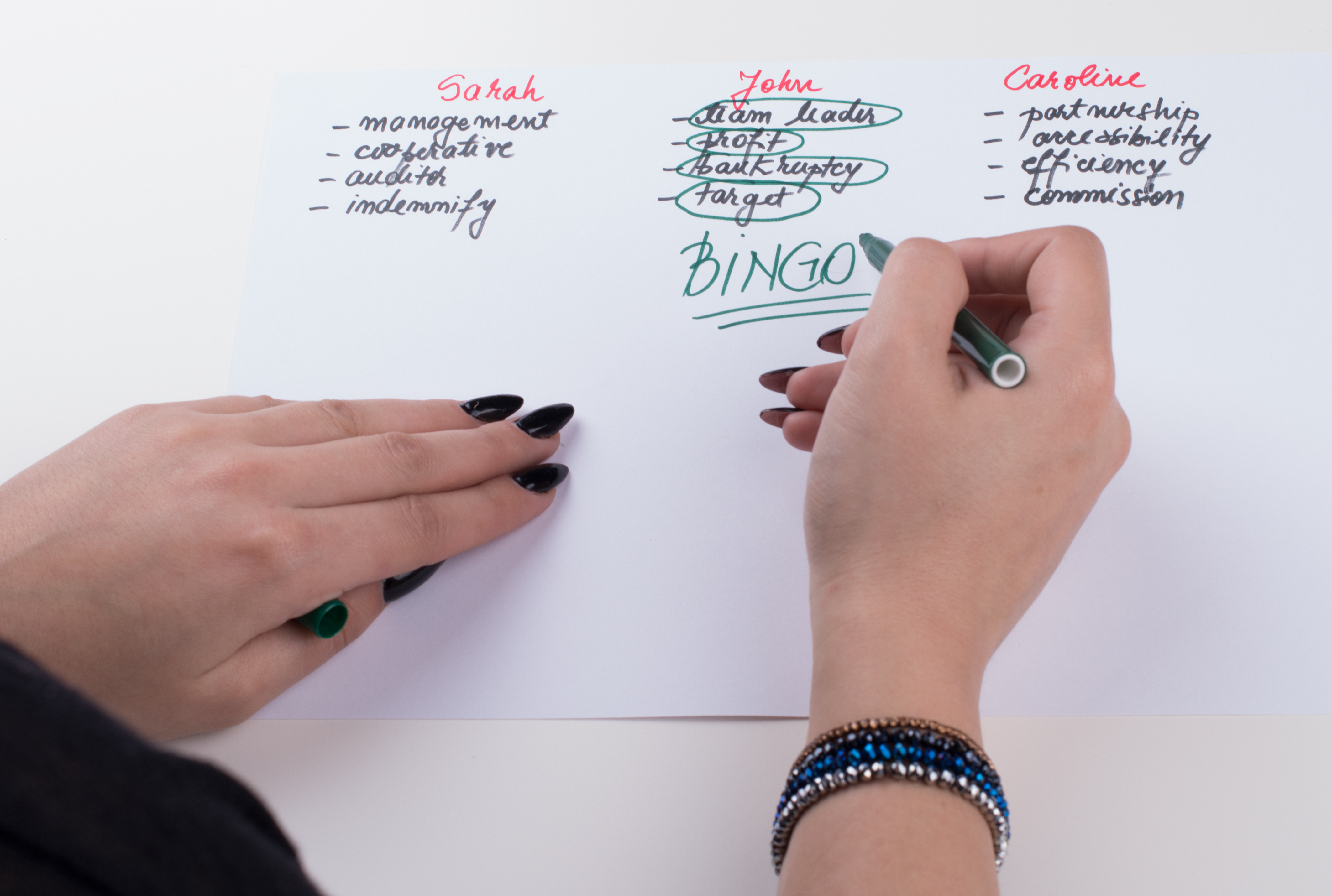
Some meetings are productive. Some meetings solve real problems. And some meetings, bless their little calendar invites, are 47 minutes of “let’s circle back,” “move the needle,” and “create cross-functional alignment” with no visible evidence that anyone knows what any of that means. That, dear reader, is where Bullshit Bingo enters the chat.
At its heart, Bullshit Bingo is a light, satirical game built around one very simple idea: when people start tossing out empty buzzwords, vague corporate clichés, or gloriously padded nonsense, you mark them off on a bingo card. It is part observation game, part survival mechanism, and part comedy relief for anyone who has ever sat through a presentation that used six slides to say, “We should probably send an email.”
The trick is playing it with the right spirit. This is not about mocking one specific coworker, humiliating a manager, or turning a normal meeting into a private roast. The best version of Bullshit Bingo is playful, discreet, and focused on patterns of language rather than on people. Think of it as a tiny anthropological study with a sense of humor.
Below, you’ll learn exactly how to play Bullshit Bingo in nine steps, plus how to make your card, what phrases to use, what mistakes to avoid, and what the experience is actually like when the jargon starts flying like confetti from a very tired cannon.
What Is Bullshit Bingo, Exactly?
Bullshit Bingo is usually a casual variation of buzzword bingo. Instead of numbers, your card contains overused phrases, fuzzy management speak, trendy jargon, or predictable meeting lines. Every time someone says one of the phrases on your card, you mark that square. Complete a row, column, or diagonal, and you’ve got bingo.
There is no single official rulebook, which is honestly fitting for a game devoted to workplace nonsense. Some people play it in meetings. Others use it during conference presentations, webinars, panel discussions, training sessions, or keynote speeches that somehow contain both the phrase “paradigm shift” and a stock photo of people high-fiving in a glass office.
The goal is not sabotage. The goal is entertainment, pattern recognition, and maybe a gentle reminder that clear language is still free.
Why Bullshit Bingo Is Weirdly Popular
There is a reason this game has such staying power. People get tired of jargon. Vague language can make simple ideas sound complicated, and complicated ideas sound like they were swallowed by a blender. Bullshit Bingo turns that frustration into a joke.
It also makes people listen more carefully. Ironically, the same meeting that might have put you into a polite emotional coma suddenly becomes an active challenge. You start noticing repeated phrases, filler language, and the exact moment someone says “Let’s unpack that” right after absolutely refusing to unpack anything.
And yes, humor helps. A little harmless laughter can make tedious situations more bearable, as long as the humor stays kind, private, and socially intelligent. In other words: laugh with the absurdity, not at a human being who forgot how many times they said “synergy.”
How to Play Bullshit Bingo: 9 Steps
Step 1: Choose the right event
Not every gathering deserves a Bullshit Bingo card. A serious budget meeting, a performance review, a crisis response call, or a conversation about layoffs is not the place. Pick a low-stakes setting where the mood is reasonably relaxed and the stakes are not life, death, payroll, or legal exposure.
The best choices are predictable jargon habitats: sales meetings, strategy sessions, all-hands presentations, conferences, webinars, marketing brainstorms, and leadership talks where someone is absolutely going to say “vision” at least three times before coffee break.
If the room already has a playful culture, you can sometimes make the game public. If not, keep it private and quiet. Bullshit Bingo works best when it adds fun without becoming the main event.
Step 2: Build your bingo card
Create a 5×5 bingo grid. Many players use a free center square because, frankly, that middle box deserves a little vacation. Fill the other squares with phrases you expect to hear. You can print the card, scribble one in a notebook, or make a digital version on your phone, tablet, or laptop.
The smartest cards are customized to the setting. A startup meeting might include “pivot,” “disruption,” “scale,” and “runway.” A corporate leadership presentation might lean harder into “alignment,” “best-in-class,” “stakeholders,” and “actionable insights.” A conference keynote may deliver bonus points if anyone says “the future of work” while standing in front of a slide with a glowing earth.
Try to mix easy squares with a few long shots. If every square is something common like “team,” you will win in four minutes and then sit there with nothing left to do except wonder why you became this powerful.
Step 3: Pick phrases that are vague, overused, or hilariously inflated
This is the soul of the game. A good Bullshit Bingo card uses phrases that sound impressive while saying very little. You are looking for language that is repetitive, foggy, or aggressively polished.
Classic options include:
- Circle back
- Take this offline
- Move the needle
- Low-hanging fruit
- Bandwidth
- Synergy
- Deep dive
- Leverage
- Value-add
- At the end of the day
- Best practices
- Action item
- Scalable solution
- Quick win
- Thought leadership
- Game changer
- Granular
- Let’s unpack that
- Level set
- North star
You can also add behaviors instead of phrases. Examples include “someone says ‘great question’ and does not answer it,” “speaker reads the slide word for word,” or “a simple problem gets renamed a framework.” Those custom squares can make the game even funnier.
Step 4: Decide your winning rules before play begins
House rules matter. Are you playing for one row, a full card, or multiple bingo patterns? Does the free space count automatically? Are repeated phrases allowed to fill multiple squares if the wording is slightly different? Does “circle back to that later” count as “circle back”? You want answers before the jargon storm begins.
The simplest rule set is this: one exact phrase equals one mark, the free square counts, and the winner is the first person to complete a row, column, or diagonal. Easy, classic, clean.
If you’re playing with a group, decide whether someone has to call “Bingo!” aloud or just quietly flash their card like a proud little workplace cryptid. In more professional settings, silent victory is often the wiser choice.
Step 5: Stay discreet and read the room
This is not karaoke night. Do not gasp dramatically every time someone says “optics.” Do not elbow your coworker so hard that they lose a contact lens. And do not grin like a Bond villain when the VP says “We need to be proactive.”
The art of Bullshit Bingo is subtlety. Mark your card quietly. Keep your face neutral. If you’re playing on paper, don’t make giant scratchy X marks like you’re carving a treasure map. If you’re playing digitally, avoid screen brightness that announces to the entire conference table that you are not, in fact, taking notes on revenue projections.
A game that stays private remains funny. A game that becomes obvious can turn awkward in a hurry. Humor should reduce tension, not create a follow-up meeting called “Communication Concerns Re: Yesterday.”
Step 6: Listen carefully and mark honestly
Bullshit Bingo is more fun when you play fair. Do not stretch every sentence into a match just because you are one square away from glory. “We should revisit that next week” is not automatically “circle back” unless your rules say close cousins count.
Honest marking keeps the game interesting and prevents the card from becoming a personal fantasy novel. It also sharpens your listening. You begin to notice not just the words themselves, but the way vague language can fill time, soften accountability, or make ideas sound more polished than they really are.
That’s part of the hidden charm here: a silly game can make you a better listener. You start hearing when people are being specific and when they are decorating the walls with language wallpaper.
Step 7: Win gracefully
Congratulations. You got bingo. Your prize is mostly emotional, though if your group has snacks, there is no moral reason not to pursue a cookie.
If you’re in a casual setting with friends or trusted coworkers, you can reveal your win at the agreed moment. If you are in a formal or mixed company setting, keep the celebration quiet. This is one of those rare games where elegance matters. A discreet smile beats a dramatic victory lap around the conference room.
If the game is public, try a light tone. Say something like, “Wow, we really did hit the full buzzword spectrum today,” and keep it playful. The goal is to share a laugh, not to embarrass the speaker into never using the word “alignment” again. Though, admittedly, that would be an interesting public service.
Step 8: Use the game to improve your own communication
Here is the twist: after one or two rounds of Bullshit Bingo, you may realize you also say some of these phrases. Most of us do. Workplace language is contagious. Spend enough time in meetings and suddenly you’re telling a friend you need to “prioritize deliverables” before folding laundry.
Use the game as a mirror. Which phrases do you rely on? Which ones sound polished but hide your actual point? Could you replace “We need better cross-functional alignment around deliverables” with “Marketing and sales need one shared timeline”? You almost always can.
That is where Bullshit Bingo stops being just funny and starts being useful. It trains your ear for clarity. And clarity, unlike “synergistic optimization,” is a phrase people can actually use.
Step 9: Debrief, refresh the card, and keep it fresh
After the meeting, compare notes if you played with others. Which squares filled fastest? Which phrases were unexpectedly popular? Which new gem appeared out of nowhere and instantly earned a permanent place on next week’s card?
Refreshing your card matters because jargon evolves. Today’s “move the needle” becomes tomorrow’s “unlock value,” and before long everyone is “pressure-testing assumptions” like they work inside a very anxious laboratory.
A short debrief also helps keep the tone constructive. The funniest Bullshit Bingo groups talk about patterns of language, not about tearing apart the person who spoke. That keeps the game social, smart, and sustainable instead of mean.
Common Mistakes to Avoid
First, do not play during sensitive conversations. Second, do not make the game public unless the culture can genuinely handle it. Third, do not stack your card with phrases one person always says, because that turns a language joke into a personal attack. And fourth, do not forget that some jargon exists for a reason. Industry terms can be useful when they are specific, shared, and meaningful.
The problem is not every technical term. The problem is language that hides more than it reveals. If a phrase helps everyone understand the work, great. If it sounds like a robot swallowed a consulting deck, it probably belongs on the card.
A Sample Bullshit Bingo Card Theme
If you want a quick starter card, try this mix:
Top row: circle back, leverage, free space, move the needle, take this offline
Second row: bandwidth, value-add, quick win, deep dive, alignment
Third row: synergy, actionable, low-hanging fruit, level set, scalable
Fourth row: unpack that, best practices, optimize, stakeholder, game changer
Bottom row: north star, holistic, strategic, granular, at the end of the day
That card has range. It can survive a marketing webinar, an operations review, a startup pitch, or a leadership retreat with suspiciously expensive muffins.
Final Thoughts
Bullshit Bingo is funny because it is familiar. We have all sat in rooms where language got puffed up like a parade balloon and floated away from reality. This game gives you a way to notice that pattern, laugh at it, and maybe even communicate a little more clearly yourself.
Play it with kindness. Customize it to your audience. Keep it discreet when needed. And remember: the best win is not just getting bingo. It is leaving the meeting with a better ear for plain English and a stronger allergy to verbal fog.
Because sometimes the most radical thing you can say at work is not “Let’s ideate around scalable cross-team transformation.” Sometimes it is just, “Here’s the problem, and here’s what we should do next.”
Experiences Related to Playing Bullshit Bingo
One of the funniest things about Bullshit Bingo is how differently it feels depending on the room. In a small team meeting, the game is usually subtle and almost cozy. You sit there with your coffee, pretending to take normal notes, while mentally circling “circle back” for the second time in six minutes. The first few marks are harmless. Then the speaker says “Let’s take a step back and think strategically about our north star,” and suddenly your card starts lighting up like a slot machine in a business-casual casino. It becomes very difficult to maintain a professional face when half your board fills before the meeting reaches slide four.
Conference settings are a whole different species. At a big event, Bullshit Bingo turns into a spectator sport. The audience may not know one another, but everyone recognizes a keynote that is drifting into inspirational vapor. You hear “innovation,” “disruption,” “agility,” and “customer-centric” in the opening five minutes, and there is a shared, silent understanding in the room: ah, yes, today we feast. Playing in that setting can actually make a generic talk more enjoyable because you stop waiting for deep insight and start appreciating the accidental comedy of repetition.
Then there are the truly elite experiences, the ones players talk about like veterans of a beautiful and ridiculous storm. Maybe it is the manager who says “bandwidth” twelve times in one meeting. Maybe it is the consultant who uses “leverage” as a noun, verb, philosophy, and apparent lifestyle. Maybe it is the webinar host who says “drop it in the chat” so often that the phrase begins to sound like a hypnotic spell. Those moments are what keep people making new cards.
What surprises most first-time players is that the game can sharpen your awareness. After playing Bullshit Bingo once or twice, you start noticing when people are actually being clear. A person who says, “We missed the deadline because we didn’t assign an owner” suddenly sounds refreshingly brilliant. The plain speaker becomes the hero of the room, not because they are flashy, but because they are understandable. That is a strangely satisfying side effect of a silly game.
There is also a bonding element when friends or trusted coworkers play together. Shared eye contact after someone says “let’s socialize this idea across verticals” can be funnier than the phrase itself. It creates the kind of low-stakes group comedy that helps people survive long workdays. The best stories usually come afterward, when everyone compares cards and realizes they all marked the same square at the exact same moment. It feels oddly unifying, like synchronized swimming, but with more blazers and less water.
Of course, the smartest players learn restraint. The funniest rounds are the ones kept private, friendly, and self-aware. Once the joke shifts from “Wow, our workplace really loves fluff” to “Let’s make one person feel foolish,” the fun evaporates. The best Bullshit Bingo experiences leave everyone with a laugh and maybe a tiny lesson: say what you mean, mean what you say, and please, for the love of all conference rooms, stop calling every minor update a paradigm shift.