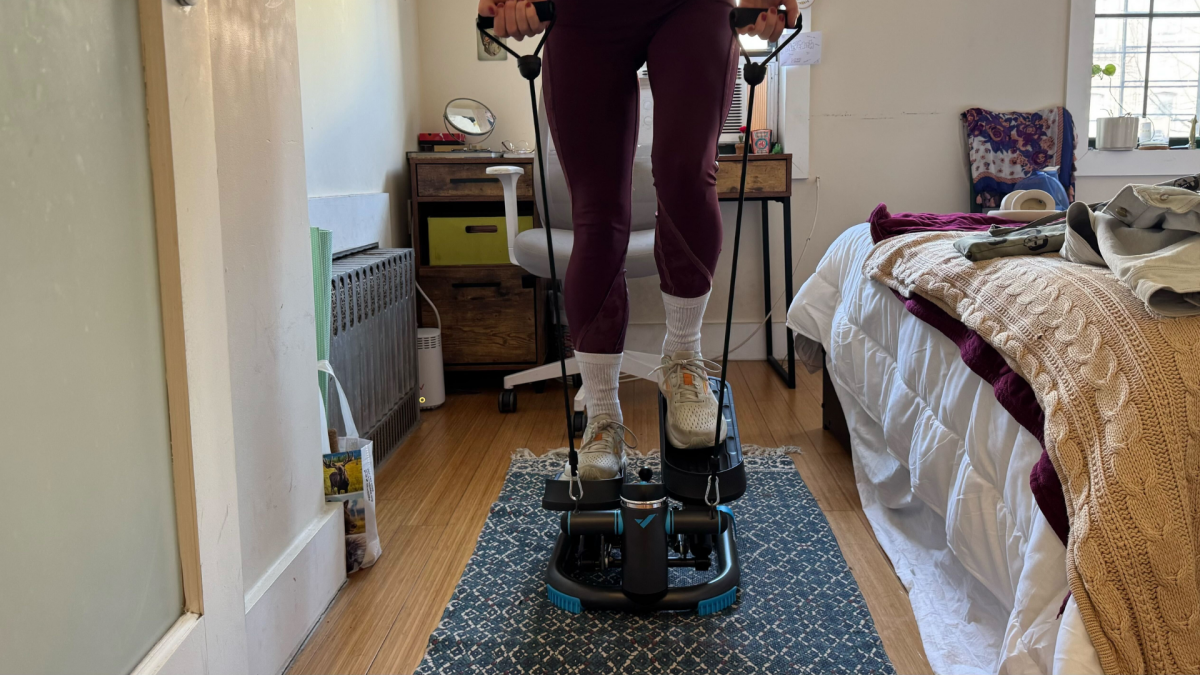
The Merach Mini Stepper promises an apartment-friendly cardio workout in a package small enough to hide beside a sofa. That sounds ideal until the same compactness that makes it convenient begins limiting stride length, foot placement, stability, and long-term progression. It can increase daily movement and make your legs burn, but for most people it works better as a fitness snack than as the main course.
The Merach Mini Stepper Review Verdict
The Merach Mini Stepper is easy to store, simple to start, and capable of turning ten idle minutes into ten active ones. Those are real advantages. Yet the machine is physically and functionally too limited to replace walking, running, cycling, strength training, or a full-size stair climber.
| Category | Rating | What It Means |
|---|---|---|
| Storage and portability | 9/10 | Small enough for apartments, closets, and shared rooms. |
| Beginner accessibility | 7/10 | The movement is simple, although balance may be an issue. |
| Cardio potential | 6/10 | Can raise heart rate, especially for beginners, but intensity options are limited. |
| Strength progression | 3/10 | Useful for muscular endurance, not a replacement for progressive resistance training. |
| Long-term workout value | 4/10 | Easy to outgrow unless used as one tool in a larger routine. |
Overall verdict: The Merach Mini Stepper is a compact movement tool, not a complete exercise solution. Buy it for short activity breaks, light cardio, or warm-upsnot because a tiny hydraulic platform will somehow replace an entire gym.
What Is the Merach Mini Stepper?
Merach sells several similarly named compact steppers, including straightforward up-and-down models, twist steppers, and rocking versions. Specifications vary by model and retailer, but the familiar design uses two hydraulic pedals mounted on a low steel frame. Many versions include detachable resistance bands and a small display that estimates steps, time, and calories.
Depending on the version, the footprint is roughly 15 to 17 inches long and about 13 to 14 inches wide. Several models advertise a 330-pound capacity, but a strong frame does not automatically create roomy pedals, a natural stride, or generous lateral stability.
What Comes in the Box?
Most packages include a mostly assembled stepper, two resistance bands, a basic monitor, adjustment hardware, and a manual. Setup is usually uncomplicated.
Review methodology: This editorial assessment combines current product specifications, independent tester observations, retailer feedback, and established U.S. exercise guidance. Because Merach uses similar names across multiple models, shoppers should verify the model number and measurements on the exact listing they plan to purchase.
Why the Merach Mini Stepper Feels Too Small
1. The Stride Is Short and Repetitive
A full staircase forces the hip, knee, and ankle through a noticeable range of motion. A gym stair climber gives each foot a larger, more predictable platform and allows sustained climbing at adjustable speeds. The Merach Mini Stepper compresses that idea into a shallow alternating press.
The motion can fatigue the calves, quadriceps, hamstrings, and glutes, especially at a higher setting. However, fatigue is not the same as comprehensive training. A cramped movement may burn while still offering limited range and little room for technique changes.
2. The Pedals May Feel Small for Larger Feet
Compact equipment has a geometry problem: every inch saved in storage is an inch unavailable during use. Users with long or wide feet may find that their heels or toes extend beyond the platforms. Even when the feet technically fit, the sensation can be less secure than walking on a treadmill or using a full-size climber.
This does not make the stepper unusable, but it changes the experience. Cardio is more enjoyable when the main question is “How long can I keep this pace?” rather than “Is my left foot slowly escaping?”
3. There Is No Handrail
The lack of a handrail keeps the stepper portable but can encourage users to reach for furniture, lean forward, or shorten the motion.
Beginners, older adults, and anyone with balance limitations should place the machine near a stable support. A rolling office chair is not a stable support. It is a practical joke with casters.
4. Resistance Progression Is Limited
Hydraulic resistance changes with speed, stride setting, temperature, and the specific model. Some versions let users adjust step height, but the progression is crude compared with the numbered resistance levels on a bike, elliptical, or commercial climber.
Fitness requires progression. Sessions can become longer or faster, but eventually the machine runs out of meaningful ways to become harder. At that point, the pedals travel less than your ambition.
5. The Resistance Bands Are a Bonus, Not a Transformation
The included bands can be used for curls, presses, raises, and rows while stepping. They make a session more interesting and can increase total-body effort. Still, the anchor point is low, the tension range is modest, and balancing on moving pedals limits how much force most users can safely produce.
Calling this a full-body workout is technically defensible in the same way that adding parsley makes dinner contain vegetables. The bands involve the upper body, but they do not replace progressive strength exercises.
Does the Merach Mini Stepper Count as Exercise?
Yes. Any session that raises breathing rate, increases heart rate, and requires sustained muscular effort can count toward aerobic activity. The better question is whether the stepper delivers enough intensity, duration, and progression for your specific goal.
U.S. guidance recommends that adults accumulate at least 150 minutes of moderate-intensity aerobic activity each week, along with muscle-strengthening work on at least two days. Moderate intensity usually means breathing faster while remaining able to talk but not sing comfortably.
A beginner may reach that level quickly on a mini stepper. A trained runner might step for twenty minutes while barely leaving warm-up territory. The machine does not decide whether the workout is meaningful; your physiological response does.
What the Stepper Can Do Well
- Break up long periods of sitting.
- Provide low-impact indoor movement when weather is unpleasant.
- Serve as a five- to ten-minute warm-up before strength training.
- Add light cardio while watching television or listening to a podcast.
- Help beginners build confidence with short, manageable sessions.
What It Does Not Do Well
- Replicate the range of motion of climbing actual stairs.
- Provide precise, repeatable resistance progression.
- Train all major muscle groups sufficiently for strength development.
- Offer the stable, hands-free rhythm of walking or cycling.
- Prepare athletes for high-power running, jumping, or heavy lifting.
Who Might Actually Enjoy the Merach Mini Stepper?
The machine makes the most sense for people who value convenience above performance. Apartment dwellers may prefer a stepper that slides into a closet over a treadmill that becomes an expensive clothing rack. Remote workers can use it for brief movement breaks, and beginners may appreciate equipment with almost no learning curve.
It can also work as a secondary cardio tool. A lifter might use it for a warm-up. A walker might use it on stormy days. A busy parent might collect three ten-minute sessions when a continuous half hour is unrealistic. In those roles, the Merach is useful precisely because it is small.
Who Should Probably Skip It?
Tall users, people with very large feet, experienced endurance athletes, and anyone wanting substantial resistance progression are likely to outgrow it quickly. People with significant balance problems may prefer equipment with a rail or a seated cardio option. Anyone expecting dramatic muscle building or a complete weight-loss solution should also lower expectations before the delivery driver lowers the box onto the porch.
Merach Mini Stepper vs. Other Home Cardio Options
| Equipment | Best Feature | Main Limitation | Best For |
|---|---|---|---|
| Merach Mini Stepper | Very compact and easy to store | Short stride and limited progression | Movement breaks and light cardio |
| Walking Pad | Natural gait and longer steady sessions | Needs more floor space and power | Daily walking and under-desk use |
| Compact Exercise Bike | Stable, scalable aerobic training | Bulky compared with a mini stepper | Consistent cardio progression |
| Full-Size Stair Climber | Higher intensity and better climbing simulation | Expensive, heavy, and space hungry | Dedicated home gyms |
| Bodyweight Circuit | Whole-body variety with no machine | Requires planning and self-motivation | Strength, conditioning, and mobility |
A walking pad supports a more natural stride, a compact bike provides measurable resistance, and a bodyweight circuit offers more complete muscular training. The Merach wins when storage is the deciding factor, but rarely when workout quality is.
How to Get a Better Workout From a Merach Mini Stepper
If you already own the machine, there is no need to exile it to the garage. Use it strategically.
Try a Simple 20-Minute Session
- Minutes 0–3: Step slowly with an upright torso and full control.
- Minutes 3–7: Increase cadence until talking is possible but singing would be difficult.
- Minutes 7–8: Recover at an easy pace.
- Minutes 8–15: Alternate 40 seconds brisk with 20 seconds easy.
- Minutes 15–18: Use the bands for light rows or curls only if balance remains solid.
- Minutes 18–20: Cool down gradually.
Keep the entire foot planted as securely as the pedal allows, avoid bouncing at the bottom of the stroke, and stop if you feel sharp pain, dizziness, or instability. New exercisers should begin with shorter sessions and build gradually.
Extended Experience: What Using a Tiny Stepper Actually Feels Like
The first impression is usually positive because the machine asks so little from the room. It arrives in a box that does not look capable of containing cardio equipment, and setup is refreshingly brief. Place it on a protective mat, attach the bands if desired, and it is ready. Compared with assembling a treadmill, this feels less like home improvement and more like opening a stubborn toaster.
The First Five Minutes
The stepping motion feels more demanding than its appearance suggests. Hydraulic pedals resist each downward press, and the lack of handrails forces the trunk to stay attentive. Calves begin working almost immediately. Beginners may feel their heart rate climb within a few minutes, especially if they use a higher step setting or maintain a brisk cadence.
At the same time, the compact geometry becomes obvious. The feet remain close together. The stride feels abbreviated. Users may experiment with leaning forward, standing taller, pressing through the heels, or stepping faster in search of a more natural rhythm. The machine rewards controlled posture, but it never stops feeling like a scaled-down version of something larger.
At the Ten- to Fifteen-Minute Mark
This is where the Merach divides users. For a sedentary beginner, the accumulating leg fatigue can feel like a legitimate workout. For a conditioned exerciser, the session may become monotonous before it becomes challenging. Speeding up raises cardiovascular demand, but rapid stepping can also shorten the already small pedal stroke and encourage bobbing.
The quiet operation is a genuine advantage when the unit is properly placed and maintained. It is possible to use it while watching a show without turning the television into a stadium sound system. Over time, however, hydraulic steppers may develop squeaks or warmth in the cylinders. A level floor, correct adjustment, and maintenance according to the manual matter more than the machine’s toy-like size suggests.
Adding the Resistance Bands
The bands make a short session less boring. Alternating curls, front raises, and light rows introduces coordination and increases breathing rate. The problem is that upper-body technique competes with balance. Pull too aggressively and the torso sways. Focus too much on the arms and foot placement becomes sloppy.
The best experience comes from treating the bands as light conditioning tools. Slow repetitions and modest tension work better than dramatic social-media choreography. Anyone attempting overhead presses while wobbling at maximum cadence is no longer exercising; they are auditioning for a preventable accident.
Living With It for More Than a Few Days
Convenience remains the strongest feature. Because the stepper is visible and requires almost no preparation, it lowers the psychological barrier to movement. Ten minutes before a shower, five minutes between meetings, or a quick warm-up before dumbbell training becomes realistic. A large machine may offer a better workout, but only when someone actually uses it.
The weakness is progression. After the novelty fades, users need a plan or the stepper becomes background furniture. Sessions can be extended, intervals can become faster, and resistance bands can add variety, but the training ceiling remains low. The machine is most successful when paired with walking, squats, lunges, hinges, pushing, pulling, and dedicated mobility work.
That experience explains the final verdict. The Merach Mini Stepper is not useless; it is undersized for the expectations often attached to it. It can be a reliable trigger for daily movement and a surprisingly effective beginner challenge. It is simply too smallin motion, adjustability, and progressionto deserve the role of a person’s only real exercise option.
Final Verdict: Useful Movement, Not a Complete Workout
The Merach Mini Stepper solves a storage problem better than it solves a fitness programming problem. It is portable, approachable, and capable of producing a respectable leg burn. For a beginner, a remote worker, or someone who needs an indoor backup for short activity breaks, that may be enough.
For everyone else, small pedals, a short stride, minimal resistance control, and weak long-term progression keep it from competing with more complete cardio equipment.
Use the Merach as a warm-up, a movement snack, or a rainy-day accessory. Do not expect it to replace a balanced routine that includes aerobic exercise, progressive strength work, mobility, and activities you can continue improving for months or years. Tiny can be convenient. Tiny can even be sweaty. Tiny is not automatically sufficient.