Some restaurants win people over with sizzling fajitas, creamy queso, cold margaritas, and salsa that makes your eyebrows briefly leave your face. Then there is the rare restaurant that manages to become famous before you even open the door. That is the magic of a funny restaurant sign: it turns a sidewalk, parking lot, or traffic light into a tiny comedy club.
The latest batch of funny restaurant signs proves something every local business secretly knows but does not always dare to admit: personality sells. A good joke on a marquee can stop a passerby, make a driver point and laugh, inspire a photo, and send the sign halfway across the internet before lunch service is over. Suddenly, a restaurant is not just a place to eat. It is a place with a voice, a sense of humor, and possibly a deep emotional relationship with tacos.
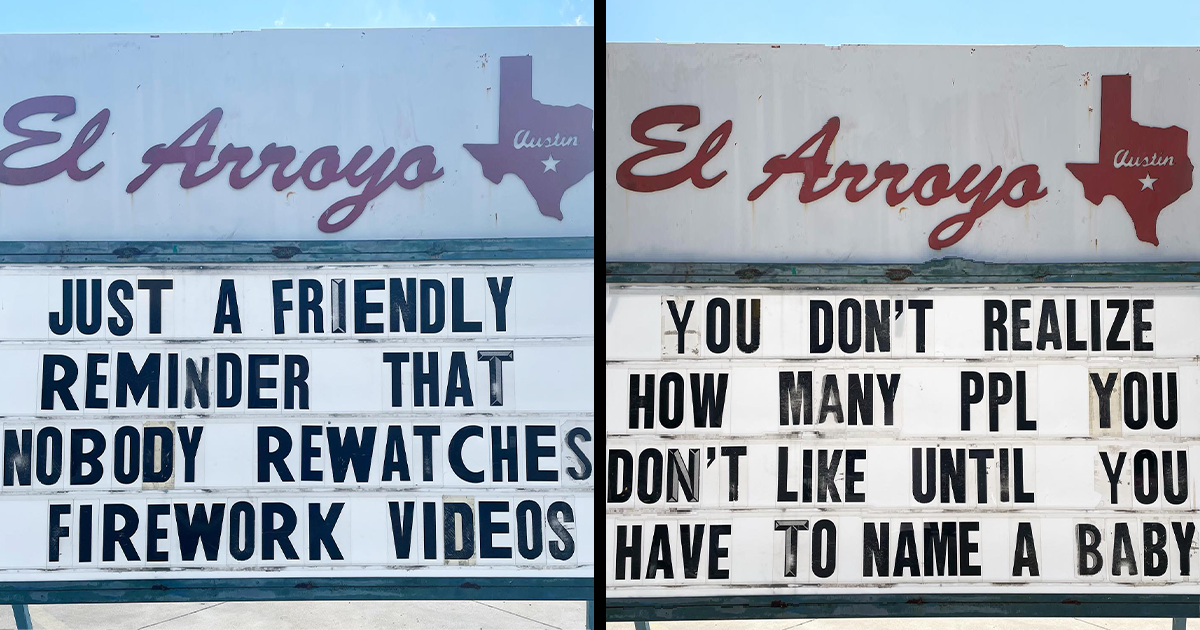
The best-known example is El Arroyo, the Austin, Texas Tex-Mex restaurant whose black-and-white marquee has become almost as recognizable as the food. For years, its signs have served up short jokes, clever one-liners, puns, pop culture nods, and painfully relatable observations. People do not just visit for enchiladas. They stop for the sign, take pictures, share them online, and come back to see what the restaurant will say next. In a world where ads often feel like they are chasing us around the internet wearing squeaky shoes, a funny sign feels refreshingly human.
Why Funny Restaurant Signs Work So Well
A restaurant sign is usually supposed to do something simple: tell people where the restaurant is. But a funny restaurant sign does more than point to the front door. It gives the business a personality before the host says hello. It says, “We have food, yes, but we also understand that life is ridiculous and Mondays should be illegal.”
Humor lowers the wall between a business and a customer. A plain sign says, “Lunch specials available.” A funny sign says, “Come in before your salad becomes a personal growth journey.” One informs. The other starts a relationship. That difference matters, especially in a crowded restaurant market where customers have countless choices and limited patience.
Great funny restaurant signs often share three qualities. First, they are short enough to read from a moving car or while pretending not to eavesdrop on the couple at the next table. Second, they are timely. A joke about summer heat, holiday stress, daylight saving time, or the emotional roller coaster of grocery prices lands because people are already thinking about it. Third, they feel casual, not corporate. The best ones sound like something a witty friend would text you, not something approved by a committee named “Brand Voice Optimization Team.”
The Secret Sauce: Relatable Humor
The funniest restaurant signs usually do not rely on complicated jokes. They work because they are painfully familiar. They joke about being tired, hungry, broke, caffeinated, under-caffeinated, overcommitted, or emotionally supported by chips and salsa. In other words, they speak fluent human.
A clever sign might poke fun at the universal experience of making weekend plans and immediately regretting them. Another might joke about tacos being a valid love language. Another could turn a seasonal moment into comedy, like warning customers that patio weather lasts approximately seven minutes in Texas before the sun starts acting like a villain. The humor is simple, but that simplicity is exactly why it spreads.
Relatable humor is powerful because it gives people a reason to share. When someone sees a sign that captures their mood perfectly, they do not just laugh. They think, “This is me,” then send it to three friends, two siblings, and the group chat that should have been deleted in 2019. That kind of organic sharing is marketing gold. It feels less like an advertisement and more like a tiny cultural moment.
How a Sign Becomes a Social Media Star
Funny restaurant signs are made for social media because they are visual, quick, and easy to understand. A good sign is basically a meme with parking. It needs no long explanation, no fancy production, and no influencer holding a fork at a suspicious angle. It simply stands there, says something funny, and lets people do the rest.
Restaurants that use humor well understand that the modern dining experience often begins online. Someone sees a photo of a sign, laughs, follows the restaurant, checks the menu, sends the post to a friend, and says, “We need to go here.” The sign becomes a doorway into the brand. It is not replacing good food or good service, but it is giving customers a reason to notice the place in the first place.
This is why funny signs can outperform polished ads. People expect ads to sell. They expect restaurant signs to list specials, hours, or maybe a reminder that parking in the dentist’s lot will get you towed. When a sign delivers a joke instead, it creates surprise. Surprise gets attention. Attention gets photos. Photos get shared. Shared photos bring new people through the door. Somewhere in that chain, a plate of nachos becomes involved, as nature intended.
What Makes El Arroyo’s Signs So Memorable?
El Arroyo’s sign has become legendary because it is consistent without becoming predictable. The format is simple: black letters on a white marquee. The content changes regularly. That combination creates a habit. Locals know to look. Visitors know to snap a picture. Online fans know to expect a fresh laugh.
The restaurant’s humor usually lives in the sweet spot between cheeky and friendly. It is not trying to be a stand-up special. It is not trying to win a Pulitzer for taco-related literature. It simply delivers a quick hit of wit. Some signs lean into pop culture. Some joke about food cravings. Some are sarcastic life advice. Some feel like the inside voice everyone has during a long workday but is too polite to say out loud.
The result is a brand identity that feels local, informal, and alive. The sign makes the restaurant feel like a person with a sense of humor, not just a business with a menu. That matters because diners remember feelings. They may forget the exact price of the margarita special, but they remember laughing before they even walked inside.
Funny Signs Turn Waiting Into Part of the Experience
No one loves waiting for a table. Even the calmest person can become dramatic after twenty minutes of smelling fajitas they cannot yet legally access. Funny signs help soften that wait. They give people something to look at, talk about, and photograph. Instead of staring at the host stand like a betrayed Victorian ghost, guests can laugh, point, and start forming an opinion about the restaurant’s personality.
That pre-meal mood matters. A guest who arrives amused is already more open to enjoying the experience. Humor creates warmth. It suggests the restaurant does not take itself too seriously, even if it takes the food seriously. That balance is especially valuable for casual dining spots, bars, diners, coffee shops, food trucks, and neighborhood restaurants where vibe can be just as important as the menu.
Of course, a funny sign cannot rescue cold fries, rude service, or a bathroom that looks like it lost a wrestling match. But when the basics are solid, humor becomes a multiplier. It makes a good visit more memorable. It gives customers a story to tell. It turns an ordinary dinner into, “You have to see the sign outside this place.”
The Best Types of Funny Restaurant Signs
1. Food Puns That Know They Are Ridiculous
Food puns are the comfort food of restaurant humor. They are cheesy, dependable, and occasionally better after midnight. Taco puns, burger jokes, coffee wordplay, and pizza one-liners work because they connect directly to what customers are already craving. A sign that makes people groan and laugh at the same time is doing its job.
2. Seasonal Jokes
Seasonal humor gives signs a built-in freshness. Summer signs can joke about heat, iced drinks, and patio bravery. Fall signs can roast pumpkin spice without angering its very powerful fan club. Winter signs can sympathize with holiday shopping, family gatherings, and the ancient human need for soup. Seasonal signs feel current, which gives people another reason to keep checking back.
3. Pop Culture References
A well-timed pop culture joke can make a restaurant feel plugged into the moment. The trick is to keep it broad enough that most people understand it. If a sign requires a full documentary, three Reddit threads, and a cousin who works in entertainment law to decode it, the joke may be doing too much.
4. Sarcastic Life Advice
Some of the funniest signs are basically tiny therapy sessions with better snacks. They joke about procrastination, adult responsibilities, bad decisions, and the healing power of queso. This kind of humor works because it captures everyday chaos in a few words. It also gives customers permission to laugh at themselves, which is much cheaper than actual therapy and often comes with chips.
5. Community-Based Humor
Local jokes can be especially strong. A restaurant that jokes about city traffic, neighborhood quirks, local weather, college rivalries, or regional slang instantly feels rooted in its community. These signs tell regulars, “We live here too. We know exactly what this parking situation is doing to your soul.”
Why People Come Back Just to Read Them
The phrase “go back just to read them” sounds exaggerated until you understand how habit works. When a restaurant changes its sign often, it creates a low-stakes reason to return. You might not be hungry every time you pass by, but you still look. Then one day you are hungry, and guess which restaurant is already living rent-free in your brain?
This is brand memory at its most charming. The sign becomes a recurring character in people’s routines. Commuters notice it on the way to work. Locals point it out to visiting friends. Tourists add it to their must-see list. Social media followers check in from states away. A simple marquee becomes part of the restaurant’s identity, and that identity becomes part of the community’s daily entertainment.
There is also a collectible quality to funny signs. People want to capture the newest one. They want to be the first to post it. They want to say, “I saw this in person.” That turns a restaurant into a photo opportunity, and photo opportunities matter in a culture where experiences are often remembered through images.
What Other Restaurants Can Learn From This
Not every restaurant needs to become a comedy factory. A fine-dining restaurant probably should not put “Come in, we have forks and emotional baggage” on a marble sign outside. Brand fit matters. But every restaurant can learn from the principle behind funny signage: customers connect with personality.
A bakery might use sweet, cozy humor. A burger joint can be bold and playful. A coffee shop can lean into caffeine jokes with the intensity of someone who has not slept since Tuesday. A family restaurant can keep it warm and wholesome. A bar can be a little sharper, as long as it does not cross into mean-spirited territory. The best humor feels like an extension of the business, not a costume it puts on for attention.
Restaurants should also remember that jokes age quickly. A sign that was hilarious last month may feel stale today. Rotating the message keeps the humor fresh and trains customers to keep looking. It is the same reason people return to a favorite comic strip, podcast, or social media account. They want the next laugh.
Where Funny Signs Can Go Wrong
Humor is powerful, but it is not risk-free. A funny restaurant sign should be clever, not cruel. It should punch up, not make customers feel mocked. It should avoid sensitive tragedies, stereotypes, personal attacks, or anything that makes the reader think, “Wow, I suddenly want lunch somewhere else.”
The safest signs tend to focus on shared experiences: hunger, weather, coffee, traffic, holidays, pets, procrastination, and the emotional complexity of choosing between tacos and nachos. The more universal the joke, the more likely it is to land. The more targeted the joke, the more careful it needs to be.
Editing matters too. A sign with a typo can be funny if the typo is the joke. If it is accidental, customers may wonder what else the restaurant is not proofreading. A good funny sign should look intentional, clean, and easy to read. The joke should be the star, not the font size.
The 50 New Pics Effect: Why We Never Get Tired of These Signs
A collection of 50 funny restaurant sign pictures works because each sign is a tiny reward. You scroll, laugh, scroll again, laugh again, and suddenly you have spent ten minutes enjoying jokes from a restaurant you may never have visited. That is the beauty of visual humor: it travels.
These signs also remind us that restaurants are more than places where food is exchanged for money. They are social spaces. They are date-night backdrops, birthday headquarters, road-trip stops, lunch-break escapes, and places where friends debate whether ordering a second appetizer is “too much” even though everyone knows the answer is no. A funny sign taps into that human side of dining.
In a competitive market, being memorable is half the battle. A funny restaurant sign gives people something to remember before the first bite. If the food is good, the service is warm, and the sign keeps delivering laughs, customers do not just return. They bring someone with them.
Experience Notes: What It Feels Like to Visit a Restaurant Famous for Funny Signs
There is a special kind of joy in discovering a restaurant sign that makes you laugh before you even park. The experience starts outside, which is unusual because most restaurants make you wait until at least the menu to develop feelings. With a funny sign, the mood shifts immediately. You are no longer simply walking into a restaurant. You are entering a place that has already made a joke at street level, which is bold considering street level has seen everything.
Imagine arriving with friends and spotting a marquee that perfectly captures your collective exhaustion after a long week. Someone reads it out loud. Someone else says, “That is literally you.” A third person takes a picture before anyone can move. Suddenly, the restaurant has given the group a shared moment before the chips hit the table. That small laugh becomes part of the meal’s memory.
The sign also changes how people talk about the visit later. Instead of saying, “We tried that Tex-Mex place,” they say, “We went to the place with the hilarious sign.” That description is stronger because it is specific. It gives the restaurant a hook. The food may be delicious, but many restaurants have delicious food. Not every restaurant has a marquee that understands your relationship with carbs.
For travelers, funny signs can become mini landmarks. You might not know the neighborhood well, but you remember the restaurant that made you laugh at a stoplight. You may even take a detour later just to see if the sign changed. That is the kind of marketing money cannot easily buy because it is driven by curiosity. The sign becomes a living part of the city, like a mural, a weird statue, or that one intersection everyone complains about but secretly loves.
For regulars, the sign becomes a ritual. They look for it on commutes. They send pictures to friends. They judge whether today’s joke is better than yesterday’s. They develop opinions, because humans can develop opinions about anything, including salsa thickness and marquee timing. Over time, the sign becomes part of the restaurant’s relationship with its customers. It says, “We are still here. We are still joking. Come eat.”
From a customer-experience perspective, that matters. A funny sign creates anticipation. It makes the restaurant feel active and cared for. It shows that someone behind the business is paying attention to the world, the community, and the mood of the moment. Even if the joke is silly, the effort feels personal.
The best part is that the humor does not need to be perfect. In fact, a slightly corny sign can be even better because it feels approachable. Nobody wants a restaurant sign that acts superior. People want the sign equivalent of a friendly server who says, “Great choice,” when you order fries for the table and then also fries for yourself. Funny restaurant signs work because they are not trying too hard to impress. They are trying to make the day a little lighter.
And that is why people go back. Not only for the tacos, burgers, coffee, pancakes, pizza, or fries, but for the feeling that the place has a pulse. A restaurant with a funny sign is telling customers, “We know you are busy. We know the world is a lot. Here is a joke. Also, we have queso.” Honestly, that is a pretty strong business plan.
Conclusion
Funny restaurant signs prove that great marketing does not always need a huge budget, a glossy campaign, or a thirty-second video with dramatic slow-motion cheese pulls. Sometimes, all it takes is a simple marquee, a sharp joke, and the courage to let a restaurant sound like a real person.
The reason these signs keep winning attention is simple: they make people feel something before they buy anything. They create laughter, curiosity, recognition, and a sense of connection. They turn a restaurant from “that place on the corner” into “the place with the hilarious sign.” In an industry where customers are looking for value, experience, and personality, that kind of memory is priceless.
Whether you are a diner who loves a good pun or a restaurant owner wondering how to stand out, the lesson is clear. Good food brings people in. Good service brings them back. But a funny sign? That might make them pull over, take a picture, tag their friends, and decide that dinner plans have officially changed.