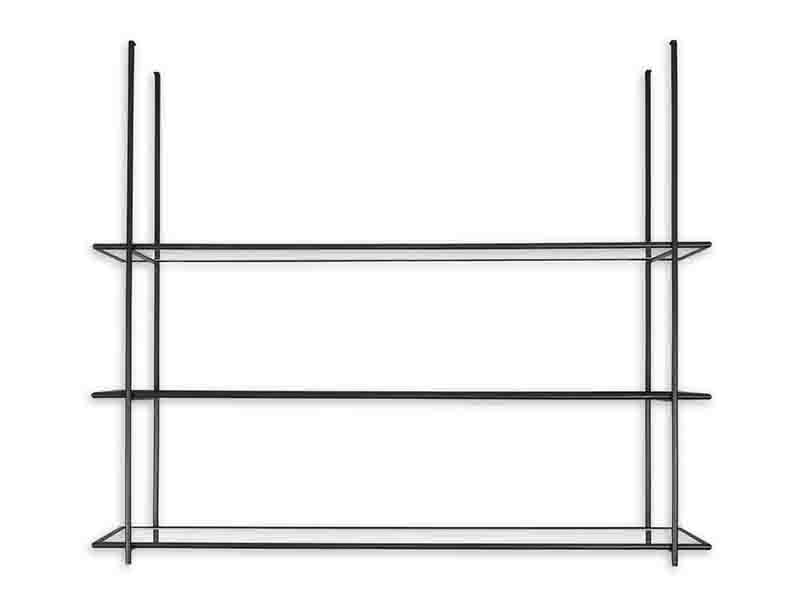
The Riviera Shelving Unit is what happens when practical storage decides it is tired of hiding in the b ceiling-mounted profile, this architectural shelving system turns glasses, dishes, books, and decorative objects into part of the room’s design.
Unlike an ordinary bookcase that arrives in a large cardboard box and immediately consumes several square feet of floor space, the Riviera is configured for a specific location. It can hang against a wall, rise above a countertop, or float over a kitchen island. The result feels lighter than traditional cabinetry while still providing meaningful storage.
That elegant openness comes with responsibilities, of course. Everything on display must behave itself. Your beautiful ceramic bowls may finally receive the attention they deserve, while the collection of mismatched plastic cups will need to find a discreet cabinet elsewhere.
What Is the Riviera Shelving Unit?
The Riviera Shelving Unit is a customizable ceiling-mounted storage system produced by Iron Abode. Its framework is made from round steel, and buyers can configure the dimensions, shelf count, shelf material, mounting position, and finish. The system may be installed flush against a wall or suspended over a counter or island, making it suitable for kitchens, home bars, offices, laundry rooms, and bathrooms. manufacturer offers glass, metal, walnut, and white-oak shelf choices, along with multiple metal finishes. Iron Abode describes its shelving as made to order in Idaho, with fabrication steps including welding, sanding, finishing, and packing completed through its workshop. Shelving System Rather Than a Standard Bookcase
The key word is system. The Riviera is not simply a fixed-width shelf that must be squeezed into an available opening. Its height, width, depth, shelf material, and number of tiers can be selected according to the room.
This flexibility is especially useful in awkward areas. A narrow coffee station may need only two shallow shelves. A long wet bar might benefit from a wider three-tier arrangement. A kitchen island could support a suspended unit that stores glassware without creating a visual wall between the cooking and dining areas.
Customization also reduces the familiar renovation problem of finding a product that is nearly perfect but two inches too wide, four inches too short, and somehow emotionally committed to the wrong shade of brass.
Why the Riviera Design Stands Out
It Uses Vertical Space Without Occupying the Floor
Floor space is valuable, particularly in compact kitchens, home offices, and multipurpose rooms. Because the Riviera mounts above a counter or connects to the ceiling, it can add storage without introducing another freestanding cabinet.
This creates a visually lighter arrangement than solid upper cabinetry. Open shelving can make a room feel airier because the wall, backsplash, or window remains visible through the structure. Designers also use suspended shelves over islands because they place frequently used items near the work surface without completely blocking sightlines. ound Steel Softens the Industrial Look
Metal shelving is often associated with restaurant kitchens, garages, or workshops. The Riviera’s round uprights and refined finishes give the structure a more decorative character. It still has an architectural presence, but it does not look as though it arrived from a warehouse loading dock.
In black, the framework can create a crisp graphic outline against pale tile or painted walls. Brass-toned finishes feel warmer and more traditional, particularly beside walnut shelves, marble counters, or aged-metal fixtures. Nickel and chrome finishes can complement cooler kitchens with stainless-steel appliances or gray stone.
It Can Be Both Storage and a Focal Point
Traditional cabinetry is designed primarily to disappear into the room. The Riviera does the opposite. Its visible framework helps define a coffee bar, beverage station, kitchen island, or office wall as a distinct destination.
That makes the unit particularly effective in open-plan interiors. A suspended shelving system can establish a visual boundary without building a full-height partition. It quietly announces, “This is the bar area,” without requiring a sign, velvet rope, or bartender named Sebastian.
Choosing the Right Shelf Material
Glass Shelves
Glass creates the lightest visual effect. It allows illumination to pass between levels and keeps decorative tile, wallpaper, stone, or windows visible behind the unit. Glass is a strong choice for displaying stemware, bottles, ceramics, and collectibles because the shelf itself does not compete for attention.
It also pairs naturally with brass or black metal. Design publications frequently recommend glass-and-brass combinations when homeowners want open shelving to feel polished rather than rustic. tradeoff is maintenance. Fingerprints, dust, and water spots are easier to see on clear glass. Displayed glassware should be dried with a clean, lint-free towel to reduce spotting, and the shelves will need routine wiping. alnut Shelves
Walnut gives the Riviera a richer, moodier personality. Its darker grain adds visual weight and works particularly well in a home bar, library, dining room, or office. Walnut with aged brass can feel traditional and luxurious, while walnut with black framing leans more contemporary.
Wood also hides minor dust and fingerprints more effectively than glass. However, spills should be cleaned promptly, especially near sinks or beverage stations. Use a slightly damp microfiber cloth and a product intended for finished wood rather than soaking the surface or attacking it with an all-purpose cleaner powerful enough to remove memories.
White-Oak Shelves
White oak introduces warmth while maintaining a bright, relaxed appearance. It complements cream cabinets, handmade tile, pale stone, natural textiles, and modern organic interiors. The lighter tone can also soften black framing, preventing the unit from feeling overly industrial.
For Scandinavian, coastal, transitional, or contemporary farmhouse rooms, white oak is often the easiest material to integrate. It looks substantial without making the wall feel heavy.
Metal Shelves
Metal provides the most streamlined and utilitarian option. It can suit minimalist kitchens, retail-inspired displays, modern offices, or rooms where durability matters more than visual softness.
A metal-on-metal configuration creates a strong architectural statement, so it works best when the surrounding room has enough warmth from wood floors, textiles, art, or natural stone. Otherwise, the space may begin applying for a permit to manufacture laboratory equipment.
Where a Riviera Shelving Unit Works Best
Above a Kitchen Counter
Installed against a backsplash, the unit can replace a section of upper cabinetry and keep everyday dishes, bowls, drinking glasses, and serving pieces within reach. This placement works especially well around a coffee maker, prep sink, or breakfast station.
Open storage is most practical when it holds objects used frequently. Regular rotation helps prevent dishes from becoming dusty decorations. Less attractive items, packaged foods, cleaning supplies, and chaotic collections of lids are better kept behind doors. ver a Kitchen Island
A suspended Riviera unit above an island can create a dramatic focal point while preserving visibility across the room. It may hold attractive cookware, serving pieces, glassware, or a restrained collection of decorative objects.
Scale is critical in this location. The unit should feel proportional to the island without hanging so low that it obstructs conversation or becomes an obstacle for tall family members. Shelf depth should also be considered carefully so stored objects remain secure and do not extend into the working area.
In a Home Bar
The home bar may be the Riviera’s natural habitat. Glass shelves display bottles and stemware beautifully, while walnut introduces the atmosphere of a classic cocktail lounge. A mirrored, tiled, painted, or stone backsplash can remain visible behind the open framework.
Keep frequently used bottles on the lower level and decorative or occasional pieces above. Arrange glassware in repeated rows and leave breathing room between groups. The goal is “thoughtful cocktail station,” not “airport duty-free shop during inventory week.”
At a Coffee Station
A compact two- or three-tier unit can turn an unused countertop into an intentional coffee bar. Store mugs, beans, filters, tea canisters, and small serving pieces above the machine. A tray on the counter can organize syrups and spoons while protecting the work surface from drips.
In an Office or Library
With wood shelves, the Riviera can hold books, storage boxes, framed photographs, awards, or product samples. Because the framework extends upward, it can visually increase the height of a room and give an ordinary wall a built-in appearance.
Books are heavier than glassware and decorative objects, so loading limits and structural attachment require careful attention. A professional installer should verify the ceiling structure and confirm the approved capacity of the chosen configuration.
In a Bathroom or Laundry Room
Open shelves can store folded towels, glass jars, baskets, and attractive daily essentials. Materials should be selected for the room’s humidity, and wood should have an appropriate sealed finish. Glass and metal are easy to wipe down, although every visible cotton swab will suddenly believe it is part of an art installation.
Planning and Installation Considerations
Measure the Entire Composition
Do not measure only the available wall width. Record ceiling height, counter depth, backsplash height, nearby cabinet doors, lighting positions, outlets, vents, windows, and walking clearances.
Next, list what the shelves must hold. Tall bottles, large bowls, art books, and stemware all require different vertical spacing. A beautiful shelving unit becomes less charming when your favorite decanter is half an inch too tall.
Confirm Structural Support
A ceiling-mounted unit must connect to suitable framing or another approved structural support. The weight calculation should include the steel framework, shelves, and everything placed on them. General shelf-installation guidance recommends fastening significant loads into structural framing whenever possible rather than depending only on drywall anchors. ause the Riviera is customized and may be installed in several configurations, follow the manufacturer’s instructions for the exact model. Hire a qualified contractor when ceiling framing, concealed utilities, tile, stone, or unusual mounting conditions are involved.
Coordinate With Lighting and Electrical Plans
Suspended shelves and pendant lights often compete for the same ceiling territory. Their positions should be planned together, not introduced to each other during installation.
Integrated or nearby lighting can make glassware sparkle and improve task visibility. However, electrical work should be completed by a qualified professional, and light fixtures must not interfere with shelf access or create excessive heat around stored objects.
Order Finish Samples
Metal finishes can look dramatically different under warm bulbs, daylight, and cool LED lighting. They may also respond differently beside cabinet hardware, faucets, appliances, or stone veining. A physical sample is more reliable than judging a finish from a phone screen set to maximum brightness at midnight.
How to Style the Riviera Shelving Unit
Start With Functional Anchors
Place the objects you use most often first. In a kitchen, that may be plates, bowls, mugs, and glasses. In a bar, begin with bottles, decanters, and stemware. In an office, start with books and storage boxes.
Functional items create a believable foundation. Decorative pieces should enhance that arrangement rather than turn the shelf into a museum exhibit no one is permitted to touch.
Repeat Colors and Materials
A limited palette helps open shelving appear organized. Repeat white ceramics, amber glass, dark wood, or brass details across multiple levels. Grouping related objects and maintaining color connections are common designer strategies for creating cohesion. ary Object Heights
Combine low stacks of dishes with taller pitchers, vases, artwork, or bottles. Varying heights encourages the eye to move across the display and prevents every shelf from resembling a supermarket product lineup. eave Empty Space
Open space is not wasted space. It separates groups, highlights special objects, and makes the entire unit easier to clean. When every inch is filled, even beautiful belongings can read as clutter.
Add One Unexpected Object
A small painting, sculptural piece, vintage tray, framed recipe, or quirky family treasure adds personality. Perfectly coordinated shelves can feel sterile; one surprising object signals that an actual person lives in the home rather than a highly organized committee.
Pros and Potential Drawbacks
Advantages
- Custom dimensions can fit unusual walls, counters, islands, and niches.
- The ceiling-mounted profile preserves floor space.
- Open construction allows light and sightlines to pass through.
- Multiple shelf materials and metal finishes support different interior styles.
- The unit can function as storage, display, and architectural decoration.
- Frequently used items remain visible and accessible.
Considerations
- Professional installation may be appropriate or necessary.
- Open shelves require regular dusting and editing.
- Glass reveals fingerprints and water spots.
- Displayed objects must remain reasonably organized.
- A customized premium system may cost more than mass-market shelving.
- Future layout changes may require ceiling or wall repairs.
Open shelving is therefore best used selectively. A Riviera unit can complement closed cabinetry rather than replace every hidden storage area. That balance provides a beautiful display zone while preserving somewhere to hide the blender attachments, novelty mugs, and container lids that have rejected all known systems of government.
Real-World Experience With a Riviera-Style Shelving Unit
The most important lesson from living with a ceiling-mounted open shelving unit is that planning matters more than decorating. Styling can be changed in an afternoon; mounting points, shelf spacing, and overall dimensions are considerably less spontaneous.
Before selecting a configuration, I would place painter’s tape on the wall and ceiling to outline the proposed width and height. Then I would stand at the counter, walk around the island, open nearby cabinet doors, and look through the taped outline from several angles. A drawing may say the dimensions are perfect, while a full-size mock-up may reveal that the unit feels too wide, blocks a light fixture, or sits directly in the sightline of someone seated nearby.
The next useful step would be gathering the actual objects intended for display. For a coffee station, that could include mugs, bean canisters, a teapot, a stack of small plates, and a serving tray. For a home bar, it might include the tallest bottle, widest decanter, largest cocktail shaker, and several types of stemware. Measuring real belongings is more reliable than guessing that “normal shelf spacing” will work.
Once installed, the first styling attempt would probably include too much. This is normal. Open shelving inspires otherwise sensible adults to display every attractive object they have owned since college. The better approach is to fill the shelves, take a photograph, and remove roughly one-quarter of the contents. Photographs make clutter easier to notice because they flatten the arrangement into a single composition.
Daily use also changes the design. Items that look ideal on the top shelf may prove annoying to retrieve. Delicate stemware may be safer at eye level than above head height. Heavy stacks of dishes belong on lower shelves, where they are easier to lift and place. Decorative objects can occupy higher areas because they require less frequent handling.
Cleaning is simpler when the display is edited. A microfiber cloth can move around grouped objects without requiring a full archaeological excavation. Glass shelves benefit from frequent light cleaning rather than occasional heroic scrubbing. Wood shelves should be wiped promptly after spills, especially around coffee machines, sinks, and cocktail stations.
Lighting is another detail that becomes more important after installation. Glass shelves can look beautiful during the day but disappear into a dark corner at night. A nearby sconce, concealed LED source, or carefully positioned ceiling light can give the unit depth and make displayed glassware glow. The lighting should illuminate the shelves without shining directly into the eyes of someone sitting at the island.
Over time, the best feature of a Riviera-style unit may be its ability to change character. White dishes and clear glass create a quiet everyday look. Colorful ceramics can make the same structure feel playful. Art, greenery, cookbooks, or seasonal branches can refresh it without replacing furniture.
The practical verdict is straightforward: this kind of shelving rewards people who enjoy visible organization and thoughtful display. It may frustrate anyone who prefers to put things away quickly and close a door. Used in the right location, however, the Riviera Shelving Unit offers something ordinary cabinets rarely providea storage solution that also gives the room a recognizable architectural identity.
Final Thoughts
The Riviera Shelving Unit is more than a place to put objects. Its round-steel framework, customizable dimensions, ceiling-mounted structure, and choice of glass, wood, or metal shelves allow it to become part of the architecture.
It is particularly effective above kitchen counters, islands, home bars, and coffee stations, where open storage can improve access while creating a strong visual feature. Success depends on accurate measurement, secure structural installation, realistic shelf spacing, and disciplined styling.
Choose glass when openness and light are priorities, walnut for depth and luxury, white oak for natural warmth, or metal for a clean contemporary statement. Then display fewer objects than you think you need. The Riviera looks best when it has room to breatheand when no one asks it to store seventeen reusable water bottles in seventeen unrelated colors.
Note: Available configurations, finishes, manufacturing lead times, prices, and installation requirements may change. Confirm current specifications and structural requirements with the manufacturer and a qualified installer before ordering.