Note: This article is written for publication and synthesizes real workplace safety, inclusion, health, design, and employee-experience research without copying source text.
Introduction: When the Office Feels Like It Was Designed by Someone Who Never Wore a Skirt
Some office problems announce themselves loudly: broken elevators, mystery smells in the break room, or a printer that behaves like it was raised by wolves. Others are quieter but far more personal. A staircase with see-through steps. A glass-walled meeting room where everyone can watch you sit, stand, stretch, or adjust your clothes. A restroom tucked at the end of a dim hallway. A freezing thermostat set to “Arctic finance bro.”
For many women, office discomfort is not one single dramatic event. It is a stack of tiny design choices, social habits, outdated policies, and workplace blind spots that quietly say, “This place was not built with you in mind.” The result is not just annoyance. It affects focus, confidence, safety, health, and belonging. An uncomfortable office can make women spend extra mental energy managing visibility, clothing, tone, temperature, personal safety, and other people’s reactionsbefore they even open their laptop.
This guide explores 29 things that make offices uncomfortable for women, from transparent staircases and open-plan seating to harassment, unequal housekeeping expectations, poor lactation spaces, bad lighting, and the eternal war over the thermostat. Some examples are physical. Some are cultural. All of them deserve attention because a workplace that works for women usually works better for everyone.
29 Things That Make Offices Uncomfortable For Women
1. See-Through Stairs That Turn Walking Into a Public Performance
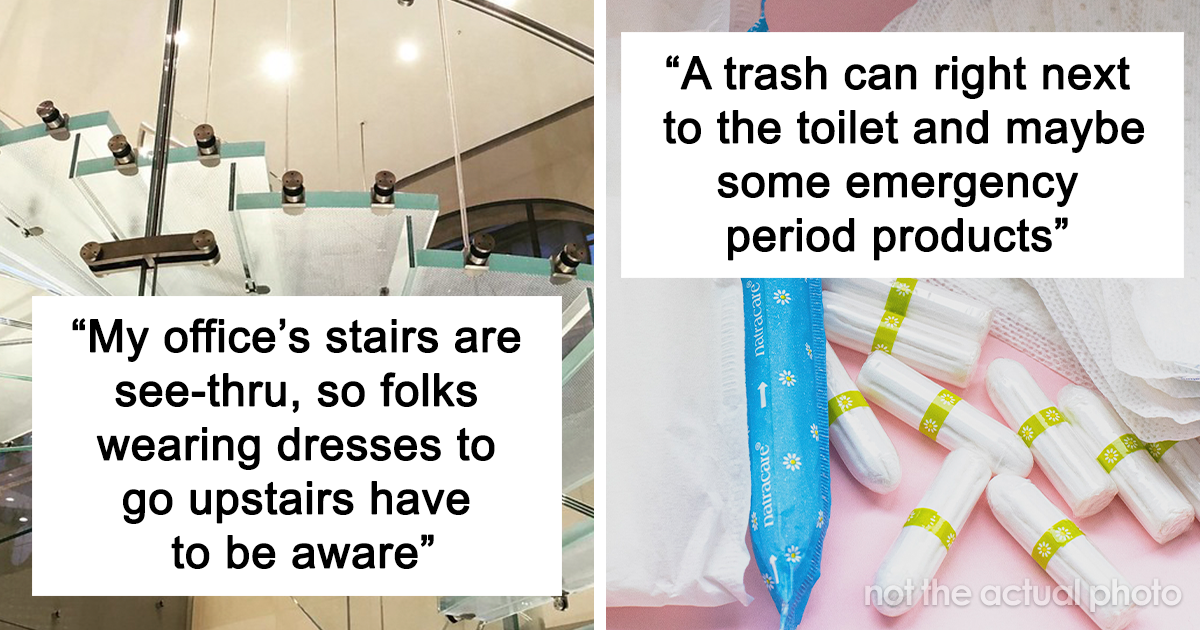
Glass or grated stairs may look modern in an architecture rendering, but for women wearing skirts, dresses, or certain uniforms, they can feel like a privacy trap. Nobody should have to plan their outfit around whether coworkers below can see upward. Stylish design should never come at the cost of basic dignity.
2. Glass Walls Everywhere
Transparent offices are often marketed as “open” and “collaborative,” but constant visibility can feel like surveillance. Women may feel watched while eating, stretching, making a private call, or simply existing. A little opacity is not anti-teamwork; it is pro-human.
3. Open-Plan Desks With No Escape
Open offices can make concentration difficult for everyone, but women often deal with an extra layer of appearance scrutiny and interruption. When there is nowhere private to reset after a tense conversation or uncomfortable interaction, the office becomes less like a workplace and more like a fishbowl with Wi-Fi.
4. Workstations Designed Around the “Average Man”
Desk height, chair depth, monitor position, and keyboard placement often assume a body size that does not fit many women. Poor ergonomics can lead to shoulder strain, back pain, wrist discomfort, and the classic office pose known as “shrimp at a laptop.” Adjustable furniture is not a luxury perk; it is basic workplace design.
5. Office Temperatures Set Too Cold
The “women are always cold” joke is tired, but the problem is real. Many offices are cooled based on older assumptions about metabolism, clothing, and comfort. When employees are typing with frozen fingers and wearing coats indoors, productivity has left the building and is warming up in the parking lot.
6. Poor Lighting in Parking Areas and Entrances
A beautiful lobby does not matter much if the parking garage feels like a suspense movie. Dim entrances, isolated stairwells, broken lights, and long walks to transit stops can make women feel unsafe, especially during early mornings, late nights, or winter evenings.
7. Restrooms That Are Too Far Away
Restroom access affects comfort, health, pregnancy, menstruation, menopause, disability, and basic human functioning. If the women’s restroom is two floors away, frequently out of supplies, or located in a deserted area, the message is clear: planning forgot half the workforce.
8. Restrooms With Gaps, Broken Locks, or No Supplies
A workplace restroom should not feel like a camping trip. Broken stall locks, huge door gaps, missing sanitary bins, empty soap dispensers, and no menstrual products create unnecessary stress. Privacy and hygiene are not fancy extras; they are minimum standards.
9. No Safe, Private Lactation Space
A bathroom is not a lactation room. Nursing employees need a private, functional, clean space that is shielded from view and free from intrusion. A supply closet with a folding chair and a mop named Kevin is not a solution.
10. Dress Codes That Police Women More Than Men
Vague rules like “dress professionally” can become a double standard. Women may be judged for outfits that are too formal, too casual, too feminine, not feminine enough, too bright, too fitted, or apparently offensive to the office cardigan council. Dress codes should be specific, fair, job-related, and applied consistently.
11. Being Told to Smile
Few phrases make a workday feel less professional than “You should smile more.” It turns a woman’s face into office décor. Employees are hired to do work, solve problems, lead projects, support clients, and thinknot to provide decorative cheerfulness on command.
12. Interruptions in Meetings
Being talked over, repeated by someone else, or ignored until a man says the same idea louder can make meetings exhausting. It is not only rude; it changes whose ideas get credit and whose leadership is noticed.
13. “Office Housework” Automatically Falling to Women
Taking notes, ordering lunch, organizing birthdays, cleaning conference rooms, mentoring everyone, and remembering who is allergic to walnuts often lands on women by default. These tasks matter, but when they are invisible and unequal, they drain time from higher-value work.
14. Being Mistaken for the Assistant
Women leaders, engineers, doctors, executives, attorneys, and technical experts still get mistaken for support staff. Administrative work is valuable, but assumptions based on gender are not. The uncomfortable part is not the role; it is the reflexive downgrade.
15. Too Many Comments About Appearance
Compliments can be kind, but constant commentary about hair, makeup, weight, clothes, pregnancy, or “looking tired” becomes intrusive. A good rule: if the comment would sound strange in a performance review, maybe let it retire peacefully.
16. Client or Customer Harassment
Women in offices with customer-facing roles may face flirtation, inappropriate jokes, personal questions, or aggressive behavior from clients. Employers should not excuse bad conduct because “that client spends a lot.” Revenue is not a permission slip for harassment.
17. Travel Policies That Ignore Safety
Business travel can be especially uncomfortable when policies ignore late arrivals, unsafe hotel locations, ride-share concerns, or pressure to attend alcohol-heavy events. A thoughtful travel policy considers safety, not just the cheapest flight with a layover in Regret City.
18. After-Hours Events Centered on Alcohol
Networking matters, but when every bonding opportunity happens at a bar, women may face uncomfortable attention, exclusion, or pressure to participate. Inclusive culture offers more than one way to build relationships.
19. Weak Reporting Systems
If employees do not trust HR, managers, or anonymous reporting channels, problems stay hidden. A policy buried in a handbook is not enough. Workers need clear procedures, protection from retaliation, and visible follow-through.
20. Retaliation After Speaking Up
Sometimes the most uncomfortable part is not the original incident; it is what happens after. Being labeled “difficult,” excluded from meetings, denied opportunities, or treated like a walking legal risk discourages women from reporting problems.
21. Microaggressions That Add Up
One dismissive comment may seem small. A year of them becomes heavy. Women, especially women of color, LGBTQ+ women, disabled women, and women with accents, may carry an “emotional tax” from constantly preparing for bias, correcting assumptions, or deciding whether a comment is worth addressing.
22. Poor Acoustics and No Confidential Spaces
If everyone can hear every call, privacy disappears. Women may need confidential conversations about health, caregiving, harassment, pay, pregnancy, or family emergencies. A workplace with no quiet room forces personal life into public airspace.
23. Cameras and Video Calls That Magnify Appearance Pressure
Remote and hybrid work did not eliminate discomfort; it moved some of it onto screens. Women may face pressure to look polished on camera, reveal their homes, or absorb comments about their appearance. “Camera on” should not become “beauty pageant with spreadsheets.”
24. Menstrual Needs Treated Like a Secret Mission
Periods are normal. Yet many offices still make menstruating employees sneak products into sleeves, search for supplies, or deal with pain without flexibility. Stocked restrooms, flexible breaks, and normal language go a long way.
25. Pregnancy Accommodations Treated as Special Favors
Pregnant workers may need water, seating, restroom breaks, schedule changes, temporary task adjustments, or time for appointments. These needs are not evidence of low commitment. They are normal accommodations that help people keep working safely.
26. Menopause Being Invisible
Hot flashes, sleep disruption, migraines, brain fog, and anxiety can affect work. Yet menopause is often treated as unmentionable. A mature workplace can discuss temperature, flexibility, and health accommodations without turning into a middle-school health class.
27. Leadership Rooms Where Women Are “Only One”
Being the only woman in a meeting, department, or leadership team can create pressure to represent all women while also proving individual competence. That pressure intensifies when mistakes are remembered longer and successes are treated as exceptions.
28. Promotions Decided in Informal Circles
If opportunities are shared during golf, late drinks, private chats, or old-boys’ networks, women can be left out even when official policies sound fair. Fair advancement requires transparent criteria, sponsorship, and access to stretch assignments.
29. A Culture That Treats Discomfort as Oversensitivity
The fastest way to make a workplace worse is to dismiss concerns as “not a big deal.” Transparent stairs, bad lighting, crude jokes, freezing rooms, and constant interruptions may seem separate, but together they shape whether women feel respected. Comfort is not weakness. It is a condition for doing good work.
Why These Office Problems Matter
It is tempting to treat workplace discomfort as personal preference. One person likes open offices; another wants a door. One person loves cold air; another is wrapped in a blanket like a corporate burrito. But many of the issues women describe are not simply preferences. They are patterns created by design decisions, power dynamics, and assumptions about who the “default worker” is.
When women feel exposed, unsafe, cold, unheard, or unsupported, they may spend more time managing the workplace than doing the work. They may avoid certain staircases, skip networking events, stay silent in meetings, delay restroom breaks, dress defensively, or stop reporting problems. These small adaptations are often invisible to leadership, but they cost energy.
The business case is obvious: uncomfortable employees are less likely to be engaged, creative, loyal, and productive. The human case is even stronger: people deserve workplaces that do not make them feel like guests in a building designed for someone else.
How Employers Can Make Offices More Comfortable For Women
Audit the Physical Space
Walk through the office from the perspective of different employees. Look at stair visibility, restroom access, lighting, private rooms, lactation spaces, parking areas, temperature zones, and furniture adjustability. Ask practical questions: Can someone make a private call? Can a pregnant employee sit when needed? Can a nursing employee pump without being interrupted? Can someone safely leave after dark?
Create Clear Behavior Standards
Respectful workplace culture should not depend on guessing. Employers need clear standards about harassment, appearance comments, meeting behavior, retaliation, customer conduct, and digital communication. Managers should be trained to respond early, not only after a formal complaint lands with a legal thud.
Make Reporting Trustworthy
A reporting channel only works when employees believe it is safe. That means confidentiality where possible, anti-retaliation enforcement, timely investigation, and visible accountability. “We take this seriously” should be a process, not a decorative sentence.
Design for Flexibility
No single office setup fits everyone. The best workplaces offer choices: quiet rooms, collaboration areas, private call booths, adjustable furniture, flexible schedules, remote options where practical, and temperature solutions that do not require a duel over the thermostat.
Measure What Actually Happens
Surveys, listening sessions, exit interviews, promotion data, pay reviews, and facility complaints can reveal whether policies are working. If women keep reporting the same problems, the office does not need another inspirational poster. It needs a fix.
Real-World Experiences: What These Office Discomforts Can Feel Like
Imagine arriving at work in a dress because you have a client presentation. You step into the lobby and remember the main staircase is made of glass. It looked impressive during the office tour, all sleek lines and “innovation energy.” But now you are calculating whether anyone below can see up, whether you should take the elevator, and whether being late is better than feeling exposed. The day has barely started, and the building has already asked you to solve a privacy puzzle.
Then comes the open office. Your desk faces a walkway, so every person passing by can glance at your screen, your lunch, your posture, your face. You put on headphones, but someone still taps your shoulder to ask if you can “quickly” help organize a team lunch. You are not on the admin team. You are leading a project. Still, somehow, the sandwich spreadsheet has found you.
At 10 a.m., the conference room is freezing. The men in suit jackets seem fine. You are trying to explain a budget forecast while your hands are cold enough to be legally classified as office supplies. Someone jokes, “Women are always cold.” Everyone laughs. You smile politely because correcting the joke would take more energy than you have before coffee number two.
At noon, you need the restroom, but the nearest women’s restroom is out of supplies again. The stall lock is broken, and the trash bin is missing. None of this is dramatic enough for a crisis meeting, yet it is exactly the kind of thing that makes employees feel overlooked. Facilities problems become culture problems when they repeatedly affect the same people and remain unfixed.
Later, in a meeting, you suggest a solution. The room moves on. Ten minutes later, a male colleague repeats the same idea with slightly more bass in his voice, and suddenly it is brilliant. You wonder whether to point it out. If you do, you risk sounding bitter. If you do not, your idea walks away wearing someone else’s name tag.
After work, the team heads to a bar for “optional” networking. Optional, in office language, sometimes means “not required, but mysteriously important.” You go because promotions often grow in informal soil. A client makes a comment about your appearance. Your manager laughs it off because the client is valuable. You spend the ride home replaying the moment and wondering whether saying something would hurt your reputation more than his behavior hurt the evening.
These experiences are not always headline-worthy, but that is the point. Office discomfort often lives in the ordinary. It is the staircase, the thermostat, the joke, the meeting interruption, the restroom, the networking event, the camera-on expectation, the manager who says, “That is just how he is.” Over time, ordinary discomfort becomes a retention issue. People do not always leave because of one terrible day. Sometimes they leave because the workplace keeps asking them to tolerate small indignities and call them culture.
The better version is not complicated. Cover the stairs. Frost the glass where privacy matters. Fix the locks. Stock the restrooms. Provide real lactation rooms. Train managers. Share office housework. Credit ideas accurately. Make advancement transparent. Offer quiet spaces. Take complaints seriously. Stop treating women’s comfort as an optional upgrade, like premium coffee or the chair in the lobby nobody is allowed to sit in.
A comfortable office is not one where nobody ever feels awkward. Humans are awkward; we invented reply-all. A comfortable office is one where the organization notices friction and removes it where possible. It is a workplace where women do not have to plan their day around avoiding exposure, being interrupted, staying warm, finding privacy, or deciding whether basic respect is worth requesting.
When offices are designed with women in mind, the benefits spread. Better lighting helps everyone. Private rooms help everyone. Adjustable furniture helps everyone. Fair meeting norms help everyone. Strong anti-harassment systems help everyone. Inclusive design is not a favor to women; it is a smarter way to build workplaces for actual humans instead of imaginary employees who never menstruate, pump milk, get cold, need privacy, travel late, or wear clothing affected by transparent stairs.
Conclusion: The Best Offices Do Not Make Women Shrink Themselves
The uncomfortable office is rarely the result of one villain twirling a mustache beside a glass staircase. More often, it is the result of small decisions made without enough input from the people affected by them. See-through stairs, freezing rooms, poor lighting, weak reporting systems, unfair dress codes, and invisible office housework all point to the same issue: workplaces need to stop designing around assumptions and start designing around real employees.
Women should not have to choose between professionalism and comfort, visibility and safety, ambition and health, teamwork and privacy. A truly modern office is not the one with the flashiest staircase or the most glass. It is the one where people can do excellent work without constantly managing avoidable discomfort. And yes, that may mean adding privacy film to the stairs. The building will survive. So will the design team’s ego.