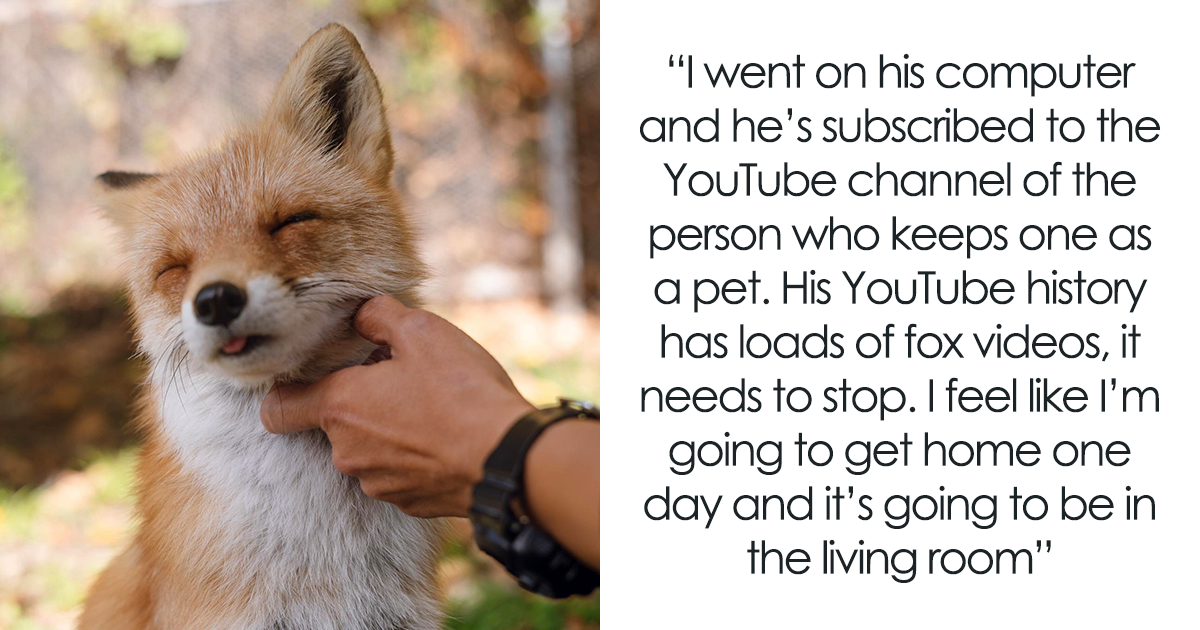
Somewhere in America right now, a man is staring out the window like he’s in a nature documentary. A fox trots across the yardtail
high, confidence higherand his brain immediately goes: I can fix him.
His wife, meanwhile, is doing a different kind of math: How many ways can a wild animal ruin my carpets, my sleep, and my marriage?
The answer is: more than you’d think… and in more jurisdictions than you’d expect, it’s also illegal.
This article isn’t here to shame anyone for loving foxes. Foxes are fascinatingsmart, adaptable, and way too stylish for an animal that
sometimes eats garbage like it’s a five-star buffet. But “wanting a fox” and “living with a fox” are two different realities. One is a cute idea
you say out loud. The other is a lifestyle choice that smells like territory-marking and sounds like midnight screaming.
Let’s break down what it really means to “domesticate” a wild fox, why your spouse is not being dramatic, and the safer (and frankly
more peaceful) ways to enjoy fox energy without turning your home into a wildlife incident report.
First: Tame Isn't Domesticated (and a Backyard Fox Isn't a Puppy)
When people say “domesticate,” they usually mean, “Can it live in my house and act like a pet?” Real domestication is much bigger than
socializing one animal. It’s a long-term process across many generations where humans select animals for traits like reduced fear,
reduced aggression, and compatibility with living alongside people.
The famous fox domestication research (often called the “Russian fox experiment”) is a perfect example of why this matters. In that study,
foxes were selectively bred for tameness generation after generation. Over time, the tamest foxes became more dog-like in behavior and
even developed physical changes that commonly show up in domesticated species.
That’s the key point: those foxes were purpose-bred over many generations. A wild fox you found near the trash cans is not part of a
decades-long breeding programhe’s part of an ecosystem. You can sometimes tame a wild animal to tolerate people, but you don’t
“domesticate” it in a weekend with hot dogs and positive vibes.
Why your wife's instinct is correct
A wild fox is wired for survival: escaping, hiding, hunting, scent-marking, and staying alert. A house is full of hazards from a fox’s
perspectivestairs, windows, cords, cleaners, pets, guests, and that one suspicious Roomba that is obviously a predator.
The Legal Reality Check: Fox Ownership Laws Are Complicated (and Wild-Caught Is Often a No)
In many places, keeping native wildlife is restricted or outright illegal. Even when fox ownership is allowed, it may require permits, special
enclosures, inspections, or strict rules about where the animal can be housed and whether it can be transported.
Translation: before you buy a tiny collar and start brainstorming names like “Copper,” you need to know whether your state (and county,
and city) will treat your fox dream as “quirky pet choice” or “sir, step away from the wildlife.”
Permits and enforcement aren't a joke
-
Some states require permits to keep certain wildlife as personal pets, and the permit is tied to a specific addressnot your
“we’re just trying it out” phase. -
Some states regulate enclosure standards for captive foxes, including size, shelter, and safety requirements designed to prevent
escapes and protect animal welfare. - Local rules can be stricter than state rules. You can be “legal” at the state level and still be breaking city ordinances.
Here’s the biggest legal and ethical line you shouldn’t cross: capturing a wild fox and trying to keep it. Wildlife agencies and
rehabilitators repeatedly emphasize that wild animals are not petsand removing them from the wild can be illegal, dangerous, and
harmful to the animal.
Health & Safety: Rabies, Distemper, Parasites, and the “Bite Problem” Nobody Posts on Instagram
Foxes are not cartoon sidekicks. They’re wild canids. That means they can carry diseases that matter to humans and pets, and they can
bite when stressed, cornered, or overstimulated. It’s not about foxes being “mean.” It’s about foxes being foxes.
Rabies is the big one (and it changes everything)
Rabies is rare in humans in the U.S., but it’s still a public health emergency because it is nearly always fatal once symptoms begin. Wildlife
remain the main source of rabies cases reported in animals, and foxes are among the wildlife species involved in exposure risk.
Here’s where pet-fox ownership gets especially messy: rabies vaccines are not licensed for use in wild animals. Some veterinarians may
use rabies vaccines “off-label” in captive foxes, but public health authorities may still treat a biting fox as unvaccinated because the vaccine
isn’t approved for that species. That can affect quarantine rules and, in worst-case scenarios, lead to euthanasia requirements after a bite
or exposureespecially if officials believe the animal may have been exposed to rabies.
Distemper and other canine diseases
Foxes can also be vulnerable to canine diseases like distemper, which affects many species. Even if your household pets are vaccinated,
a fox’s medical needs are different, and not every vet is equipped (or willing) to treat an exotic canid. Exotic vet care can be limited, costly,
and far awaymeaning the “cute fox plan” can quickly become the “three-hour drive for a specialty appointment” plan.
Parasites and zoonotic risks
Wild canids can carry parasites and pathogens that may affect people and pets, especially if sanitation and preventive veterinary care aren’t
consistent. That’s not fearmongeringit’s basic wildlife biology. The more “wild” the fox, the more unknown variables you’re inviting into a
living room where toddlers crawl and dogs lick everything like it’s their job (because it is).
Household Reality: Odor, Marking, Noise, Destruction, and Escape Artist Olympics
If your spouse is worried about having a fox indoors, she’s not being “anti-fun.” She’s being “pro-furniture.”
Foxes mark territory, and it smells strong
Foxes have a natural urge to mark. Even captive foxes may scent-mark with urine and gland secretions. And fox odor isn’t a “light candle,
crack a window” situation. Many people who consider foxes as pets are surprised by how powerful and persistent the smell can be,
particularly in indoor environments.
They dig, chew, climb, and redecorate (without your permission)
Foxes are curious and athletic. In a house, that translates to:
- Digging at carpet corners like they’re trying to reach the Earth’s core
- Chewing household items (including things you like and things that can electrocute them)
- Scaling baby gates with the confidence of a tiny, fluffy parkour coach
- Finding gaps in fences that you didn’t even know existed
Nocturnal-ish lifestyle meets human sleep needs
Many foxes are most active at dawn and dusk, and can be surprisingly noisyespecially when stressed, excited, or calling. The “fox scream”
is not a gentle woodland sound. It’s more like a spooky karaoke performance that starts exactly when you finally fall asleep.
Housing standards are closer to “secure outdoor enclosure” than “dog bed by the couch”
In places where captive foxes are permitted, enclosure requirements tend to assume an outdoor setup designed to prevent escape, provide
shelter, and support welfare. That’s already a major commitmentand it’s before you factor in enrichment, daily cleaning, and the reality
that foxes can be stressed by constant indoor activity.
Animal Welfare: The Fox Doesn't Want Your Life (It Wants Its Life)
The emotional truth underneath this debate is simple: a wild fox isn’t waiting for a human family to “complete” its story. It is already living
the life it evolved to livehunting, roaming, learning, and interacting with its environment on its own terms.
Wildlife rehabilitators and conservation groups emphasize that rehabilitation is about returning wild animals to the wildnot turning them
into pets. Even well-meaning people can harm an animal by habituating it to humans, feeding it improperly, or keeping it in conditions that
don’t meet its needs.
Habituation can be a death sentence
A fox that becomes too comfortable around humans may approach homes, pets, and roads more often. That increases the chance of being
hit by a car, attacked by dogs, trapped as a nuisance animal, or euthanized after conflicts. “Love” can accidentally teach a fox the wrong
lessons for survival.
The Marriage Side: Why This Isn't Just About a Fox
On paper, this argument looks like “man wants fox, wife says no.” In real life, it’s usually about:
- Safety (kids, guests, pets, bites, disease protocols)
- Home boundaries (cleanliness, smell, damage, noise)
- Emotional labor (who cleans, who schedules vet care, who handles emergencies)
- Consent (a house pet should be a two-yes, one-no decision)
A wild fox isn’t like adding a plant to your kitchen window. It’s more like adding a part-time demolition crew that requires permits, a
specialty doctor, and constant supervision.
A practical way to talk about it without starting World War III
- Start with the shared goal: “We both want to do what’s safe and humane.”
- Define the non-negotiables: No wild-caught animals. No illegal possession. No indoor fox.
- Price the fantasy: enclosure build, vet access, permits, insurance, ongoing food and enrichment costs, emergency plans.
- Agree on alternatives that still feel meaningful (see below).
If the fox dream survives that conversation, it becomes a “long-term research project,” not a surprise animal in the hallway.
Better Alternatives: How to Love Foxes Without Bringing One Home
If what you love is the idea of foxessmart, curious, wildthere are ways to keep that connection without forcing a fox into a human
lifestyle.
Options that don't end with animal control at your door
-
Volunteer or donate to licensed wildlife rehabilitators or conservation organizations. You support fox care without trying to
convert wildlife into roommates. -
Improve your yard for wildlife viewing (without feeding): keep trash secure, avoid rodenticides, and create a safer habitat.
Enjoy fox sightings the way nature intended: from a respectful distance. -
Work with a humane wildlife professional if foxes are causing issues (like denning under a shed). Coexistence strategies are
often available. -
Adopt a dog with “fox vibes” if what you want is the look and the companionship. Plenty of dog breeds deliver the pointy ears
and fluffy tail without the legal and public health complications.
If You've Already Found a Fox You're Tempted to "Save"
If the fox is injured, orphaned, or behaving strangely, the best move isn’t to bring it inside. The best move is to contact local animal
control, your state wildlife agency, or a licensed wildlife rehabilitator. Many young animals that look abandoned are not truly orphaned, and
human interference can make outcomes worse.
And if the fox is healthy and simply existing near your home? Enjoy the moment, take a photo, and let it go about its business. The most
loving thing you can do is let wildlife stay wild.
Conclusion: The Fox Is Cute. The Consequences Are Not.
Your husband isn’t wrong for being enchanted. Foxes are captivating. But your wife isn’t wrong for saying, “Absolutely not in this house.”
When you add up the legality, disease protocols, enclosure demands, odor, behavior, vet limitations, and welfare concerns, “domesticating a
wild fox” stops sounding like a charming hobby and starts sounding like an expensive, stressful experiment that the fox didn’t consent to.
If you want a home filled with companionship, choose an animal that has evolved for it. If you want to love foxes, love them the way they
are: wild, free, and best admired from a respectful distancepreferably while your furniture remains intact.
Experiences That Come Up Again and Again (What People Learn the Hard Way)
The stories below are not “my personal adventures with a fox” (I don’t keep animals). They’re common experiences described by wildlife
rehabilitators, exotic veterinarians, and long-time captive fox ownersshared here as realistic snapshots of what tends to happen when a
household tries to turn a fox into a typical pet.
1) The smell surprise that no one warned them about (except everyone did)
One of the most repeated “I didn’t realize” moments is the scent-marking reality. A couple may start out optimisticair purifiers, enzyme
cleaners, the whole setuponly to discover that fox odor is not like wet dog. It’s stronger, more persistent, and deeply tied to natural fox
behavior. Owners often describe a turning point when a guest politely says, “Oh… you have an animal,” the second they walk in.
That’s usually when the dream stops being aesthetic and starts being logistical.
2) The midnight noise phase (also known as: "Why is it screaming?")
Another frequent experience: the first time a fox vocalizes loudly at night. People expect cute chirps and playful yips. Instead, they get a
sound that can be mistaken for a person yelling in the distance. Some owners say this is the moment their neighbors begin texting:
“Everything okay over there?” The household then realizes: even if the fox is technically allowed, it doesn’t mean the neighborhood is
emotionally prepared.
3) The “perfectly trained” fox that still can’t be trusted like a dog
Many owners report a humbling pattern: they can bond with a fox, teach basic routines, and create enrichment schedulesand still face
sudden fear responses. A loud sneeze, a guest entering quickly, a dog barking from the other room… and the fox bolts, bites, hides, or
panics. It’s not malice. It’s the fox’s nervous system doing what it was built to do. This unpredictability is why experienced handlers keep
emphasizing secure enclosures, controlled introductions, and realistic expectations.
4) The bite incident that becomes a legal and public-health nightmare
Exotic vets and public health guidance often intersect in the worst possible way after a bite. People are shocked to learn thateven if a vet
gave a rabies vaccine off-labelauthorities may still treat the fox as unvaccinated because the vaccine isn’t licensed for that species.
That’s when a family realizes the stakes: a single bite can trigger quarantine orders, legal scrutiny, or requirements that feel heartbreaking.
Owners frequently describe this as the moment they wish they had chosen a domesticated pet with straightforward, well-established public
health protocols.
5) The relationship stress nobody budgets for
Couples also describe the emotional toll: who cleans the enclosure, who handles the smell, who answers the door when a delivery driver is
startled, who stays home when the fox can’t be boarded easily. Often, the partner who didn’t want the fox ends up carrying the stress
anywaybecause the home is shared, and the consequences don’t stay neatly in one person’s hobby lane.
6) The happiest outcomes often come from letting the fox stay wild
Finally, many people describe a shift from “I want to own a fox” to “I want to protect foxes.” Some install better trash lids, stop feeding
wildlife, remove hazards, and learn coexistence strategies. They still get the magic of spotting a fox at duskwithout forcing that fox to live
under fluorescent lights and human schedules. That kind of “experience” is quieter, but it lasts longerand it’s the one wildlife professionals
tend to cheer for.