What happens when a Wes Anderson family of eccentric overachievers wanders into a 1970s New York romantic comedy and everybody decides to order a beer?
You get something surprisingly close to the original Easy Tiger Bake Shop & Beer Garden in Austin, Texasa hospitality concept that once combined artisan bread, German-influenced food, craft beer, ping-pong, vintage furniture, theatrical color, and just enough preppy oddness to make the whole place feel as though it had a complicated backstory.
The unlikely creative recipe came from designer Veronica Koltuniak, whose background in film-set decoration helped her approach the space less like a conventional restaurant and more like a character. For the original Easy Tiger interiors, she drew inspiration from two movies that seem, at first glance, to belong in completely different conversations: The Royal Tenenbaums and Annie Hall. The result blended Upper East Side sporting-club polish, eccentric cinematic details, a relaxed European-style beer garden, and Austin’s famously casual social energy.
It sounds like a design dare. Somehow, it worked.
When Two Very Different Movies Walk Into a Beer Garden
There is an obvious question here: What could The Royal Tenenbaums and Annie Hall possibly have in common?
One is associated with Wes Anderson’s meticulously composed world of dysfunctional privilege, faded grandeur, saturated color, vintage objects, sporting references, and people who dress as though they chose one outfit in 1974 and simply committed to it forever. The other is a New York romantic comedy whose title character became a fashion icon through an apparently effortless mix of menswear, loose trousers, vests, ties, hats, and intellectual downtown cool.
Yet both films understand something important about style: personality is more memorable than perfection.
Annie Hall helped turn Diane Keaton’s layered menswear-inspired wardrobe into one of American cinema’s most recognizable fashion statements. Film historians and the Academy have repeatedly noted the character’s eclectic style, while retrospectives continue to highlight the vests, ties, wide-legged pants, hats, and preppy references that made her look feel individual rather than trend-driven.
The Royal Tenenbaums, meanwhile, is part of a broader Wes Anderson design language built around distinctive color, character-driven interiors, nostalgic objects, and visually controlled worlds. Even Anderson’s longtime collaborators have described set decoration as a process of building a space around personality, memory, and tone rather than merely filling a room with attractive furniture.
Put those ideas together and the connection becomes clearer. Both influences favor the specific over the generic. Both make old-fashioned details feel strangely fresh. Both understand the charm of a spaceor a personthat is a little formal, a little rumpled, and completely comfortable being itself.
The Original Easy Tiger: Bread Upstairs, Beer Downstairs
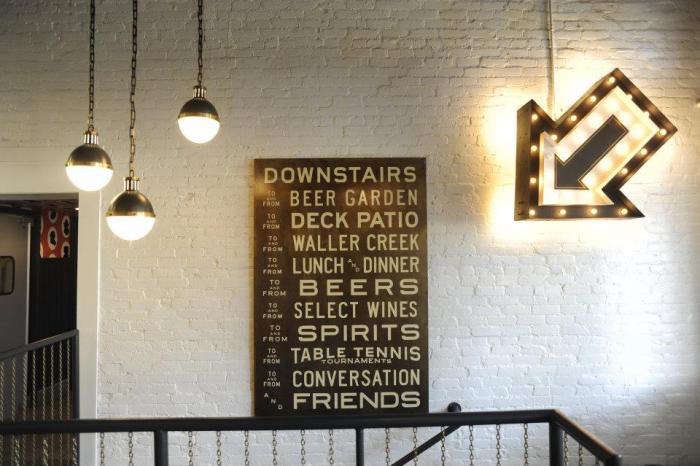
The original Easy Tiger occupied a two-story historic building at 709 East Sixth Street in Austin. It opened in 2012 with a concept that was easy to explain and difficult not to love: bakery plus beer garden. Upstairs, customers could grab breads and pastries. Downstairs, the pub and outdoor area offered beer, sausages, cured meats, and a setting designed for lingering rather than rushing through a meal. Contemporary coverage described the property as combining a bakery, restaurant, and beer garden in a late-19th-century building near Waller Creek.
The cleverest part was that the two halves were not as unrelated as they sounded.
The unifying idea was yeast.
Beer and bread are ancient cousins, and Easy Tiger built an entire hospitality experience around that relationship. One minute you could be considering a pastry; the next, a pretzel and beer suddenly seemed like a perfectly responsible dinner. This is the sort of culinary logic that deserves respect.
The original location eventually became known for its combination of artisan bread, sausages, charcuterie, numerous beer taps, communal outdoor seating, and an atmosphere that encouraged people to stay. Its first downtown location closed permanently in 2020, so the design discussed here should be understood as the influential original Easy Tiger space rather than a description of the current 709 East Sixth Street property.
How The Royal Tenenbaums Entered the Room
French Pink Without the Sugar Rush
One of the most memorable elements of the original design was the use of deep French pink, including at the bakery counter. Pink can be dangerous territory in hospitality design. Use too little and it feels accidental. Use too much and suddenly the room appears to be selling cupcakes exclusively to unicorns.
Here, the shade worked because it was balanced by darker, tougher materials and more restrained architectural elements. Rather than becoming sugary, the color behaved like a dramatic costume piece. It brought warmth, eccentricity, and a slightly theatrical quality associated with the richly colored interiors that helped make The Royal Tenenbaums visually unforgettable.
The same playful influence appeared in cameo-patterned wallpaper set against a pink background. It was a decorative wink rather than a movie-theme-park recreation. Nobody needed a cardboard cutout of Richie Tenenbaum standing next to the restroom. The inspiration was translated, not copied.
Objects That Look Like They Have Stories
Great film sets rarely feel as though everything arrived from the same furniture catalog on Tuesday morning. The original Easy Tiger shared that layered quality.
Existing Spanish Colonial-style wooden chairs were reportedly retained, stripped down, and given a dark treatment rather than automatically discarded. That decision gave the room texture and history. Newness was not the goal. Character was.
This is one of the smartest lessons restaurant designers can take from cinema. A memorable room often needs irregularity: a chair with an unexpected silhouette, a surface that shows grain, a lamp that makes people look twice. When everything is perfectly coordinated, the space can become visually silent.
Easy Tiger was not silent.
Where Annie Hall Meets the Tennis Club
If The Royal Tenenbaums supplied some of the color and eccentricity, Annie Hall helped make sense of the preppy, athletic, old-New-York side of the concept.
Koltuniak’s design was described as a mashup involving an Upper East Side tennis-club aesthetic. That idea appeared through sporting references that were deliberately playful rather than literal. Pendant lights were painted to resemble tennis balls. A vintage wooden tennis racket became part of a lampshade. Ping-pong tables extended the recreational atmosphere into the guest experience.
It is exactly the kind of design move that can go terribly wrong if executed without confidence.
A sports-themed restaurant can easily become a warehouse of jerseys, televisions, and framed objects that nobody remembers five minutes after leaving. Easy Tiger took another route. The sporting references functioned like props in a film. They suggested a social world: perhaps an old club, perhaps a summer tournament, perhaps an eccentric family with a suspicious number of trophies in storage.
The details created a mood rather than delivering a lecture.
The Beer Garden as the Great Social Equalizer
Traditional beer gardens have long been defined by more than beer. Their enduring appeal comes from communal tables, outdoor shade, informal food, and the possibility of spending hours in the company of friends and strangers. Historic and contemporary beer-garden spaces repeatedly rely on this social architecture: long tables, open air, simple food, and an atmosphere where sitting together is part of the experience rather than an inconvenience.
The original Easy Tiger translated that idea into an Austin setting.
Its outdoor area featured picnic-style tables with varied dark staining patterns rather than a uniform furniture package. Ivy spilled into the courtyard. Ping-pong introduced movement. Beer and food made staying easy. The surrounding environment added the kind of looseness that cannot be manufactured with a motivational sign reading, “Please Relax Now.”
This mattered because the strongest feature of the design was not a particular wallpaper or chair. It was the way the environment supported behavior.
You could arrive for bread and stay for beer. You could meet one friend and end up sharing a table with six people. You could play ping-pong badly enough to generate entertainment for the entire courtyard. The design created reasons to remain.
Why the Mashup Worked
It Used Inspiration Instead of Imitation
A film-inspired restaurant does not need to resemble a movie set. In fact, direct imitation usually ages quickly. Guests may enjoy recognizing a reference once, but they return because the place feels good.
Easy Tiger borrowed design attitudes rather than simply recreating scenes.
From The Royal Tenenbaums: saturated color, odd combinations, faded-preppy energy, visual humor, and an affection for objects that appear to have histories.
From Annie Hall: relaxed menswear sensibility, New York intellectual cool, informal prep, and the confidence to mix polished and rumpled elements.
From the beer-garden tradition: communal seating, outdoor sociability, beer, hearty food, and permission to linger.
From Austin: informality, experimentation, and a refusal to become overly precious about any of the above.
That combination produced something more useful than a theme. It produced an identity.
The Concept Connected Food and Interior Design
The bakery and beer garden could have felt like two unrelated businesses sharing rent. Instead, the yeast concept connected the menu at a fundamental level.
That same logic carried into the design. The bakery could be bright, quick, and convenient, while the lower pub and garden encouraged a slower rhythm. Different spaces served different moments without breaking the overall story.
Good hospitality design does not merely photograph well. It helps guests understand what to do.
Grab this. Walk there. Sit here. Order another. Stay awhile.
That is choreography disguised as casual fun.
Design Lessons Worth StealingPolitely
1. Begin With a Story, Not a Shopping List
Buying attractive chairs, lights, and wallpaper is not the same as designing a memorable restaurant. Start with a world. Who belongs there? What mood should guests feel? What references can guide decisions without becoming obvious decoration?
A strong story helps answer practical questions. A color is no longer simply “pretty”; it either belongs in the world or it does not.
2. Mix High and Low
One reason the Easy Tiger concept felt lively was the tension between refinement and casualness. Deep pink sat beside darker industrial surfaces. Vintage references met straightforward picnic tables. Carefully considered interiors coexisted with beer, sausages, and ping-pong.
Contrast creates energy.
3. Give Guests Something to Do
Hospitality spaces often focus entirely on eating and drinking, but social activities can transform the mood. Ping-pong is not merely a decorative accessory. It changes how long people stay, how groups interact, and how a courtyard sounds.
The best experiential design sometimes begins with a simple question: After guests sit down, what happens next?
4. Let Imperfection Carry Some of the Charm
Uniformity is easy to specify and easy to forget. Varied table treatments, reused furniture, climbing greenery, and eccentric objects can create the impression that a place has evolved rather than arrived fully assembled from a warehouse.
Of course, “intentionally imperfect” still requires intention. There is a fine line between charmingly layered and “we found all this behind the building.”
The Experience: Entering a Movie-Inspired Beer Garden Without Entering a Movie Set
The most interesting way to understand a place like the original Easy Tiger is through the guest journey. Not as a checklist of design features, but as a sequence of small discoveries.
Imagine approaching a historic building on East Sixth Street expecting one thing and immediately receiving several possibilities. There is bread. There is beer. There is food. There is a garden. Somewhere, a ping-pong ball is probably escaping beneath a table.
The experience begins with contrast.
Upstairs, the bakery side suggests movement. You notice pastries, loaves, counters, and the promise that you could complete a quick transaction and continue with your day like a highly organized adult.
Then the rest of the place interferes with your schedule.
You head downstairs and the mood changes. The building begins to feel less like a shop and more like a private club that has relaxed its membership rules. Darker surfaces and vintage-inspired details meet strange flashes of color. A pink counter or patterned wall catches your eye. The visual language is polished but not stiff.
Then comes the garden.
Outdoor beer gardens have a psychological advantage over ordinary dining rooms: they make staying feel harmless. Another twenty minutes seems reasonable. Then another round arrives. Someone suggests ping-pong. A friend claims to have “played competitively,” which turns out to mean there was a table in a cousin’s basement sometime around 2008.
The communal tables also change the experience. A conventional restaurant tends to preserve the borders of each group. A beer garden softens them. Bags are moved. Benches are shared. Someone asks whether a seat is free. Another person wants to know what you ordered. Social contact occurs without requiring a formal introduction or an app.
That is where the film-inspired design earns its keep.
The Royal Tenenbaums influence is not valuable because guests can identify a particular shade of pink. It is valuable because the eccentricity makes the place feel as though something has already happened there. The room seems to possess memory.
The Annie Hall influence works in a similarly indirect way. There is a preppy, slightly intellectual looseness to the imagined atmosphere: tennis-club references without actual country-club behavior, vintage style without a demand that anyone dress correctly, sophistication that has loosened its tie.
And the food-and-drink concept keeps everything grounded. A dramatic interior can become exhausting when every object is begging for attention. Bread, beer, sausages, shared tables, and straightforward pleasures bring the experience back to earth.
You do not need to understand the references to enjoy the place.
That may be the ultimate test of successful themed design.
A guest who loves Wes Anderson can notice the color and visual wit. A fashion enthusiast can recognize the relaxed preppy spirit associated with Annie Hall. A design professional can study the reused furniture and playful lighting. Another person can ignore all of this, order a pretzel, drink a beer, and attempt to defeat a friend at ping-pong.
Everyone gets a different version of the same room.
That layered experience is difficult to achieve because it depends on restraint. Add too many film references and the restaurant becomes a fan exhibition. Add too much German beer-hall imagery and it becomes a costume party. Add too much polished design and guests may become afraid to move a chair.
The original Easy Tiger concept found its charm in the overlap.
It was cinematic without requiring a screenplay. Preppy without being proper. German-influenced without becoming an Oktoberfest prop warehouse. Stylish without forgetting that people occasionally spill mustard.
In other words, it treated design the way the best movie characters treat clothes: as an extension of personality.
Why This Beer Garden Still Matters as a Design Idea
Restaurant trends change quickly. Colors become fashionable, furniture styles cycle through social media, and one year’s “timeless” interior can become the next year’s renovation project.
Concepts built around personality tend to last longer in memory.
The original Easy Tiger demonstrated that hospitality design can borrow from movies without becoming movie merchandise. It showed how wildly different influences can coexist when they share an emotional connection. The Royal Tenenbaums brought theatrical eccentricity. Annie Hall brought relaxed preppy individuality. Beer-garden tradition brought community. Bread and beer brought the yeast.
And Austin brought the useful reminder not to take any of it too seriously.
Perhaps that is why the question in the title remains so appealing. A beer garden inspired by The Royal Tenenbaums and Annie Hall?
Absolutely.
Just make sure there is a pink counter, a suspiciously stylish tennis racket, plenty of bread, and enough room for somebody to lose a ping-pong ball in the ivy.
Note: This article examines the design and guest experience associated with the original Easy Tiger Bake Shop & Beer Garden at 709 East Sixth Street in Austin. That original downtown location opened in 2012 and permanently closed in 2020; references to its interiors are historical.