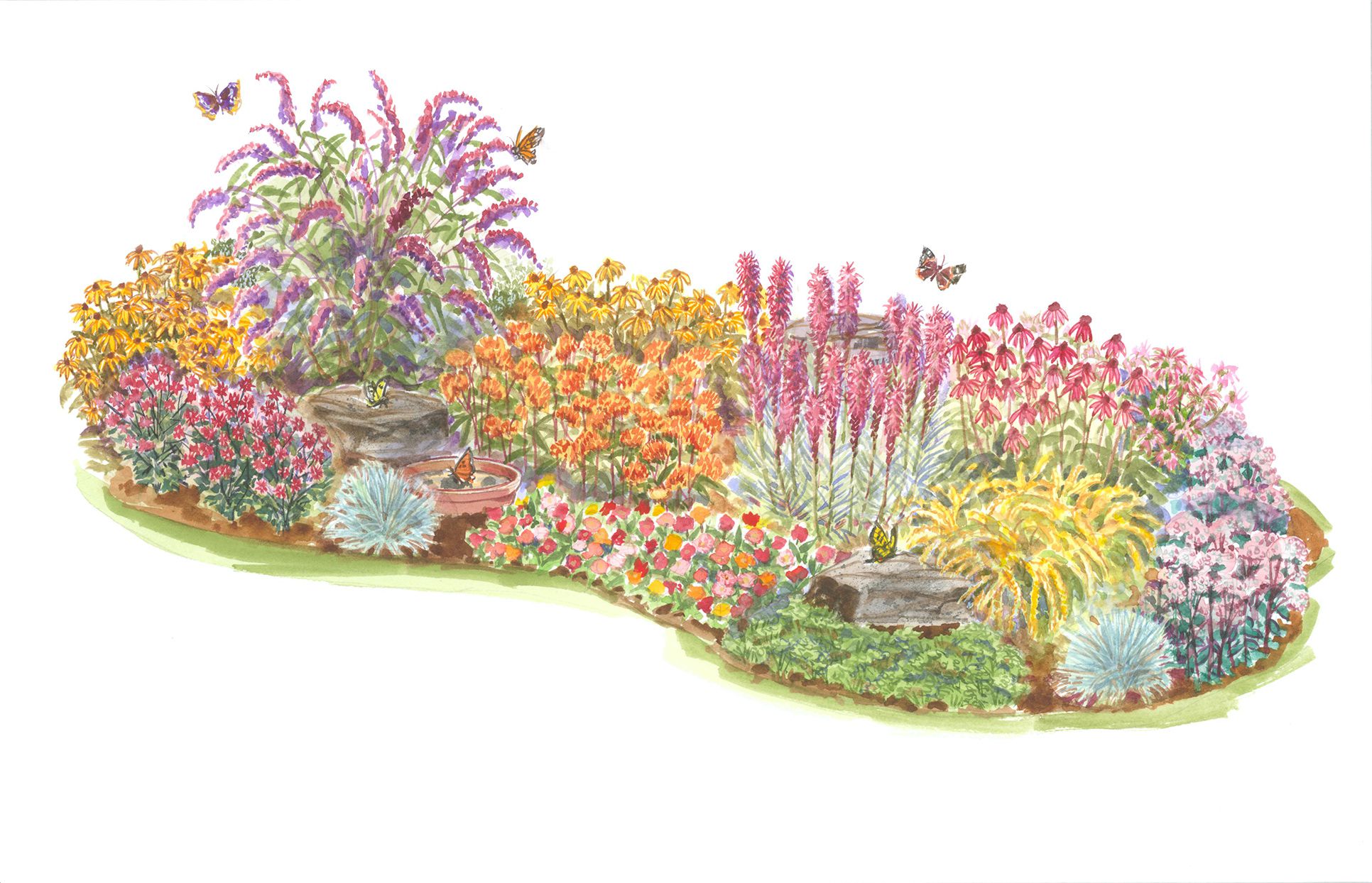
If your yard feels a little… quiet (like a library where even the squirrels whisper), you don’t need a massive
makeover to bring it to life. You need a smart, easy-care butterfly garden plan that does three things well:
feeds adult butterflies, supports hungry caterpillars, and keeps blooms coming from spring through fall.
This guide gives you a practical layout you can plant in a weekend, plus the “secret sauce” details that
separate a pretty flower bed from a true pollinator pit stop. Expect butterflies, bees, beneficial insects,
and the occasional neighbor leaning over the fence like, “So… what did you DO?”
What Butterflies Actually Need (Spoiler: It’s Not Just Flowers)
A butterfly garden works best when you design for the whole lifecycle. Adults sip nectar, but babies
(caterpillars) chew leaves like tiny, determined lawnmowers. The most successful gardens provide:
- Nectar plants with blooms in succession from spring to fall (no “all July, nothing August” gardens).
- Host plants where butterflies lay eggs and caterpillars can feed.
- Sun + shelter (butterflies love warmth and hate getting body-slammed by wind).
- Water + minerals (a simple “puddling station” can be the difference between visits and residency).
- Low-to-no pesticides (broad sprays don’t just “handle pests,” they wipe out your guests).
The Easy-Care Butterfly Garden Plan
This plan is built for real life: busy schedules, normal soil, and the fact that you’d like butterflies
without signing up for a second full-time job. It’s designed for a 10 ft x 10 ft sunny or mostly sunny bed,
but it scales down easily.
Ideal Site
- Sun: 6+ hours daily is best (morning sun is especially helpful).
- Soil: Average garden soil is fine; improve drainage if water puddles for hours after rain.
- Wind protection: A fence, hedge, or shrub line nearby makes the space feel “safe” for butterflies.
The Layout (Tall in Back, Short in Front)
Picture your garden like stadium seating: tall plants in the back so everything gets sunlight and butterflies
can “see” your buffet from a distance.
Bed size: 10 ft x 10 ft (adjust spacing if smaller)
Planting Map (Simple Grid You Can Follow)
Stand with your back to the house looking at the bed. The “back row” is farthest from you.
- Back row (tall, 4–6 ft): Joe Pye weed, native asters, goldenrod (choose well-behaved varieties), tall coneflower types.
- Middle row (mid-height, 2–4 ft): Purple coneflower, bee balm, blazing star (liatris), black-eyed Susan.
- Front edge (low, 1–2 ft): Coreopsis, yarrow, creeping phlox (where appropriate), compact milkweed, herbs (dill/parsley) in clumps or containers.
The Plant List: Easy-Care Winners That Feed Butterflies and Pollinators
The best butterfly garden plants do double duty: nectar for adults, leaves for caterpillars, and blooms that
show up reliably every year. Below is a balanced list that’s widely adaptable across many U.S. regions.
Always prioritize native options for your state when you canlocal butterflies recognize local food.
1) Host Plants (Because Butterflies Have Babies, Too)
If you want more than a quick fly-by, you need host plants. Many butterflies are picky about where they lay
eggs, and caterpillars can only eat certain plants.
- Milkweed (Asclepias spp.): Essential host for monarch caterpillars. Choose native milkweed species suited to your region.
- Dill, parsley, fennel: Host plants for swallowtails. Bonus: you can still harvest somejust accept “sharing” as a lifestyle.
- Violets (Viola spp.): Often overlooked, but important host plants for fritillaries (and they make a nice living mulch in the right spot).
- Native grasses (optional but powerful): Little bluestem or similar grasses can support skipper butterflies and add structure in winter.
2) Nectar Plants (The All-Season Buffet)
Your goal is continuous bloom, so butterflies don’t show up, shrug, and leave you on “seen.”
Spring to Early Summer
- Penstemon: Early nectar and a clean, upright look.
- Coreopsis: Bright blooms, long season, low fuss.
- Native columbine (where appropriate): A spring standout for pollinators.
Mid-Summer (Peak Butterfly Season)
- Purple coneflower (Echinacea): Reliable nectar, sturdy, drought-tolerant once established.
- Bee balm (Monarda): Big pollinator magnet; choose mildew-resistant varieties if humidity is high.
- Blazing star (Liatris): Vertical purple spikes butterflies love (also a great “design” plant).
- Black-eyed Susan (Rudbeckia): The cheerful workhorse that keeps going when other plants get dramatic.
Late Summer to Fall (The “Don’t Leave Yet” Encore)
- Native asters (Symphyotrichum spp.): A top late-season nectar source.
- Goldenrod (Solidago): Misunderstood and wildly valuable for pollinatorschoose native, garden-friendly selections.
- Joe Pye weed (Eutrochium): Tall, showy, and absolutely buzzing with life in late summer.
A Note About Butterfly Bush
“Butterfly bush” sounds like the obvious choice, but some types can be invasive depending on where you live.
If you want the same wow factor without ecological regret, pick region-appropriate native flowering shrubs or
robust perennials that provide nectar and fit into local habitat. Your local extension office or native plant
society can help you choose a truly responsible substitute.
Step-by-Step: Plant This Plan in a Weekend
Step 1: Mark Your Bed and Prep the Soil
- Outline a 10×10 area (or whatever fits your space).
- Remove grass/weeds. If you’re starting from lawn, consider sheet mulching (cardboard + compost + mulch).
- Work in 2–3 inches of compost if soil is compacted or sandy.
- Level lightly and plan for gentle drainage away from foundations.
Step 2: Plant in Clusters (Not Singles)
Butterflies are drawn to clumps of color and nectar. Plant each flower type in clusters of 3–5 (or more),
instead of one of everything like a botanical “sample platter.” You’ll get more visits and a cleaner design.
Step 3: Mulch Like You Mean It
A 2–3 inch mulch layer reduces weeds and helps soil hold moisture. Keep mulch a couple inches away from plant
crowns to prevent rot.
Step 4: Water Smart (Then Back Off)
- Weeks 1–3: Water deeply 2–3 times per week if rain is light.
- Remainder of first season: Deep water weekly (more during heat waves).
- Year 2 and beyond: Most natives and tough perennials need minimal supplemental watering once established.
Easy Add-Ons That Multiply Butterfly Visits
Create a Butterfly “Puddling Station”
Butterflies often seek minerals and moisture from damp sand or soil. You can replicate this with:
- Use a shallow dish or plant saucer.
- Fill with coarse sand (builder’s sand works well).
- Add water until damp (not a swimming pool).
- Optionally add a tiny pinch of salt or mineral-rich compost to mimic natural mineral sources.
- Keep it moist in hot weather.
Give Them a Sun Lounge
Place a few flat stones in the garden. Butterflies use them to bask and warm upbasically the patio furniture
of the insect world.
Skip the Broad-Spectrum Pesticides
If you spray the whole yard “just in case,” you may be removing the very insects you’re trying to attract.
Focus on hand-picking problem pests, targeted solutions, and letting beneficial insects do their job.
Maintenance That Stays Easy (Because You Have a Life)
Weekly (10 minutes)
- Spot-weed while you’re already out admiring your work.
- Check moisture in the first season.
- Deadhead selectively if you want more blooms (but leave some seedheads for birds in fall).
Seasonal
- Spring: Cut back dead stems once you see new growth starting. Leave some hollow stems over winter for beneficial insects when possible.
- Summer: Trim plants lightly if they flop; add a discreet support ring if needed.
- Fall: Don’t over-clean. Leaf litter and standing stems can provide overwintering habitat.
Common Butterfly Garden Mistakes (And the Fix)
Mistake: Only planting nectar flowers
Fix: Add host plants (milkweed, parsley/dill/fennel, violets). Expect some leaf damageit means the system is working.
Mistake: One big bloom window
Fix: Build bloom succession: spring, summer, late-season asters/goldenrod/Joe Pye.
Mistake: Too tidy, too sterile
Fix: Leave a little “mess” in fall and winter. Wildlife needs shelter more than it needs your garden to look like a showroom.
Quick Example: A Simple Shopping List for the 10×10 Plan
Here’s a practical starting point (adjust to your region and plant availability):
- 3 Joe Pye weed (back row focal points)
- 3–5 native asters (back row / corners)
- 3 goldenrod (back row, choose garden-friendly natives)
- 5 purple coneflower (middle row clusters)
- 3 bee balm (middle row, spaced for airflow)
- 5 black-eyed Susan (middle/front blend)
- 3 blazing star (liatris) (middle accents)
- 3 coreopsis or yarrow (front edge)
- 2–3 milkweed (front/middle where visible)
- 2 herb pots: dill + parsley (front edge, easy to swap and replace)
Conclusion: A Butterfly Garden That’s Beautiful, Functional, and Low Fuss
The easiest butterfly garden plan is the one that matches nature’s blueprint: nectar for adults, host plants
for caterpillars, blooms that overlap through the seasons, and a yard that’s friendly to the small creatures
doing big ecological work. Start with the 10×10 plan, plant in clusters, add a puddling station, and resist
the urge to “sterilize” the garden with broad sprays and constant cleanup.
Give it a little timemany perennials truly hit their stride in year two. And when the butterflies show up
in force, you’ll know you didn’t just plant flowers. You built habitat.
Real-World Experiences: What People Notice After Planting This Plan (500+ Words)
Gardeners who try an easy-care butterfly garden plan often say the first change is emotional, not visual:
the yard starts to feel alive. At first, you may only spot a few visitorsmaybe a couple of cabbage whites,
a lone swallowtail cruising by, or small skippers darting like they’re late for an appointment. That’s normal.
New gardens are like new restaurants: they need time for word to spread.
One of the most common “aha” moments happens when people add host plants. Nectar flowers are great for adult
butterflies, but host plants are what turn your space into a true lifecycle garden. When milkweed goes in,
many gardeners start watching it the way people watch reality TVchecking leaves daily for eggs, tiny
caterpillars, and the first signs of chewing. The first time someone sees monarch caterpillars on milkweed,
it’s often followed by a proud announcement to anyone nearby (including relatives who did not ask). The same
excitement shows up with swallowtails: when dill or parsley is planted, gardeners frequently notice those
classic “bird-dropping lookalike” caterpillars and suddenly become very tolerant of missing herb leaves.
Another repeated experience is learning to embrace “imperfect” plants. In a butterfly-friendly yard, a few
nibbled leaves are not a failure; they’re proof of function. People who are used to pristine landscaping
sometimes feel surprised when they’re asked to let caterpillars snack. But many gardeners say the mindset
shift happens quickly: once you’ve watched a caterpillar grow, form a chrysalis, and emerge as an adult,
cosmetic damage starts to feel like a fair trade.
Gardeners also report that bloom timing matters more than they expected. It’s easy to plant whatever looks
great at the garden center in May and then wonder why August feels empty. Once they include late-season
nectar plants like asters and goldenrod, they notice a “second wave” of activity in late summer and early
fallwhen butterflies are fueling up and other pollinators are preparing for the season’s end. That late
bloom window often becomes the most rewarding time to sit outside, because the garden is busy when much of
the neighborhood has already faded.
The puddling station is another surprisingly effective upgrade. People often assume butterflies only need
flowers, but once a shallow dish of damp sand is added, it can become a regular stopespecially during hot,
dry stretches. Gardeners frequently describe seeing butterflies linger longer, flitting between blooms and
the puddler, then basking on flat stones like they own the place (which, honestly, they kind of do).
Finally, experienced butterfly gardeners often say the best “maintenance tip” is patience. Perennials tend
to sleep, creep, then leap: the first year they establish roots; the second year they fill in; and by the
third year the garden looks intentional and abundant. The people who enjoy this process most are the ones
who treat it as a living system, not a static displaywatering well early on, weeding lightly, avoiding
broad pesticides, and letting the garden mature into a dependable pollinator hub.