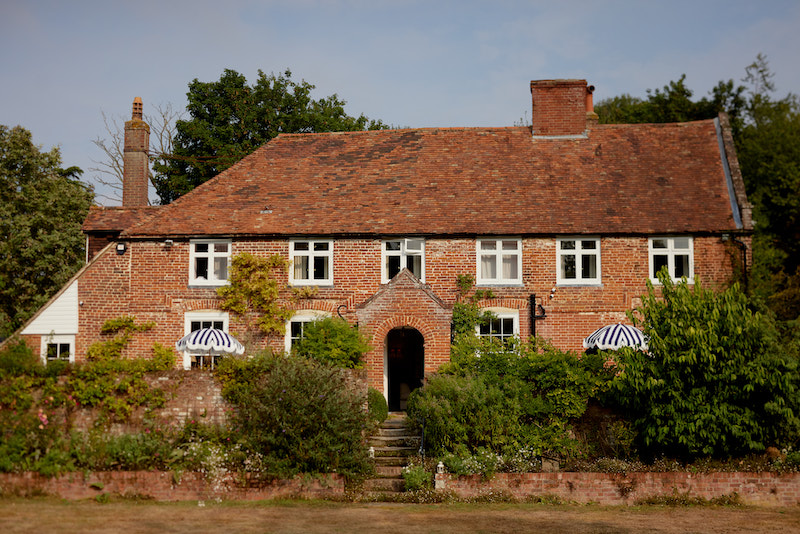
Some country hotels whisper. Updown Farmhouse strolls in wearing a fantastic coat, pours a martini, and casually reveals that dinner will be excellent. Tucked just outside Deal in Kent, this restored former farmstead has become one of those rare places that feels both deeply designed and delightfully unpretentious. It is polished, but not polished to death. Stylish, but not the sort of stylish that makes you afraid to set down your coffee.
That balance is exactly what makes Updown Farmhouse so appealing. On paper, it checks all the boxes travelers love: a historic farmhouse, beautiful grounds, destination dining, charming rooms, and easy access to the Kent coast. In real life, it feels more specific than that. This is not a generic “luxury country escape” with a few wildflowers in a vase and a sheepish nod to local character. It is colorful, personal, food-forward, and just eccentric enough to be memorable in the best way.
If you have been craving an English country retreat with real personality, Updown Farmhouse makes a strong case for packing a weekend bag immediately. Not recklessly, of course. Sensibly. But with enthusiasm.
What Exactly Is Updown Farmhouse?
Updown Farmhouse is a 17th-century former farmstead just outside Deal, a seaside town on Kent’s eastern edge. Today, it operates as a hotel and restaurant with ten guest rooms spread across the main house, two cottages, and the newer Stables rooms. That setup matters because it shapes the whole feel of the place. Rather than one big, formal hotel building, Updown reads more like a small, stylish estate where guests can settle into different corners of the property and find their own rhythm.
Its story also gives the place extra texture. Before fully settling into life as a hotel, Updown built buzz through intimate supper clubs with notable chefs. That early restaurant energy still defines it. Even now, the property feels less like a traditional country house hotel and more like a restaurant-led escape where beautiful rooms happen to be part of the deal. That is a compliment, not a technicality. In an era of many pretty hotels with forgettable food, Updown understands that a great stay is often one excellent meal away from becoming a story you retell for months.
Why Updown Farmhouse Stands Out in Kent
A historic shell with real warmth
Kent has no shortage of attractive places to stay, and the county’s reputation as the “Garden of England” already gives it a natural advantage. The countryside is green, generous, and ridiculously photogenic, even when the weather is doing that moody British thing where the sky looks like it is considering a minor career in theater.
What Updown does particularly well is make the most of that setting without leaning too hard on cliché. Yes, there are gardens, woodland, and the romance of an old farmhouse. Yes, there is a sense of escape. But the property avoids becoming a costume drama. It does not feel trapped in amber. It feels lived in, evolving, and confidently modern in its comforts.
The grounds are a big part of that appeal. Guests can wander through more than seven acres that include gardens, woodland, a kitchen garden, and secluded spots for loafing in a highly respectable manner. There is also an outdoor heated pool set by ancient woodland, open year-round, which adds an extra layer of treat-yourself energy. The pool’s mood can be summed up as follows: country calm, but make it fabulous.
Color that gives the place a pulse
The title of this article is not exaggerating for sport. Updown Farmhouse really is colorful, and not in the timid “one cheerful cushion in the corner” sense. The interiors embrace bold, memorable tones that give the property a pulse. Remodelista’s look inside the farmhouse highlighted a long drawing room in a pale oyster-shell blue, a library painted a bespoke orange, and an honesty bar with dramatic night-sky blue walls. That kind of palette tells you everything about the place’s design confidence.
What makes the color story work is restraint in all the right places. Updown is not trying to win a shouting match. Instead, it layers old and new pieces, keeps the bones of the old building visible, and lets color create emotional contrast from room to room. One space feels calm and airy. Another feels enveloping and rich. Another makes you want to order a drink and inspect the art a little more closely.
That approach aligns beautifully with why English country style still resonates. The best version of that aesthetic is not formulaic. It is layered, comfortable, collected over time, and slightly fearless about mixing eras, finishes, and personality. Updown Farmhouse understands that instinctively. Its rooms feel curated, but not stage-managed. The effect is more “fascinating friend with impeccable taste” than “hotel chain mood board.”
The Restaurant Is the Main Character
At Updown, food is not an amenity tacked onto the side of the stay. It is the center of gravity. The conservatory restaurant is one of the property’s signature spaces, and it sounds like a dream sequence written by someone who loves both architecture and lunch. Guests dine under grape vines amid old brick, with views into an open kitchen where chefs work the wood-fired grill and the original farmhouse bread oven. If that sounds cinematic, that is because it is.
The menu is typically described as Italian-leaning and hyper-seasonal, with ingredients sourced locally or grown on-site where possible. That combination gives the kitchen room to be both grounded and playful. One moment the meal can feel unmistakably Kentish; the next it can lean Mediterranean in spirit without feeling disconnected from place. In other words, it is not localism as a rigid rulebook. It is localism with taste buds, imagination, and a passport.
This is also where the owners’ sensibilities really show. Updown is run by Ruth Leigh and chef Oli Brown, and the property’s restaurant-first identity feels completely intentional. The result is a hotel where the meal is not something you squeeze in between activities. It is the activity. Dinner becomes the event, breakfast feels like recovery with style, and even the simple fact of house-baked bread emerging from an original oven makes the entire enterprise feel richer and more real.
That food-led model matters because it shapes the whole emotional temperature of the stay. You do not simply sleep here and head out in the morning. You settle in. You have a drink. You decide you might as well stay for dinner because walking elsewhere suddenly sounds absurd. You start with one course, then two, then dessert because you are on retreat and your better judgment has politely excused itself.
Rooms, Shared Spaces, and the Art of Feeling at Home
The rooms at Updown Farmhouse are spread across the main house, Gardener’s Cottage, Fig Tree Cottage, and the Stables, which gives guests a range of experiences. Some stays will feel tucked into the social heart of the house. Others will feel more independent and private. That variety is smart. It lets couples, solo travelers, and small groups find a version of the property that suits how they like to travel.
But the private rooms are only half the story. The shared spaces are clearly part of the charm. There is a library stocked with books and games, a drawing room overlooking the terrace and restaurant, and an honesty bar that encourages exactly the kind of relaxed, low-key hospitality many boutique hotels claim to offer but rarely nail. At Updown, the common rooms seem designed to invite actual lingering, not just quick Instagram reconnaissance followed by strategic retreat.
The newer additions help widen the property’s appeal as well. Bar Vita, for instance, brings a touch of Roman aperitivo glamour to the Kent countryside with martinis, negronis, shakeratos, and snacks. That is a very fun sentence to type because it still sounds faintly improbable. Roman cocktail energy in a farmhouse near Deal? Apparently yes, and apparently it works. This willingness to add a little metropolitan sparkle to a rural setting is part of what keeps Updown from feeling too precious.
Why the Design Works So Well
It respects tradition without becoming trapped by it
One of the easiest mistakes in country-house design is to confuse “historic” with “stuffy.” Another is to overcorrect and strip away every ounce of romance in pursuit of minimalism. Updown threads the needle between those extremes. It keeps the farmhouse’s age and architectural character visible, but it refuses to behave as if old buildings must always be beige, hushed, and vaguely apologetic.
The interiors feel informed by the best principles of English country decorating: comfort, collectedness, texture, flexibility, and a willingness to mix mismatched pieces until the room clicks. But they also feel sharper and more contemporary than a lot of nostalgia-driven countryside spaces. There is humor here. There is nerve. There is a sense that the people behind the project understand beauty should be enjoyed, not tiptoed around.
It treats color as atmosphere, not gimmick
Color is the most obvious visual story at Updown, but it is not used randomly. The palette helps create tempo. Lighter rooms expand and relax. Darker rooms cocoon. The orange library draws people in. The blue honesty bar sets a mood. Bedrooms feel distinct rather than copy-pasted. In practical design terms, this makes the property feel larger, more layered, and more emotionally resonant than its room count might suggest.
That kind of atmosphere is hard to fake. It comes from understanding that design is not only about what looks good in photographs. It is about how a room behaves when you are in it for an hour with a book, or twenty minutes before dinner, or a sleepy half-morning with coffee while rain taps at the window. Updown seems to understand that beautifully.
What to Do Beyond the Farmhouse
As tempting as it is to spend an entire stay rotating between lunch, a walk, a drink, the pool, and dinner, the surrounding area adds even more to the appeal. Deal has developed a reputation as one of Kent’s most appealing coastal towns, with independent shops, galleries, wine bars, and a creative energy that keeps it from feeling like a frozen postcard. It is the kind of place where you can browse, eat well, and stroll the seafront without needing a rigid itinerary.
More broadly, Kent rewards travelers who like a mix of coast, countryside, and gardens. The county’s nickname is not just tourism poetry. The landscapes really are part of the draw. That means an Updown stay can work in several ways: as a romantic weekend, a design-focused getaway, a food trip, or a base for exploring the wider region. The hotel is charming enough to anchor the trip, but the area is rich enough that you will not feel stranded in beauty with nothing else to do.
The Experience of Staying at Updown Farmhouse
What does a stay at Updown Farmhouse actually feel like? Imagine arriving with city shoulders still raised somewhere near your ears. The drive narrows, the landscape opens up, and suddenly the whole place begins to work on you before you have even checked in. There is that first glance at the farmhouse and grounds, the quiet sense that you have made an excellent decision, and the immediate urge to look as though you belong in the countryside even if your shoes say otherwise.
Once inside, the design does what great hospitality design should do: it changes your pace. You notice the color first, then the textures, then the way one room opens into another without losing character. The house invites curiosity. You want to peek into the library, inspect the artwork, and test the dangerous logic that one drink before dinner is technically a wellness ritual if the room is beautiful enough.
Then there is the social mood. Updown seems to specialize in the kind of atmosphere that is relaxed without being sleepy. It does not feel hushed in the intimidating luxury-hotel way, and it does not feel overly programmed either. Instead, it feels like staying somewhere that trusts guests to make their own pleasure. Read. Swim. Walk. Linger over lunch. Sit in the drawing room. Order something excellent at the bar. Repeat as needed.
Mornings would be particularly easy to love here. You can picture the slightly cool air, the garden still deciding what kind of day it wants to become, and the small ceremony of coffee before breakfast. In a property this rooted in food, breakfast is not just fuel; it is part of the narrative. Even the details that sound small on paperfresh milk, homemade nibbles, honest comforts instead of flashy gimmickshelp make the whole experience feel more intimate.
Afternoons offer two equally appealing options. The virtuous version involves exploring Deal, walking the coast, visiting local shops, and returning with the glow of someone who has “really seen the area.” The other version involves not going very far at all: a swim, a wander through the gardens, perhaps a spot by the kitchen garden, and then the deeply meaningful decision of when exactly to transition into pre-dinner mode. Both are valid. Both sound wonderful. One simply requires fewer shoes.
Evenings are when Updown likely hits its emotional sweet spot. The restaurant comes alive, the light changes, and the whole property leans into its strongest identity: a country retreat where dinner matters. There is a particular pleasure in staying somewhere that takes its food seriously without turning the meal into theater for theater’s sake. At Updown, the setting may be romantic and the design may be memorable, but the point is still pleasure rather than performance.
That is probably why the farmhouse leaves such a strong impression. It delivers the fantasy many travelers want from an English countryside stay, but it filters that fantasy through better taste, stronger food, and more personality than usual. It is idyllic, yes, but not flimsy. It has ease, but also substance. It is the sort of place that makes you briefly consider dramatic life changes, such as moving to Kent, learning to host elegant lunches, or painting an entire library orange just to see what happens.
And when a hotel inspires both contentment and mild interior-design recklessness, you know it is doing something right.
Final Thoughts
Updown Farmhouse succeeds because it understands that a memorable country retreat is never only about the setting. Beautiful landscapes help, obviously. Historic buildings do not hurt. But what really makes a place stick is coherence: design that feels personal, food that feels purposeful, and hospitality that does not flatten everything into bland luxury.
In that sense, Updown Farmhouse is more than a pretty place to stay in Kent. It is a smart modern interpretation of the country-house ideal: rooted in history, alive with color, serious about food, generous in mood, and open to a little fun. If you are drawn to boutique hotels with individuality, restaurants worth traveling for, and interiors that prove country style does not have to be boring, Updown is exactly the sort of retreat that deserves attention.
It is colorful. It is comforting. It is a little bit glamorous. And unlike many places that promise “escape,” this one seems to know what people are actually hoping to escape into: beauty, ease, good bread, and just enough drama on the walls.