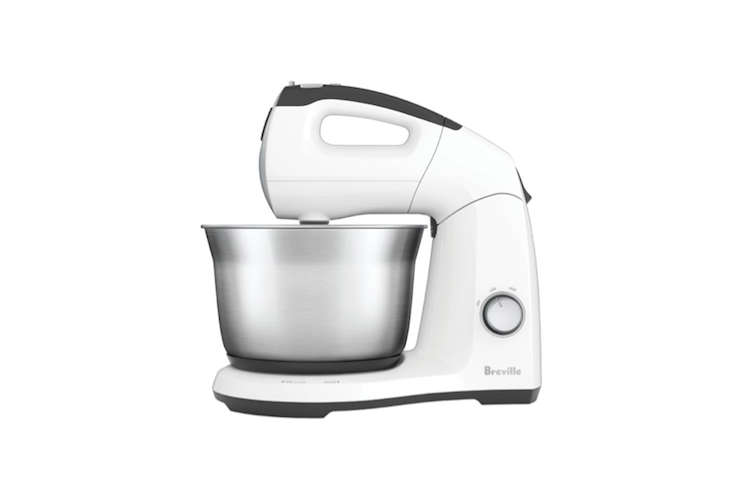
The Breville USA BEM600XL Handy Stand Mixer was designed for bakers who could never quite decide between a compact hand mixer and a traditional countertop machine. Instead of forcing that choice, Breville combined both formats into one unusually practical appliance: a detachable hand mixer mounted on a stand with its own powered rotating bowl.
That hybrid design made the BEM600XL especially appealing to occasional bakers, apartment dwellers, and anyone who wanted hands-free mixing without adopting a countertop appliance roughly the size of a small parade float. Although Breville has discontinued the model, it remains available through used-appliance marketplaces, old retail inventory, and refurbished-product sellers.
This in-depth review examines how the Breville Handy Stand Mixer works, what it handles well, where it falls short, and whether buying one today still makes sense.
What Is the Breville BEM600XL Handy Stand Mixer?
The Breville BEM600XL is a 2-in-1 electric mixer that can operate as either a stand mixer or a handheld mixer. When attached to its base, the mixer works above a stainless steel bowl for hands-free preparation. Press the release control, remove the mixer head, and it becomes a portable hand mixer that can be used with another bowl or moved around the kitchen.
This flexibility is the model’s defining feature. A conventional stand mixer is excellent for long mixing sessions but heavy to move and inconvenient for tiny tasks. A hand mixer is lighter and easier to store but requires the cook to hold it continuously. The BEM600XL sits between those categories, offering some of the freedom of a handheld appliance and some of the convenience of a countertop mixer.
A Mixer With Two Independent Motors
The stand contains a separate motor that rotates the bowl while the mixer head powers the beaters. The bowl therefore moves against the beating action, helping ingredients travel through the mixing zone rather than remaining motionless near the outer wall.
This is different from the planetary action used by many premium stand mixers, where one attachment rotates while also traveling around the bowl. The Breville relies on a rotating bowl and paired beaters instead. It is a simpler arrangement, but it can distribute cookie dough, frosting, mashed potatoes, and cake batter more evenly than an ordinary stationary hand mixer.
Breville BEM600XL Specifications and Features
The BEM600XL was built as a relatively compact household mixer rather than a commercial dough machine. Its documented specifications and commonly listed features include:
- A fully detachable electric hand mixer
- A 3.5-quart stainless steel mixing bowl
- A 380-watt power rating for the U.S. model
- Two independently powered mixing actions
- Multiple electronic speed settings
- A turbo boost function
- An LCD display with a count-up mixing timer
- Electronic load sensing for heavier mixtures
- A motor protection system
- Spring-loaded V-groove beaters with soft tips
- Dough hooks and a mixing spatula
- A bowl motor with adjustable rotation settings
Retail listings historically described the unit as approximately 8 inches wide, 12.25 inches deep, and 13.5 inches high, with a weight just under eight pounds. That is substantially lighter than many full-size die-cast stand mixers, some of which can weigh more than 20 pounds. Specifications may differ slightly between regional versions, so owners should confirm the voltage and model label before purchasing a secondhand unit.
Electronic Load Sensing
As a mixture becomes thicker, the motor has to work harder to maintain the selected speed. The BEM600XL uses electronic load sensing to compensate for that increased resistance. In practical terms, it is less likely to slow dramatically the moment flour transforms a pleasant butter mixture into cookie dough with the structural integrity of driveway cement.
Load sensing does not make the appliance indestructible. Extremely stiff dough, oversized batches, or prolonged operation can still strain its gears and motor. It simply gives the mixer better speed consistency during normal household recipes.
Digital Controls and Mixing Timer
The digital timer is more useful than it may initially appear. Baking instructions often call for creaming butter and sugar for a specific number of minutes or whipping cream only until it reaches a particular stage. A visible count-up display helps users repeat successful results without checking a phone, wall clock, or suspiciously flour-covered wristwatch.
Timing matters because both under-mixing and over-mixing can affect texture. Cake recipes may require enough mixing to create an even emulsion and develop the intended structure, while muffin and quick-bread batters generally need a lighter touch after flour is added. Following the recipe’s stated speed and duration is usually more reliable than treating “mix until it feels spiritually complete” as a technical instruction.
How the Soft-Tipped Beaters Work
The BEM600XL uses spring-loaded V-groove beaters fitted with soft scraping tips. As the beaters rotate, the tips can travel close to the bowl surface, helping collect ingredients that might otherwise cling to the sides.
The spring mechanism allows each beater to respond to the bowl’s shape and position rather than remaining completely rigid. This design is particularly helpful when creaming softened butter, combining frosting, or mixing batter containing small pockets of dry ingredients.
Soft tips also reduce metal-on-metal contact between the beaters and stainless steel bowl. They are not a magical force field, however. Owners should inspect older beaters for worn, cracked, loose, or damaged material. Deteriorated attachments should be replaced rather than used in food preparation.
Does the Bowl Still Need Scraping?
Usually, yesat least once during many recipes. The soft-tipped beaters reduce manual scraping, but sticky ingredients can still collect above the active mixing area, around the upper wall, or near the center of the bowl.
For consistent results, stop the appliance, unplug it when appropriate, and scrape the sides with a flexible spatula. Never insert a utensil into the bowl while the beaters are moving. The mixer is designed to make cookies, not to launch a silicone spatula into low Earth orbit.
Performance With Common Recipes
Whipped Cream and Egg Whites
Light aeration is one of the BEM600XL’s strongest jobs. Consumer Reports rated its cream-whipping performance highly and found its cookie-mixing performance very good during testing.
The detachable hand mixer is particularly convenient for small amounts of cream or egg white. Users can select a narrower bowl, angle the beaters, and keep them properly submerged. For a larger batch, attaching the mixer to the stand provides hands-free operation while the bowl rotates.
Start at a moderate speed to reduce splashing, then increase gradually. Heavy cream can travel from soft and cloudlike to grainy and halfway toward butter surprisingly quickly, especially near the end of whipping.
Cake Batter and Cupcakes
The rotating bowl and timer make the mixer well suited to boxed cake mixes, butter cakes, cupcakes, and similar medium-weight batters. Starting slowly helps incorporate dry ingredients without decorating the kitchen in a fine layer of flour.
After the flour has entered a tender cake or quick-bread mixture, use only the speed and duration required by the recipe. Excessive mixing can encourage additional gluten development and produce a tighter or tougher result. Conversely, stopping too early can leave streaks of fat, flour pockets, or an uneven batter.
Cookie Dough
Chocolate chip cookies, oatmeal cookies, peanut butter cookies, and sugar cookies are realistic tasks for the BEM600XL when prepared in ordinary home-sized batches. The load-sensing system helps the beaters maintain their pace as the dough thickens.
Very cold butter should be softened according to the recipe before mixing. Forcing compacted butter through a lightweight mixer does not prove culinary bravery; it proves that replacement gears may soon become part of the shopping list.
Chocolate chips, chopped nuts, or dried fruit should generally be added at a low speed. Folding the final additions by hand can provide better control and prevent ingredients from bouncing across the counter like delicious little escapees.
Frosting and Buttercream
The Breville works well for American buttercream, cream cheese frosting, whipped toppings, and many basic glazes. The timer makes it easier to aerate frosting consistently, while the hand-mixer mode allows closer attention to small batches.
Powdered sugar should be introduced gradually at a low speed. Starting at maximum power may create a dramatic sugar cloud, which is impressive for three seconds and annoying for the following 20 minutes.
Bread and Pizza Dough
Dough hooks were supplied for kneading yeast dough, but expectations should remain reasonable. The BEM600XL is not a heavy-duty spiral mixer or a large bowl-lift machine. It is best suited to softer dough in conservative quantities.
Lean bread dough with relatively low hydration, whole-grain dough, bagel dough, or a large double batch may place excessive stress on the appliance. Modern equipment testers generally reserve demanding bread work for full-size stand mixers with stronger drive systems and larger attachments.
When the motor sounds labored, the body becomes unusually warm, or the mixer begins moving across the counter, stop and reduce the load. A heroic final stand against a ball of pizza dough is not covered by most warrantiesespecially when the product has already been discontinued.
Using the BEM600XL as a Hand Mixer
To use the appliance in handheld mode, the mixer head is released from the stand and lifted away. This configuration is useful for small recipes, stovetop preparations, or mixing in containers that do not fit the supplied bowl.
Hand-mixer mode offers several advantages:
- It can be used with different bowl shapes and sizes.
- The beaters can be moved toward unmixed ingredients.
- Small quantities are easier to reach.
- The user can control the angle and depth of mixing.
- Cleanup may be faster for simple recipes.
Hand mixers are generally ideal for whipped cream, meringue, cake batter, mashed potatoes, frosting, and modest cookie batches. They are less suitable for very heavy dough or extended kneading.
Using the BEM600XL in Stand Mixer Mode
Before assembly, place the stand on a dry, level, stable counter. Confirm that the mixer and bowl controls are off. The mixer head aligns with the mounting points on the stand and locks into place. The original instruction booklet advises checking that the head is securely attached before operation.
Once assembled, install the correct pair of beaters or dough hooks, position the stainless steel bowl, and select the desired bowl rotation. Add ingredients according to the recipe and begin at a low mixer speed.
The two speed systems should be treated separately. The main controls determine how quickly the beaters turn, while the bowl dial controls the second motor. Adjusting both allows the baker to change how frequently the mixture passes through the beaters.
Practical Mixing Tips
- Bring butter and other ingredients to the temperature specified by the recipe.
- Begin slowly before increasing the speed.
- Add flour and powdered sugar gradually.
- Stop and scrape the bowl when necessary.
- Use the timer to reproduce successful batches.
- Reduce batch size when preparing dense mixtures.
- Never change or remove attachments while the appliance is connected to power.
Cleaning and Maintenance
The mixer head, power cord, and stand should never be immersed in water. Wipe exterior surfaces with a soft, damp cloth and dry them thoroughly. Avoid allowing water, batter, or cleaning solution to enter the ventilation openings, attachment sockets, motor housing, or control panel.
The stainless steel bowl, beaters, dough hooks, and spatula should be cleaned promptly so dough and frosting do not harden in narrow areas. The original instructions recommend washing the bowl and attachments in warm water with gentle dishwashing liquid before first use.
Because attachment materials and replacement versions can vary, consult the instruction booklet before using a dishwasher. Hand-washing older soft-tipped beaters is often the gentler choice. Avoid abrasive pads, aggressive cleaners, and extended soaking that could damage the finish or flexible components.
Maintenance Checks for a Used Mixer
Anyone purchasing a preowned BEM600XL should inspect:
- The power cord for cuts, hard bends, or exposed wiring
- The mixer-head latch for secure engagement
- The attachment sockets for excessive movement
- The beaters and dough hooks for bending or corrosion
- The soft beater tips for cracks or missing material
- The stainless steel bowl for deep dents
- The bowl motor for smooth, consistent rotation
- The display and speed controls for reliable operation
- The motor for burning odors, sparks, or abnormal grinding sounds
A slight new-motor odor was described as normal during initial use, but a persistent burning smell from an older appliance is not something to dismiss with optimism and another batch of brownies.
Advantages of the Breville Handy Stand Mixer
True 2-in-1 versatility: The detachable mixer head gives the appliance a practical advantage over fixed stand mixers.
Compact dimensions: It occupies less counter and cabinet space than many full-size machines.
Lower weight: Moving it between a cabinet and countertop is comparatively easy.
Powered rotating bowl: The second motor improves ingredient circulation during hands-free mixing.
Useful timer: Mixing duration can be monitored without another device.
Soft-tipped beaters: They help collect ingredients while reducing direct metal contact with the bowl.
Good everyday performance: It is capable of whipping cream, preparing frosting, mixing cakes, and handling typical cookie dough.
Disadvantages and Limitations
Discontinued status: New units are uncommon, and prices may not reflect the appliance’s age or remaining service life.
Limited bowl capacity: A 3.5-quart bowl is convenient for ordinary batches but restrictive for holiday-scale baking.
Not a heavy-duty dough mixer: Dense bread recipes can overwork the drive system.
Fewer expansion options: It does not offer the broad ecosystem of pasta rollers, grinders, and specialty attachments associated with some full-size stand mixers.
Replacement-part uncertainty: Breville maintains a support page and lists parts for the model, while third-party repair suppliers also catalog the BEM600XL. Nevertheless, the actual availability of a specific bowl, beater, electronic component, or motor part can change.
Hybrid compromises: It is more capable than a basic hand mixer but less powerful and expandable than a premium stand mixer.
Who Should Consider Buying One?
The Breville USA BEM600XL Handy Stand Mixer is most suitable for:
- Occasional and intermediate home bakers
- People with limited counter or storage space
- Users who alternate between small and medium recipes
- Bakers who value a digital timer
- Anyone who wants hands-free mixing without a very heavy appliance
- Shoppers who find a clean, fully tested unit at a sensible price
It is less suitable for frequent bread makers, high-volume bakers, commercial kitchens, or buyers who want a large attachment ecosystem. A current full-size stand mixer may cost more, but it will generally offer greater bowl capacity, better performance with stiff dough, and easier access to long-term support.
Realistic Ownership Experience With the Breville BEM600XL
Living with the BEM600XL is largely an exercise in appreciating convenience rather than raw industrial power. Imagine a typical weekend baking session. You begin with a small bowl of cream for a pie. Instead of assembling the entire stand, you release the mixer head, insert the beaters, and use it like a conventional hand mixer. The motor is easy to guide, the beaters stay immersed, and the cream reaches soft peaks without requiring a countertop rearrangement worthy of a moving company.
Next comes cookie dough. The mixer head returns to the stand, the stainless steel bowl is positioned, and the bowl motor is switched on. Softened butter and sugar begin circling beneath the beaters. The timer provides a clear record of the creaming stage, which is helpful for anyone who normally judges two minutes by checking email and accidentally returning seven minutes later.
As eggs and vanilla are incorporated, the rotating bowl does a respectable job of bringing ingredients back through the center. A thin layer may remain near the upper wall, so one pause for scraping is still worthwhile. After flour is added, the electronic speed control helps the beaters stay steady. The machine sounds more serious, but it does not immediately behave as though the dough has personally offended it.
The smaller bowl encourages moderate recipes. A standard batch of cookies fits comfortably, while a doubled recipe can become crowded. This limitation is not necessarily bad. It discourages overloading and makes the bowl easier to lift, pour, and wash. For a household that bakes a few dozen cookies rather than supplying an entire school fundraiser, the capacity is usually adequate.
Cleanup is straightforward when handled immediately. The bowl rinses easily, and the attachments are much less troublesome before batter dries inside their grooves. The stand requires only a wipe unless powdered sugar has staged its traditional countertop rebellion.
The mixer’s relatively low weight is noticeable when storage time arrives. It can be moved into a cabinet without the two-handed ceremony associated with a large metal stand mixer. However, its hybrid shape is not as compact as a plain hand mixer. Owners still need enough shelf height for the assembled stand, bowl, and mixer head.
Bread dough reveals the boundary of the design. A soft dinner-roll dough may be manageable in a small batch, especially when ingredients are measured accurately and mixing is stopped before the motor overheats. A dense whole-wheat loaf feels very different. The mixer may strain, the stand may shift, and the dough hooks can begin pushing the mass around rather than kneading it efficiently. At that point, finishing by hand is smarter than insisting that a compact appliance settle a personal dispute with gluten.
The most satisfying ownership pattern is therefore mixed use: hand mode for quick whipping and small bowls, stand mode for cakes, frostings, mashed potatoes, and ordinary cookie dough, and manual kneading or a stronger machine for challenging bread. Used this way, the BEM600XL feels clever rather than compromised.
Buying one secondhand adds another layer to the experience. A clean unit with a stable bowl motor, responsive buttons, intact beaters, both dough hooks, and a readable display can still be useful. A suspiciously cheap unit missing proprietary attachments may become expensive once shipping and replacement parts are considered. Testing every speed and both motors before purchase is therefore more valuable than admiring a spotless product photo.
For the right household, the BEM600XL remains a charming problem solver. It does not replace a heavy-duty stand mixer in every situation, but it can replace both a basic hand mixer and a lightweight countertop mixer. That combination is precisely why the model continues to attract attention long after leaving Breville’s current product lineup.
Final Verdict
The Breville USA BEM600XL Handy Stand Mixer is an inventive hybrid appliance with a detachable mixer head, powered rotating bowl, electronic timer, load sensing, and soft-tipped beaters. Its best qualities are versatility, manageable size, and solid performance with common home-baking recipes.
Its weaknesses are equally clear. The bowl is smaller than those of many full-size stand mixers, heavy dough can challenge the motor, and discontinued status makes condition and replacement-part availability important considerations.
A fully functional BEM600XL can still be a worthwhile purchase for an occasional baker, particularly when priced below a modern premium mixer. Inspect it carefully, confirm that all important accessories are included, and choose it for what it does well: cakes, cookies, whipped cream, frosting, mashed potatoes, and other everyday mixing jobs. Do not choose it because you plan to knead enough bagel dough to open a bakery before lunch.