Teaching kids to brush and floss sounds simple until you are standing in a bathroom at 8:47 p.m., holding a toothbrush while your child insists they are “too tired to clean the back teeth.” Suddenly, the tiny molars become the most dramatic characters in the house.
The good news is that teaching children good oral hygiene does not require a military-grade bathroom schedule. It requires consistency, age-appropriate tools, a little patience, and just enough creativity to make a two-minute routine feel less like a chore and more like a daily mission. These practical tips can help parents and caregivers teach kids to brush and floss while building habits that protect their teeth for years to come.
Why Teaching Kids to Brush and Floss Matters
Brushing and flossing are not only about avoiding bad breath before school picture day. They remove plaque, a sticky film of bacteria that can contribute to cavities and gum irritation. Brushing cleans the surfaces of the teeth, while flossing or another between-the-teeth cleaner helps reach areas a toothbrush cannot easily reach.
For children, the goal is not perfection on day one. The goal is to build a routine that becomes automatic: brush twice a day, clean between teeth once a day when teeth touch, use fluoride toothpaste in the right amount, and let an adult help until the child can do a thorough job independently.
Think of it as teaching a child to tie shoes. At first, there are loops, knots, frustration, and possibly a shoe thrown across the room. With practice, it becomes a skill they carry for life. Toothbrushing works the same way, except the shoelaces do not taste like bubblegum.
16 Useful Tips for Teaching Kids to Brush and Floss
1. Start the Routine Early
Dental care should begin before a child becomes old enough to negotiate bedtime like a tiny attorney. For babies, caregivers can gently wipe the gums with a clean, soft cloth. Once the first tooth appears, begin brushing with a soft, child-sized toothbrush and fluoride toothpaste in the appropriate amount.
Starting early helps children see brushing as a normal part of daily life instead of a suspicious new activity introduced after they discover candy.
2. Use the Right Amount of Fluoride Toothpaste
Using too much toothpaste does not make brushing more effective. It mostly creates a foam party in the sink.
For children younger than 3, use a tiny smear of fluoride toothpaste, roughly the size of a grain of rice. For children ages 3 through 6, use a pea-sized amount. Adults should place the toothpaste on the toothbrush and keep the tube out of reach, especially for younger children who may be tempted to treat it like frosting.
3. Choose a Soft, Child-Sized Toothbrush
A toothbrush should fit comfortably in a child’s mouth and have soft bristles. Large brushes can make it harder to reach back teeth, while hard bristles can feel uncomfortable and encourage rough brushing.
Let your child choose a toothbrush in a favorite color or with a character they love. A dinosaur toothbrush will not magically remove plaque by itself, but it may convince a reluctant preschooler to open their mouth without launching a formal protest.
4. Make Brushing a Twice-a-Day Non-Negotiable
Children should brush twice daily, ideally after breakfast and before bed. The nighttime brushing session is especially important because teeth should be clean before a long stretch of sleep.
Attach brushing to habits that already happen every day. For example, brush after putting pajamas on, after reading a bedtime story, or before choosing tomorrow’s clothes. When brushing is connected to a familiar routine, children are less likely to view it as an unexpected interruption.
5. Teach the Two-Minute Rule
Two minutes can feel like an entire geological era to a child. A timer, a short song, or a kid-friendly brushing app can make the time easier to manage.
Try dividing the mouth into four sections: top right, top left, bottom right, and bottom left. Spend about 30 seconds on each section. This approach gives children a simple plan and reduces the chance that they will spend one minute polishing the front teeth while the molars quietly collect snacks from three days ago.
6. Show Them How to Brush Every Surface
Kids often brush only the teeth they can see in the mirror. Unfortunately, cavities have no problem hanging out in less glamorous places.
Teach children to clean the outside surfaces, inside surfaces, chewing surfaces, and the back teeth. Encourage gentle, small circular motions or short strokes rather than aggressive scrubbing. The bristles should reach near the gumline, but brushing should feel gentle, not like sanding a table.
7. Let Kids Practice, Then Finish the Job
Independence matters, but so does actually getting the teeth clean. Let younger children brush first so they can practice hand movements and feel proud of their progress. Then take a turn to brush the areas they missed.
A useful phrase is: “You brush first, then I check for sugar bugs.” This makes adult help feel like teamwork instead of a takeover. Many children need assistance for several years, and even older kids may need occasional supervision to make sure they are cleaning thoroughly.
8. Brush Together Whenever Possible
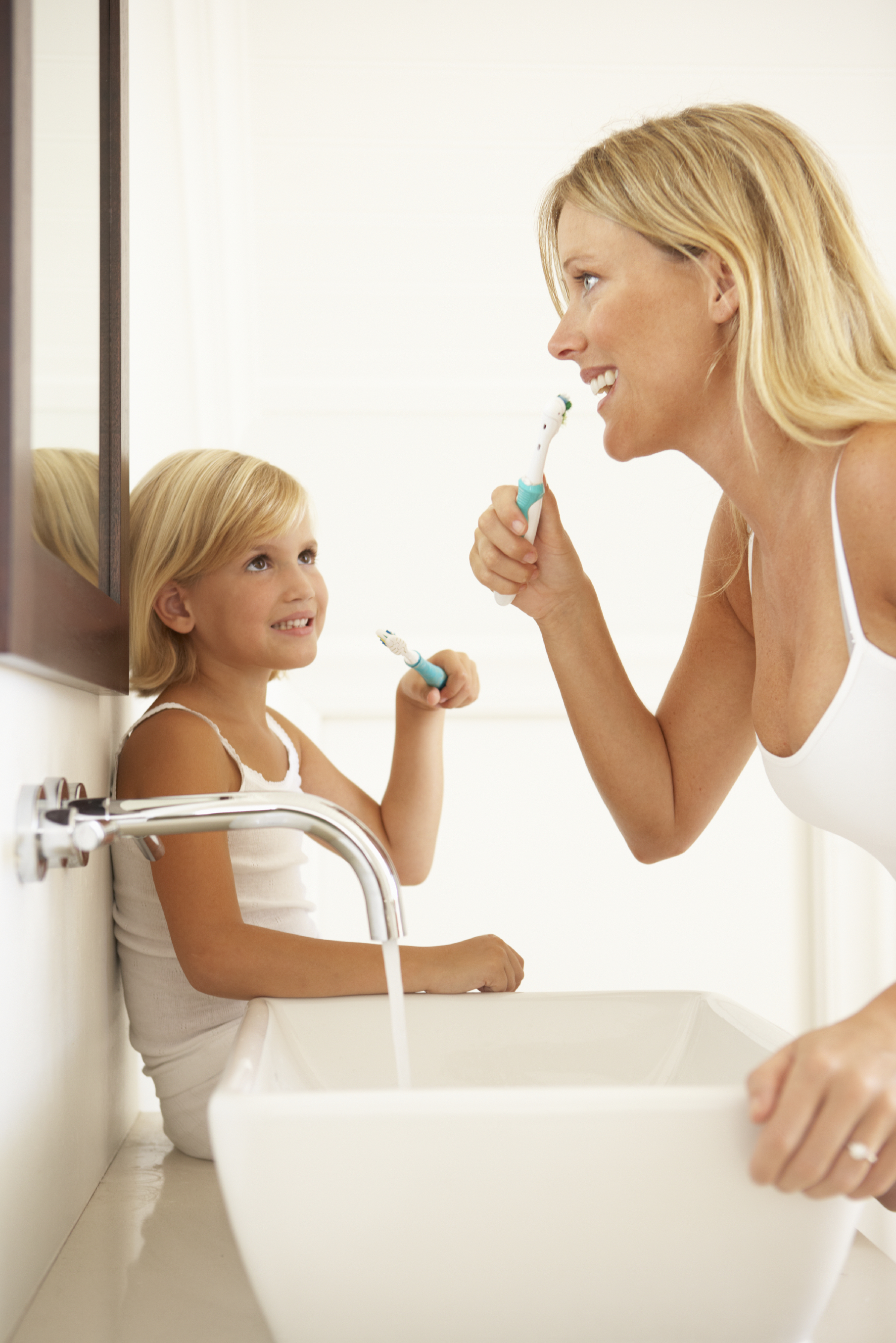
Children learn a surprising amount by watching adults. Brushing together makes oral care feel normal and gives kids a real-life example of what to do.
Stand side by side at the sink, brush at the same time, and narrate the process in a playful way: “Now I am brushing the sleepy back teeth. Now I am cleaning the chewing mountains.” It may sound silly, but silly is often more effective than a lecture delivered by a tired adult in pajamas.
9. Use a Mirror for Better Technique
A mirror helps children see where the toothbrush is going and understand why back teeth need attention. Encourage them to open wide and watch the brush travel around the mouth.
For toddlers, adults may find it easier to stand behind the child while the child looks upward. This position can provide a better view of the teeth and make gentle brushing easier. Use whatever safe, comfortable setup works best for your family.
10. Teach Flossing When Teeth Start Touching
Flossing becomes important when two teeth touch each other. A toothbrush cannot fully clean the tight spaces between teeth, especially around the back molars where food likes to set up camp.
Parents should floss for young children until they develop the coordination to do it well. If traditional string floss feels too tricky, child-friendly floss holders may be easier to use. Ask a pediatric dentist or dental hygienist to demonstrate a technique that works for your child’s age and tooth spacing.
11. Show the Gentle “C” Shape for Flossing
Flossing should not involve snapping floss into the gums like a tiny rubber band. Guide the floss gently between the teeth, curve it into a “C” shape around one tooth, and move it up and down before repeating on the neighboring tooth.
It is normal for beginners to need help. The goal is not to create a flossing champion overnight. The goal is to clean between teeth gently and consistently without turning the bathroom into a wrestling arena.
12. Give Kids Choices, Not Escape Routes
Children respond well to small choices because choices give them a sense of control. Offer two toothpaste flavors, two toothbrushes, or the choice between brushing before or after putting on pajamas.
Avoid asking, “Do you want to brush your teeth?” That question invites a very reasonable answer from a child: “No.” Instead, ask, “Do you want the blue toothbrush or the green toothbrush?” The brushing still happens; the child simply gets to be the chief executive officer of toothbrush color.
13. Use Praise More Than Pressure
Positive feedback works better than turning every brushing session into a courtroom drama. Praise specific actions: “You remembered the back teeth,” “You kept brushing until the timer ended,” or “You did a great job spitting out the toothpaste.”
Sticker charts can work well for younger children, especially when the reward is simple and not food-based. A week of successful brushing might earn a new book, extra story time, a family game night, or the honor of choosing Saturday breakfast.
14. Keep Sugar in Perspective
Kids do not need a life completely free of birthday cake, holiday cookies, or the occasional mysterious school cupcake. But frequent sugary snacks and sweet drinks can give plaque bacteria more opportunities to produce acids that attack tooth enamel.
Offer water often, limit sugary drinks, and encourage snacks such as cheese, yogurt, fruit, vegetables, or nuts when age-appropriate. Frequent sipping on juice, soda, sports drinks, or sweetened beverages can be especially tough on teeth because the mouth is repeatedly exposed to sugar.
15. Replace Worn-Out Toothbrushes
Toothbrushes do not last forever, even if your child has named theirs “Captain Sparkle.” Replace a toothbrush about every three to four months, or sooner if the bristles are frayed, flattened, or damaged.
A worn brush cannot clean as effectively, and a fresh toothbrush can be a surprisingly useful motivation tool. Sometimes a new brush is all it takes to restart a routine after a week of brushing resistance.
16. Make Dental Visits Part of the Plan
Regular dental visits help catch problems early and give parents personalized advice about brushing, flossing, fluoride, sealants, crowding, thumb sucking, braces, and other oral health concerns. Children should see a dentist by their first birthday or within six months of the first tooth appearing, whichever comes first.
Do not wait until a child has pain to schedule a dental visit. A calm, preventive appointment is much easier than introducing the dentist during a toothache emergency, when nobody is in the mood for a cheerful sticker from the treasure box.
How to Handle Brushing Battles Without Losing Your Mind
Some children love brushing. Others react to a toothbrush as though it is a tiny alien spaceship entering their personal airspace. Resistance is common, especially during the toddler and preschool years.
When brushing becomes difficult, focus on routine and gradual progress. Keep the timing predictable, use calm language, and avoid lengthy arguments. For a child who strongly resists, start with a smaller goal, such as brushing the front teeth for a few seconds, then slowly add more areas over time.
Distraction can also help. A favorite song, a short brushing video, a stuffed animal “watching,” or a silly story about chasing away plaque monsters can make the routine feel safer and more fun. Children with sensory sensitivities, developmental differences, braces, crowded teeth, or medical conditions may need individualized strategies from a pediatric dentist.
Experience-Based Lessons From Real Family Brushing Routines
Families often discover that the best brushing routine is not the fanciest one. It is the one that can survive a rushed school morning, a late sports practice, a sleepover, a travel day, and a child who has decided that toothpaste is suddenly “too spicy.” The most useful systems are flexible enough for real life but consistent enough that kids know brushing and flossing are simply part of the day.
One common lesson is that children respond better to participation than commands. Instead of hearing, “Go brush your teeth,” they may respond more positively to, “Let’s race the timer,” or “Can you show me how you clean the dinosaur teeth in the back?” Turning brushing into a skill they are learning gives them a sense of pride. The child is no longer being ordered to do a boring task; they are becoming the official protector of their own smile.
Another practical lesson is that bedtime is often the toughest moment. Kids are tired, adults are tired, and every tiny task suddenly becomes a major event. Families who put brushing earlier into the bedtime routine often have fewer battles. For example, brushing right after pajamas but before stories can work better than waiting until the child is already tucked in and emotionally attached to the blanket.
Parents also learn that kids may need different tools at different stages. A toddler may love a soft manual toothbrush with a chunky handle. A school-age child may become more motivated by an electric toothbrush with a timer. A child who struggles with traditional floss may do better with a floss holder, while an older child may prefer regular string floss once coordination improves. The “best” tool is usually the one that gets used correctly and consistently.
Flossing can be especially awkward at first. Kids may complain that it feels strange, that it takes too long, or that it is “basically impossible.” Those comments are not always dramatic exaggerations; flossing requires fine motor skills that take practice. Parents who treat flossing as a normal learning process often have more success than those who expect instant independence. A calm demonstration, a few teeth at a time, and gentle encouragement can gradually make it less intimidating.
Families also find that visible progress matters. A simple calendar with morning and evening check marks can help children see how often they complete their routine. Older kids may enjoy tracking streaks, while younger children may prefer stickers. The reward does not need to be expensive. Extra reading time, choosing the family movie, or earning a small privilege can be enough to make the habit feel meaningful.
Finally, the biggest lesson is that imperfect consistency beats occasional perfection. A child may miss a spot, rush through flossing, or need reminders for years. That is normal. What matters most is returning to the routine again and again. Every calm reminder, every side-by-side brushing session, and every successful bedtime floss helps build a healthy habit that can last long after the character toothbrush has disappeared under the bathroom cabinet.
Final Thoughts
Teaching kids to brush and floss is a long game. The goal is not to create a tiny dental hygienist by next Tuesday. The goal is to help children understand that caring for their teeth is part of caring for themselves.
Keep the routine simple: brush twice daily with fluoride toothpaste, clean between touching teeth once a day, use gentle technique, make the process age-appropriate, and stay involved until your child has the skill to do a thorough job independently. With patience, practice, and perhaps one ridiculous toothbrushing song, your child can build a healthy smile that lasts far beyond the sticker-chart years.
Note: This article is for general educational purposes and does not replace advice from a pediatric dentist, dentist, or physician. Ask a dental professional for personalized guidance if your child has tooth pain, bleeding gums, sensory challenges, braces, developmental differences, frequent cavities, or difficulty brushing and flossing.