Note: This article is based on publicly available information and avoids speculation about private medical details that have not been disclosed by Kensington Palace or the Princess of Wales.
A Personal Message That Stopped the Rumor Machine
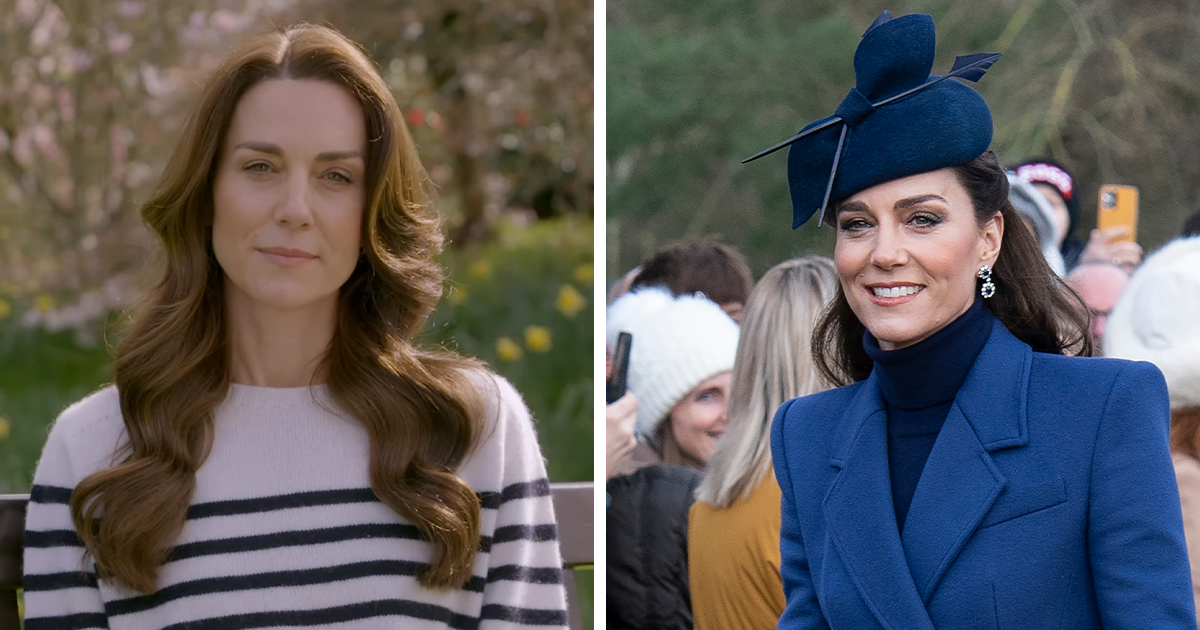
When Catherine, Princess of Walesstill widely known around the world as Kate Middletonappeared in a calm, emotional video message on March 22, 2024, the internet’s roaring rumor engine suddenly had to hit the brakes. After weeks of speculation about her health, her absence from royal duties, and even a now-infamous edited Mother’s Day photo, Kate chose to speak directly to the public in her own words.
In the video, filmed at Windsor, the Princess of Wales revealed that she had been diagnosed with cancer following major abdominal surgery earlier in the year. She said that when she underwent the operation in January, her condition was initially believed to be non-cancerous. However, post-operative tests later found that cancer had been present. Her medical team advised a course of preventative chemotherapy, and she said she was in the early stages of that treatment.
The moment was startling not because royals are expected to be superhumandespite the hats, carriages, and balconies, they are notbut because the message was so human. Kate spoke as a patient, a mother, a wife, and a public figure trying to balance an intensely personal diagnosis with global curiosity. In an age when social media can turn silence into a full-time detective series, her request was simple: time, space, and privacy while she focused on recovery.
What Kate Middleton Said in Her Cancer Diagnosis Video
Kate began by thanking the public for messages of support during her recovery from surgery. She described the previous months as “incredibly tough” for her family and expressed gratitude for the medical team that had cared for her. Her tone was steady, but the message carried the weight of someone who had clearly spent time deciding how much to share, when to share it, and how to protect the people closest to her.
She explained that the surgery itself had been successful, but later tests revealed cancer. The exact type of cancer was not disclosed, and that point matters. Public interest does not erase a person’s right to medical privacy. Kensington Palace made clear that no further private medical information would be shared. For readers searching “what kind of cancer does Kate Middleton have,” the honest answer remains: it has not been publicly revealed.
Kate also addressed the emotional challenge of explaining the diagnosis to her three children: Prince George, Princess Charlotte, and Prince Louis. She said it had taken time to explain everything to them in an age-appropriate way and to reassure them that she was going to be okay. That sentence may have been one of the most relatable parts of the entire announcement. Any parent who has ever had to translate adult fear into child-sized language understands how delicate that conversation can be.
Why the Timing of the Announcement Mattered
The Princess of Wales had not been seen in regular public duties since Christmas 2023. On January 17, 2024, Kensington Palace announced that she had undergone planned abdominal surgery and would remain in the hospital for up to two weeks before continuing her recovery at home. The palace also said she was unlikely to return to public duties until after Easter.
At first, the statement seemed like a standard royal health update: brief, polished, and privacy-minded. But as the weeks passed, the lack of new information created a vacuum. And as everyone on the internet knows, a vacuum online is rarely filled with calm, sensible patience. It is more often filled with theories, memes, side-by-side image comparisons, and people confidently announcing things they could not possibly know.
The situation intensified after Kensington Palace released a Mother’s Day photo of Kate with her children. Several major news agencies later withdrew the image over concerns that it had been edited. Kate apologized publicly for the confusion, saying that, like many amateur photographers, she sometimes experimented with editing. That explanation did not fully calm the public conversation; in fact, it gave the rumor mill a fresh cup of coffee.
By the time Kate released her video, the announcement did more than share a diagnosis. It reset the story. It reminded audiences that behind the public role was a person recovering from surgery, beginning cancer treatment, and managing family life under a spotlight bright enough to make anyone wish for blackout curtains.
Understanding “Preventative Chemotherapy”
One phrase from the announcement drew particular attention: preventative chemotherapy. In medical language, this is commonly connected with adjuvant chemotherapy, which is treatment given after a primary treatment, such as surgery, to help destroy remaining cancer cells and reduce the risk of recurrence.
This does not mean chemotherapy is being used to prevent a healthy person from ever getting cancer. Instead, it generally refers to treatment used after cancer has been detected and treated in some initial way. The goal is to lower the chance that microscopic cancer cells, which may not be visible on scans or during surgery, could later grow or return.
Because Kate has not shared the type or stage of cancer, responsible coverage should stop there. Guessing about her diagnosis may generate clicks, but it does not generate truth. The better approach is to explain what is known: cancer was found after abdominal surgery, her medical team recommended preventative chemotherapy, and she asked for privacy while completing treatment.
The Privacy Request Was Not a Footnote
Kate’s appeal for privacy was not a decorative sentence tucked near the end of a royal statement. It was central to the message. She asked the public to understand that her family needed “time, space and privacy” while she completed treatment. She also said her work had always brought her joy and that she looked forward to returning when she was able, but her immediate priority was a full recovery.
This request landed in a media environment that often treats public figures as open-source projects. Every outing, outfit, absence, facial expression, and family photograph can become searchable content. Yet illness changes the equation. A cancer diagnosis is not a plot twist in a streaming drama. It is a life event, and even famous people deserve the dignity of deciding what parts of it they share.
That is especially important when children are involved. Kate and Prince William were not only managing a public announcement; they were managing bedtime conversations, school routines, fears, questions, and the need to keep family life as steady as possible. Their children did not choose public life in the same way adults around them did, and Kate’s message made clear that protecting them was a priority.
Global Reaction: Support, Sympathy, and a Much-Needed Pause
After the video was released, support poured in from across the world. King Charles III, who had also been receiving cancer treatment, expressed pride in Kate’s courage. Prince Harry and Meghan, the Duke and Duchess of Sussex, wished her health and healing. Political leaders, public figures, cancer charities, and ordinary people also shared messages of sympathy.
The response showed how quickly the public mood can shift when speculation meets reality. Many people who had participated in jokes or rumors suddenly recognized the seriousness of the situation. Others used the moment to point out how unfair the scrutiny had become. It was a collective reminder that “Where is Kate?” had never been a harmless question for the person at the center of it.
At the same time, the announcement started broader conversations about cancer, family communication, and the emotional exhaustion of being visibly unwell. Cancer is not only a medical condition; it is also a logistical, emotional, social, and psychological event. It affects schedules, parenting, work, relationships, identity, and the small routines that make life feel normal.
Kate’s Later Updates: Treatment, Recovery, and Remission
In September 2024, the Princess of Wales shared another personal video message, announcing that she had completed chemotherapy. She described the previous nine months as incredibly difficult for her family and said her focus was now on doing what she could to stay cancer-free. The tone of that message was hopeful but realistic. Completing treatment did not mean everything instantly returned to normal; recovery, she said, would take time.
In January 2025, Kate announced that she was in remission after visiting the Royal Marsden Hospital, where she had received treatment. She thanked medical staff and reflected on adjusting to a “new normal,” a phrase many cancer patients and survivors know well. Remission can bring relief, but it does not always erase the emotional aftershocks of diagnosis and treatment.
Since then, Kate has gradually resumed public duties, while appearing to approach her schedule with more caution and balance. That gradual return reflects a truth often overlooked in public conversations about illness: recovery is not a light switch. It is more like slowly turning up a dimmer, hoping the bulb holds steady.
Why This Story Resonated Beyond Royal Watchers
Not everyone follows royal news. Some people can identify every royal balcony appearance since 2011; others could not tell a tiara from a fancy headband under exam conditions. Still, Kate Middleton’s cancer diagnosis resonated widely because the themes were universal: fear, family, privacy, uncertainty, and hope.
The announcement also challenged the public to think about how we consume celebrity health news. Curiosity is natural. Cruelty is optional. There is a difference between wanting to understand a public statement and demanding private details as if they are unpaid subscription content. Kate’s video drew a boundary, and that boundary became part of the story.
It also offered a subtle lesson in communication. Her message was clear, brief, and emotionally honest without being medically exhaustive. She did not owe the world a chart, scan, diagnosis code, or treatment calendar. She shared enough to explain her absence and ask for compassion. Sometimes that is all the public needs, even if the internet thinks it needs a 27-slide presentation and a timeline with red string.
What Families Can Learn From Kate’s Public Message
For families facing cancer, one of the hardest questions is how much to say and when to say it. Experts often encourage honest, age-appropriate communication with children. That does not mean sharing every frightening detail. It means using clear language, reassuring children about care and routines, and allowing them to ask questions over time.
Kate’s message reflected that approach. She said it took time to explain the situation to George, Charlotte, and Louis in a way that was right for them. That is a practical reminder: families do not have to announce everything immediately to everyone. They can take time to understand the diagnosis, speak with doctors, plan treatment, and prepare children before facing the wider world.
The video also showed the value of emotional honesty. Kate did not pretend the diagnosis was easy. She called it a shock. She acknowledged the difficulty of the past months. But she also expressed hope, gratitude, and focus. That balancetruth without panic, hope without denialis often what families need most during a health crisis.
Experiences Related to Kate Middleton’s Cancer Diagnosis and Privacy Request
Kate Middleton’s announcement felt powerful because it echoed experiences many families know intimately, even without palaces, press offices, or global headlines. A cancer diagnosis often begins with confusion. One appointment becomes another. A surgery leads to lab results. A doctor uses words that make the room feel suddenly smaller. Even when treatment is available and the outlook is hopeful, the first emotional wave can be enormous.
For many patients, one of the first challenges is deciding who gets to know. Some people want to tell everyone quickly because secrecy feels heavy. Others need a smaller circle first: a spouse, parents, siblings, a best friend, perhaps one colleague who can help manage work. Neither response is wrong. Illness has a way of making privacy feel both precious and complicated. You may want support, but you may not want questions at breakfast, in the school parking lot, or from a cousin who suddenly became an internet-trained oncologist overnight.
Parents face an especially tender version of this challenge. Children are excellent emotional weather detectors. They may not know the medical details, but they often sense when something has changed. A parent may be tired, distracted, going to appointments, or avoiding certain activities. The goal is not to burden children with adult fear, but to prevent them from filling silence with worse possibilities. Simple language can help: “The doctors found an illness called cancer. I am getting treatment. You did not cause it. You will still be cared for.” Those sentences are not magic, but they create ground under a child’s feet.
Another common experience is the strange gap between public appearance and private reality. Someone undergoing treatment may look “fine” one day and feel exhausted the next. They may attend a family event and need two days to recover. They may smile in a photo while carrying fear that no camera can capture. This is why comments like “But you don’t look sick” can land badly, even when meant kindly. Cancer treatment is not a costume; it is often invisible, uneven, and deeply personal.
Kate’s request for privacy also speaks to a broader cultural habit: we sometimes confuse access with care. Wanting updates can come from a good place, but constant questioning can become another burden for the person healing. A better form of support is often practical and quiet. Drop off food. Send one thoughtful message with no demand for a reply. Help with school runs. Respect cancelled plans. Do not ask for medical details unless invited. And please, for the love of everyone’s blood pressure, do not forward miracle cures from a Facebook post with seven emojis in the headline.
The most meaningful lesson from Kate’s video may be that dignity matters during illness. People deserve space to process news before performing strength for others. They deserve room to be scared, hopeful, tired, grateful, and private all at once. Whether someone is a princess or a neighbor down the street, a cancer diagnosis is not public property. Compassion means letting the person set the pace.
Conclusion: A Royal Announcement With a Human Message
Kate Middleton’s cancer diagnosis video was more than a royal health update. It was a rare public moment that combined vulnerability, restraint, and a clear request for privacy. She explained that cancer had been discovered after abdominal surgery, confirmed she was undergoing preventative chemotherapy, and asked for time and space to focus on recovery and family.
The announcement also exposed the cost of runaway speculation. Behind every public absence may be a private struggle. Behind every polished statement may be a family trying to protect children, process fear, and keep ordinary life from falling apart. Kate’s message did not answer every question, but it answered the most important one: she was dealing with a serious health matter and deserved compassion.
For readers, the takeaway is simple. Curiosity should have limits. Privacy is not secrecy. And when someone facing cancer asks for space, the kindest response is to give itno detective board required.