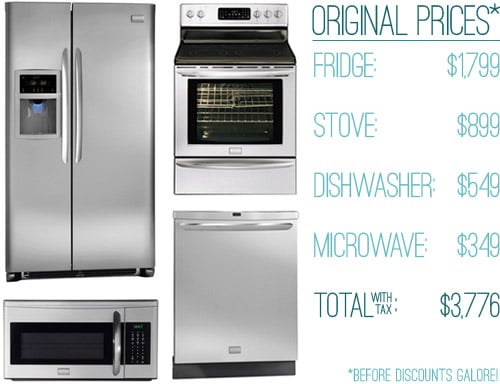
Buying kitchen appliances can feel like walking into a shiny, stainless-steel jungle where every refrigerator has Wi-Fi, every oven has opinions, and every price tag looks like it was written during a brief national shortage of common sense. When we started shopping for our kitchen appliances, we had one simple goal: get reliable, good-looking, energy-efficient appliances without donating our entire renovation budget to the Appliance Gods.
Somehow, through timing, patience, price comparisons, rebates, open-box hunting, and a mild amount of spreadsheet behavior, we ended up saving about 63% off the original retail pricing. No coupon fairy visited us. No cousin worked in a warehouse. We simply learned how appliance pricing really works and stopped shopping like people who panic-buy dishwashers at full price on a Tuesday.
This guide breaks down exactly how to save money on kitchen appliances, including refrigerators, ranges, dishwashers, microwaves, cooktops, wall ovens, and appliance packages. Whether you are remodeling a whole kitchen or replacing one sad appliance that has started making raccoon noises, these tips can help you spend less without buying junk.
Why Kitchen Appliances Are So Expensive in the First Place
Kitchen appliances are expensive because they combine machinery, electronics, design, delivery logistics, installation requirements, warranties, and brand reputation into one very heavy box. A refrigerator is not just a cold cabinet. It is a temperature-controlled food guardian that runs 24 hours a day, quietly judging how many condiments you own.
Major appliances also have complicated pricing. The sticker price you see online is often not the final price shoppers actually pay. Retailers run frequent promotions around holidays, manufacturers offer rebates, local utilities may provide incentives for ENERGY STAR certified models, and stores discount open-box, scratch-and-dent, discontinued, or floor-model inventory. In other words, full price is often the opening act, not the grand finale.
Our 63% Savings Strategy: The Big Picture
We saved money by combining several smaller strategies instead of waiting for one magical mega-discount. The final savings came from buying during a major sale period, choosing a kitchen appliance package, comparing multiple retailers, checking rebate programs, considering open-box models, and being flexible about features that sounded fancy but did not actually improve daily life.
Here is the simple version: we did not start by asking, “What is the prettiest appliance?” We started by asking, “What do we actually need, what fits our space, what has good efficiency ratings, and where can we stack discounts without creating a customer-service nightmare?” That one mindset shift saved us more than any single coupon code.
Step 1: We Measured Everything Before Shopping
The least glamorous money-saving tip is also one of the most important: measure your space before you fall in love with an appliance. Measure the width, height, depth, doorway clearance, cabinet opening, counter depth, gas or electrical connection location, water line access, and ventilation needs.
Why does this matter? Because buying the wrong size appliance is expensive. A refrigerator that sticks out too far can block a cabinet. A range that needs a different electrical outlet can trigger an unplanned electrician visit. A dishwasher with the wrong installation requirements can turn a “great deal” into a tiny financial ambush wearing a stainless-steel hat.
Our measurement checklist included:
- Cabinet opening width and height
- Door swing clearance
- Depth with handles included
- Delivery path through doors and hallways
- Electrical, gas, and water hookup locations
- Ventilation requirements for cooking appliances
Before we compared prices, we eliminated anything that did not physically fit. This kept us from wasting time on beautiful appliances that belonged in someone else’s kitchen, preferably one with wider doorways.
Step 2: We Waited for the Right Appliance Sale
Timing matters. Major appliance sales commonly appear around Presidents Day, Memorial Day, Fourth of July, Labor Day, Black Friday, Cyber Monday, and end-of-year clearance periods. Retailers also discount older models when new product lines arrive. If your appliance has completely died, you may not have the luxury of waiting. But if you are planning a remodel, timing your purchase can save hundreds or even thousands of dollars.
We watched prices for several weeks before buying. This helped us recognize the difference between a real discount and a “sale” where the price tag simply put on sunglasses and called itself special. Some appliance deals are genuinely strong. Others are just marketing confetti.
Best times to look for kitchen appliance deals
- Memorial Day weekend
- Fourth of July sales
- Labor Day promotions
- Black Friday and Cyber Monday
- End-of-year clearance
- Model changeover periods
Our biggest markdown appeared during a holiday promotion, but the sale alone did not create the 63% savings. The secret was stacking that sale with package discounts, rebates, and a discounted model condition.
Step 3: We Compared Appliance Packages Instead of Buying One Piece at a Time
One of the easiest ways to save money on kitchen appliances is to shop appliance packages. Retailers and manufacturers often offer extra savings when you buy multiple appliances from the same brand or collection. A typical package might include a refrigerator, range, dishwasher, and over-the-range microwave. Higher-end packages may include a cooktop, wall oven, hood, or built-in microwave.
Appliance packages can be useful because the finishes match, the handles coordinate, and the bundle discount may be better than buying each item separately. But packages are not automatically the best deal. Sometimes one appliance in the package is excellent while another is merely there to complete the family photo.
We priced each appliance individually, then compared the total to the package price. We also checked whether the package qualified for a manufacturer rebate. That step mattered because some rebates only apply when you buy appliances from multiple categories, such as refrigeration, cooking, dishwashing, and ventilation.
What we checked before choosing a package
- Was the package cheaper than buying each item separately?
- Did every appliance fit our kitchen layout?
- Did the package qualify for a rebate?
- Were delivery and installation included or extra?
- Were all items actually in stock?
- Would one delayed appliance hold up the whole kitchen?
The winning package was not the fanciest one. It was the one that gave us the right mix of price, reliability, size, efficiency, and availability. Fancy is nice. A dishwasher that arrives on time and does not require a second mortgage is nicer.
Step 4: We Looked at Open-Box and Scratch-and-Dent Appliances
Open-box appliances can be one of the best ways to save money if you inspect them carefully. These items may have been returned, delivered and refused, displayed in a showroom, or opened but never heavily used. Some are nearly perfect. Others have cosmetic flaws, missing accessories, or packaging damage.
We were comfortable with minor side-panel scratches because those sides would be hidden by cabinets. We were not comfortable with dents on doors, damaged control panels, missing racks, or anything that suggested rough handling. Cosmetic damage can be a bargain. Functional damage is a headache with a plug.
Our open-box inspection rules
- Check the front, sides, handles, corners, and control panel.
- Confirm the model number exactly matches the listing.
- Ask whether the manufacturer warranty still applies.
- Check whether accessories, racks, manuals, and hoses are included.
- Understand the return policy before paying.
- Take photos before and after delivery.
One of our best savings came from an open-box appliance with a small side scratch. Once installed, the scratch disappeared against the cabinet. The discount, however, remained beautifully visible in our budget.
Step 5: We Used Rebates Like Responsible Adults
Rebates are easy to ignore because they require paperwork, deadlines, serial numbers, receipts, and the emotional stamina to upload a PDF at 11:37 p.m. But appliance rebates can be worth real money. Manufacturer rebates, retailer rebates, and local utility incentives may apply to qualifying models, especially ENERGY STAR certified appliances.
We checked rebate centers before purchasing, not after. That is important because many rebates have strict purchase dates, delivery deadlines, model requirements, and submission windows. Buying first and checking later is how people accidentally miss $200 and then spend the evening whispering dramatically into a cereal bowl.
Rebate details we verified
- Eligible model numbers
- Purchase date range
- Delivery deadline
- Submission deadline
- Required documents
- Whether online submission was available
- Whether multiple rebates could be combined
We saved additional money by choosing models that qualified for rebates without upgrading to unnecessary luxury features. A rebate is only helpful if the final price still makes sense.
Step 6: We Paid Attention to ENERGY STAR and EnergyGuide Labels
The purchase price is only one part of appliance cost. Refrigerators, dishwashers, and other kitchen appliances also cost money to operate. That is why we looked at ENERGY STAR certification and the yellow EnergyGuide label, which helps compare estimated annual energy use and operating cost among similar models.
An efficient appliance may cost more upfront but save money over time. However, we did not automatically buy the most expensive “green” model. We compared the estimated yearly operating cost, our local electricity rates, and the price difference. The goal was not to win an imaginary trophy for maximum efficiency. The goal was to lower total cost of ownership.
How we used energy information
- We compared annual operating cost estimates.
- We checked for ENERGY STAR certified models.
- We looked for local utility rebates.
- We avoided oversized appliances that used more energy than we needed.
- We considered long-term savings, not just checkout price.
This helped us choose appliances that were affordable both on purchase day and on every utility bill afterward. That second part is easy to forget when the showroom lighting is sparkling off a French-door refrigerator like it is auditioning for a cooking show.
Step 7: We Avoided Paying Extra for Features We Would Not Use
Appliance features can get out of hand quickly. Smart screens, app alerts, craft ice, built-in cameras, voice control, specialty cooking modes, and dramatic lighting all sound exciting until you realize you mostly need cold milk, clean plates, and an oven that does not burn frozen pizza into archaeological material.
We made a “must-have” list and a “nice-but-not-worth-$700” list. This was surprisingly freeing. It helped us avoid paying for technology that might become outdated before the appliance itself wore out.
Features we prioritized
- Reliable temperature control
- Quiet dishwasher operation
- Easy-to-clean surfaces
- Good storage layout
- Proper size and fit
- Reasonable energy use
- Strong warranty coverage
Features we treated carefully
- Built-in touchscreens
- Ultra-premium finishes
- Special ice systems
- Smart features we would rarely use
- Oversized capacity we did not need
This did not mean we bought the cheapest appliances available. Cheap can become expensive if repairs start early. Instead, we aimed for the best value: dependable models with the features we would actually use.
Step 8: We Checked Delivery, Installation, and Haul-Away Costs
A low appliance price can become less impressive when delivery, installation parts, haul-away, permits, or special hookups appear at checkout. Before buying, we compared the full delivered price, not just the product price.
Some retailers include basic delivery for qualifying purchases. Others charge depending on location, product type, service level, stairs, installation needs, or haul-away requests. Built-in appliances, gas appliances, dishwashers, and wall ovens may require professional installation. Local codes can also affect who is allowed to connect certain appliances.
Costs we checked before checkout
- Delivery fee
- Installation fee
- Required installation kit or power cord
- Old appliance haul-away
- Gas line or water line requirements
- Return pickup fees
- Restocking fees, if applicable
This is where many “cheap” appliances lose their sparkle. We chose the retailer with the best total cost and clearest service terms, not just the lowest headline price.
Step 9: We Used Price Matching and Price Adjustments Carefully
Price matching can help, but policies vary. Some retailers match only identical new items sold by approved competitors. Many exclude clearance, refurbished, open-box, marketplace sellers, limited-time promotions, membership deals, or special event pricing. Translation: read the fine print before you stride into customer service like a coupon cowboy.
We saved by documenting prices with screenshots, model numbers, dates, and retailer names. We also watched prices after purchase during the return or adjustment window. If a retailer lowers its own price shortly after you buy, you may be able to request a price adjustment depending on the store policy.
Price comparison tips that helped us
- Compare exact model numbers, not just similar names.
- Check whether the item is sold directly by the retailer.
- Include delivery and installation in the comparison.
- Save screenshots before the sale ends.
- Ask about price adjustments within the allowed window.
Exact model numbers matter because appliance names can be confusing. Two refrigerators may look nearly identical but have different finishes, capacities, ice makers, shelves, or warranty terms. Close enough is not good enough when asking for a match.
Step 10: We Inspected Everything at Delivery
Delivery day is not the time to be shy. Inspect your appliances before signing anything that says they arrived in acceptable condition. Look for dents, scratches, broken handles, cracked trim, missing parts, and packaging damage. If possible, plug in or test appliances according to the delivery team’s process.
We checked each appliance carefully and photographed everything. This may feel excessive, but appliances are big, expensive, and occasionally treated by delivery trucks as if they are contestants in a metal-box rodeo. If something is damaged, report it immediately and follow the retailer’s required process.
Our delivery-day checklist
- Inspect packaging before unboxing.
- Check visible surfaces for dents and scratches.
- Confirm model and serial numbers.
- Verify all included accessories.
- Test doors, drawers, racks, and controls.
- Take photos before installation.
- Report damage immediately.
This step protects your savings. A discounted appliance is only a win if it arrives in the condition you agreed to buy.
What Our Final Savings Looked Like
Our final appliance savings came from multiple layers. The biggest discount came from seasonal sale pricing. The second-largest came from package savings. Additional savings came from open-box pricing, rebates, and avoiding unnecessary premium upgrades.
For example, imagine a kitchen appliance set with an original combined retail price of $8,000. A holiday sale might lower it to $5,600. Package savings might reduce it to $4,900. An open-box refrigerator or floor-model range could bring the total to $3,600. Manufacturer and utility rebates might reduce the effective cost to around $3,000. That is not an exact receipt from every shopper’s life, but it shows how layered discounts can create a dramatic final result.
The key is stacking legitimate savings without sacrificing fit, safety, warranty coverage, or reliability. Saving 63% on the wrong appliances is not a victory. It is just an expensive scavenger hunt with delivery windows.
Extra Experience: What We Learned After Living With the Appliances
Saving money at checkout felt fantastic, but the real test came after installation. Appliances are not decorative trophies. They have to survive daily life: breakfast chaos, dinner experiments, dishwasher overloads, mystery leftovers, and the occasional “Why is the oven beeping?” family meeting.
The first thing we learned is that quiet appliances are worth prioritizing. Our dishwasher was not the absolute cheapest model available, but it had a lower noise rating than the bargain-basement options. That mattered more than we expected. In an open kitchen, a loud dishwasher can turn movie night into “subtitles or nothing.” Spending slightly more for quiet operation was a value decision, not a luxury decision.
The refrigerator taught us another lesson: layout matters more than capacity numbers alone. A huge refrigerator with awkward shelves can feel smaller than a modest one with smart storage. We tested the door bins, freezer drawers, shelf adjustments, and deli drawer before buying. That small effort paid off every week. The fridge holds groceries efficiently, and we do not have to perform vegetable archaeology to find the spinach.
Our range confirmed that simple controls are underrated. We considered models with more cooking modes than a spaceship, but we ultimately chose one with dependable burners, an accurate oven, and easy cleaning. After months of use, we have not once wished the range could connect to an app. We have, however, appreciated that sauce splatters wipe up quickly and the oven temperature behaves like a responsible adult.
The microwave was where we almost overspent. Built-in and drawer-style microwaves can look sleek, but they can also be expensive. We chose an over-the-range microwave that matched the set and handled ventilation needs well enough for our cooking style. It was not the most glamorous choice, but it saved cabinet space and money. Sometimes the smartest design decision is the one that does its job and quietly minds its business.
We also learned to register warranties immediately. After installation, we took photos of every serial number, saved digital receipts, submitted rebates, and stored warranty documents in a cloud folder. This took less than an hour and prevented future confusion. If something breaks later, we will not be crawling behind a refrigerator with a flashlight, muttering dramatic things about model numbers.
Maintenance became part of the savings plan too. We clean the dishwasher filter, wipe refrigerator gaskets, vacuum refrigerator coils when accessible, avoid overloading shelves, and use the right cooking settings. These habits help appliances run efficiently and may extend their lifespan. A deal is not only about buying low; it is also about keeping the appliance working well for years.
Finally, we learned that patience beats panic. The worst appliance purchases often happen when something breaks and you need a replacement immediately. If possible, plan ahead when appliances are aging. Watch prices before the emergency. Know your measurements. Save a shortlist of models. That way, when your dishwasher finally gives up and starts washing dishes with the enthusiasm of a tired garden hose, you are ready.
Final Thoughts: Saving Money Without Regret
Saving 63% on kitchen appliances was not about being lucky. It was about being prepared, flexible, and slightly suspicious of every “limited-time deal” banner. We measured first, watched prices, shopped holiday sales, compared appliance packages, checked rebates, considered open-box options, reviewed delivery costs, and avoided features we did not need.
The best appliance deal is not always the lowest price. It is the lowest smart price for an appliance that fits your space, suits your habits, qualifies for useful savings, and will not make you regret your life choices every time you open the freezer.
If you are shopping for kitchen appliances, slow down before you click “buy.” Compare the full cost. Check the model number. Look for rebates. Ask about price matching. Inspect delivery. And remember: stainless steel is pretty, but saving hundreds or thousands of dollars is also a design feature.
Note: Savings percentages vary by retailer, model, location, sale timing, rebate eligibility, and product condition. Always verify current prices, warranty terms, return policies, and installation requirements before purchasing.