Maple syrup may look like the kind of food that refuses to change. It comes from trees, arrives in charming glass bottles, and makes pancakes behave like they finally found their purpose in life. But behind that cozy breakfast-table image, maple syrup production is becoming a surprisingly high-tech field. Scientists, university researchers, extension specialists, and producers are rethinking nearly every step of the process: how sap flows, how trees respond to weather, how vacuum systems improve yield, how reverse osmosis saves energy, and how climate data can help sugarmakers plan smarter seasons.
The result is not a futuristic syrup that tastes like a lab coat. The goal is the opposite: protect the classic maple flavor while making production more efficient, sustainable, consistent, and resilient. Maple producers still depend on forests, freezing nights, thawing days, and a whole lot of patience. The difference is that today’s sugarbush may also include sensors, vacuum pumps, sanitary tubing systems, high-efficiency evaporators, sap chillers, Brix meters, climate models, and reverse osmosis membranes. In other words, Grandma’s syrup operation has quietly learned to speak fluent engineering.
This transformation matters because maple syrup is both a beloved natural sweetener and an important regional agricultural product in the United States. Vermont, New York, Maine, Wisconsin, Michigan, Pennsylvania, Ohio, and other states all play roles in the industry. At the same time, warmer winters, shorter freeze-thaw windows, forest health concerns, pests, labor shortages, and rising fuel costs are putting pressure on producers. New methods are helping the industry adapt without losing the soul of maple sugaring.
The Science Behind Maple Syrup Starts Inside the Tree
To understand why scientists are so involved in maple syrup production, it helps to know that sap flow is already a natural physics experiment. Maple sap moves best when nights fall below freezing and days rise above freezing. During cold periods, pressure inside the tree changes as gases contract and water is drawn through the wood. When temperatures warm again, internal pressure increases and sap can flow from a tap hole.
That simple explanation, however, hides a complicated system. Sap flow depends on tree physiology, air temperature, soil temperature, internal tree pressure, sugar concentration, moisture, timing, and the health of the sugarbush. Researchers are now using modern monitoring tools to measure those variables in real time. Instead of relying only on tradition and weather folklore, scientists can track what is happening inside the tree and around it.
This is a major shift. For generations, sugarmakers learned by watching the woods, feeling the weather, and remembering what worked last year. Those skills still matter. But now researchers can add data to the craft. When does sap begin to run? How does high vacuum affect flow? What happens when soil warms earlier than expected? How does a stressed tree behave compared with a healthy one? These questions are no longer just discussed over coffee in the sugarhouse. They are being measured.
Vacuum Tubing Has Changed the Sugarbush
One of the biggest changes in modern maple syrup production is the move from buckets to tubing systems, especially vacuum tubing. Traditional bucket collection has charm. It also has a habit of turning sap collection into a full-body workout. Buckets must be checked, carried, emptied, cleaned, and protected from debris. Charming? Yes. Efficient for large operations? Not exactly.
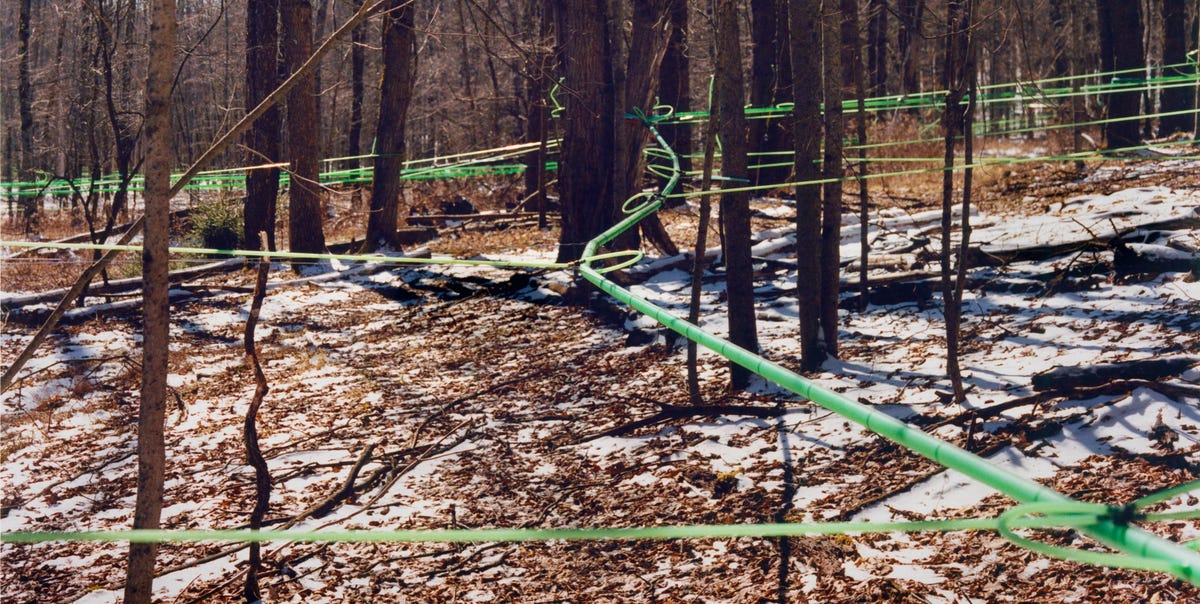
Modern tubing systems connect taps to lines that carry sap downhill or toward a collection point. When vacuum pumps are added, the system lowers pressure at the tap hole and increases the pressure difference between the inside of the tree and the tubing. That can improve sap flow and help producers collect more sap during a season. It also reduces labor because sap moves directly to tanks instead of being hauled by hand through snow, mud, or the strange spring mixture of both that seems designed specifically to ruin boots.
Vacuum tubing is not just a convenience upgrade. It has reshaped maple economics. More sap per tap can mean better use of existing trees, more predictable output, and improved efficiency. For producers dealing with shorter or more erratic seasons, that matters. If the best sap weather arrives in quick bursts, the operation has to capture those runs efficiently. A leaky, poorly designed tubing system can waste opportunity. A well-maintained vacuum system can turn a narrow weather window into a strong production day.
Why Tubing Design Matters
Scientists and extension specialists now study tubing diameter, slope, line layout, vacuum levels, leaks, tap placement, and sanitation. Even small details can have big effects. A tiny leak may reduce vacuum across part of a system. A poorly sloped line can leave sap sitting in warm tubing. Old spouts or dirty drop lines can encourage microbial growth near the tap hole. In maple production, the small stuff can absolutely bite. It is not dramatic, but neither is a leaky garden hose until you realize your shoes are soaked.
Research into tubing systems helps producers make practical decisions. Should they use gravity or mechanical vacuum? How often should spouts be replaced? How should lateral lines be installed? When should tubing be cleaned or replaced? These questions affect yield, syrup quality, labor, and cost. The modern sugarbush is part forest, part plumbing system, and part science project.
Sanitation Is Becoming a Production Tool
When people think of maple syrup, they often picture steam rising from an evaporator. They may not immediately think of sanitation, but clean systems are essential. Sap is a natural product with sugars, minerals, and water, which means microorganisms can multiply if sap sits too long or equipment is poorly maintained. That microbial activity can affect flavor, reduce quality, and contribute to lower yields.
Scientists have studied how bacterial growth in tubing systems affects sap flow and taphole performance. Modern sanitation strategies include using new spouts, maintaining clean drop lines, keeping tubing drained, repairing leaks, filtering sap, and processing or chilling sap quickly. Some innovations, such as check-valve-style adapters, are designed to reduce backflow into tap holes and help keep the tapping zone cleaner.
This is where maple production starts to look a little like food science and a little like forest medicine. Producers are not only collecting sap; they are managing a living tree wound in a way that protects both yield and tree health. A clean tap hole may remain productive longer during the season. A dirty or contaminated system may shut down flow earlier. That makes sanitation one of the least glamorous but most powerful tools in modern maple syrup production.
Reverse Osmosis Is Saving Time, Fuel, and Patience
Reverse osmosis, often called RO, has become one of the most important technologies in maple syrup production. Maple sap is mostly water. A common rule of thumb says it can take roughly 40 gallons of sap to make one gallon of syrup, though the exact amount depends on sugar content. That means boiling is not just a cooking step; it is a water-removal marathon.
RO systems use pressure and semipermeable membranes to remove a significant portion of water from sap before boiling. The sugars and dissolved solids stay in the concentrate, while much of the water is separated out. The concentrated sap still needs heat to develop the classic maple flavor and reach the proper density, but it requires far less boiling than raw sap.
The benefits are obvious: less fuel, less time, lower labor demands, and faster processing when sap runs heavily. For commercial producers, those savings can be enormous. For smaller producers, even a modest RO system can make the difference between an enjoyable sugaring season and a sleep-deprived friendship test. Anyone who has boiled sap late into the night knows that romance fades quickly when the evaporator still needs “just a little longer” at 2 a.m.
RO Does Not Replace the Evaporator
One important point: reverse osmosis does not make finished syrup by itself. Maple flavor develops through heat. The evaporator remains essential because boiling triggers chemical changes that create the familiar aroma, color, and flavor of maple syrup. RO simply removes water before that finishing stage, allowing producers to use heat more efficiently.
This is why researchers study not only whether RO saves energy, but also how different concentration levels affect syrup quality. If sap is concentrated too aggressively or handled poorly, the final syrup may not develop the same desirable character. The best systems balance efficiency with flavor. After all, nobody wants a syrup that is technically impressive but tastes like someone whispered “maple” into a glass of sugar water.
Sap Chilling and Storage Are Getting More Attention
Sap quality begins changing soon after it leaves the tree. Warm storage conditions can encourage microbial growth and off-flavors. As maple seasons become less predictable, producers may collect large volumes of sap during short runs, then need to hold it before processing. That makes storage a serious issue.
Modern operations increasingly use stainless steel tanks, food-grade storage vessels, filtration systems, refrigerated tanks, and rapid processing schedules. Sap chilling helps preserve quality when immediate boiling is not practical. This is especially useful for producers who collect more sap than their evaporator can handle in a single day.
Better storage also supports larger and more efficient operations. A sugarhouse with enough clean, cold storage can manage big sap runs without sacrificing quality. A producer with inadequate storage may be forced to boil around the clock or risk spoilage. In the maple world, storage is not boring infrastructure. It is the difference between premium syrup and a very expensive lesson.
Climate Data Is Helping Producers Adapt
Climate change is one of the biggest long-term challenges facing maple syrup production. Maple sap depends on freeze-thaw cycles, and those cycles are shifting in many regions. Warmer winters can move tapping seasons earlier, shorten ideal sap runs, or create more unpredictable conditions. Tree stress, drought, pests, and forest composition changes can also affect the future of maple production.
Scientists are responding with climate monitoring networks, sap-flow studies, forest health research, and production models. Some research tracks how sap flow, sugar content, and chemical composition may change across the maple range. Other work looks at how producers are adapting by tapping earlier, improving vacuum systems, using reverse osmosis, expanding tap counts, diversifying forests, or experimenting with other maple species in suitable regions.
The future is not as simple as “maple syrup disappears” or “technology fixes everything.” The more realistic story is complicated. Some areas may face more stress, while others may gain opportunities. Seasons may become more variable. Producers who invest in monitoring, forest health, and efficient equipment may be better prepared. Scientists are giving the industry better tools to understand what is changing and how to respond.
High-Efficiency Evaporators Are Making the Sugarhouse Smarter
The evaporator remains the heart of the sugarhouse. It is where concentrated sap becomes syrup, where steam fills the air, and where visitors suddenly understand why sugarmakers talk about boiling with the seriousness of airline pilots discussing landing conditions.
Modern evaporators are designed for better heat transfer, faster evaporation, and improved fuel efficiency. Some use flue pans, forced draft systems, preheaters, steam hoods, automatic draw-off controls, and more precise temperature management. These upgrades help producers finish syrup more consistently while using less energy.
Fuel matters because boiling sap can be expensive. Wood, oil, propane, and other fuels all carry costs. When RO removes water before boiling and efficient evaporators handle the finishing stage, producers can reduce emissions, lower operating expenses, and make better use of labor. Efficiency is not just about making more syrup. It is about making maple syrup in a way that remains economically realistic.
Data Tools Are Turning Sugaring Into Precision Agriculture
Maple production is joining the broader movement toward precision agriculture. Sensors can measure sap flow, vacuum pressure, tank levels, temperature, and sugar content. Remote monitors can alert producers to leaks, pump problems, or full tanks. Brix refractometers help measure sugar concentration. Digital records help compare seasons, equipment changes, yields, and quality outcomes.
These tools are especially valuable because sap runs are time-sensitive. If a vacuum pump fails during a major run, lost hours can mean lost production. If a tank is full and no one knows, sap can back up or overflow. If a leak reduces vacuum in one section of tubing, dozens or hundreds of taps may underperform. Monitoring systems allow producers to respond faster.
Of course, technology does not replace judgment. A sensor can report a pressure drop, but a producer still needs to know whether the issue is a squirrel-chewed line, a loose fitting, ice blockage, or a pump problem. Maple production remains wonderfully hands-on. The difference is that producers now have better clues before walking into the woods with tools, tape, and a deeply suspicious attitude toward wildlife.
New Research Is Expanding Where Maple Syrup Can Be Produced
Although sugar maple is the classic species for syrup, researchers and producers are also exploring production from red maple, silver maple, boxelder, and bigleaf maple in regions where conditions allow. These species may have different sap sugar levels, flavors, flow patterns, and processing needs. In some cases, lower sugar content means more water must be removed, making reverse osmosis especially useful.
This research could open opportunities for states and regions not traditionally viewed as maple powerhouses. It also supports agroforestry, local food systems, and forest-based income. A landowner with suitable trees may not become the next giant maple producer, but they may develop a small seasonal business, educational project, or value-added product line.
Still, expansion requires careful planning. Not every tree, site, or climate is suitable. Producers must consider tree health, tap density, equipment cost, food safety, labor, marketing, and local regulations. The science helps identify what is possible, but successful maple production still depends on practical management.
Forest Health Is the Foundation of the Whole Industry
All the technology in the world cannot help if the trees are unhealthy. Sustainable maple syrup production depends on strong forests, proper tapping practices, good soil conditions, and long-term sugarbush management. Scientists study tree growth, crown health, regeneration, pests, disease, invasive plants, soil nutrition, and climate stress because syrup starts long before sap enters a tube.
Modern producers are paying more attention to forest diversity and resilience. A healthy sugarbush may include different age classes, species diversity, wildlife habitat, erosion control, and careful thinning. Tapping guidelines help protect trees from excessive wounding. Proper tap depth, tap size, and spacing reduce damage and allow trees to compartmentalize wounds over time.
This may be the most important lesson from current research: maple syrup production is not just extraction. It is stewardship. The best producers are not mining trees for sweetness; they are managing forests so those trees can keep producing for decades. Maple syrup is renewable only when the sugarbush is treated as a living system, not a syrup vending machine with bark.
How Science Is Protecting Maple Flavor
Efficiency is exciting, but maple syrup ultimately succeeds or fails by flavor. Consumers want rich, clean, authentic maple character. Scientists and quality specialists study how sap handling, microbial activity, boiling methods, filtration, density, color, and storage affect finished syrup. Quality control manuals and extension programs help producers avoid off-flavors, cloudiness, fermentation, improper density, and contamination.
Flavor is affected by many small decisions. Was the sap filtered before processing? Was it held too long? Was the evaporator clean? Was the syrup finished to the correct density? Was it packed hot enough in clean containers? Were filters changed regularly? A maple operation can have expensive equipment and still make poor syrup if quality control is weak.
This is why the new era of maple science is not just about making more syrup. It is about making better syrup more reliably. Advanced equipment can improve efficiency, but best practices protect taste. The perfect result is syrup that feels traditional to the consumer and scientific to the producer.
The Economics of Modern Maple Production
Maple syrup production is a business, and technology must earn its keep. Vacuum pumps, tubing, RO machines, stainless tanks, monitoring systems, and efficient evaporators all cost money. Producers must decide which investments match their scale, goals, terrain, labor availability, and market strategy.
For large operations, high-tech systems may pay for themselves through higher yields, lower fuel use, reduced labor, and better product consistency. For small producers, the decision is more personal. A hobbyist may not need a commercial RO unit or remote vacuum sensor. But a small-scale RO system, cleaner storage, or improved tubing layout might still save enough time and frustration to be worthwhile.
The key is not buying every shiny tool in the catalog. The key is identifying bottlenecks. Is the operation losing sap because of poor vacuum? Spending too much on fuel? Struggling with off-flavors? Running out of storage? Missing leaks? Boiling too slowly? Each problem points to a different solution. Good science helps producers invest wisely instead of throwing money at the sugarhouse and hoping syrup comes out.
Examples of Transformation in the Field
University research forests and extension programs are leading many of these changes. Cornell’s maple facilities, for example, support applied research, producer education, tubing and vacuum demonstrations, product development, and food science. UVM’s Proctor Maple Research Center studies sap flow, tree physiology, vacuum systems, sanitation, climate impacts, and forest health. University of Maine Extension provides guidance on quality control and equipment. Utah State Extension has helped explain sap collection and processing systems for producers in nontraditional maple regions. Ohio State maple specialists continue to emphasize sanitation, tubing maintenance, and quality.
These programs show how maple syrup production has become a collaboration among scientists, farmers, foresters, engineers, food safety experts, and educators. The industry is not abandoning tradition. It is building a stronger foundation under it.
What Consumers Should Know
For consumers, all this research means the bottle of maple syrup on the table may represent far more innovation than expected. That syrup may have started in a carefully managed forest, moved through a vacuum tubing system, passed through filters, been chilled in stainless storage, concentrated by reverse osmosis, finished in a high-efficiency evaporator, checked for density, graded by color and flavor, and packed under quality standards.
None of that makes maple syrup less natural. In fact, many of these methods help preserve quality and reduce waste. RO removes water, not maple character. Vacuum tubing collects sap more efficiently. Better sanitation protects flavor. Monitoring helps producers respond to problems quickly. Efficient evaporators reduce unnecessary fuel use. The product remains what it has always been: concentrated maple sap, finished with heat, skill, and timing.
Experiences and Lessons From the New Maple Syrup Era
Anyone who spends time around modern maple production quickly learns that the work is a blend of romance and realism. From the outside, sugaring looks peaceful: snow under the trees, steam from the sugarhouse, the smell of warm syrup, maybe a golden retriever wandering around as if it is quality-control manager. But inside the operation, every decision has consequences. A missed leak can lower vacuum. A warm tank can damage sap quality. A poorly timed boil can turn an easy day into a late-night marathon.
One practical experience that stands out is how dramatically reverse osmosis changes the rhythm of a sugaring day. In a small traditional setup, boiling raw sap can feel endless. The evaporator works hard, steam fills the air, and progress seems almost comically slow. Once sap is pre-concentrated, the work becomes more manageable. The producer still needs skill to finish the syrup correctly, but the process feels less like trying to empty a lake with a spoon. That time savings can make maple production more welcoming for families, small farms, and new producers who cannot dedicate every waking hour to boiling.
Another lesson comes from tubing systems. At first glance, tubing looks simple: blue lines running from tree to tree. In practice, it is a living network that needs attention. Lines sag. Fittings loosen. Wildlife interferes. Ice forms. Vacuum changes. Producers who walk their lines regularly often develop a strange sixth sense for problems. They notice a tube angle that looks wrong or a section that seems too quiet. Technology helps, but experience still matters. The best operations combine monitoring tools with boots-on-the-ground observation.
Sanitation may be the least romantic part of maple production, but it may also be the most underrated. Clean filters, fresh spouts, drained lines, food-grade tanks, and quick processing all protect the final flavor. Many beginners focus on the dramatic moment of boiling, but experienced producers know that syrup quality is won or lost long before the sap reaches the pan. A clean system gives the evaporator better raw material to work with. It is much easier to preserve good sap than to rescue bad sap.
Climate variability is another experience producers talk about often. Some seasons begin early. Some start, stop, and restart. Some deliver huge sap runs in short windows. Others feel like waiting for a bus that keeps changing routes. This unpredictability rewards flexible operations. Producers with good storage, strong vacuum, efficient RO, and reliable evaporator capacity can respond when the trees run. Producers who are under-equipped may watch valuable sap weather slip away.
There is also a human side to the transformation. New technology can make maple production more accessible, but it can also feel intimidating. A beginner may wonder whether they need sensors, pumps, membranes, special tanks, and a sugarhouse that resembles a small spaceship. The honest answer is no. Maple production can start simply. But science gives producers a path to improve step by step. First learn tree health and tapping basics. Then improve collection. Then improve storage. Then consider RO or better evaporation. The most successful upgrades solve real problems, not imaginary ones.
The biggest lesson is that maple syrup production remains deeply connected to place. A vacuum pump cannot create a healthy forest. Reverse osmosis cannot replace good sap. A sensor cannot make weather behave. Technology supports the work, but the trees still set the rules. That balance is what makes the new maple era so interesting. Scientists are not trying to turn maple syrup into an industrial imitation of itself. They are helping producers understand the forest better, waste less energy, protect flavor, and adapt to a changing climate.
In the end, the transformation of maple syrup production is not about making syrup less traditional. It is about making tradition more durable. The sugarhouse still smells like spring. The syrup still belongs on pancakes, waffles, oatmeal, roasted vegetables, coffee, and probably anything else willing to stand still long enough. The difference is that behind every delicious pour, there may now be a quiet army of data, membranes, pumps, sensors, and researchers helping the maple industry keep flowing.
Conclusion: The Future of Maple Syrup Is Smart, Sustainable, and Still Delicious
Scientists are transforming maple syrup production by improving how sap is collected, stored, concentrated, boiled, measured, and protected. Vacuum tubing systems increase yield and reduce labor. Reverse osmosis saves time and fuel. Better sanitation protects quality. Climate monitoring helps producers adapt to shifting seasons. Forest health research supports long-term sustainability. High-efficiency evaporators and digital tools make sugarhouses smarter without taking away the craft.
The future of maple syrup will not be built by technology alone. It will be built by producers who understand their trees, care for their forests, follow quality practices, and use science as a tool rather than a replacement for experience. That is good news for everyone who loves real maple syrup. The methods may be modern, but the mission is beautifully familiar: turn spring sap into something worth pouring slowly.