Modern life has become a group project where nobody read the instructions, everyone is talking at once, and somehow the loudest person is also selling a course. That is the deliciously uncomfortable world behind “Act Accordingly,” a comic series built around the chaos, contradictions, performative outrage, social media weirdness, and everyday hypocrisy that seem to define the current age.
The concept is simple but sharp: take the absurd situations people witness online and offline, compress them into a panel or short comic, and let humor do what lectures rarely can. Instead of wagging a finger, the comic holds up a mirror. Unfortunately, the mirror has excellent lighting, which means we can see every questionable decision, every fake humble post, every clout-chasing performance, and every moment when society says one thing while doing the exact opposite with confidence and a ring light.
Created by UNscenefuture, a graphic illustrator and writer, Act Accordingly was presented as a bi-monthly comic strip inspired by post-COVID weirdness, online behavior, and the strange feeling that the world took a wrong turn and forgot to update the rest of us. The artist describes the series as dark, funny, twisted, and whistle-blowing—a kind of illustrated field report from the front lines of modern society. In that sense, the pencil becomes a microphone, the marker becomes a camera, and the punchline becomes evidence.
Why Comics Are Perfect For Explaining Modern Chaos
Comics have always been better at catching human foolishness than long speeches. A good comic can make a point in three seconds that an essay might need three pages to explain. That speed matters today, because modern culture moves at the pace of a scrolling thumb. People do not always pause to read a 5,000-word breakdown of consumerism, hypocrisy, entitlement, loneliness, and digital performance. But they will stop for a comic that makes them laugh and then quietly ruins their afternoon by being too accurate.
This is why social satire works so well in visual form. Comics reduce complicated social behavior into recognizable scenes. A character with an exaggerated expression, a messy room, a phone glowing like a tiny judgmental sun, or a speech bubble full of self-importance can communicate an entire cultural problem without needing a footnote. The best modern comics do not merely say, “People are hypocritical.” They show the hypocrisy walking into the room wearing sunglasses and asking to speak to the manager.
Act Accordingly fits into a long tradition of cartooning as social commentary. Political cartoons, comic strips, and satirical illustrations have been used for generations to criticize power, mock trends, and translate public frustration into images people instantly understand. The difference now is the setting. Today’s town square is not just a newspaper page or a cafe conversation. It is Instagram, TikTok, Reddit, X, YouTube, group chats, comment sections, and whatever platform becomes everyone’s new personality next Thursday.
The Post-COVID Mood: Something Feels Off
One of the strongest ideas behind Act Accordingly is the feeling that life after COVID did not simply return to normal. It returned wearing a fake mustache and insisting nothing had changed. Many people became more online, more suspicious, more exhausted, and more sensitive to contradictions in public behavior. Work changed. Friendships changed. News habits changed. The gap between public virtue and private action became harder to ignore.
That post-pandemic atmosphere gives the comic series its emotional fuel. The humor is not random silliness; it comes from recognizing a shared tension. People want authenticity but perform constantly. They demand kindness but attack strangers for sport. They say they are tired of drama while refreshing drama every seven minutes. They criticize consumer culture while adding another limited-edition item to the cart because the algorithm whispered, “You deserve this.”
In that way, Act Accordingly is not just about laughing at others. It invites readers to notice the small contradictions in themselves. That is what makes satire sting. A weak joke says, “Look at those ridiculous people.” A strong comic says, “Look at those ridiculous people, and please notice you are standing right next to them holding the same phone.”
The 12 Comics As A Map Of Modern Hypocrisy
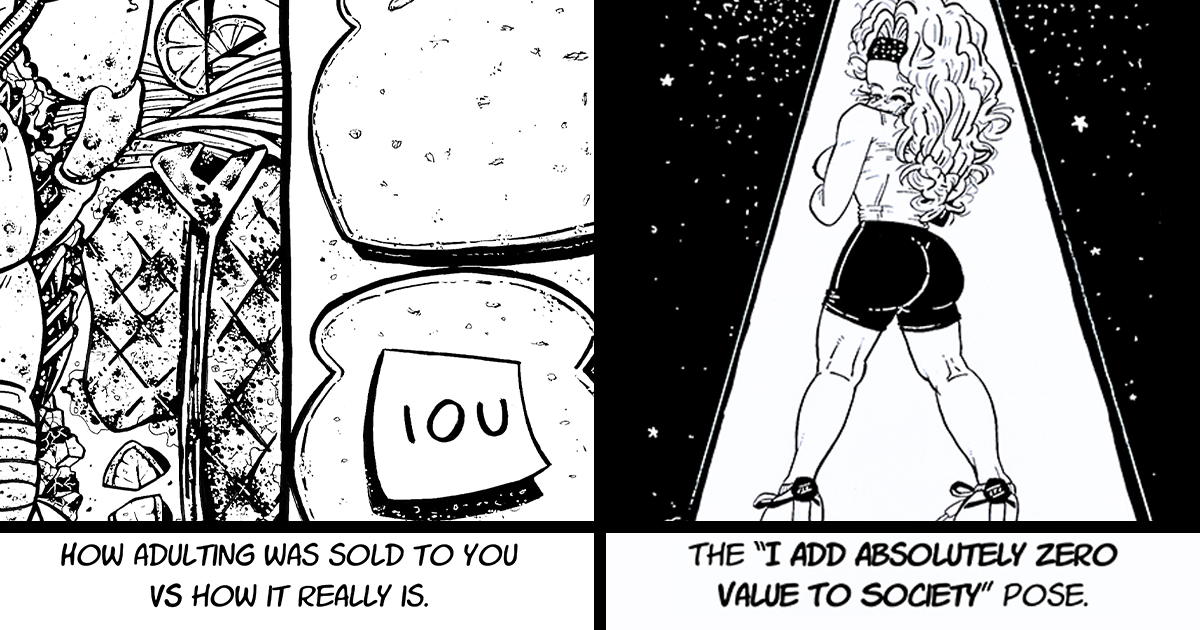
The collection includes titles such as “Adulting Is Hard,” “The Life Of Karen,” “Entitlement On Steroids,” “They Anything For Clout,” and “Anywhere USA.” Even without describing every panel, those titles reveal the territory: everyday frustration, public entitlement, attention-seeking behavior, social collapse jokes, and the strange comedy of people acting shocked by consequences they personally ordered from the menu.
“Adulting Is Hard” And The Exhaustion Economy
Adulting has become one of the most relatable modern punchlines because many people feel trapped between responsibility and absurdity. Rent is high, groceries require financial planning, inboxes multiply like gremlins, and everyone is supposed to maintain a skincare routine, a side hustle, emotional boundaries, and eight hours of sleep. Easy, right? Just become three people and a spreadsheet.
A comic about adulting works because it speaks to a generation that was told to dream big and then handed a bill for existing. The humor is not laziness; it is survival. When people laugh at adulting jokes, they are laughing at the impossible expectations of modern productivity culture. The joke says: yes, you are tired, and no, it is not just because you forgot to buy a planner.
“The Life Of Karen” And Public Entitlement
The “Karen” archetype has become shorthand for entitlement, performative victimhood, and the belief that personal inconvenience is a federal emergency. A comic built around this idea taps into a familiar social pattern: people who mistake control for justice and volume for truth.
But the best version of this satire does more than mock one type of person. It examines a broader culture of entitlement. We see it in customer service meltdowns, comment-section wars, neighborhood complaints, and the way people sometimes weaponize rules only when the rules benefit them. In modern life, hypocrisy often appears as selective outrage. A person may demand compassion in one moment and deny it to someone else in the next. That contradiction is comic gold, though probably not for the poor barista trapped inside the scene.
“They Anything For Clout” And The Performance Machine
Few phrases summarize the internet age better than “for clout.” Attention has become a strange currency. People chase visibility, reactions, followers, shares, and outrage because the system rewards performance. A bad opinion can travel farther than a thoughtful one. A staged moment can look more real than reality. A person can turn sincerity into branding and still ask everyone to “be authentic.”
This is where Act Accordingly feels especially timely. Online culture often blurs the line between personal expression and public marketing. A post can be a confession, an advertisement, a flex, a cry for help, and a networking strategy all at once. That confusion creates endless material for comics. The joke is not simply that people want attention. Everyone wants to be seen in some way. The deeper joke is that the platforms encourage people to turn their entire lives into audition tapes.
Social Media: The Stage Where Everyone Is A Critic And A Performer
Social media is one of the main engines behind the chaos that Act Accordingly observes. It has changed how people argue, learn, flirt, grieve, celebrate, shop, and publicly announce that they are taking a break from social media while continuing to post about the break. Platforms reward speed, emotion, novelty, and conflict. That does not automatically make them evil, but it does make them excellent machines for turning ordinary human flaws into public entertainment.
One major contradiction of modern online life is that people often complain about toxicity while feeding it. A person may say the internet is too negative, then spend an hour quote-posting strangers into the emotional woodchipper. Someone may criticize influencers for being fake, then carefully stage a casual photo that took 47 attempts and involved moving a houseplant six inches to the left. This is not because people are uniquely terrible now. It is because the tools make contradiction visible, measurable, and addictive.
The comic format captures this perfectly because a panel can freeze the exact moment when self-awareness leaves the building. A character can preach mindfulness while doomscrolling. Another can demand privacy while narrating their entire life to an audience. Someone can accuse others of being sheep while repeating a trend word-for-word. The comedy lives in the gap between the caption and the behavior.
Why Dark Humor Feels So Useful Right Now
Dark humor is not everyone’s cup of tea. Some people prefer gentle jokes, warm cartoons, and punchlines that feel like a soft blanket. That is fine. But for readers who feel overwhelmed by the absurdity of the moment, darker satire can be oddly comforting. It says, “You are not imagining this. Things are weird. Here is a drawing about it.”
There is a difference between cynicism and clear-eyed comedy. Cynicism says nothing matters. Satire says things matter so much that we need to laugh before we scream into a decorative pillow. Act Accordingly operates in that second space. The comics are not trying to solve every social problem. They are trying to notice them honestly, exaggerate them just enough, and give readers a moment of recognition.
That recognition is powerful. When people see a comic about entitlement, burnout, clout, or social hypocrisy, they may tag a friend, laugh, argue, or feel personally attacked by ink. Any of those reactions means the work has made contact. Good satire does not float politely above culture. It bumps into the furniture.
The Artist As A Reporter With A Pencil
One of the most interesting parts of the Act Accordingly concept is the creator’s self-description as a kind of reporter at ground zero, except armed with drawing tools instead of a microphone. That is an excellent way to understand modern cartoonists. They observe behavior, collect details, identify patterns, and turn them into scenes that feel both exaggerated and true.
The process also sounds refreshingly human. Ideas come from news, social media posts, direct messages, restless nights, shower thoughts, rough sketches, and conversations with creative friends. That matters because social satire needs observation. A comic about modern times cannot be built from theory alone. It has to come from watching how people actually behave when they are tired, insecure, angry, hopeful, bored, or desperate to be noticed.
The creator also mentions the challenge of balancing a full-time job, other projects, and the desire to make quality comics. That detail gives the series another layer. Many independent artists are not working in glamorous studios with unlimited time and dramatic background music. They are squeezing creativity between obligations. They are building a voice in stolen hours. They are trying to make something honest while life taps its foot and asks whether the laundry is done.
What Makes The Series SEO-Relevant And Shareable
From a digital publishing perspective, Act Accordingly has several strengths. First, the title is memorable. It sounds like advice, warning, and accusation all at once. Second, the subject is highly searchable: modern comics, social satire, hypocrisy, dark humor, social media culture, post-COVID life, clout chasing, entitlement, and adulting are all themes people actively recognize. Third, the work is built around emotional shareability. Readers share comics when they feel seen, amused, called out, or eager to call out someone else with plausible deniability.
The title also benefits from contrast. “Act Accordingly” is calm and almost formal, while the content deals with messy behavior. That contrast creates tension. It suggests that the world is giving us signs everywhere, and the only reasonable response is to behave with awareness. Of course, because this is modern society, many people will instead ignore the signs, livestream the disaster, and ask why nobody warned them.
Why The Hypocrisy Theme Connects With Readers
Hypocrisy is one of the most durable subjects in comedy because everyone recognizes it and almost nobody enjoys being accused of it. Modern hypocrisy is especially visible because people document their values in public. Bios, posts, hashtags, slogans, reaction videos, and comment histories can create a giant archive of what people claim to believe. Then real life arrives and asks for receipts.
That does not mean every contradiction is malicious. Humans are inconsistent. We grow, fail, learn, forget, and occasionally become the villain in someone else’s group chat. But satire becomes necessary when contradiction turns into performance: when people use moral language for status, demand accountability without practicing it, or treat empathy as a costume for public occasions.
Act Accordingly works because it notices these patterns without needing to deliver a courtroom speech. The comics offer a compact diagnosis: here is the behavior, here is the absurdity, here is the laugh, and here is the uncomfortable silence afterward.
Experiences Related To Creating Comics About Modern Chaos
Creating comics about the chaos and hypocrisy of modern times is a strange experience because the material never stops arriving. You can wake up with a blank sketchbook and, within ten minutes, find five potential comic ideas before finishing coffee. A trending argument, a bizarre advertisement, a celebrity apology, a workplace email written in cheerful corporate fog, or a stranger recording themselves doing charity with cinematic lighting can all become creative fuel. The problem is not finding absurdity. The problem is choosing which absurdity deserves ink first.
One of the biggest lessons from making satire is that reality often outruns exaggeration. You may sketch a character who says something ridiculous, then open your phone and discover someone has said the same thing sincerely, with a podcast microphone and sponsors. At that point, the cartoonist has to work harder. The comic cannot merely repeat reality; it has to frame it. The drawing must reveal the pattern behind the incident. Otherwise, it becomes yesterday’s meme instead of lasting commentary.
Another experience is learning how personal the work can feel. A comic about burnout might start as a joke about society, but halfway through drawing it, you realize you are also drawing yourself. The messy desk, the tired eyes, the fake optimism, the calendar full of tasks labeled “urgent”—these details may come from observation, but they also come from lived experience. That honesty makes the comic stronger. Readers can tell when satire is written from a balcony and when it is written from inside the storm.
There is also the challenge of tone. Push too softly, and the comic becomes forgettable. Push too hard, and the joke can turn into a lecture wearing cartoon shoes. The sweet spot is sharp but not lazy, dark but not empty, funny but not cruel for no reason. The goal is not to mock suffering. The goal is to expose the systems, habits, and contradictions that make people act against their own values while pretending everything is fine.
Feedback becomes part of the experience too. Some readers laugh immediately. Some feel seen. Some feel attacked. Some tag their friends with a suspiciously specific “this is you.” Others argue in the comments, which can accidentally prove the comic’s point with the efficiency of a self-own in formalwear. For a cartoonist, that reaction is useful. It shows that the image landed somewhere real.
Over time, creating comics like Act Accordingly can become a habit of paying attention. You begin to notice small social performances: the apology that avoids apologizing, the inspirational post that quietly sells insecurity, the outrage that disappears when it becomes inconvenient, the person preaching simplicity from a luxury unboxing video. These moments are funny because they are familiar. They are troubling for the same reason.
The best experience, though, is when a comic helps someone name a feeling they had not organized yet. Maybe they were tired of online performance but could not explain why. Maybe they felt the post-pandemic world had become stranger, louder, and less sincere. Maybe they needed a laugh that admitted things are messy without pretending to fix them. In those moments, a comic becomes more than a joke. It becomes a small, illustrated agreement between creator and reader: yes, this is absurd; yes, we noticed; now let’s act accordingly.
Conclusion
‘Act Accordingly’: I Made 12 Comics Based On The Chaos and Hypocrisy Of Modern Times is more than a collection of funny drawings. It is a visual commentary on a culture trying to look polished while tripping over its own contradictions. Through dark humor, social observation, and sharp comic timing, the series captures the post-COVID weirdness, online performance, entitlement, burnout, and clout-driven behavior that shape everyday life.
Its strength comes from recognition. Readers see the jokes because they have lived near them. They have watched people perform virtue, chase attention, complain about drama while feeding it, and call for accountability from a safe distance. The comics do not need to shout. They simply point, pause, and let the absurdity introduce itself.
In a time when everyone is overloaded with opinions, posts, alerts, and contradictions, comics like Act Accordingly offer something valuable: a fast, funny, uncomfortable moment of clarity. And honestly, if modern society insists on behaving like a badly moderated comment section, the least we can do is bring better cartoons.