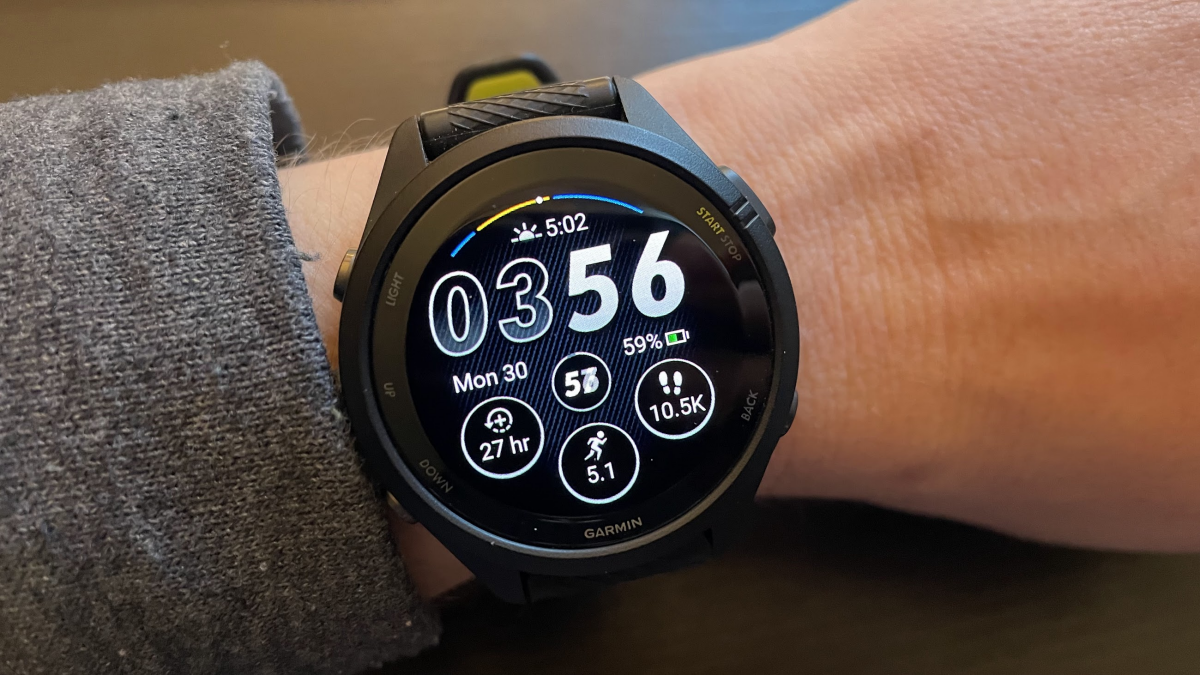
Choosing the best running watch can feel like picking a cereal in a grocery aisle the size of an airport terminal. There are watches for marathoners, watches for trail runners, watches for triathletes, watches that look like tiny rugged satellites, and watches that mainly exist to remind you that you have ignored your step goal again. But after comparing features, comfort, training tools, battery life, GPS accuracy, and everyday usefulness, I keep coming back to one answer: the Garmin Forerunner 265 and its smaller sibling, the Garmin Forerunner 265S.
Is it the most expensive Garmin watch? No. Is it the cheapest running watch? Also no. But that is exactly why it feels so good. The Forerunner 265 series sits in a sweet spot where serious running features meet a modern AMOLED display, long battery life, accurate multi-band GPS, and practical recovery insights. It is not trying to be a luxury smartwatch with a side hobby in jogging. It is a running watch first, and everything else comes secondwhich, for runners, is kind of the whole point.
In my opinion, the Garmin Forerunner 265/265S is the best running watch for most runners because it offers advanced training tools without forcing you to sell a kidney, refinance your shoes, or become a data scientist overnight.
Garmin Forerunner 265 vs. 265S: What Is the Difference?
The Garmin Forerunner 265 and 265S are essentially the same watch in two different sizes. The standard Forerunner 265 has a 46mm case and a 1.3-inch AMOLED display, while the Forerunner 265S has a smaller 42mm case and a 1.1-inch AMOLED display. The 265 weighs about 47 grams, and the 265S weighs about 39 grams, making both light enough for daily wear and long runs.
The smaller 265S actually gets slightly better battery life, offering up to 15 days in smartwatch mode and up to 24 hours in GPS mode. The larger Forerunner 265 offers up to 13 days in smartwatch mode and up to 20 hours in GPS mode. That is more than enough for daily training, half marathons, marathons, long weekend runs, and those “I swear I’m only doing five miles” runs that magically turn into eight.
The choice between the two is mostly about wrist size and personal comfort. If you like a larger display and do not mind a slightly bigger case, the Forerunner 265 is excellent. If you have smaller wrists or prefer a lighter watch, the Forerunner 265S may be the better fit. Either way, you get the same core running experience.
The AMOLED Display Is a Game-Changer
The first thing that makes the Garmin Forerunner 265 stand out is the bright AMOLED screen. Previous Forerunner models were known for practical, battery-friendly displays, but they were not exactly what anyone would call dazzling. The 265 changes that. The screen is colorful, sharp, and easy to read, whether you are checking pace in the morning sun or reviewing your workout while pretending not to wheeze at a stoplight.
The touchscreen is useful, but Garmin wisely kept its classic five-button layout. That matters more than it sounds. Touchscreens are great when you are sitting on the couch. They are less great when your fingers are sweaty, cold, gloved, or emotionally unavailable at mile 18. With the Forerunner 265, you can swipe when it is convenient and use buttons when your run turns into a battle scene.
This hybrid design makes the watch feel modern without sacrificing reliability. It is pretty enough for daily wear but still practical enough for workouts. That balance is one of the biggest reasons I think it beats many other GPS running watches in its class.
Accurate GPS That Runners Can Trust
A running watch can have all the fancy wellness features in the world, but if it cannot track your run accurately, it is basically a motivational bracelet with commitment issues. The Forerunner 265 includes SatIQ technology and multi-band GNSS support, which helps improve GPS accuracy in challenging environments such as cities, tree-covered routes, and areas where signals can bounce around.
For road runners, this is a major benefit. City running often includes tall buildings, bridges, tunnels, and chaotic intersections where GPS can get confused. Multi-band GPS helps create more consistent track logs and more reliable distance readings. That means your pace, splits, and post-run map are less likely to look like you were being chased by a squirrel through a shopping mall.
Reliable GPS also matters for training confidence. If you are doing intervals, tempo runs, marathon-pace workouts, or long-run progression sessions, you need data that is close enough to trust. The Garmin Forerunner 265 gives you that confidence without requiring you to buy Garmin’s highest-end outdoor watches.
Training Readiness Makes the Watch Feel Like a Coach
One of the most useful features on the Garmin Forerunner 265 is Training Readiness. This score combines factors such as sleep, recovery time, HRV status, recent training load, and stress to estimate how ready your body is for a hard workout. It is not magic, but it is surprisingly helpful.
Runners are famously bad at resting. We will ignore tight calves, bad sleep, suspicious knee sounds, and the fact that our body is sending an email titled “Please stop.” Training Readiness gives you a clearer signal. If the score is high, it may be a good day to push. If it is low, you may be better off doing an easy run, cross-training, or taking a rest day before your legs file a formal complaint.
This feature makes the Forerunner 265 feel more intelligent than a basic GPS watch. It does not just record what you did. It helps you decide what to do next. For runners trying to improve without overtraining, that is a big deal.
Morning Report Is Surprisingly Addictive
The Morning Report is another feature that sounds small until you start using it. When you wake up, the watch gives you a simple summary of your sleep, HRV status, training outlook, weather, and suggested workout. It feels like a tiny sports assistant on your wrist, minus the clipboard and whistle.
This is useful because it puts your training day into context. Maybe your plan says speed workout, but your sleep was terrible and your HRV status is off. Or maybe you expected to feel sluggish, but your recovery looks strong and the watch suggests a productive session. The Morning Report gives you quick information before you even open Garmin Connect.
For busy runners, this matters. Not everyone has time to analyze charts over breakfast. Sometimes you just need to know whether today is a “go crush it” day or a “jog gently and do not pick a fight with gravity” day.
Daily Suggested Workouts Are Actually Useful
Daily Suggested Workouts are one of Garmin’s most practical tools for runners who want structure but do not always want to follow a rigid training plan. The Forerunner 265 can suggest workouts based on your fitness, recovery, recent training, and race goals. These might include easy runs, base runs, tempo efforts, intervals, or long runs.
The best part is that the suggestions adapt. If you miss a workout, sleep badly, or do more training than expected, the watch adjusts. This flexibility makes the feature more realistic for normal life. Because normal life includes work deadlines, family plans, weather drama, sore hamstrings, and the occasional decision to eat tacos instead of doing hill repeats.
For beginners, Daily Suggested Workouts can provide direction. For intermediate runners, they can help add variety. For experienced runners, they can serve as a second opinion. You do not have to follow every suggestion, but having smart guidance on your wrist is incredibly convenient.
Race Widget and Adaptive Training Help You Prepare Smarter
If you have a race on the calendar, the Garmin Forerunner 265 becomes even more helpful. You can add your event, and the watch can provide race-focused training suggestions, countdown details, and workout guidance based on the race date and distance. This is especially useful for 5K, 10K, half marathon, and marathon preparation.
Instead of treating every week the same, the watch can help shape training around your goal. That makes it easier to build fitness gradually, avoid random workout chaos, and arrive at race day with a plan. The Race Widget is also a great psychological tool. Seeing your race countdown can be motivating, mildly terrifying, or both. Usually both.
For runners who are not ready to hire a coach but want something smarter than a printable training plan from 2011, this feature adds real value.
Running Dynamics and Performance Metrics Go Deep
The Garmin Forerunner 265 offers advanced running metrics that go beyond distance and pace. Depending on setup and compatible accessories, runners can track data such as cadence, stride length, vertical oscillation, ground contact time, running power, performance condition, training load, VO2 max estimates, recovery time, and more.
That may sound like a buffet of numbers, and yes, some runners will ignore half of them. That is fine. The beauty of the Forerunner 265 is that it gives you room to grow. Beginners can focus on pace, heart rate, and distance. More advanced runners can dig into training load, workout execution, intensity distribution, and recovery trends.
In other words, the watch does not become obsolete as your running improves. It can be simple when you need simple and detailed when you want to geek out over your long-run heart rate like it is a stock portfolio.
Battery Life Is Strong Enough for Real Training
Battery life is where many smartwatches fall apart for runners. A watch that needs charging every night can work for casual fitness tracking, but it becomes annoying when you are training consistently. The Forerunner 265 series offers impressive endurance for a watch with an AMOLED display.
With up to 13 days of smartwatch battery life on the Forerunner 265 and up to 15 days on the 265S, you can go several days without thinking about the charger. GPS battery life is also strong, with up to 20 hours on the 265 and up to 24 hours on the 265S. That is plenty for marathon training, long hikes, travel days, and most endurance events short of ultra-distance adventures.
Yes, using always-on display, music, and multi-band GPS will reduce battery life. That is normal. But even with real-world usage, the Forerunner 265 remains far more convenient than many lifestyle smartwatches that need constant charging.
It Handles More Than Running
Although the Forerunner 265 is built for runners, it is not a one-trick pony wearing running shoes. It supports multiple sport profiles, including cycling, swimming, strength training, yoga, HIIT, and triathlon-style training. It also has a 5 ATM water rating, making it suitable for pool workouts and rainy runs.
This matters because many runners cross-train. Maybe you cycle on recovery days, lift twice a week, swim during injury rehab, or do yoga because your hips have the mobility of office furniture. The Forerunner 265 can track those sessions and keep your overall training picture more complete.
It may not replace a full outdoor adventure watch with topographic maps and massive expedition battery life, but for road runners, fitness enthusiasts, and everyday athletes, it covers the important bases very well.
Music, Garmin Pay, and Smart Features Add Convenience
The Garmin Forerunner 265 includes built-in music storage, allowing you to download playlists from supported services such as Spotify, Amazon Music, or Deezer. That means you can run without carrying your phone, as long as you pair Bluetooth headphones. For many runners, phone-free music is a small luxury that feels enormous.
Garmin Pay is another useful feature. It lets you make contactless payments at supported locations, which is handy if you need water, coffee, or an emergency pastry after a long run. The watch also supports smartphone notifications, calendar alerts, weather, safety and tracking features when paired with a phone, and Garmin Connect syncing.
To be clear, this is not an Apple Watch replacement if your priority is apps, calling, messaging, and deep phone integration. But for runners who want smart features without sacrificing battery life and training tools, the Forerunner 265 gets the balance right.
Comfort Is One of Its Secret Weapons
Specs get all the attention, but comfort is what determines whether you actually wear the watch. The Forerunner 265 and 265S are light, slim enough for daily use, and comfortable during sleep tracking. That last part is important because sleep, HRV, recovery, and Training Readiness data become more useful when you wear the watch consistently.
The 265S is especially good for runners who find larger sports watches bulky. Its smaller case makes it easier to wear all day and all night. The standard 265 still feels light compared with many premium outdoor watches, especially those with metal bezels and larger cases.
A running watch should disappear on your wrist until you need it. The Forerunner 265 gets close to that ideal. It looks sporty but not ridiculous, which means you can wear it to the gym, office, grocery store, or post-run brunch where you pretend the side of fries was part of your carb-loading strategy.
Where the Garmin Forerunner 265 Is Not Perfect
No watch is perfect, and the Garmin Forerunner 265 has a few limitations. It does not include full-color onboard maps like higher-end Garmin models. If you regularly run unfamiliar trails, navigate remote routes, or want advanced mapping, a Forerunner 965/970, Fenix, or Epix-style watch may be better.
It is also not the cheapest running watch. Budget runners may prefer the Garmin Forerunner 165 or older Forerunner 255, especially if AMOLED display and Training Readiness are not must-have features. And if your top priority is smartwatch functionality, phone calls, app ecosystems, or voice assistants, Apple Watch or Samsung Galaxy Watch models may feel more versatile.
But for the specific job of being a serious running watch that also works well for everyday life, the Forerunner 265 remains extremely hard to beat.
Why I Think It Beats Cheaper Running Watches
Cheaper running watches can be excellent. Many track GPS, heart rate, pace, and workouts well enough for beginners. But the Forerunner 265 adds features that become more valuable as training gets more consistent. Training Readiness, HRV status, adaptive workouts, multi-band GPS, running dynamics, music storage, and the AMOLED display all make the experience feel more complete.
A cheaper watch might tell you what happened. The Forerunner 265 helps explain what it means and what you might do next. That is the difference between a tracker and a training partner.
For runners who only jog occasionally, this may be overkill. But for anyone training several days a week, preparing for races, or trying to improve without burning out, the extra tools are worth it.
Why I Think It Beats More Expensive Running Watches for Most People
Premium Garmin watches are fantastic, but many runners do not need everything they offer. Full maps, titanium bezels, sapphire lenses, flashlights, golf features, diving modes, and extreme battery life are great if you use them. If you do not, they are expensive decorations.
The Forerunner 265 gives most runners the features they will actually use every week: accurate GPS, advanced training data, recovery insights, workouts, race tools, music, strong battery life, and a bright display. It skips some high-end extras but keeps the essentials that matter most for running performance.
That is why I see it as the best value point in Garmin’s lineup. It is premium enough to feel powerful but not so premium that you are paying for features you will only use during a hypothetical mountain expedition you keep mentioning but never schedule.
Who Should Buy the Garmin Forerunner 265/265S?
Buy it if you are a serious beginner
If you are new to running but already know you want to train consistently, the Forerunner 265 gives you room to grow. You can start with basic metrics and gradually learn the advanced features.
Buy it if you are training for a race
For 5K, 10K, half marathon, and marathon training, the workout suggestions, Race Widget, pacing data, GPS accuracy, and recovery insights are genuinely useful.
Buy it if you want a watch you can wear every day
The AMOLED display, light design, notifications, music, Garmin Pay, and health tracking make it practical beyond workouts.
Buy the 265S if comfort is your top priority
The smaller size and lighter weight make the 265S a great option for smaller wrists or runners who dislike bulky watches.
Who Should Skip It?
Skip the Forerunner 265 if you need detailed onboard maps, ultra-long GPS battery life, rugged outdoor materials, or advanced smartwatch features like LTE calling. Also consider a cheaper model if you only run once or twice a week and mainly want basic pace and distance tracking.
But if you want a running-first watch with modern display quality, strong training tools, and excellent daily usability, the Garmin Forerunner 265/265S is one of the most compelling choices available.
My Personal Experience: Why the Forerunner 265/265S Feels Like the Right Watch
The reason I like the Garmin Forerunner 265/265S so much is not just the spec sheet. Specs are helpful, but real running is messy. Some days you feel fast. Some days your legs feel like they were assembled from leftover sofa parts. Some days you plan intervals and end up negotiating with a headwind like it owes you money. A great running watch has to make sense in that chaos, and the Forerunner 265 does.
The AMOLED display is the first thing I would notice during daily use. On early morning runs, it makes pace, distance, and heart rate easy to read quickly. That matters because I do not want to stare at my wrist for three full seconds while running near traffic, potholes, dogs, or other sidewalk surprises. A quick glance should be enough, and with the Forerunner 265, it usually is.
I also appreciate that Garmin did not abandon buttons. During hard workouts, buttons are simply better. When doing intervals, I want to hit lap without wondering if sweat confused the screen. The combination of touchscreen and buttons makes the watch feel flexible. It behaves like a smartwatch when I am browsing menus and like a serious training tool when the workout starts.
Training Readiness is the feature I would check more often than expected. It does not replace common sense, but it does help confirm what your body is already whispering. If I slept badly and the watch shows low readiness, I am less tempted to force a hard workout just because it was on the plan. On the other hand, when recovery looks good, it gives a little confidence boost before a demanding session.
The Morning Report is another small feature that becomes part of the routine. It gives the day a useful starting point: sleep summary, recovery, weather, and training suggestion. Instead of opening three apps and pretending I am a professional athlete with a staff meeting, I can get the important information directly on my wrist.
For longer runs, the battery life reduces stress. I do not want to charge a running watch every night. I already have enough devices begging for electricity like tiny digital houseplants. The Forerunner 265 lasts long enough that charging becomes an occasional habit, not a daily chore. That makes it easier to wear consistently, which makes the recovery and health data more meaningful.
I also like the 265S option because not everyone wants a big watch. Many performance watches look great on paper but feel like wearing a hockey puck. The 265S keeps the advanced features in a smaller, lighter case. That makes the watch more inclusive for runners with smaller wrists and anyone who wants comfort during sleep tracking.
The most important experience, though, is motivation. A good running watch should not shame you, overwhelm you, or turn every jog into a spreadsheet crisis. The Forerunner 265 gives helpful feedback while still letting running feel like running. It can guide easy days, support race training, track hard workouts, and celebrate progress without constantly demanding attention.
That is why I think the Garmin Forerunner 265/265S is the best running watch for most people. It is advanced without being absurd, stylish without being fragile, and practical without being boring. It respects the runner who wants to improve but also has a normal life, a normal budget, and occasionally a normal desire to skip hill repeats.
Conclusion
The Garmin Forerunner 265 and 265S hit the rare middle ground between performance, comfort, design, and value. They offer the features most runners actually need: accurate GPS, strong battery life, Training Readiness, Daily Suggested Workouts, race tools, HRV status, music storage, Garmin Pay, and a beautiful AMOLED display. They are not the cheapest watches and they are not the most feature-packed watches Garmin makes, but they may be the best balanced.
For runners who want to train smarter, recover better, and enjoy a modern watch that works both on and off the road, the Forerunner 265/265S is easy to recommend. It feels like a watch built by people who understand that running is not just about data. It is about consistency, confidence, comfort, and occasionally convincing yourself that a “short easy run” is still a victory.
Note: This article is written from an editorial perspective and is based on real product specifications, independent running-watch reviews, and common runner use cases. Prices, software features, and availability may change over time, so readers should verify current details before buying.