Comic book fans are not casual readers. They are detectives with pull lists, caffeine, and the ability to spot a background clue that most people would mistake for wallpaper. Give them a strange panel, a missing corpse, a suspicious line of dialogue, or a bald scientist in a colorful coat, and they will build a theory so elaborate it deserves its own mortgage.
That is the fun of comic book fan theories. Sometimes they are gloriously wrong. Sometimes they are so elegant that they feel more emotionally satisfying than the official comic book explanation. And occasionally, they are not exactly canon, but they make a story richer, stranger, and more fun to reread.
This article explores four comic book fan theories that are arguably cooler than the comic book itself. Not because the original stories are weakfar from it. These are classic works involving Batman, the Joker, Watchmen, Galactus, Superman, and Lex Luthor. But the theories surrounding them add an extra layer of “Wait, did I just miss the best part?” energy. That is the magic. Or, depending on your comic shop, that is how three-hour conversations start next to the back-issue bins.
Why Comic Book Fan Theories Are So Addictive
Superhero comics invite interpretation because they are built from decades of reinvention. Writers leave, artists change, continuity gets rebooted, villains die, villains return, and somebody eventually explains that the dead villain was actually a clone, a robot, a dream, a Skrull, or Tuesday. In that environment, fan theories are not just entertainment; they are a survival tool.
The best comic book fan theories do three things. First, they notice details that seem intentional. Second, they create an emotional payoff that the comic only hints at. Third, they make readers want to reopen the book immediately and inspect every panel like it owes them money. The four theories below all do exactly that.
1. Batman Killed the Joker at the End of The Killing Joke
The theory
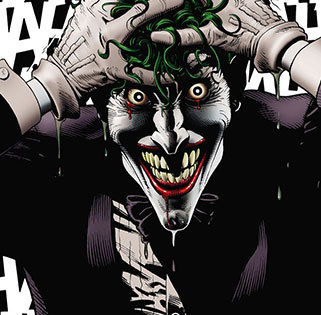
Alan Moore and Brian Bolland’s Batman: The Killing Joke is one of the most famous Joker stories ever published. Its central idea is brutal: the Joker tries to prove that one terrible day can break anyone. He shoots Barbara Gordon, tortures Commissioner Gordon, and builds an entire nightmare carnival around his philosophy of madness. Batman eventually defeats him and, in the final scene, offers help. The Joker refuses and tells a joke about two inmates escaping an asylum. Then Batman and Joker laugh together in the rain.
On the surface, the ending is strange but poetic. Batman and Joker share a brief human moment, even though they remain locked in an endless moral war. But a darker fan theory argues that the scene is not simply a shared laugh. According to this reading, Batman reaches toward the Joker, the laughter suddenly stops, and the title becomes literal: Batman kills the Joker after hearing the “killing joke.”
Why it is cooler than the obvious reading
This theory transforms the comic from a disturbing Joker story into the final Batman-and-Joker story. Batman begins the book by trying to end the feud peacefully. He tells Joker that one day one of them may kill the other. By the end, after the Joker has hurt the Gordon family and rejected redemption, Batman finally breaks the cycle the only way he believes is left.
It is a chilling interpretation because it gives the story a closed loop. The rain, the laughter, the headlights, the silenceit all becomes a visual curtain dropping on the most toxic relationship in superhero comics. Suddenly, the ending is not awkward. It is devastating.
Why it probably is not canon
The strongest argument against the theory is that the published script and later continuity do not support a literal murder. The Joker obviously continues appearing in Batman stories, and the script describes the two characters collapsing with laughter rather than Batman snapping his neck. Still, the theory survives because it captures something emotionally true: Batman and the Joker cannot keep doing this forever. The comic knows it. The readers know it. Gotham, unfortunately, keeps pretending it did not get the memo.
2. Watchmen Secretly Reveals That Hooded Justice and Captain Metropolis Survived
The theory
Watchmen, created by Alan Moore and Dave Gibbons, is practically designed to make readers suspicious. It is packed with visual echoes, recurring symbols, background jokes, fake documents, and tiny details that reward rereading. So when fans noticed two older men sitting together in a restaurant scene, some began connecting dots at Olympic-level speed.
The theory claims that these men are actually Hooded Justice and Captain Metropolis, two early costumed adventurers from the Minutemen era. In the official backstory, Hooded Justice disappears under mysterious circumstances, while Captain Metropolis is believed to have died years later. The theory suggests they faked their deaths or quietly vanished from public life, then lived together as an older couple in plain sight.
Why it is cooler than the official mystery
This interpretation is irresistible because Watchmen is already a book about hidden identities, buried scandals, and history being rewritten by people with power. Hooded Justice is one of the story’s most fascinating mysteries. He appears as a masked symbol of early superhero culture, but the truth about him remains cloudy, violent, and unresolved.
If the restaurant theory were true, it would give Hooded Justice and Captain Metropolis a secret ending that is almost tender. In a world full of paranoia, nuclear dread, and morally broken heroes, two men quietly surviving together would feel like a tiny act of rebellion. Not a big heroic triumph. Not a cosmic squid. Just two people choosing privacy after being chewed up by the superhero machine.
That is what makes the theory powerful. It does not need a punch or explosion. It makes a background panel feel like a hidden novel.
Why it probably is not canon
Dave Gibbons has reportedly described the idea as interesting but not intended. The restaurant couple appears to be more about world-building: a visual sign that this alternate 1985 has different social attitudes in some areas. Even so, the theory remains one of the most elegant Watchmen fan theories because it feels like something the book could have done. With Watchmen, the line between clue and coincidence is thinner than Rorschach’s patience.
3. Galactus Was Originally Marvel’s Version of God
The theory
In Fantastic Four #48–50, Stan Lee and Jack Kirby introduced Galactus, the Silver Surfer, and one of the defining cosmic stories in Marvel history. Galactus is not a typical villain. He does not rob banks, build death rays for fun, or monologue about real estate near Times Square. He eats planets because he must. He is enormous, unknowable, and presented less like a bad guy than a natural disaster wearing a helmet.
The fan theory goes like this: Galactus was originally imagined as God, or at least as the Fantastic Four fighting a direct stand-in for God. The idea has circulated partly because Lee and Kirby were known for the “Marvel Method,” where plots could be loose and artists helped shape the storytelling. Kirby’s pages often expanded simple concepts into mythic, architectural madness. So the theory imagines a scenario where the instruction was basically, “This month, the Fantastic Four fight God,” and Kirby returned with Galactus.
Why it is cooler than the official version
The official Galactus is already magnificent. But the theory makes the story feel even more audacious. Imagine superhero comics in the 1960s casually escalating from family adventure to cosmic theology. Reed Richards does not just face a big alien. He confronts the idea of divine indifference. Sue, Johnny, and Ben are not merely saving Earth from a space giant; they are arguing humanity’s right to exist before a being so far above them that morality may not even apply.
That is why Galactus works so well. Whether or not he was meant to be God, he functions like a godlike force. He is hunger, balance, judgment, and cosmic scale. The Silver Surfer adds the angelic element: a shining herald who announces doom, then develops compassion for the people he was supposed to help sacrifice. Subtle? No. Effective? Absolutely. Comics do not always whisper. Sometimes they arrive on a surfboard and announce the apocalypse.
Why it probably is not canon
Lee and Kirby openly discussed Galactus as a godlike being rather than the literal God. The story was designed to create a villain beyond ordinary evil, not necessarily to stage a direct theological showdown. Still, the theory survives because it points to the real greatness of the Galactus Trilogy. It feels biblical without being a sermon. It makes four astronauts in matching blue outfits look small against infinityand then lets them win anyway.
4. Leo Quintum in All-Star Superman Is a Redeemed Lex Luthor from the Future
The theory
Grant Morrison and Frank Quitely’s All-Star Superman is often praised as one of the greatest Superman stories ever written. It presents a dying Superman completing a series of heroic labors after Lex Luthor’s scheme overloads his body with solar radiation. Along the way, Superman interacts with Dr. Leo Quintum, a brilliant, colorful, wealthy scientist who runs P.R.O.J.E.C.T. and seems determined to preserve Superman’s legacy.
The fan theory argues that Leo Quintum is actually Lex Luthor from the future, redeemed and traveling back to help Superman. The clues are tempting. Quintum and Luthor are both scientific geniuses. Both are theatrical. Both are associated with advanced experiments, super-science, and grand plans for the future. In the final issue, Luthor briefly sees the world as Superman sees it and experiences a moment of cosmic understanding. The theory imagines that this revelation changes him so deeply that he eventually becomes Quintum.
Why it is cooler than the comic book explanation
This theory gives Superman the ultimate victory over Lex Luthor. Not by punching him harder, exposing him publicly, or sending him back to prison, but by inspiring him. Superman’s real power has never been heat vision or flight. It is the ability to make people better simply by being impossible to ignore.
If Quintum is future Lex, then All-Star Superman becomes a story where Superman redeems his greatest enemy without even living to see the full result. Lex finally stops trying to beat Superman and starts trying to continue his work. That is beautiful. It is also very Superman. The Man of Steel wins by turning hatred into service, ego into stewardship, and one bald super-genius into a slightly less alarming bald super-genius with better fashion choices.
Why it probably is not canon
Morrison has described Quintum more as the “good scientist” counterpart to Luthor’s corrupted science rather than as a literal future Lex. In other words, Quintum is thematically linked to Luthor, but not secretly Luthor wearing a different coat and a moral upgrade. However, that thematic link is exactly why the theory works so well. It may not be canon, but it is spiritually convincing. In superhero comics, that is sometimes more satisfying than a footnote in continuity.
What These Fan Theories Teach Us About Comics
The best comic book fan theories are not just trivia games. They reveal what readers want from stories. The Batman theory wants consequence. The Watchmen theory wants secret mercy. The Galactus theory wants cosmic meaning. The Leo Quintum theory wants redemption. Each one takes an existing comic and pushes its emotional logic one step further.
That is why fans keep inventing theories even when creators deny them. A debunked theory can still be valuable if it makes the reading experience richer. Canon answers the question, “What officially happened?” A great fan theory asks, “What would make this story resonate even more?” Those are different jobs, and both matter.
Comic books are uniquely suited to this kind of analysis because every panel is a controlled space. The reader decides how long to look. A background figure can become a mystery. A repeated visual shape can become a symbol. A line of dialogue can become evidence. When comics are good, they turn readers into collaborators. When comics are great, they turn readers into lovable maniacs with sticky notes.
Reader Experience: Living With Comic Book Fan Theories
One of the best experiences related to comic book fan theories is the moment a theory changes how you reread a familiar story. You may have read The Killing Joke years ago and thought the ending was simply uncomfortable. Then someone explains the “Batman killed Joker” interpretation, and suddenly the final pages become colder. You notice where the laughter stops. You pay attention to body language. You wonder whether the rain is romantic, tragic, or just Gotham being dramatic again.
The same thing happens with Watchmen. Many readers begin by following the murder mystery. On the second read, they notice symbols. On the third read, they start watching the background. By the fourth read, they are examining restaurant patrons and asking whether two elderly men are secretly retired superheroes. That is not overthinking; that is the book training you to look harder.
With Galactus, the experience is different. The theory does not depend on one tiny clue as much as tone. When you read the Galactus Trilogy, it feels bigger than a standard superhero battle. There is awe in it. The Fantastic Four seem small, yet their humanity matters. The Silver Surfer’s rebellion feels almost religious: compassion interrupts cosmic procedure. Whether Galactus is “God” or not, the reading experience becomes richer when you understand that Lee and Kirby were pushing superhero comics toward myth.
Then there is All-Star Superman, where the Leo Quintum theory can make the entire story feel warmer. Even if Quintum is not literally Lex Luthor, the idea encourages readers to focus on one of Superman’s greatest themes: influence. Superman saves people physically, but he also saves them morally. He challenges them to imagine better versions of themselves. If Lex can glimpse Superman’s perspective for even a moment, maybe that moment matters. Maybe the story is not just about Superman’s death. Maybe it is about the better future he leaves behind.
That is the real joy of fan theories. They make reading social, flexible, and alive. A comic book is printed ink, but a theory turns it into a conversation. Friends argue over it. Forums revive it. Videos dissect it. Someone at a comic shop waves a trade paperback like courtroom evidence. Another person says, “No, the creator denied that,” and the first person replies, “Sure, but look at the panel.” Civilization continues, somehow.
Of course, not every theory is brilliant. Some require ignoring half the story and performing acrobatics that would injure Nightwing. But the good ones remind us that readers are not passive. They bring memory, emotion, pattern recognition, and wonderfully unnecessary intensity to the page. That is why comic book fan theories can be cooler than the comic book: they are not replacing the original story. They are extending the fun after the last page.
Conclusion
Comic book fan theories thrive because superhero stories are built from mystery, symbolism, and contradiction. Batman can be both a detective and a myth. Watchmen can be both a deconstruction and a puzzle box. Galactus can be both a space entity and a theological mood swing with a helmet. Leo Quintum can be a good scientist, a mirror of Lex Luthor, orif your imagination has had enough coffeea redeemed enemy from the future.
Are these theories officially true? Mostly no. Are they cooler than many official explanations? Absolutely. They make classic comics feel new again, and that is the best compliment a fan theory can earn. After all, comics are not only about what is drawn in the panel. They are also about what readers see between the panelsand occasionally what they insist is hidden behind the mustache of an old man in a restaurant.
Note: This article is an original, fully rewritten analysis based on publicly available comic-book history, publisher descriptions, creator commentary, and long-running fan-theory discussions. Source links are intentionally not inserted in the article body for cleaner web publication.