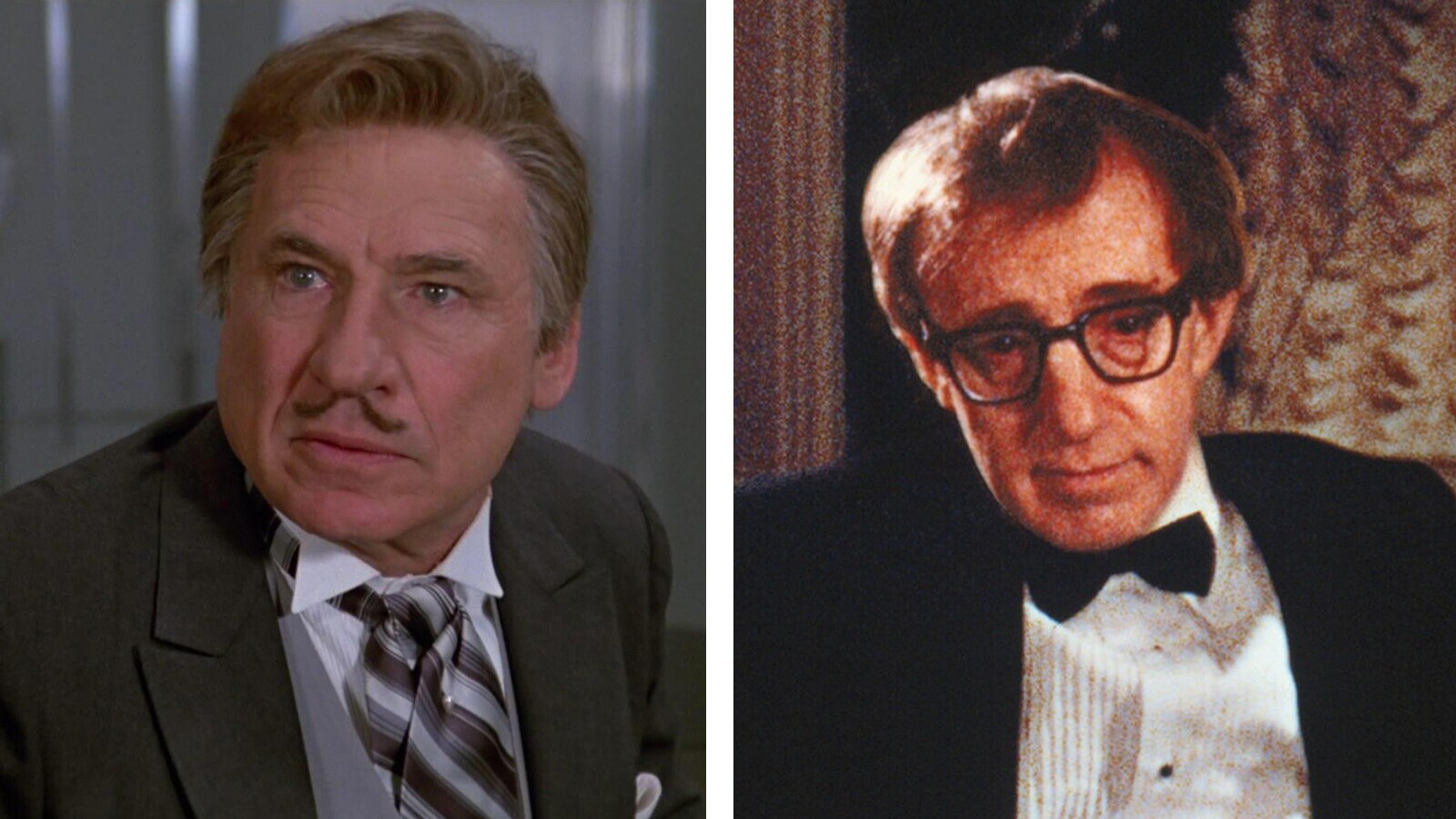
Mel Brooks has spent nearly a century doing something very difficult: making chaos look cheerful. He turned Nazis into punch lines, monsters into tap dancers, cowboys into cultural dynamite, and space operas into merchandising jokes with a tiny yogurt-shaped guru. For many fans, Brooks is less a filmmaker than a public utility: turn on the lights, pay your taxes, quote Young Frankenstein, move along.
Then came the uncomfortable headline: Mel Brooks almost made it to 100 without publicly defending Woody Allen. It sounds like a punch line Brooks might reject for being too obvious. Yet the moment landed because Brooks, at 99, remains one of comedy’s most beloved survivors, while Allen remains one of Hollywood’s most divisive figures. When Brooks said it was “a pity” Allen was being “crucified” over the long-running allegations against him, many readers reacted with a collective, “Mel, please do not make us update the emotional spreadsheet.”
This is not just a celebrity quote story. It is a story about memory, loyalty, old creative circles, public accountability, and the strange way Hollywood legends can carry both brilliance and baggage into their tenth decade. It is also a reminder that comedy history, like a Mel Brooks musical number, tends to enter wearing a funny hat and leave dragging a legal file cabinet.
Why Mel Brooks’ Woody Allen Comment Hit a Nerve
The immediate reason the comment mattered is simple: Brooks is not just another celebrity with an opinion. He is Mel Brooks, the Brooklyn-born writer, director, actor, producer, and EGOT winner whose films helped define American screen comedy. His résumé includes The Producers, Blazing Saddles, Young Frankenstein, High Anxiety, History of the World, Part I, and Spaceballs. That is not a filmography; that is a very noisy national monument.
Brooks and Allen also share a real professional history. Both came out of the mid-century New York comedy world, the legendary orbit of Sid Caesar’s television programs. Brooks wrote for Caesar’s shows, and the broader Caesar writers’ room became famous for producing or elevating names like Carl Reiner, Neil Simon, Larry Gelbart, Woody Allen, and Brooks himself. For comedy nerds, that room is basically the Avengers, except everyone is smoking, arguing, and rewriting a sketch at 3 a.m.
In interviews over the years, Brooks has described Allen as a sharp young comedy writer with a surprising mind. He has also spoken warmly about their old friendship, including walks home after work. That personal memory helps explain why Brooks might see Allen through the soft-focus lens of youth, friendship, and a vanished comedy era. But public audiences do not receive those comments in a private memory album. They hear them in the context of decades of allegations, denials, documentaries, industry backlash, and cultural debate.
The Complicated History Behind the Backlash
Woody Allen has long denied Dylan Farrow’s allegation that he abused her when she was a child. The allegation first became public in the early 1990s during the bitter breakup between Allen and Mia Farrow, alongside the revelation of Allen’s relationship with Soon-Yi Previn, Mia Farrow’s adopted daughter from a previous marriage. Allen was not criminally prosecuted, but the controversy never disappeared. Instead, it has returned repeatedly, especially during the #MeToo era and after the HBO documentary series Allen v. Farrow renewed public scrutiny.
That context is why Brooks’ defense did not land like a harmless old friend saying, “I remember him when he was funny.” It sounded, to many, like an attempt to flatten a complex and painful public controversy into “people are being mean to my buddy.” And in modern celebrity culture, that kind of flattening is where the internet starts warming up the orchestra.
Public figures are not required to abandon old friends. But when they speak publicly about controversial figures, their words become part of the record. They also become part of a broader pattern. Over the years, some actors and filmmakers have distanced themselves from Allen, expressed regret about working with him, or donated pay from Allen-related projects to charities. Others, including Scarlett Johansson, have publicly defended him. Brooks’ comment entered that existing debate, not an empty room.
Why the Phrase “Almost Made it to 100” Feels So Sharp
The phrase “almost made it to 100” works because Brooks’ age is part of his public mythology. Born in 1926, he has lived through the Great Depression, World War II, live television, the studio system, New Hollywood, cable, streaming, TikTok, and probably at least six executives explaining why comedy should be “more algorithm-friendly.” He is approaching 100 as one of the last living links to a foundational generation of American comedy.
That longevity gives every new Brooks quote extra weight. When a 35-year-old actor says something clumsy, the internet may complain for a week. When a 99-year-old legend says something disappointing, fans experience it like finding a raccoon in the attic of a childhood home. You still love the house. You just wish the raccoon had not chosen today to become symbolic.
The reaction also reflects the affection people have for Brooks. Audiences have forgiven him for jokes that are dated, outrageous, and proudly tasteless because his work often punches upward: at Nazis, racists, pompous institutions, Hollywood genres, and the self-important machinery of power. When the creator of The Producers or Blazing Saddles appears to defend a powerful man from scrutiny, it clashes with the image many viewers have built around him.
Mel Brooks, Woody Allen, and Two Very Different Comic Legacies
Brooks and Allen are often grouped together because both are Jewish New Yorkers who emerged from mid-century comedy and became writer-director-performers. But their comic styles are wildly different. Brooks is a cannonball. Allen is a clarinet solo performed inside a panic attack.
Brooks’ comedy is broad, physical, musical, and gleefully shameless. His best jokes often announce themselves with cymbals. He turns history into vaudeville and genre parody into controlled demolition. Allen’s comedy, by contrast, became associated with neurotic intellectualism, romantic anxiety, literary references, jazz, Manhattan apartments, and characters who sound like they are arguing with their own footnotes.
That difference matters because Brooks’ public image has remained warmer. His films may be outrageous, but Brooks himself is often viewed as generous, silly, and emotionally open. Allen’s public image has been inseparable from controversy for decades. So when Brooks defended Allen, the contrast made the moment feel even stranger: the beloved clown prince of movie parody stepping into one of Hollywood’s least funny debates.
Can We Separate the Artist From the Comment?
Every generation has to decide what to do when beloved artists say something that disappoints them. There is no single instruction manual, partly because the manual would immediately become controversial and then someone would option it for a limited series.
Some fans will continue watching Brooks’ movies without much trouble. They may see his defense of Allen as misguided loyalty, not as a reason to throw away a lifetime of work. Others may feel that the comment changes how they experience him, especially because it touches on a debate about power, credibility, and whose pain gets minimized. Both reactions are real.
The more useful question may not be, “Is Mel Brooks canceled?” That question is too lazy. At 99, Brooks is not auditioning for a Marvel reboot called Grandpa Multiverse: Still Kvetching. The better question is: What do we do when a cultural hero reminds us that he is a human being shaped by his own loyalties, blind spots, and generational instincts?
The Generational Loyalty Problem
Brooks’ defense of Allen also reveals something about old creative networks. People who came up together in harsh, competitive environments often develop deep loyalty. In Brooks’ case, the Caesar era was not just a job. It was a comedy boot camp, a place where young writers survived pressure, long hours, clashing egos, and live television’s terrifying lack of an undo button.
To Brooks, Allen may still be the young writer walking him home after brutal workdays. To the public, Allen is not frozen in that hallway of memory. He is a famous filmmaker whose name carries decades of complicated reporting and debate. That gap between private memory and public meaning is where the controversy lives.
Older artists sometimes speak from the personal archive: “I knew him. He was kind to me.” Audiences often respond from the public archive: “That is not the whole story.” Neither archive is imaginary. But one is incomplete without the other.
Why Public Defense Carries More Weight Than Private Affection
There is a major difference between privately caring about someone and publicly defending them. Private affection is human. Public defense is a statement. It can influence how fans interpret the controversy, how survivors hear cultural conversations, and how institutions decide whether old reputations deserve fresh polishing.
That is why Brooks’ words felt bigger than a passing comment. He did not merely say Allen was talented in the old days. He suggested Allen was being punished unfairly. That shifts the discussion from personal memory to moral judgment.
Public figures do not need to turn every interview into a courtroom. In fact, please do not. Nobody wants a press junket where every answer begins, “Your Honor.” But when a celebrity chooses to comment on a serious controversy, precision matters. A sentence can become a headline. A headline can become a cultural argument. And a cultural argument can outlive the interview by years.
What This Moment Says About Celebrity Culture in 2026
The Brooks-Allen moment shows how celebrity culture has changed. In earlier decades, Hollywood often protected powerful men through silence, charm, prestige, and the magic dust of box-office success. Today, audiences are more likely to question those protections. They ask who gets defended, who gets doubted, and why some careers are treated as too important to interrupt.
At the same time, public debate can become blunt and theatrical. Online culture often prefers instant moral sorting: hero, villain, coward, saint, hypocrite, icon, problem. Real life is messier. Brooks can be a comedy genius and wrong about Allen. Allen can be artistically significant and still subject to serious scrutiny. Audiences can love Young Frankenstein and still wince at Brooks’ comment. Human complexity remains undefeated, which is annoying because it never even goes to the gym.
Specific Examples: How the Industry Has Responded to Allen
The industry response to Woody Allen has been uneven. Some performers have publicly expressed regret about working with him. Timothée Chalamet donated his salary from A Rainy Day in New York to charities. Rebecca Hall also expressed regret and donated pay related to the film. Other actors have said they would not work with Allen again. Amazon ended its film deal with Allen, leading to a legal dispute that was later settled.
Yet Allen has not vanished. He has continued to make films outside the traditional American studio center, and he has published writing, including a late-career novel. This is why phrases like “crucified” or “canceled” can feel imprecise. Allen has faced professional consequences and reputational damage, but he has also continued to create, publish, and receive attention. The reality is neither total exile nor total absolution.
That nuance matters. Public scrutiny is not automatically persecution. Professional consequences are not always censorship. And continuing to work is not the same thing as being universally embraced. The entertainment industry, as usual, has chosen the most complicated possible arrangement and then spilled coffee on it.
What Brooks Fans Can Do With the Disappointment
If you admire Mel Brooks, this moment does not require you to erase your affection for his work. But it may require holding two thoughts at once. First: Brooks helped shape American comedy with fearless invention. Second: his defense of Allen was, for many people, deeply disappointing.
That is not hypocrisy. That is adulthood. Loving art does not mean outsourcing your judgment to the artist. You can laugh at the campfire scene in Blazing Saddles, admire the craft of Young Frankenstein, and still say, “This public comment was not it.”
In fact, Brooks’ own best work teaches audiences not to worship authority too easily. His films mock kings, dictators, studios, genres, priests, sheriffs, aristocrats, and people who take themselves too seriously. Applying skepticism to Brooks himself is not a betrayal of his comedy. It may be one of the most Brooks-like things a viewer can do, minus the fake mustache.
Experience Section: Watching a Comedy Hero Step Into a Serious Debate
There is a particular kind of disappointment that comes from watching an older cultural hero stumble into a modern controversy. It is not the same as discovering a scandal. It is quieter, more personal, and somehow more awkward. You are not shocked in the dramatic movie-trailer sense. You are more like a person at Thanksgiving who hears a beloved uncle say something wildly unnecessary between mashed potatoes and pie. Suddenly everyone is very interested in the cranberry sauce.
For many comedy fans, Mel Brooks represents comfort. His movies are the films people discover with parents, grandparents, college roommates, theater kids, or that one friend who insists Spaceballs is a sacred text. Brooks’ comedy is often rebellious, but it also feels communal. It invites viewers into a shared joke. When a figure like that publicly defends Woody Allen, the reaction is not only political or cultural. It can feel emotional.
The experience is especially strange because Brooks’ work has helped people laugh at evil without minimizing it. The Producers turns Hitler into a ridiculous spectacle because ridicule can be a form of resistance. Blazing Saddles attacks racism by making racists look stupid, greedy, and absurd. His comedy often understands that laughter can puncture power. That is why hearing him frame Allen as unfairly persecuted may feel out of step with the moral energy fans associate with his best work.
There is also the experience of generational translation. Younger viewers often approach Hollywood history with a different set of questions than older insiders. They want to know not only who made great work, but who was protected, who was ignored, who paid the price, and who got to keep being called a genius. Older artists may focus on loyalty, personal knowledge, and memories of someone before the scandal. Younger audiences may focus on patterns of power and public accountability. These perspectives can collide hard enough to knock the seltzer bottle off the table.
As a viewer, the healthiest response may be neither blind defense nor performative outrage. It may be honest separation: the films remain historically important; the comment remains disappointing. Brooks’ legacy is not made of glass, but it is also not immune to criticism. A great artist can say something weak. A beloved comic can misread the room. A nearly 100-year-old legend can still remind us that age brings perspective, but not automatic wisdom on every subject.
That experience is useful because it forces audiences to become more active. Instead of treating celebrity admiration like a subscription service, viewers have to make choices. They can revisit the work, read the history, listen to people affected by the controversy, and decide what remains meaningful. They can refuse to let nostalgia do all the thinking. Nostalgia is charming, but left unsupervised, it will eat the entire cake and blame the dog.
In the end, the Brooks-Allen story is not about destroying Mel Brooks’ legacy. It is about seeing it clearly. Brooks gave American comedy some of its loudest, strangest, most fearless laughs. He also publicly defended a man whose public record remains painfully contested. Both facts can sit in the same room. They may not enjoy dinner together, but they can sit there.
Conclusion: A Legend, a Comment, and the Cost of Nostalgia
Mel Brooks almost made it to 100 without publicly defending Woody Allen, and the reason that sentence stings is because Brooks means so much to so many people. His career is a monument to comic courage, genre demolition, Jewish-American humor, and the sacred art of making pompous people look like idiots. But beloved artists do not stop being accountable for what they say just because audiences grew up quoting them.
The Brooks comment matters because it shows how old loyalties can collide with modern expectations of accountability. It also shows that celebrity culture is no longer willing to let affection do all the legal, moral, and historical work. Fans can still love Brooks’ movies. They can still honor his influence. They can still laugh at Young Frankenstein until their ribs file a complaint. But they can also say that defending Woody Allen publicly, in this way, was a sour note near the end of an extraordinary symphony.
That may be the fairest final frame: not cancellation, not sainthood, not a trial by comment section. Just a clear-eyed look at a comedy giant who made history, made millions laugh, and then reminded everyone that even legends can step on the rake.