Tax season in Michigan has a special talent for arriving right when your kitchen table is already covered with mail, coffee mugs, and one mysterious receipt from a place you do not remember visiting. Fortunately, you do not have to fight the tax dragon aloneor pay a small fortune just to find out whether you qualify for a refund. The Volunteer Income Tax Assistance program, better known as VITA, offers free tax preparation help for eligible taxpayers across Michigan.
VITA is not a coupon, a gimmick, or a “free trial” that suddenly asks for your credit card at the end. It is an IRS-supported program staffed by trained, IRS-certified volunteers who help people prepare and e-file basic federal and state tax returns at no cost. In Michigan, VITA sites often operate through United Way organizations, community action agencies, colleges, libraries, nonprofit groups, and local tax coalitions. The goal is simple: help people file accurately, claim the credits they qualify for, and keep more money in their pockets.
This guide explains how to get free assistance filing tax returns in Michigan through VITA, who qualifies, where to look for help, what documents to bring, and how to avoid common mistakes that can slow down your refund faster than a pothole slows down a Michigan commute.
What Is VITA?
VITA stands for Volunteer Income Tax Assistance. It is a nationwide IRS program that provides free basic tax return preparation for eligible individuals and families. In Michigan, VITA is especially helpful for workers, retirees, students, people with disabilities, limited-English taxpayers, and households that may qualify for valuable tax credits.
The program is designed for common tax situations, such as W-2 wages, Social Security income, unemployment compensation, retirement income, interest, dividends, education credits, child tax credits, Earned Income Tax Credit, and Michigan state credits. Many locations can also help with renters’ and homeowners’ Michigan credits, including the Homestead Property Tax Credit and Home Heating Credit.
Think of VITA as a friendly tax pit stop. You bring the documents, certified volunteers check the details, and your return gets prepared and usually e-filed. Nobody throws confetti, but when you avoid filing errors and preparation fees, it can feel pretty close.
Who Qualifies for Free Tax Help Through VITA in Michigan?
The IRS generally says VITA is available for people who make $69,000 or less, people with disabilities, and taxpayers who need language assistance. However, local Michigan VITA sites may set their own income limits depending on funding, staffing, and local program rules. Some Michigan organizations list limits such as $67,000, while certain regional programs may use different thresholds.
That means the smartest move is to check with the specific VITA site before making an appointment. A Detroit-area tax coalition, a Lansing-area mobile tax unit, a college-based clinic, and a northern Michigan community agency may all follow the same IRS framework but use slightly different appointment rules.
You may be a good fit for VITA if:
- You have W-2 income from a job.
- You received Social Security, pension, unemployment, or basic retirement income.
- You are a student with education-related tax forms.
- You are a renter or homeowner who may qualify for Michigan credits.
- You qualify for the Earned Income Tax Credit or Child Tax Credit.
- You want help e-filing a basic federal and Michigan return.
- You usually skip filing because you think your income is too low, but you may still qualify for refundable credits.
Why Michigan Taxpayers Should Pay Attention to VITA
Michigan taxpayers often have more to consider than just federal tax. The state return can include credits that are easy to miss, especially for renters, homeowners, seniors, workers with modest income, and households paying high utility costs. Missing a credit is like leaving money in a coat pocket and then donating the coat. Noble, perhapsbut not ideal.
VITA volunteers can help eligible taxpayers look at both federal and Michigan tax benefits. This matters because some people who are not required to file a federal tax return may still benefit from filing. For example, a low-income Michigan renter, a retired person receiving Social Security, or a household with little taxable income might still qualify for state-level credits.
Two Michigan credits that often come up at VITA sites are the Homestead Property Tax Credit and the Home Heating Credit. These credits are not automatic. You generally need to file the right forms and provide the right information. VITA can help you understand whether those forms apply to your situation.
How to Find a VITA Site in Michigan
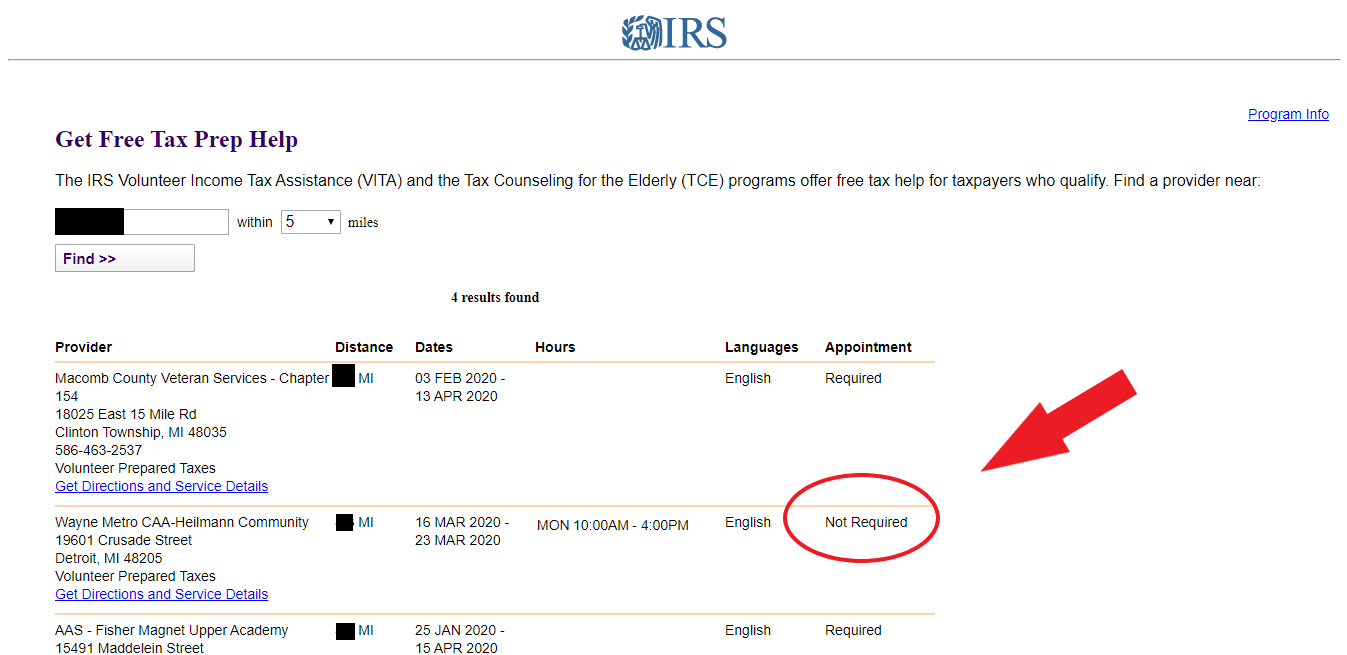
Finding free tax help in Michigan usually starts with one of four routes: the IRS VITA locator, dialing 2-1-1, checking Michigan Free Tax Help resources, or contacting a local United Way or community action agency.
1. Use the IRS VITA Locator
The IRS provides a locator tool for free tax preparation sites. You can search by ZIP code and distance to find nearby VITA and TCE sites. TCE stands for Tax Counseling for the Elderly, another IRS-supported program that focuses on taxpayers age 60 and older. Many TCE locations operate through AARP Foundation Tax-Aide, which is free and does not require AARP membership.
2. Dial 2-1-1
Michigan Treasury and many local partners direct taxpayers to call 2-1-1 for free tax help information. This is especially useful if you are not sure which organization serves your county. The 2-1-1 helpline can often point you to appointment scheduling, nearby sites, and local eligibility rules.
3. Check Local United Way Programs
United Way organizations across Michigan frequently support VITA programs. In Southeast Michigan, tax assistance efforts may involve United Way for Southeastern Michigan, Accounting Aid Society, Wayne Metro, and other community partners. In Southwest Michigan, United Way programs may support residents in counties such as Berrien, Cass, and Van Buren. In the Capital Area, United Way partners help connect households to free tax preparation clinics and mobile services.
4. Look for Community Action Agencies and College Clinics
Michigan has VITA programs connected to community action agencies and schools. Examples include Michigan State University VITA, Northwest Michigan Community Action Agency, Mid Michigan Community Action, Capital Area Community Services, Goodwill-supported VITA efforts in West Michigan, and other local providers. These organizations may offer in-person, drop-off, virtual, or hybrid tax preparation options.
What Services Does VITA Usually Provide?
Most VITA sites help with basic federal and state income tax returns. Services commonly include preparation and electronic filing for Form 1040, Michigan individual income tax returns, wage income, unemployment income, Social Security benefits, retirement income, education credits, child-related credits, and certain state credits.
Many Michigan VITA programs also focus on making sure taxpayers do not miss refundable credits. Refundable credits are the good kind of tax phrasethe kind that may produce a refund even if your tax bill is low. These may include the Earned Income Tax Credit, Child Tax Credit, Additional Child Tax Credit, American Opportunity Credit, Michigan Homestead Property Tax Credit, and Home Heating Credit.
What VITA May Not Be Able to Handle
VITA is powerful, but it is not a full-service accounting firm wearing a superhero cape. The program is meant for basic returns. Some returns are considered out of scope, meaning volunteers are not allowed or not certified to prepare them.
Examples may include complicated business returns, rental property income, large or complex self-employment expenses, inventory, depreciation, employees, certain casualty losses, advanced investment transactions, and tax situations involving legal disputes with the IRS or the State of Michigan. If your return is too complex, the site may refer you to a qualified paid tax professional or a tax clinic.
This is not a failure. It is quality control. A good VITA site would rather say “this needs specialized help” than prepare something incorrectly and send your return into the tax wilderness with a granola bar and no map.
Documents to Bring to a Michigan VITA Appointment
Showing up prepared is the tax-season version of bringing snacks to a road trip: everyone benefits. Missing documents can delay your return or force you to reschedule. Before your appointment, gather everything in one folder, envelope, or digital file.
Bring identification and personal information
- Photo ID for you and your spouse, if filing jointly.
- Social Security cards or ITIN letters for everyone listed on the return.
- Birth dates for you, your spouse, and dependents.
- A copy of last year’s federal and Michigan tax returns, if available.
- IRS Identity Protection PIN, if one was issued to you.
Bring income documents
- Forms W-2 from employers.
- Forms 1099 for unemployment, interest, dividends, retirement, contract income, or other payments.
- SSA-1099 for Social Security benefits.
- 1095-A if you had Marketplace health insurance.
- Any letters from the IRS or Michigan Department of Treasury.
Bring deduction and credit information
- Child care provider name, address, and tax ID number.
- Education forms such as Form 1098-T.
- Student loan interest statements.
- Charitable contribution records, if relevant.
- Medical or health insurance premium information, if needed for Michigan credits.
Bring Michigan-specific documents
- Rent paid during the year and your landlord’s name and address.
- Summer and winter property tax bills if you own your home.
- Heating cost information or utility details if applying for the Home Heating Credit.
- Proof of direct deposit, such as routing and account numbers or a voided check.
For married couples filing jointly, both spouses usually need to be present to sign the return for electronic filing. Yes, even if one spouse “handles the taxes.” The IRS still wants both signatures, because romance is nice but compliance is mandatory.
Step-by-Step: How to Get Free Assistance Filing Tax Returns in Michigan Through VITA
Step 1: Confirm your eligibility
Start by checking your household income and tax situation. If your return is basic and your income falls within the local VITA limit, you are probably a strong candidate. If you have a complex business, rental property, major investment activity, or a tax controversy, call first to ask whether the site can help.
Step 2: Find a nearby appointment
Use the IRS locator, call 2-1-1, or visit a local VITA partner’s scheduling page. Appointments fill quickly, especially in February, March, and the first half of April. If one location is full, ask about nearby counties, virtual preparation, drop-off options, mobile clinics, or self-file assistance.
Step 3: Ask how the site operates
Some sites prepare returns while you wait. Others use a drop-off model where documents are scanned or copied securely, prepared later, and reviewed with you before filing. Some programs offer virtual upload systems. Ask what to expect so you do not arrive expecting a 30-minute appointment and discover you signed up for a two-step process.
Step 4: Gather every tax document
Do not guess. Do not bring “most of it.” Do not assume the missing W-2 will magically appear because you looked confident. VITA volunteers need complete information to prepare an accurate return. If you worked multiple jobs, received unemployment, changed banks, moved, paid rent, bought a home, attended college, or had health insurance through the Marketplace, bring the related documents.
Step 5: Review the return before it is filed
Before your return is submitted, review your name, Social Security numbers, address, bank account information, income, dependents, filing status, credits, and refund or amount due. A typo in your direct deposit information can create a refund headache that nobody wants.
Step 6: Keep copies
After filing, keep a copy of your federal return, Michigan return, W-2s, 1099s, and signed forms. You may need them for next year’s taxes, student aid, housing applications, loans, immigration paperwork, or identity verification.
Michigan Credits VITA Can Help You Understand
Earned Income Tax Credit
The Earned Income Tax Credit, or EITC, is one of the most important credits for working households with low to moderate income. It can be worth a meaningful amount, especially for families with qualifying children. Michigan also has its own state Earned Income Tax Credit, which can increase the benefit for eligible residents.
Michigan Homestead Property Tax Credit
The Michigan Homestead Property Tax Credit helps qualified homeowners and renters offset property taxes or rent-related property tax costs. Renters should not ignore this credit. Many people hear “property tax” and assume it only applies to homeowners, but Michigan renters may also qualify because part of rent is treated as going toward property taxes.
Michigan Home Heating Credit
The Home Heating Credit helps eligible Michigan households with heating costs. Some people may qualify even if heat is included in rent. Depending on the situation, the credit may be issued as a check, draft, or payment to a heat provider. VITA volunteers can help identify whether this credit should be considered when preparing your Michigan return.
Can You Use VITA If You Are Not Required to File?
Yes, and this is one of the most overlooked benefits. Some Michigan residents are not required to file because their income is below the filing threshold. But not filing can mean missing refundable credits. If you had earned income, paid rent, owned a home, had heating costs, or supported children, it may still be worth asking a VITA site whether filing could help you claim money.
This is especially true for seniors, students, part-time workers, seasonal workers, and households with limited income. The tax system is not famous for sending friendly postcards that say, “Hello, you may be missing a refund.” Sometimes you have to file to find out.
VITA vs. Paid Tax Preparation: What Is the Difference?
Paid tax preparation can be useful for complex returns, business owners, landlords, investors, and people with unusual tax situations. But for many basic returns, VITA can provide reliable help at no cost. The volunteers are trained and certified, and returns are typically reviewed for quality before filing.
The biggest difference is scope. VITA does not prepare every kind of return. Paid preparers may handle more complex cases, but fees vary widely. For a simple return, paying a large preparation fee can eat into a refund that your household may need for rent, groceries, utilities, car repairs, school supplies, or emergency savings.
Tips for a Smooth VITA Experience in Michigan
Book early
Do not wait until April 14 and expect the appointment calendar to welcome you like a long-lost cousin. VITA appointments can fill up quickly. Start looking in late January or early February if possible.
Be honest about your tax situation
If you have self-employment income, gambling winnings, cryptocurrency, rental income, debt cancellation, or missing documents, say so when scheduling. The site can tell you whether your return is within scope.
Bring Michigan rent and property records
If you rent, bring your total rent paid and landlord information. If you own, bring property tax bills. These details can matter for Michigan credits, and trying to remember exact amounts from memory is a risky little game.
Use direct deposit
E-filing with direct deposit is generally the fastest way to receive a refund. Bring accurate bank routing and account numbers. If you do not have a bank account, ask the site whether they can point you to safe, low-cost banking options.
Ask questions before signing
VITA volunteers are there to help. If you do not understand a credit, filing status, refund amount, or form, ask. A good question before filing is much easier than a confused phone call three months later.
Common Mistakes to Avoid
The first mistake is assuming free tax help is lower quality. VITA volunteers are trained, tested, and certified. The second mistake is assuming you do not qualify before checking. Local eligibility rules vary, and some programs have flexible options.
Another common mistake is forgetting about Michigan credits. Renters, homeowners, seniors, and low-income households may miss state credits simply because they are not familiar with the forms. Finally, many taxpayers forget a document: one W-2, one 1099, one Marketplace insurance form, or one property tax bill. Missing paperwork can delay everything.
What If Your Return Is Too Complicated for VITA?
If VITA cannot prepare your return, do not panic. Ask why it is out of scope and what kind of help you need. You may be referred to a professional tax preparer, a Low Income Taxpayer Clinic, a university tax clinic, or another nonprofit resource. If you have a dispute with the IRS or State of Michigan, a tax preparation site may not be the right place; legal tax clinics may be more appropriate.
The key is to ask early. Complex issues become more stressful when the filing deadline is breathing down your neck like a snowstorm on I-75.
Real-Life Experience: What Using VITA in Michigan Can Feel Like
For many Michigan taxpayers, the hardest part of using VITA is not the appointment itself. It is getting over the feeling that taxes are supposed to be confusing, expensive, and slightly terrifying. A typical VITA experience is much more practical and human than people expect.
Imagine a single parent in Grand Rapids who worked two jobs, paid child care, rented an apartment, and received several tax forms in the mail. Filing alone might feel overwhelming because there are federal credits, Michigan credits, dependent rules, and direct deposit details to sort through. At a VITA appointment, the volunteer checks the W-2s, asks about child care costs, confirms the landlord information, reviews whether the taxpayer may qualify for the Earned Income Tax Credit and Michigan Homestead Property Tax Credit, and prepares the return for review. The taxpayer still signs and approves everything, but the process becomes manageable instead of mysterious.
Or picture a retired renter in Lansing who receives Social Security and a small pension. This person may assume filing is unnecessary because the income is modest. But after speaking with a VITA site, they learn that filing a Michigan return may help them claim credits related to rent and heating costs. That is the kind of detail many people miss when they rely on guesswork or avoid filing altogether.
A student in East Lansing may have a part-time job, tuition forms, and maybe a small refund waiting. A VITA clinic connected to a university or community partner can help the student understand basic filing, education forms, and why keeping copies matters. This is also a confidence boost. Once someone files correctly the first time, taxes feel less like a haunted spreadsheet.
A worker in Detroit may use a free tax site through a local coalition and discover that the appointment is not just about filing. Many programs also connect residents to financial resources, safe banking options, credit-building information, or benefits screening. In that sense, VITA can be more than a tax service. It can be a doorway to broader financial stability.
The best experience usually starts with preparation. People who arrive with photo ID, Social Security cards, W-2s, 1099s, rent records, property tax bills, heating information, and bank details tend to move through the process more smoothly. People who arrive with a shoebox full of mystery papers may still get help, but the appointment may involve more sorting, more questions, and more “let’s find that missing form” moments.
The biggest emotional benefit is relief. Taxes can make people feel embarrassed, especially if they have not filed in a few years or do not understand the forms. Good VITA volunteers are used to that. Their job is not to judge; it is to help prepare accurate returns within program rules. Many taxpayers leave with a clearer understanding of their finances, a filed return, and sometimes a refund they did not expect.
One practical lesson from VITA users is to save documents all year. Create a folder labeled “Taxes” and put forms, rent totals, property tax bills, child care receipts, and IRS or Michigan letters there as they arrive. Your future self will thank you. Maybe not with a parade, but definitely with less panic.
Another lesson is to ask about prior-year returns if you missed filing. Some Michigan VITA partners may help with prior-year returns during certain times of the year, while others only handle the current year during regular tax season. Rules vary, so ask the local site. If prior-year filing is available, it may help you claim refunds or credits before deadlines expire.
Finally, remember that free does not mean careless. VITA sites often use intake forms, interview questions, certified preparers, quality review, and taxpayer approval before e-filing. You are still responsible for the return, so review it carefully. But you are not alone at the table, which makes a big difference when the forms start speaking fluent alphabet soup.
Conclusion
Getting free assistance filing tax returns in Michigan through VITA is one of the smartest moves eligible taxpayers can make. The program helps people file accurate federal and state returns, avoid preparation fees, and claim credits that may otherwise be missed. Whether you live in Detroit, Lansing, Grand Rapids, Traverse City, Kalamazoo, Flint, Ann Arbor, or a small town where everyone knows the best breakfast spot, there may be a VITA partner ready to help.
Start early, check eligibility, schedule an appointment, gather your documents, and ask questions before your return is filed. Tax season may never become anyone’s favorite holiday, but with VITA, it can at least become less expensive, less confusing, and a lot less dramatic.