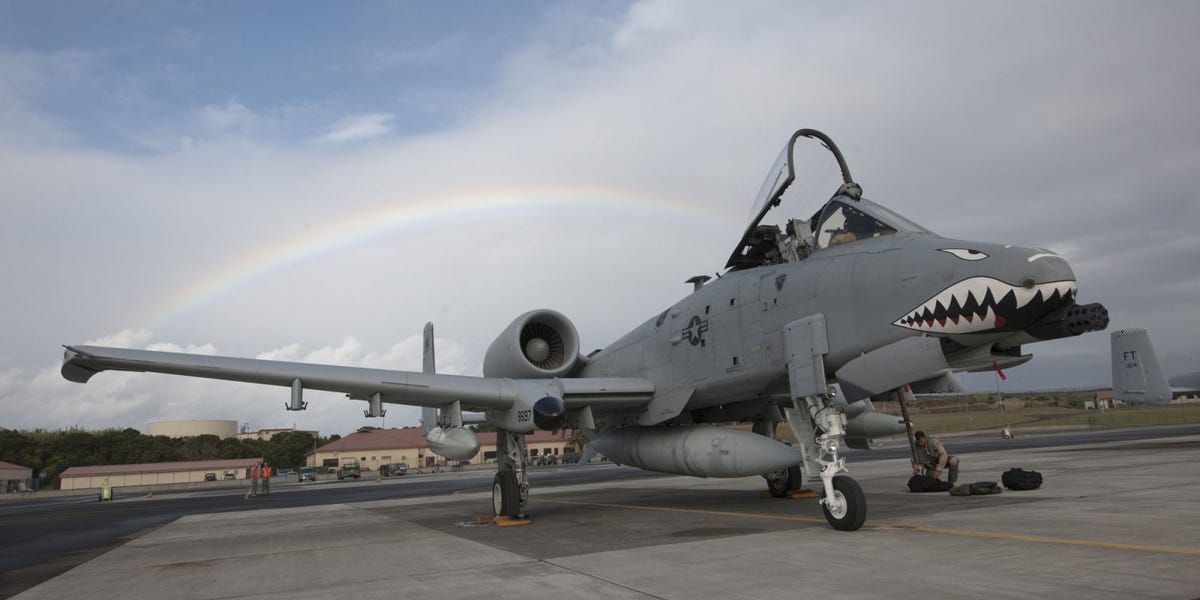
The A-10 Thunderbolt II, better known by its wonderfully unglamorous nickname, the Warthog, has never been the sleek sports car of the U.S. Air Force. It is more like a flying pickup truck with armor, attitude, and a very loud front-mounted argument. Built for close air support and famous for its 30mm GAU-8/A Avenger cannon, the A-10 has spent decades proving that rugged design still matters when troops on the ground need help fast.
Now the Warthog’s tool kit has become even more interesting. A-10s can carry laser-guided rockets, specifically weapons in the Advanced Precision Kill Weapon System family, often called APKWS. In plain English, that means a familiar 2.75-inch Hydra-style rocket can be upgraded with a laser guidance section, turning a once-unguided rocket into a much more accurate precision weapon.
That may sound like a small change. It is not. For an aircraft designed around battlefield flexibility, adding laser-guided rockets gives the A-10 a middle option between its cannon, larger missiles, and heavier bombs. It also reflects a broader shift in modern air warfare: precision is no longer just about big, expensive weapons. Sometimes the smarter answer is a smaller munition that can do the job with less cost, less weight, and less unnecessary blast.
What Are Laser-Guided Rockets on the A-10?
Laser-guided rockets are not science fiction, and they are not mini cruise missiles. They are conventional aerial rockets improved with a guidance kit. APKWS takes the basic 2.75-inch rocket family and adds a semi-active laser seeker. The rocket follows reflected laser energy from a designated point, allowing it to correct its flight path instead of simply flying ballistically after launch.
The key advantage is accuracy. Traditional unguided rockets can be useful, but they require more margin for error. A guided rocket gives pilots and ground controllers a more precise option, especially when the target is small, moving, or located near areas where excessive damage would be unacceptable. In a world where every pound of payload and every dollar of munition cost matters, that is a very practical upgrade.
APKWS: A Smart Upgrade to a Familiar Rocket
The Advanced Precision Kill Weapon System is designed around a clever idea: do not reinvent the whole rocket if you can improve the part that matters most. Instead of creating an entirely new weapon from scratch, APKWS adds a guidance section to existing rocket components. That approach helps preserve compatibility with aircraft and launchers already used by the military.
For the A-10, this is especially useful. The Warthog has always been valued for carrying a mixed load of weapons suited to close air support. Laser-guided rockets give it another precision choice without forcing it to rely only on larger munitions. Think of it as adding a scalpel to a toolbox that already had a hammer, wrench, and one very intimidating chainsaw.
Why This Matters for the A-10 Warthog
The A-10’s reputation was built on survival, persistence, and support for ground forces. It can fly low, absorb punishment better than many aircraft, and remain over a battlefield where faster jets might have to leave sooner. Its pilots often work closely with troops, joint terminal attack controllers, and other aircraft to deliver timely air support.
Laser-guided rockets fit that mission because they add precision without always requiring a larger weapon. In close air support, the best munition is not automatically the biggest one. It is the one that matches the target, the environment, and the risk. When a smaller guided rocket is enough, it may be preferable to a bomb or missile that produces a much larger effect.
That is one reason APKWS has attracted attention across multiple platforms. It has been used or tested with helicopters, fighter aircraft, attack aircraft, and even unmanned systems. The A-10’s adoption of laser-guided rockets is part of that wider movement toward flexible, lower-cost precision weapons.
From Close Air Support to Counter-Drone Missions
The A-10 was originally built with armored vehicles and battlefield support in mind, but modern conflicts keep changing the job description. Small drones, one-way attack drones, and low-cost aerial threats have become a major concern for militaries around the world. Defending against them with very expensive missiles can become financially awkward very quickly. Nobody wants to spend luxury-car money swatting a flying lawn mower.
This is where laser-guided rockets become especially interesting. APKWS-type rockets have been explored and used in counter-drone roles by several platforms because they offer a more economical precision option against certain aerial threats. For the A-10, that creates a surprising second act. The aircraft once known mostly as a tank buster can also contribute to missions where smaller, lower-cost precision weapons are valuable.
This does not magically turn the Warthog into a modern air-superiority fighter. It lacks the speed, sensors, and air-combat design philosophy of aircraft built specifically for that mission. But in the right operational network, with support from sensors and controllers, an A-10 carrying laser-guided rockets can become part of a layered defense approach.
How Laser-Guided Rockets Change the Warthog’s Loadout Story
The A-10 has always been a flying menu of unpleasant options for enemy ground forces. Its traditional weapon mix can include the GAU-8/A cannon, Maverick missiles, guided bombs, unguided rockets, and defensive air-to-air missiles. Adding laser-guided rockets improves the middle of that menu.
Before APKWS, pilots choosing rockets had to accept the limits of unguided accuracy. For some missions, that was acceptable. For others, especially where precision mattered, a guided bomb or missile might be required. Laser-guided rockets give the A-10 a smaller precision tool that can be carried in quantity and used against suitable targets without jumping straight to heavier weapons.
That matters because combat aircraft rarely face perfect textbook conditions. Targets vary. Weather changes. Friendly forces move. Civilian structures may be nearby. Commanders need choices. The more graduated the weapon options, the easier it is to match effect to mission.
A Brief Timeline of A-10 Laser-Guided Rocket Integration
Early Testing
Public Air Force reporting shows that A-10 testing with APKWS dates back more than a decade. At Eglin Air Force Base, test units worked on fixed-wing employment of the guided rocket, proving that the weapon could be safely carried and fired from aircraft such as the A-10 and F-16.
Those early tests mattered because helicopter use and fixed-wing use are not identical. A rocket leaving a faster aircraft faces different airflow, separation, and stability issues. Before any weapon becomes operationally useful, engineers and test pilots must verify that it behaves safely and predictably. That is the unglamorous part of military aviation: before the dramatic headline, there is a mountain of paperwork, telemetry, and people wearing serious expressions near test ranges.
Operational Relevance
Later testing and fielding efforts helped show that APKWS could fill a gap between unguided rockets and larger precision weapons. The system became attractive because it offered accuracy at a lower cost than many bigger munitions. For the A-10, that meant a familiar close-air-support aircraft could carry a precision rocket suited to modern missions.
Recent defense reporting has also connected A-10s and other U.S. aircraft with laser-guided rocket use in Middle East operations and counter-drone contexts. This reflects a larger trend: older platforms can remain useful when paired with newer weapons, sensors, and tactics. The Warthog may be old enough to have stories, but it keeps getting new tools in the garage.
Why APKWS Is Often Described as Cost-Effective Precision
Precision weapons are valuable, but they are not all priced the same. A large guided missile may be perfect for some targets, yet excessive for others. APKWS exists partly because the military needed a weapon that was more accurate than an unguided rocket but smaller and generally less expensive than larger missiles.
This cost-effectiveness is not just about saving money. It also affects magazine depth. Aircraft, ships, and ground units can only carry so many weapons. If a platform can carry more guided rockets than larger missiles, commanders gain more engagement options before needing to reload or return to base. In long-running operations, that kind of efficiency can matter as much as raw firepower.
Precision and Collateral Damage Concerns
One of the most important reasons for using guided rockets is control. Modern air operations often happen in complex environments, where military targets may be near roads, buildings, vehicles, or friendly forces. A smaller precision munition can help reduce unnecessary damage when used properly under lawful rules of engagement.
That does not make any weapon harmless. A laser-guided rocket is still a weapon, and its use carries serious responsibility. But compared with larger munitions, a smaller guided rocket may offer a more proportional option in some situations. This is one reason official descriptions of APKWS often emphasize precision and reduced collateral damage.
The A-10’s Future: Old Airframe, New Relevance
The A-10’s future has been debated for years. Some argue that the aircraft is too vulnerable in heavily defended airspace and should be replaced by newer platforms. Others argue that its close-air-support value, durability, and ability to loiter remain difficult to duplicate. Both sides have a point, which is why the Warthog debate refuses to retire even when the aircraft itself is scheduled to do so.
Laser-guided rockets do not solve every problem. They do not make the A-10 stealthy. They do not turn it into a supersonic interceptor. They do not erase the risks of modern air defenses. But they do help the aircraft stay useful in missions where precision, persistence, and lower-cost weapons matter.
In that sense, the A-10 carrying laser-guided rockets is not just a weapons update. It is a case study in adaptation. Military platforms often survive not because they are perfect, but because they can be upgraded for new jobs. The Warthog is not elegant, but elegance has never been its brand. Effectiveness has.
What This Means for Modern Air Warfare
The rise of laser-guided rockets on aircraft like the A-10 points to a larger lesson: the future of air warfare is not only about the most advanced jets. It is also about matching the right weapon to the right mission. A fifth-generation fighter may dominate one scenario, while a rugged attack aircraft with a practical precision rocket may be better suited to another.
Modern militaries are learning that low-cost threats can create high-cost defensive problems. Drones are a perfect example. If every small aerial threat requires a premium missile, the math becomes ugly fast. Systems like APKWS offer another layer in the defensive toolbox, especially when paired with aircraft and sensors that can identify and track appropriate targets.
The A-10’s laser-guided rocket capability also shows how older weapons ecosystems can evolve. The basic 2.75-inch rocket has been around for a long time, but adding guidance changes its usefulness. This is modernization by smart upgrade rather than total replacement, and it is often faster and cheaper than building an entirely new weapon family.
Common Misunderstandings About A-10 Laser-Guided Rockets
Misunderstanding 1: The A-10 Is Suddenly a Fighter Jet
No. The A-10 remains an attack aircraft. Laser-guided rockets may allow it to contribute to counter-drone missions, but that does not make it a dogfighter. It was not designed to chase fast enemy aircraft around the sky like a movie scene with dramatic violin music.
Misunderstanding 2: Guided Rockets Replace the GAU-8 Cannon
Also no. The cannon remains central to the A-10’s identity, but modern missions require more than one tool. Laser-guided rockets complement the cannon by giving pilots another precision option at different distances and effects.
Misunderstanding 3: Smaller Means Less Important
Wrong again. A smaller precision weapon can be extremely important when commanders need accuracy, controlled effects, and efficient use of payload. In many situations, “just enough” is better than “way too much.”
Experience-Based Perspective: What the A-10 Rocket Upgrade Feels Like in the Real World
When people talk about the A-10, they often start with the sound. The cannon has become a legend, and the aircraft’s bulky shape makes it instantly recognizable. But the experience of understanding the Warthog is not only about noise and nostalgia. It is about appreciating why troops, maintainers, planners, and aviation enthusiasts keep paying attention to an aircraft that first flew in another era.
From an observer’s point of view, the addition of laser-guided rockets changes the way the A-10 is perceived. It is no longer just the aircraft that flies low and brings the big gun. It becomes a more flexible precision platform, one that can carry a wider range of effects for different battlefield problems. That matters because modern operations are rarely simple. A pilot may need to support friendly forces, avoid unnecessary damage, respond quickly to changing information, and preserve more expensive weapons for harder targets. Laser-guided rockets help create that flexibility.
For maintainers and weapons crews, upgrades like APKWS also represent the practical side of innovation. The public often sees the final result: a photo of an aircraft carrying a new munition. Behind that image are compatibility checks, loading procedures, software updates, safety reviews, training requirements, and many hours of careful work. Military aviation is not magic. It is disciplined repetition with extremely expensive equipment and very little room for sloppy habits.
For pilots, the experience is about options. A-10 pilots have long been trained to think in terms of supporting people on the ground. The aircraft’s value comes from being present, communicating clearly, and delivering the appropriate effect when needed. A laser-guided rocket adds another decision point. Instead of choosing between the cannon and a larger guided weapon, the pilot may have a smaller precision tool available. That can matter in crowded environments where restraint and accuracy are not just preferred but required.
For aviation fans, there is also a strange emotional satisfaction in watching an old aircraft remain relevant. The A-10 looks like it was designed by someone who believed beauty was optional but survivability was not. Its continued modernization feels like watching a veteran mechanic install a modern navigation screen in a classic truck. The frame may be old, the paint may not impress anyone at a luxury showroom, but the machine still has work to do.
The broader experience around the A-10 and laser-guided rockets is really a lesson in adaptation. Technology does not always replace the old thing immediately. Sometimes it upgrades the old thing until it can solve new problems. The Warthog carrying APKWS rockets is a perfect example. It combines a Cold War-era aircraft, a long-serving rocket family, modern laser guidance, and today’s demand for lower-cost precision. That blend is not flashy, but it is deeply practical.
And practicality has always been the A-10’s secret charm. It is not sleek. It is not subtle. It does not look like it came from the future. But with laser-guided rockets under its wings, the Warthog proves once again that usefulness can be upgraded, relevance can be extended, and sometimes the old beast still has a few new tricks left.
Conclusion
A-10 Warthogs now carrying laser-guided rockets is more than a catchy defense headline. It shows how a famous close-air-support aircraft can adapt to modern warfare through smarter, more precise, and more cost-effective weapons. APKWS gives the Warthog a useful middle-ground option between unguided rockets and larger precision munitions, while also opening the door to roles such as counter-drone support in the right operational setting.
The A-10 may never win a beauty contest, unless the judges are ground troops, aircraft maintainers, and people who admire machines that refuse to quit. But with laser-guided rockets added to its arsenal, the Warthog continues to prove that old aircraft can remain relevant when paired with practical innovation.