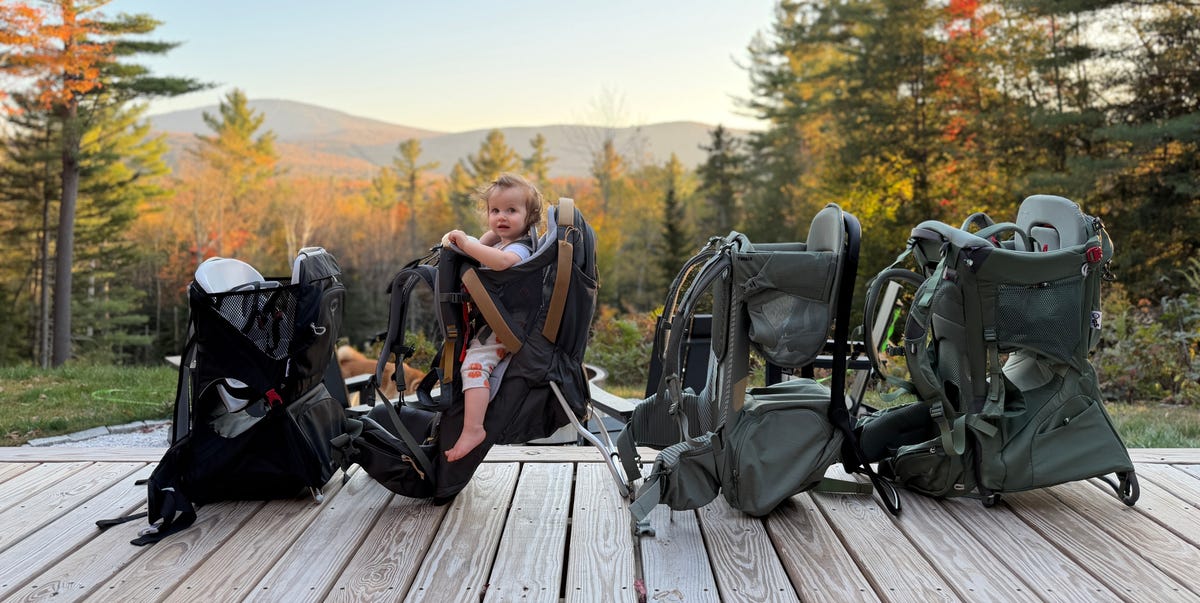
Hiking with a baby is basically backpacking with a tiny trail boss. You carry snacks, layers, wipes, diapers, water, a stuffed animal that may or may not be “emotionally essential,” and, somehow, one very small human who has very strong opinions about hat placement. That is why choosing the best baby carrier for hiking matters. A good carrier keeps your child supported, your back from staging a protest, and your hike from turning into a mile-long negotiation with gravity.
The right hiking baby carrier depends on your child’s age, your body type, the trails you love, and how much gear you need to haul. Some families need a full-frame child carrier backpack with a sunshade, suspension system, hip belt, and enough storage for a small grocery run. Others need a soft structured carrier for short nature walks, newborn snuggles, or travel days when a framed pack feels like bringing a canoe to a picnic.
This guide breaks down the best baby carriers for hiking using real product features, current outdoor gear standards, and practical trail experience from the perspective of a mom who hikes. Translation: we care about comfort, safety, snack access, diaper blowout logistics, and whether the carrier still feels good after the cute “first ten minutes” are over.
Quick Picks: Best Baby Carriers for Hiking
- Best Overall Hiking Baby Carrier: Osprey Poco Premium
- Best for Parent Comfort: Deuter Kid Comfort
- Best Storage-Focused Carrier: Kelty Journey PerfectFIT Elite
- Best Ergonomic Child Seat: Thule Sapling
- Best Compact Framed Carrier: Osprey Poco SLT
- Best Soft Carrier for Easy Trails: Ergobaby Omni Breeze
- Best Budget-Friendly Framed Option: Chicco SmartSupport Backpack Carrier
What Makes a Baby Carrier Good for Hiking?
A hiking baby carrier is not just a regular baby carrier with dirt on it. Trail use adds new demands: uneven ground, changing weather, longer wear time, heavier loads, and the need to carry both baby supplies and hiking essentials. A carrier that feels fine walking around the block may feel very different after climbing switchbacks with 25 pounds of cheerful cargo on your back.
Child Support and Age Range
Most framed child carrier backpacks are designed for babies who can sit upright independently and have strong head and neck control, often around 6 months old, though every child develops differently. Always follow the manufacturer’s age, weight, and developmental guidance. For younger babies, a soft structured carrier may be more appropriate for short, gentle walks if it supports safe positioning.
Parent Comfort
The best baby hiking backpack should fit like a real hiking pack. Look for an adjustable torso, padded shoulder straps, a supportive hip belt, load lifters, and ventilation. A good hip belt transfers weight away from your shoulders, which is a fancy way of saying your traps will not write you an angry email later.
Storage and Trail Practicality
Parents do not hike light. Even a “quick” trail outing can require diapers, wipes, water, snacks, sunscreen, an extra baby layer, a changing pad, and possibly a tiny sock that will disappear by mile two. Storage matters. Some carriers offer 14 liters, while larger models provide 26 to 36 liters of space, making them better for longer adventures.
Sun and Weather Protection
A built-in sunshade is one of the most important features in a baby carrier for hiking. Babies and toddlers are exposed up high in framed carriers, so shade, airflow, and weather accessories are more than nice extras. They are part of keeping the ride comfortable.
Best Overall: Osprey Poco Premium
The Osprey Poco Premium is the kind of hiking child carrier that makes you think, “Okay, this thing was clearly designed by people who understand both backpacks and toddlers.” It has a sturdy frame, adjustable fit, generous storage, a built-in sunshade, and a load range designed for real trail use. With 36 liters of storage and a pack weight of about 8.34 pounds, it is not the lightest option, but it is built for families who want a serious hiking carrier that can handle longer days.
What makes the Poco Premium shine is its balance of comfort and organization. The suspension feels more like a technical hiking pack than a basic baby carrier, and the storage layout gives parents room for layers, lunch, diapers, and emergency gummy bears. The included raincover and sunshade also make it a strong choice for families who hike in unpredictable weather.
Best for: Families who hike often, need lots of storage, and want a premium framed baby carrier for day hikes and longer outings.
Watch out for: The loaded weight. Once you add a child, water, snacks, and gear, this pack can get heavy fast. It is comfortable, but it is still physics.
Best for Parent Comfort: Deuter Kid Comfort
The Deuter Kid Comfort has earned a loyal following among hiking parents because it feels stable, adjustable, and thoughtfully designed. Deuter lists the Kid Comfort at about 3,230 grams with 14 liters of backpack volume and a recommended load range of 9 to 22 kilograms. It also includes a supportive child cockpit, ventilated back system, footrests, and a sunroof-style sunshade.
The biggest selling point is comfort for the adult carrying the load. Deuter’s suspension system is known for handling weight well, and the adjustable back length makes it easier for two adults to share carrying duties. That matters because the “I’ll carry the baby the whole time” parent may become the “Actually, can we switch?” parent after the first climb.
The child seat is roomy and supportive, making this a strong baby backpack carrier for toddlers who enjoy looking around, snacking, and issuing trail commentary from above. The side entry also helps when loading a wiggly child who has suddenly developed the flexibility of a raccoon.
Best for: Parents who prioritize carrying comfort, ventilation, and a stable ride over maximum storage capacity.
Watch out for: Storage is useful but not massive. For long outings, another adult may need to carry extra gear.
Best Storage-Focused Carrier: Kelty Journey PerfectFIT Elite
The Kelty Journey PerfectFIT Elite is a practical favorite for families who bring everything. It is designed with a generous storage setup, multiple pockets, an integrated sunshade, and an adjustable suspension system that works well for caregivers of different sizes. Retail specifications commonly list it with 26 liters of storage and nine pockets, which is parent code for “yes, there is probably a place for the crackers.”
Kelty’s PerfectFIT system is one of its biggest strengths. It allows quick torso adjustment, which is helpful when parents, grandparents, or caregivers take turns carrying. The padded hip belt and structured frame make it a capable option for day hikes, park trails, and family camping trips.
This carrier is especially appealing if you want a premium feel without going all-in on the most expensive models. It has the major features most hiking families need: sunshade, roomy storage, child harness, kickstand, hydration compatibility, and plenty of organization.
Best for: Families who need lots of pockets and want a comfortable, feature-rich hiking baby carrier.
Watch out for: More storage can tempt you to overpack. Your shoulders will know exactly how many “just in case” items you brought.
Best Ergonomic Child Seat: Thule Sapling
The Thule Sapling stands out for its child seat design. The current Sapling emphasizes an ergonomic seat that supports the child’s legs and promotes a comfortable seated position on longer outings. Thule lists the carrier with a maximum child weight of 18 kilograms, a total capacity of 22 kilograms, and a carrier weight around 3.8 kilograms.
For kids who get uncomfortable in traditional framed carriers, the Sapling’s seat design may be a major plus. It also has a sleek structure, adjustable torso and hip belt, and a ventilated child sitting area. The removable, washable elements are another parent-friendly detail, because trail snacks do not always stay where trail snacks belong.
The Thule Sapling is a great choice for families who value clean design, child ergonomics, and a close-to-body carrying feel. It may not offer the biggest built-in storage system compared with some competitors, but it carries well and feels polished.
Best for: Parents who want an ergonomic child seat and a streamlined, modern hiking carrier.
Watch out for: Accessories and storage options may be more limited or sold separately depending on the model and retailer.
Best Compact Framed Carrier: Osprey Poco SLT
The Osprey Poco SLT is built for families who want a framed child carrier without the full bulk of a deluxe expedition-style pack. It is slimmer, lighter, and easier to store than larger models, making it a smart choice for travel, shorter hikes, and families with limited car space.
This carrier is not meant to replace a high-capacity pack like the Poco Premium for long days with lots of gear. Instead, it shines when you want structure, child comfort, and a real hiking feel in a more compact package. It is especially useful for casual hikers, petite caregivers, or parents who find larger framed carriers too bulky.
Best for: Short hikes, travel, smaller storage spaces, and parents who want a less bulky framed carrier.
Watch out for: It has fewer premium features and less storage than full-size models.
Best Soft Carrier for Easy Trails: Ergobaby Omni Breeze
Not every hike requires a framed backpack carrier. For easy nature trails, neighborhood greenways, travel days, and younger babies, a soft structured carrier like the Ergobaby Omni Breeze can be a practical option. It is designed for multiple carry positions and breathable comfort, which makes it useful before a baby is ready for a framed hiking backpack.
The Omni Breeze is not a technical hiking pack. It does not have a kickstand, large gear storage, or a framed child cockpit. But it is lighter, less bulky, and easier to use for short walks or nap-friendly outings. Many parents use a soft carrier during the early months, then transition to a framed child carrier once their baby can sit independently.
Best for: Young babies, short walks, travel, and mellow trails where a big pack feels unnecessary.
Watch out for: It is not ideal for longer hikes with lots of gear or hot, strenuous climbs.
Best Budget-Friendly Framed Option: Chicco SmartSupport Backpack Carrier
The Chicco SmartSupport Backpack Carrier is a more affordable framed option for families who want occasional trail use without investing in a premium hiking carrier. It includes a lightweight frame, padded child seat, adjustable features, and a built-in sun canopy. For casual walks, parks, and short hikes, it can do the job without overwhelming your gear closet or your wallet.
That said, budget carriers usually make trade-offs. You may get less storage, less suspension support, and fewer comfort features for the adult. If you plan to hike every weekend or carry your child for several miles at a time, a more technical carrier will likely feel better. But for occasional outings, the Chicco can be a reasonable entry point.
Best for: Casual hikers, short trails, and families who want a lower-cost framed carrier.
Watch out for: Limited storage and less advanced suspension compared with premium hiking baby carriers.
How to Choose the Best Baby Carrier for Your Hiking Style
For Long Day Hikes
Choose a framed carrier with strong suspension, a padded hip belt, a sunshade, hydration compatibility, and at least moderate storage. The Osprey Poco Premium, Deuter Kid Comfort, and Kelty Journey PerfectFIT Elite are strong choices for longer routes.
For Hot Weather
Look for ventilation for both parent and child. Mesh back panels, breathable child cockpits, and sun protection make a big difference. The Deuter Kid Comfort and Thule Sapling are especially appealing for airflow-focused families.
For Shared Carrying
If two adults will trade off, adjustable torso length is essential. A carrier that fits one parent beautifully but makes the other feel like a turtle wearing furniture will not be fun. Kelty, Deuter, Osprey, and Thule all offer adjustable systems, but your best fit depends on your torso length and body shape.
For Travel and Short Trails
Compact carriers like the Osprey Poco SLT or a soft structured carrier may be easier to manage. If the trail is flat and short, you may not need a big framed pack with every feature known to parentkind.
Safety Tips for Hiking With a Baby Carrier
Before hitting the trail, practice using the carrier at home. Adjust the torso, hip belt, child harness, seat height, and stirrups before you are standing in a parking lot with one shoe untied and a toddler trying to eat a pinecone.
Always secure your child according to the manufacturer’s instructions. Use the kickstand only on flat, stable ground, and never leave a child unattended in the carrier. Bring sun protection, weather layers, water, snacks, and a basic first-aid kit. Choose trails that match your balance and fitness level, especially because carrying a child changes your center of gravity.
Also, check in with your child often. A baby in a framed carrier may be higher and more exposed to sun, wind, and cold than you realize. Cold fingers, warm cheeks, sleepy posture, or sudden fussiness can all be signs that it is time for a break.
Trail-Tested Experience: What a Hiking Mom Actually Notices
After the first few hikes with a baby, you stop caring about the shiny product photos and start caring about very specific things. Can I reach the snack pocket without removing the pack? Does the sunshade actually stay put? Can I load my child without performing a parking-lot circus act? Does the hip belt sit on my hips or slowly migrate toward my ribs like it has travel plans?
The first lesson is that comfort matters for both people. A baby who is too low, too hot, or unsupported will let you know. Loudly. A parent with sore shoulders will also let everyone know, usually through dramatic sighing. The best baby carriers for hiking solve both problems at once: they keep the child secure and comfortable while spreading the weight across the adult’s hips and back.
The second lesson is that storage changes everything. On short hikes, one pocket may feel fine. On real family hikes, you need room for diapers, wipes, a small changing pad, baby sunscreen, a hat, water, snacks, a light jacket, keys, phone, and something ridiculous your child insisted on bringing. A pinecone, perhaps. Maybe three. A carrier with smart storage saves you from digging through one giant compartment while your child chants for crackers like a tiny trail goblin.
The third lesson is that not every hike needs the same carrier. For a quick walk through a shaded park, a soft carrier may be perfect. It keeps your baby close, packs easily, and works well when you do not need to carry much. But once trails get longer, steeper, warmer, or gear-heavy, a framed hiking carrier becomes much more comfortable. The frame, hip belt, ventilation, and storage are not luxury details. They are the difference between “What a beautiful family adventure” and “Why did we bring so many bananas?”
The fourth lesson is that children have opinions. Some love being high up and seeing the world. Others need breaks, snacks, songs, and occasional freedom to toddle around safely. A carrier with footrests, a comfortable seat, and a supportive harness can extend the happy window, but it will not replace realistic expectations. Start with short hikes. Build slowly. Plan stops. Choose trails with shade, interesting views, and places to pause.
The fifth lesson is that the best carrier is the one you will actually use. The fanciest model is not helpful if it is too bulky for your car or uncomfortable for your body. The lightest carrier is not ideal if it lacks the support you need. Try carriers on with weight if possible. Adjust them carefully. Walk around. Bend slightly. Notice pressure points. Imagine doing that for two miles while someone behind your head drops a cracker into your collar.
For frequent hikers, the Osprey Poco Premium, Deuter Kid Comfort, Kelty Journey PerfectFIT Elite, and Thule Sapling are the strongest all-around picks because they are built like real outdoor gear. For occasional hikes, compact framed carriers and soft structured carriers can be enough. The goal is not to buy the biggest carrier; it is to choose the carrier that matches your trails, your child, and your sanity.
Final Verdict: Which Hiking Baby Carrier Is Best?
If you want one premium carrier that can handle serious family hiking, the Osprey Poco Premium is the best overall choice thanks to its storage, comfort, weather protection, and trail-ready design. If adult carrying comfort is your top priority, the Deuter Kid Comfort is a fantastic pick. If you want generous organization and family-friendly practicality, the Kelty Journey PerfectFIT Elite is hard to beat. For parents focused on child ergonomics, the Thule Sapling deserves a close look.
The best baby carrier for hiking is ultimately the one that fits your body, supports your child, and makes getting outside feel easier instead of more complicated. Because hiking with a baby is not about crushing miles. It is about fresh air, tiny trail discoveries, snack breaks with a view, and proving that adventure does not end when parenthood begins. It just comes with more wipes.
SEO Tags
Note: This article is based on synthesized current product information, outdoor gear testing insights, and practical hiking-parent experience. Source links are intentionally not included in the article body as requested.