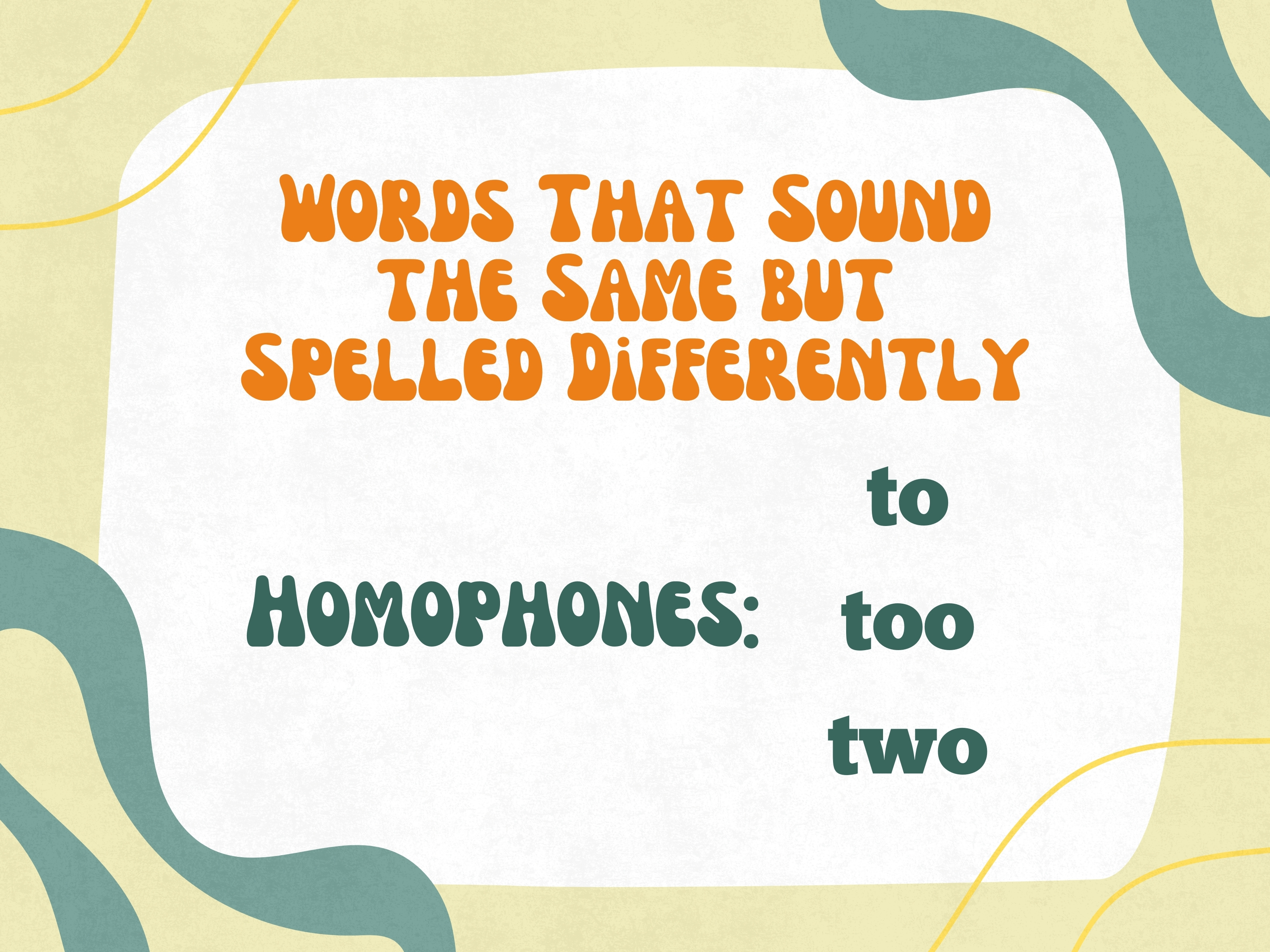
Words that sound the same but are spelled differently are called homophones. They are the sneaky little twins of English: they walk into a sentence sounding identical, but once you see them on the page, they reveal completely different personalities. Think of see and sea. Your ears hear the same sound, but your eyes know one belongs to vision and the other belongs to waves, boats, and suspiciously aggressive seagulls.
Homophones are one reason English spelling can feel like a puzzle designed by a mischievous committee. You may know exactly what you want to say out loud, but when it is time to write it down, suddenly their, there, and they’re line up like three suspects in a grammar lineup. The good news? Once you understand how homophones work, you can spot them, use them correctly, and avoid writing sentences that accidentally say your sandwich has a sole instead of a soul.
What Are Homophones?
A homophone is a word that has the same pronunciation as another word but has a different meaning, and often a different spelling. In simple terms, homophones are words that sound alike but are spelled differently. Common examples include flower and flour, night and knight, right and write, and to, too, and two.
The word itself gives away the idea. Homo means “same,” and phone relates to sound. So, homophone literally points to “same sound.” The spelling and meaning may go in completely different directions, but the pronunciation stays the same or nearly the same, especially in standard American English.
Homophones vs. Homonyms vs. Homographs
Before we dive deeper, let’s clear up a common grammar traffic jam. Homophones, homonyms, and homographs are related, but they are not exactly the same thing.
Homophones
Homophones sound the same but have different meanings and often different spellings. Examples include hear and here, or bare and bear.
Homographs
Homographs are spelled the same but have different meanings. Some are pronounced the same, while others are pronounced differently. For example, bat can mean a flying mammal or a piece of sports equipment. Meanwhile, lead can mean to guide, or it can refer to the metal, depending on pronunciation and context.
Homonyms
Homonyms is a broader term. It can refer to words that are spelled the same, sound the same, or both, but have different meanings. Because grammar terminology can vary slightly depending on the source, many people use homonym casually when they really mean homophone. For SEO, writing, and everyday learning, the most useful term for words that sound the same but are spelled differently is still homophones.
Common Homophones in English
English has plenty of homophones, and some of them cause trouble for students, writers, editors, job applicants, business owners, and anyone who has ever typed too fast before coffee. Here are some of the most common pairs and trios.
There, Their, and They’re
There points to a place or introduces an idea: There is a book on the table.
Their shows possession: Their dog stole my sandwich.
They’re is a contraction of they are: They’re pretending the dog is innocent.
To, Too, and Two
To often shows direction or purpose: I went to the store.
Too means also or excessively: I bought too many cookies, too.
Two is the number 2: I ate two cookies before dinner.
Your and You’re
Your shows ownership: Your idea is excellent.
You’re means you are: You’re going to love this trick.
Its and It’s
Its is possessive: The cat chased its tail.
It’s means it is or it has: It’s running in circles again.
Hear and Here
Hear means to perceive sound: I can hear music.
Here refers to a place: The music is coming from here.
Right, Write, Rite, and Wright
Right can mean correct or the opposite of left. Write means to form words. Rite is a ceremony or ritual. Wright refers to a maker or builder, as in playwright. Four words, one sound, zero mercy for careless typing.
Why Does English Have So Many Words That Sound the Same?
English is a language with a long suitcase and a questionable packing strategy. It has borrowed words from Old English, French, Latin, Greek, Norse, and many other languages. Over time, pronunciations changed, spellings became standardized in uneven ways, and words that once sounded different sometimes merged into the same pronunciation.
That is why knight and night now sound alike, even though the k in knight was once pronounced. Silent letters are like linguistic fossils: they show where a word has been, even if they no longer do much work in modern speech.
English spelling also preserves meaning and word history. The spelling of flour helps distinguish it from flower, even though both sound the same. The difference matters. You can bake with flour, but if you bake with flowers, your cake may look charming and taste like a garden accident.
Why Homophones Matter in Writing
Homophones are not just a classroom topic. They affect real communication. A single wrong word can change the meaning of a sentence, weaken credibility, or make a polished paragraph look rushed.
Imagine writing, We except your proposal when you mean We accept your proposal. That tiny spelling switch changes the message from agreement to exclusion. Or picture a restaurant sign that says, Try our stake dinner. Technically, someone may still show up, but probably with questions about vampires.
Using the correct homophone helps readers trust your writing. Whether you are sending a work email, writing a school essay, posting a blog, or creating website content, choosing the right word shows attention to detail. It tells readers, “I know what I mean, and I respect your eyeballs.”
How to Choose the Right Homophone
Use the Meaning, Not the Sound
The best way to choose the correct homophone is to focus on meaning. Ask yourself: What idea am I trying to express? If you mean location, use there. If you mean ownership, use their. If you mean they are, use they’re.
Replace Contractions
For contractions, test the full phrase. If you’re can be replaced by you are, it is correct. If it’s can be replaced by it is or it has, use the apostrophe. If the replacement does not work, choose the possessive form instead.
Build Memory Tricks
Memory tricks are surprisingly helpful. Hear contains ear, and you hear with your ear. Stationery with an e relates to envelopes. Principal ends in pal, and a school principal may be your palat least on a good day.
Read the Sentence Out Loud, Then Read It Slowly
Reading out loud helps with rhythm, but homophones require slow visual checking. Since the wrong word may sound perfect, your ear will not always catch the mistake. Your eyes need to inspect the spelling like a tiny grammar detective with a magnifying glass.
Homophones in School and Language Learning
Students often meet homophones early because they are part of vocabulary, spelling, reading comprehension, and writing instruction. For young learners, homophones help build awareness that sound and meaning are not always connected in a simple one-to-one way.
For English language learners, homophones can be especially confusing because pronunciation may vary by accent. Some word pairs sound identical in one region but slightly different in another. In many American accents, words like meat and meet are perfect homophones. Other pairs may depend on regional pronunciation, speed, or context.
The trick is not to memorize every homophone in one heroic weekend. That path leads to flashcard chaos and snack crumbs. Instead, learn the most common ones first, practice them in sentences, and connect each spelling to a clear meaning.
Examples of Homophones in Sentences
- Sea / See: I can see the sea from the balcony.
- Flour / Flower: She spilled flour on the table while arranging a flower in a vase.
- Brake / Break: Press the brake before you break the mailbox.
- Pair / Pear: He ate a pear while wearing a new pair of shoes.
- Buy / By / Bye: I will buy snacks by the station before saying bye.
- Mail / Male: The male bird sat near the mail truck.
- Peace / Piece: She wanted a piece of cake and a moment of peace.
- Plain / Plane: The plane flew over a wide plain.
- Allowed / Aloud: Students are allowed to read aloud.
- Cent / Scent / Sent: He sent a letter with a pleasant scent and paid one cent too little.
Homophones and SEO Writing
If you write content for the web, homophones matter more than many people realize. Search engines are smart, but readers are still human. A blog post full of incorrect homophones can reduce trust, increase bounce rates, and make a brand look careless.
For example, a headline like How to Choose the Right Flower for Baking may attract the wrong audience unless you are truly writing about edible flowers. If the article is about bread, the keyword should be flour. Search intent depends on meaning, not just sound.
Clear homophone usage also improves readability. People skim online content quickly. When a word looks wrong, the reader pauses. That pause interrupts the flow. In SEO writing, smooth reading is not decoration; it is part of user experience.
Funny Homophone Mistakes to Avoid
Homophones are useful, but they can also create accidental comedy. Some mistakes are harmless; others make a sentence sound like it wandered into the wrong costume party.
- I need to meat the manager. Unless the manager is a steak, use meet.
- Please bare with me. Unless clothing is leaving the conversation, use bear with me.
- She has a great since of humor. The correct phrase is sense of humor.
- He gave me a peace of advice. Advice may bring peace, but the phrase is piece of advice.
- The dog wagged it’s tail. The correct possessive is its.
Practical Tips for Mastering Homophones
Keep a Personal Confusing Words List
Everyone has a few homophones that cause trouble. Maybe yours are affect and effect, or principal and principle. Keep a short list and review it before sending important writing.
Practice With Real Sentences
Do not study homophones only as word pairs. Put them in sentences. Context is what gives each word its job. The sentence is the stage, and the homophone is the actor who must wear the correct costume.
Use a Dictionary When Unsure
Guessing is fast, but checking is safer. A dictionary can confirm meaning, spelling, pronunciation, and usage. This is especially helpful for less common homophones like complement and compliment, council and counsel, or discreet and discrete.
Do Not Trust Spell-Check Alone
Spell-check can catch misspelled words, but it may not catch correctly spelled words used incorrectly. If you write I ate ate cookies, a tool may notice. If you write I ate eight cookies when you mean I ate cookies at eight, you may need your own judgment to save the sentence from dessert confusion.
Experience: Learning Homophones in Real Life
One of the funniest things about homophones is that people usually learn them through small mistakes. Almost everyone has had a moment when a teacher, editor, coworker, or brutally honest friend points out that the word sounds right but looks wrong. It is not always fun in the moment, but it is memorable. Nothing teaches the difference between your and you’re quite like seeing a red correction mark on a sentence you were absolutely sure was perfect.
In everyday writing, homophones show up in emails, text messages, essays, resumes, social media captions, and business content. A person might type quickly and write, Your welcome, even though the correct phrase is You’re welcome. The mistake does not mean the person is careless or unintelligent. It usually means the brain was moving faster than the fingers. Homophones are especially tricky because the brain often processes sound before spelling. You know what you meant, so your mind politely fills in the correct meaning even when your keyboard betrays you.
For students, homophones can feel like a spelling trap. A child may hear the sentence, I saw a deer, and write dear because the sound is identical. That is a normal part of learning. The best improvement usually happens when the learner connects each word to an image or situation. Deer has antlers. Dear begins a letter. Sea has water. See has eyes. Suddenly the spelling is not random; it has a memory hook.
Writers and editors also deal with homophones all the time. During proofreading, a sentence may look polished at first glance, but one wrong homophone can slip through like a raccoon in a tuxedo. That is why professional writers often read slowly from the end of a paragraph backward, review printed drafts, or use a separate editing pass just for commonly confused words. It may sound excessive, but one wrong public word can become very public very quickly.
Homophones also make English more playful. They are the engine behind puns, jokes, riddles, and clever headlines. A bakery might write, We knead your support, using knead instead of need. A seafood restaurant might advertise, Come sea us. These jokes work because readers hear one meaning and see another. Homophones can confuse, but they can also create humor, personality, and memorable writing.
The best personal strategy is to treat homophones as vocabulary pairs with different jobs. Instead of thinking, “These words sound the same, so they are confusing,” think, “These words sound the same, but each one has a separate purpose.” Once you learn the purpose, the spelling starts to make sense. It is like giving each word its own name tag at a very loud party.
With practice, homophones become less intimidating. You begin to notice patterns, catch mistakes faster, and choose words more confidently. You may still pause before typing affect or effect, and that is perfectly fine. Even experienced writers pause. The goal is not to become a walking dictionary with shoes. The goal is to communicate clearly, avoid preventable confusion, and maybe enjoy the weird beauty of English along the way.
Conclusion
Words that sound the same but are spelled differently are called homophones. They are common in English, useful in wordplay, and occasionally responsible for grammar headaches. From to, too, and two to right, write, and rite, homophones remind us that pronunciation and spelling do not always walk hand in hand.
The easiest way to use homophones correctly is to focus on meaning, check context, learn common pairs, and proofread carefully. Whether you are writing an essay, polishing a blog post, sending a professional email, or making a pun that causes your friends to groan, homophones are part of the fun and frustration of English. Master them, and your writing becomes clearer, sharper, and far less likely to accidentally invite someone to eat a flower cake.