Your mattress works the night shift. It supports your spine, cradles your dreams, and quietly collects a little bit of everything: sweat, skin flakes,
body oils, dust, and the occasional “How did that get there?” mystery spot. The good news: you don’t need a hazmat suitor a brand-new mattress
to get things back to fresh.
This guide walks you through how to clean a mattress the smart way: a deep clean that tackles odors, common stains, and allergens
without soaking the bed like a sponge cake. You’ll also get quick refresh tricks, stain-specific playbooks, and prevention tips so you can spend more
time sleeping and less time Googling “why does my bed smell like life choices?”
Before You Start: A 3-Minute Setup That Saves You 3 Hours
Check the manufacturer instructions
Mattresses aren’t all built the same. Memory foam, latex, pillow-top, hybrideach has different tolerances for moisture and heat. If your mattress has
a removable cover, it may be washable (often cold water and gentle drying), while the foam itself usually is not. When in doubt, treat your mattress like
a nice sweater: use minimal liquid, and don’t “power-wash” your problems away.
Pick the right day
Choose a day when you can leave the bed uncovered for a few hours. Ventilation is your best friend. Open windows, turn on fans, and if you have a
dehumidifier, let it earn its keep.
Gather supplies
- Vacuum with upholstery attachment (HEPA-filter vacuum is a bonus)
- Clean towels or microfiber cloths
- Baking soda
- Mild dish soap
- Spray bottle
- Hydrogen peroxide (3%) for certain stains (optional; patch-test)
- Enzyme cleaner for urine/vomit/pet accidents (highly recommended)
- Soft-bristle brush (optional)
The Deep-Clean Method: 7 Steps for a Fresher Mattress
Step 1: Strip the bed completely
Remove sheets, pillowcases, comforter, and mattress pad/protector. Wash everything according to the care label.
If allergies are a big deal in your home, washing bedding weekly in hot water is commonly recommended to cut down on allergens.
(Translation: your sheets can’t do their job if they’re busy hosting microscopic roommates.)
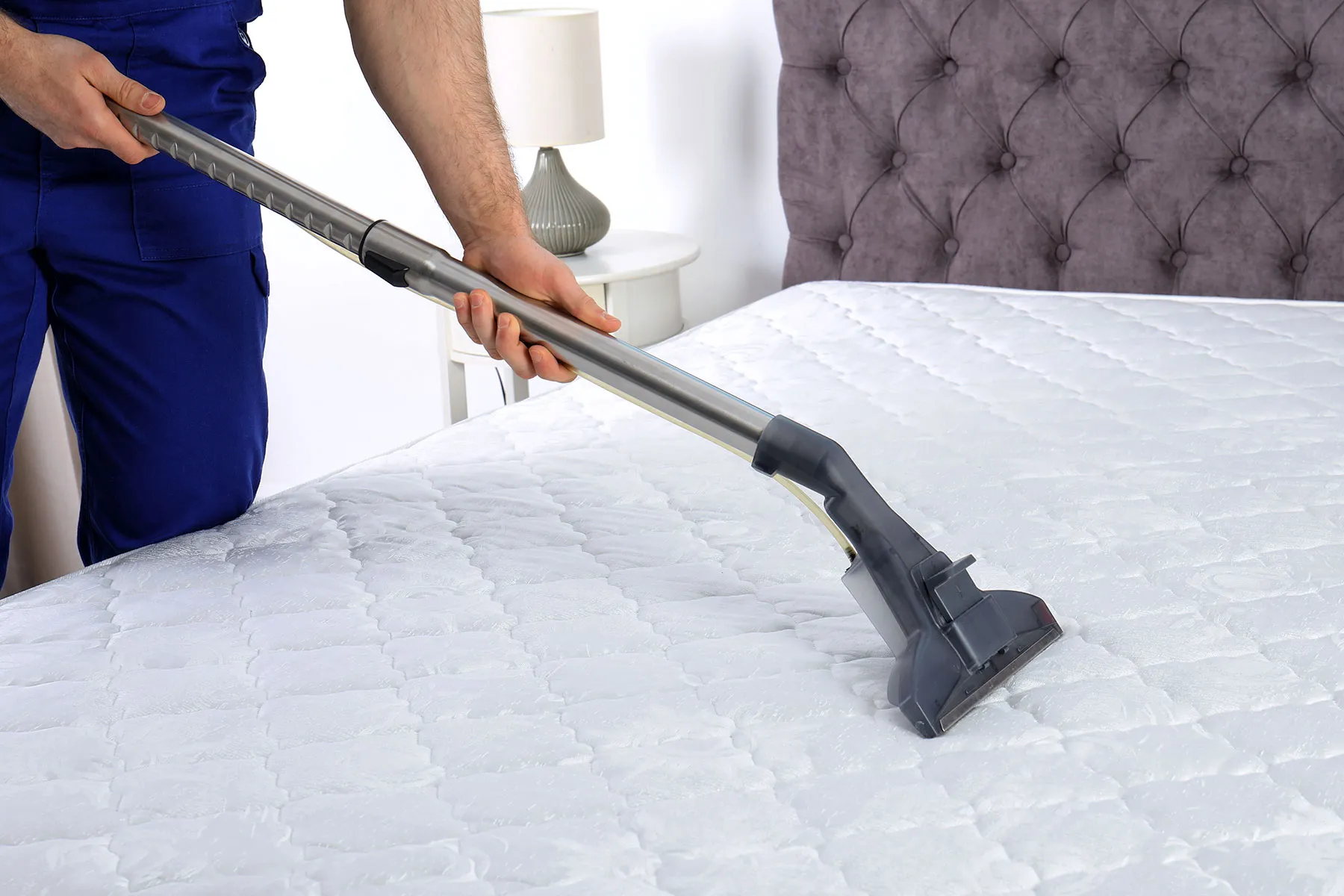
Step 2: Vacuum slowlylike you’re detailing a car
Vacuum the entire mattress surface, then go back for the seams, piping, and edges where dust and debris love to hide. Use the upholstery tool for the
main surfaces and a crevice tool for the perimeter.
If you have allergies or asthma, a vacuum designed to reduce allergen blowback (often paired with good filtration and sealing) can make cleaning feel
less like you’re stirring dust into the air and more like you’re actually removing it.
Step 3: Spot-clean stains (the “don’t soak it” rule)
Mattresses are famously bad at drying quickly once they’re wet. So the goal is spot-cleaning, not saturating.
Always blotdon’t scrub like you’re mad at the fabric. Scrubbing can push stains deeper and rough up the surface.
Basic spot-clean solution: Mix a few drops of mild dish soap into cool water. Lightly dampen a cloth (not dripping), blot the stain, then blot with a clean damp cloth to “rinse.” Finish by blotting with a dry towel.
Step 4: Use stain-specific tactics (because stains have personalities)
Sweat and yellow stains
Sweat stains are basically “invisible today, neon tomorrow.” A common method is a light spray of a gentle cleaning solution (often diluted)
and careful blottingfollowed by thorough drying. If you’re trying a peroxide-based approach, patch-test first and keep the liquid minimal.
The winning move is patience and blotting, not flooding the area.
Blood
Use cold water (heat can set protein-based stains). Blot with a cold damp cloth first. If needed, a small amount of 3% hydrogen peroxide
applied carefully can help lift the stainlet it fizz briefly, then blot. Repeat in small rounds rather than soaking the area.
Urine (kids, pets, and the occasional “I laughed too hard” moment)
Speed matters. Blot up as much as possible right away. For urine, enzyme cleaners are often the MVP because they’re designed to break down
organic compounds that cause lingering odor. Apply according to the product directions (usually: apply lightly, let it work, blot).
If the smell is stubborn, you can follow up with a deodorizing step (baking sodamore on that below). Just don’t mix a bunch of products at once.
Give one approach time to work before layering on the next.
Vomit or fecal matter
Remove solids first (gloves are a good idea). Then use an enzyme cleaner before anything else. Some guidance notes that enzymes can be less effective if
other cleaners leave residues firstso lead with the enzyme product when you’re dealing with bodily fluids.
Coffee, wine, or food stains
Blot immediately. Then use the mild soap solution (small amount, careful blotting). For colored stains, repeat rather than escalating to harsh chemicals.
Your mattress isn’t a white T-shirtthere’s no bonus prize for “brightening” it with something too aggressive.
Ink and makeup
Ink is tricky. A tiny amount of isopropyl alcohol on a cloth can sometimes lift it. Dab from the outside in, and don’t over-wet the fabric.
For makeup, mild soap and cool water often work well if you catch it early.
Step 5: Deodorize with baking soda (the mattress reset button)
Once stains are treated and the surface is dry to the touch, sprinkle a light, even layer of baking soda over the mattress.
Let it sit. For a quick refresh, 20–30 minutes can help. For a deeper odor pull, a few hours or even overnight is often recommended.
Want to feel extra fancy? Some people mix a small amount of baking soda with a few drops of essential oil for scent, but be cautious if you have asthma,
allergies, or pets sensitive to fragrances. “Fresh” shouldn’t come with a side of sneezing.
Step 6: Vacuum againyes, again
Vacuum the baking soda thoroughly using the upholstery attachment. Take your time. Leftover powder can feel gritty and can also get kicked up into the air
the next time you flop into bed like a happy seal.
Step 7: Dry completely before remaking the bed
This part is non-negotiable. A slightly damp mattress can invite musty odors and, in worst cases, mold. Use fans, open windows, and run a dehumidifier if
your home is humid. If you can safely get sunlight on the mattress (near a bright window or in a well-ventilated room), even better.
Can You Steam Clean a Mattress?
Steam can sanitize some surfaces, but mattresses are a “proceed with caution” zone. Too much moisture and heat can damage foams and adhesives, and wet
interiors are hard to dry.
- Best practice: Follow the manufacturer’s care instructions first.
- Foam caution: Many foam products do better with low-moisture spot cleaning, not heavy steam.
- If you steam: Keep passes quick, avoid saturating, and dry aggressively afterward.
When Cleaning Isn’t Enough: Mold, Bed Bugs, and “Time to Call a Pro” Situations
Mold
Mold is a moisture problem first and a cleaning problem second. If a mattress has been wet for a long time, or the smell is deeply musty, it may not be
safely salvageable. Guidance for mold cleanup often warns that porous materials can be difficult or impossible to fully decontaminate once
mold penetrates inside. If you suspect mold inside the mattress (not just a surface spot), replacement may be the safer optionespecially if anyone in the
home has asthma, severe allergies, or is immunocompromised.
Bed bugs
If you suspect bed bugs, skip the DIY heroics. Bed bugs require a coordinated treatment plan. Vacuuming can help remove some bugs, but it won’t solve an
infestation. Call a licensed pest professional and follow local guidance.
Huge stains, lingering odors, or repeated accidents
If you’ve tried enzyme cleaner + deodorizing + thorough drying and the odor still haunts you, consider professional upholstery/mattress cleaning.
Sometimes the issue is deep in the padding, and pros have extraction tools designed to pull out moisturesomething most households don’t have.
How Often Should You Clean a Mattress?
A simple schedule keeps things manageable:
- Weekly: Wash sheets and pillowcases. If allergies are a concern, hot-water washing is often recommended for bedding.
- Monthly: Vacuum the mattress surface and seams.
- Every 6 months: Do a full deep clean (vacuum, spot-clean, baking soda deodorize).
- Immediately: Treat spills and accidents as soon as possible.
The Prevention Plan: Keep Your Mattress Cleaner with Less Effort
Use a mattress protector (and consider an encasement if allergies are intense)
A washable mattress protector is one of the best “future-you” gifts you can buy. Waterproof versions help with spills and accidents. For allergy control,
zippered dust-mite-proof covers are often recommended to help reduce exposure to dust mites and related allergens.
Control humidity
Dust mites and mold both love humidity. Keeping indoor humidity at reasonable levels (often suggested under 50% in allergy guidance) can help your bedroom
feel fresher and less like a tropical resort for allergens.
Don’t eat in bed (or at least don’t eat like it’s a competitive sport)
Crumbs invite pests, and spilled drinks invite stains. If bed-snacking is your love language, keep a tray nearby and choose foods that don’t crumble like
a nature documentary about erosion.
A 15-Minute Mattress Refresh (Perfect Before Guests Arrive)
- Strip bedding and start the laundry.
- Vacuum the mattress quickly, focusing on seams.
- Sprinkle a light layer of baking soda and let it sit while you tidy the room (10 minutes).
- Vacuum again.
- Remake the bed with clean bedding and a protector.
FAQ: Quick Answers That Prevent Regret
Should I use bleach on a mattress?
Generally, no. Bleach can damage fabrics, discolor materials, and create strong fumesplus it’s easy to overdo. Stick to mild cleaners and targeted methods.
Never mix bleach with other household chemicals.
How long does a mattress take to dry?
It depends on how much moisture you used, room humidity, and airflow. With minimal liquid and good ventilation, surface dampness might dry in a few hours.
If you accidentally over-wet the mattress, drying can take much longerso keep liquid use light and blot aggressively.
Can I flip my mattress?
Many modern mattresses are one-sided and should not be flipped, but some can be rotated. Check your manufacturer guidance. Rotating can help even out wear
and extend comfort.
Real-World Experiences: What Mattress Cleaning Looks Like in Actual Homes (500+ Words)
Mattress cleaning advice is usually written as if you live in a perfectly controlled environment where stains politely wait in a corner until you have time.
In real homes, cleaning a mattress tends to happen in three very human scenarios: panic cleaning, seasonal “fresh start” cleaning,
and the “I can’t un-smell this” cleaning.
1) The panic clean: the midnight accident
Parents and pet owners often describe the same lesson: the first five minutes matter more than the fanciest product. The people who get the best outcomes
typically do the boring basics immediatelystrip the bed, blot (not rub), and avoid pouring water like they’re putting out a campfire. When urine is involved,
households that keep an enzyme cleaner on hand tend to report fewer “ghost odors” later. The common experience is that skipping the enzyme step can turn a small
accident into a weeklong “Why does my room smell like a vague memory of regret?” situation.
2) The “I swear my mattress is clean” deep clean
Plenty of people don’t realize how much dust and debris their mattress holds until they vacuum it slowly. A surprisingly common reaction:
“I vacuumed… and then I vacuumed again… and it kept happening.” The seam lines are usually the shocker. Folks often say the mattress looks fine until
they run the crevice tool along the edges and discover dust buildup that never makes it to the sheets. After that, they become mattress-protector evangelists.
Not because protectors are glamorous (they are not), but because washing a protector is dramatically easier than trying to spot-clean “general life residue.”
3) The odor war: sweat season and humid climates
In warmer, humid areas, people often notice that mattresses can develop a stale smell even without obvious stains. The shared experience here is that odor
usually isn’t solved by perfume-y spraysit’s solved by absorption + airflow. Many homeowners report that baking soda works best when it’s given
time (hours, not minutes) and when they vacuum thoroughly afterward. They also notice that the “fresh” feeling lasts longer when they combine deodorizing with
humidity controllike running a dehumidifier or improving airflow. The real takeaway: a mattress can’t stay fresh if the room is basically a sauna with throw pillows.
4) The “I used too much water” learning moment
A classic mistake people mention is over-wetting the mattress while trying to “rinse” cleaner out. The fabric may feel clean at first, but then drying takes forever,
and the smell gets worsemusty, sour, or just “off.” The households that recover fastest usually do two things: they blot repeatedly with dry towels (like, a lot),
and they create airflow with fans and open windows. Some even prop the mattress slightly to increase air circulation underneath. After living through that once, many
people adopt a personal rule: if it can drip, it’s too much liquid.
5) The long-game win: prevention habits that actually stick
The best “experience-based” tip is also the least exciting: routines beat rescues. People who vacuum their mattress monthly, wash bedding consistently, and use a
protector tend to describe mattress cleaning as a quick chorenot an epic saga. And when spills do happen (because life is determined to life), they have fewer layers
of fabric and foam to fight through. The mattress stays more comfortable, smells better, and feels less like it’s been through a decade of plot twists.
In short: the most common real-life mattress cleaning experience is that small, steady maintenance feels boringright up until the day it saves you
from scrubbing a mystery stain at 6 a.m. before guests arrive. Boring can be beautiful.