Sciatica is the kind of pain that does not politely knock before entering. It barges in, shoots from the lower back or buttock down the leg, and then makes ordinary activitieswalking, sitting, tying a shoe, or getting out of a carfeel like a badly designed obstacle course. If you have ever felt a sharp, electric, burning, or tingling sensation traveling down one leg, you already know that sciatica is not “just back pain.” It is back pain with a dramatic side quest.
So, can acupuncture ease your sciatica? The short answer is: it may help some people, especially those with chronic sciatica related to a herniated disk, but it should be approached as part of a smart, medically guided treatment plan. Harvard Health has highlighted recent research suggesting that acupuncture may reduce leg pain and improve physical function in people with chronic sciatica. That does not mean needles are magic wands. It does mean acupuncture has earned a serious seat at the pain-management table.
This guide explains what sciatica is, how acupuncture may help, what the research says, who might benefit, what to expect during treatment, and when you should skip the wellness experiment and call a healthcare professional immediately.
What Is Sciatica, Really?
Sciatica describes pain caused by irritation or compression of nerve roots in the lower spine that contribute to the sciatic nerve. The sciatic nerve is the longest nerve in the body, running from the lower back through the hips, buttocks, and down each leg. When something presses on or inflames this nerve pathway, the result can be pain that travels like an angry text message from your spine to your foot.
The most common cause is a herniated disk, sometimes called a slipped disk. A disk acts like a cushion between the bones of the spine. When the softer inner material pushes out and irritates a nearby nerve root, sciatica may appear. Other causes include spinal stenosis, bone spurs, arthritis-related changes, injury, or muscle tightness that aggravates nearby structures.
Common Sciatica Symptoms
Sciatica symptoms vary from annoying to “I am negotiating with my couch.” They may include sharp leg pain, burning, numbness, tingling, weakness, or pain that worsens when coughing, sneezing, sitting, bending, or standing for long periods. The pain usually affects one side of the body. Some people feel it mainly in the buttock; others feel it all the way down the calf or into the foot.
Because sciatica is a symptom pattern rather than a single disease, good treatment starts with understanding the cause. Acupuncture may help with pain modulation, muscle relaxation, and function, but it does not physically remove a large herniated disk or reverse severe spinal narrowing. That is why diagnosis matters.
How Acupuncture May Help Sciatica Pain
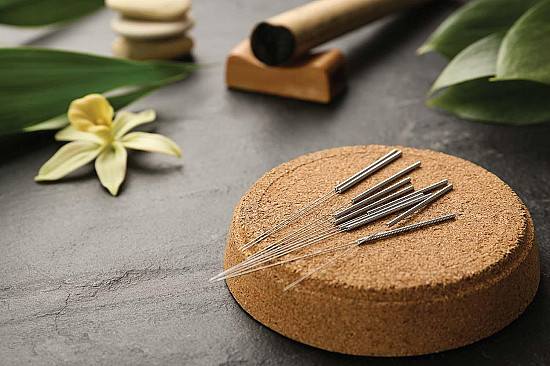
Acupuncture is a traditional Chinese medicine practice that involves inserting very thin needles into specific points on the body. In modern medical explanations, acupuncture may influence the nervous system, stimulate the release of pain-modulating chemicals, improve local blood flow, reduce muscle tension, and calm pain signaling. In traditional terms, it is often described as balancing the flow of energy, or qi. Either way, most patients are mainly interested in one practical question: “Will I be able to sit without making that weird face?”
For sciatica, practitioners may place needles near the lower back, hip, buttock, leg, ankle, or other related points depending on the patient’s symptoms. Some treatments include electroacupuncture, where a gentle electrical current is applied through the needles. Others may include heat, pressure, or related techniques, depending on the provider’s training and the patient’s needs.
The Possible Pain-Relief Mechanisms
Acupuncture may help sciatica through several pathways. First, it may encourage the body to release endorphins, which are natural pain-relieving chemicals. Second, it may influence neurotransmitters and pain-processing pathways in the brain and spinal cord. Third, it may reduce muscle guarding around the lower back and hips. When muscles stop behaving like overprotective security guards, movement can become easier.
Acupuncture may also help people relax, sleep better, and feel less anxious about movement. This matters because chronic pain is rarely only a physical sensation. It can affect mood, confidence, mobility, and daily routines. A treatment that reduces pain even modestly may help a person return to walking, stretching, physical therapy, or normal activitiesthe real superheroes of long-term recovery.
What Harvard Health and Recent Research Suggest
Harvard Health discussed a randomized clinical trial published in JAMA Internal Medicine that studied acupuncture for chronic sciatica caused by a herniated disk. In that trial, adults with chronic sciatica were assigned to receive either real acupuncture or a sham procedure. The treatment schedule included 10 sessions over four weeks.
The results were encouraging. People who received real acupuncture reported greater reductions in leg pain and better physical function compared with those who received sham acupuncture. The improvements appeared within weeks and persisted during longer follow-up. This is important because chronic sciatica can linger, and many patients want options that do not rely only on medication.
However, a responsible interpretation is still necessary. One strong trial does not prove acupuncture works for every type of sciatica, every patient, or every cause of nerve pain. The best evidence appears strongest for chronic sciatica related to herniated disk. If your sciatica comes from severe spinal stenosis, major nerve compression, trauma, infection, or another serious condition, your treatment plan may look very different.
Is Acupuncture a First-Line Treatment for Sciatica?
Usually, sciatica care begins with conservative strategies. These may include staying gently active, targeted physical therapy, stretching, heat or cold therapy, posture changes, nonsteroidal anti-inflammatory drugs when appropriate, and time. Many cases improve without surgery. That said, “wait and see” should not become “suffer and pretend everything is fine.” If pain persists, worsens, or limits daily life, it is reasonable to discuss additional options.
Acupuncture may be considered when standard self-care has not provided enough relief, when a person wants to reduce reliance on pain medication, or when the healthcare team supports it as part of a broader plan. It may pair well with physical therapy because pain relief can make movement less intimidating. Think of acupuncture as possibly turning down the volume on pain so rehab exercises do not feel like an argument with your nervous system.
What Acupuncture Should Not Replace
Acupuncture should not replace urgent medical care. Seek immediate help if you have new bowel or bladder problems, numbness in the groin or saddle area, rapidly worsening leg weakness, fever, unexplained weight loss, history of cancer, major trauma, or severe pain that does not improve. These red flags may signal serious conditions that need prompt evaluation.
Acupuncture also should not replace a proper diagnosis if symptoms last more than a few weeks or keep returning. A licensed acupuncturist can be valuable, but a primary care clinician, physiatrist, neurologist, orthopedic specialist, or physical therapist may be needed to identify the underlying cause and guide treatment.
Who May Benefit Most from Acupuncture for Sciatica?
People most likely to consider acupuncture include those with chronic sciatica, mild to moderate nerve pain, muscle tightness around the lower back and hips, medication sensitivity, or a preference for non-drug therapies. It may also appeal to people who want a complementary approach while continuing physical therapy or other conservative care.
Acupuncture may be less helpful as a stand-alone option when sciatica is caused by severe structural compression, progressive weakness, or a condition requiring surgery or urgent intervention. That does not mean it has no role, but expectations should be realistic. If the nerve is being squeezed like a suitcase in an overhead bin, pain relief alone may not solve the mechanical problem.
What to Expect During an Acupuncture Session
At the first visit, the practitioner typically asks about your symptoms, medical history, pain location, triggers, medications, sleep, activity level, and previous treatments. They may examine posture, movement, tenderness, and pain patterns. You should clearly explain where the pain travels, whether you feel numbness or weakness, and what makes symptoms better or worse.
During treatment, you usually lie on a table while very thin, sterile needles are placed at selected points. Most people feel little to no pain during insertion. Some feel pressure, warmth, heaviness, tingling, or a dull ache. The needles often remain in place for 15 to 30 minutes. If electroacupuncture is used, you may feel a mild pulsing sensation.
Afterward, some people feel relaxed, sleepy, or temporarily sore. Others notice pain relief quickly, while some need several sessions before judging whether it helps. A common treatment plan may involve one to three sessions per week at first, then less frequent visits if symptoms improve.
How Many Sessions Might You Need?
There is no universal number. The JAMA trial discussed by Harvard Health used 10 sessions over four weeks. In real-world practice, some people try four to six sessions before deciding whether it is worth continuing. Chronic symptoms may require a longer course. If you have no meaningful improvement after a reasonable trial, it may be time to reassess the diagnosis, technique, provider, or treatment strategy.
Safety: How to Choose the Right Acupuncturist
Acupuncture is generally considered low risk when performed by a qualified professional using sterile, single-use needles. Still, safety depends heavily on training, hygiene, and appropriate patient selection. Choose a licensed acupuncturist, ask about credentials, and make sure the practitioner uses sterile disposable needles. If a clinic looks less medical and more “garage sale with incense,” keep walking.
Tell your practitioner if you take blood thinners, have a bleeding disorder, are pregnant, have a pacemaker, have a weakened immune system, or have had spine surgery. These details do not always rule out acupuncture, but they may change the approach. Electroacupuncture, for example, may not be appropriate for some people with implanted electrical devices.
Acupuncture vs. Other Sciatica Treatments
Sciatica care is not a popularity contest. The best plan often combines several approaches. Physical therapy can improve strength, flexibility, posture, and movement patterns. Heat or cold can reduce discomfort. Anti-inflammatory medications may help some people, though they are not safe for everyone. Spinal injections may be considered for persistent nerve inflammation. Surgery may be needed when symptoms are severe, progressive, or resistant to conservative care.
Acupuncture fits into this landscape as a complementary, non-drug pain-management option. It may be especially useful for people who want fewer medications, have chronic pain, or need enough relief to participate in exercise-based recovery. But it works best when expectations are practical. The goal may be less pain, better walking, improved sleep, and more confidencenot necessarily instant, permanent, movie-ending relief.
Does Insurance Cover Acupuncture for Sciatica?
Coverage depends on the insurance plan, diagnosis, provider type, and state regulations. Medicare Part B covers acupuncture for chronic low back pain under specific rules, including limits on the number of sessions and requirements for eligible providers. Coverage for sciatica specifically may vary, especially if the diagnosis is framed as nerve pain from a herniated disk rather than nonspecific chronic low back pain.
Before booking a long treatment package, call your insurer. Ask whether acupuncture is covered, whether you need a referral, how many sessions are allowed, what diagnosis codes are eligible, and whether the acupuncturist must be in network. This is not the most thrilling phone call of your week, but it can prevent a surprise bill large enough to create a second pain condition.
Practical Tips Before Trying Acupuncture for Sciatica
1. Get Clear on Your Diagnosis
If symptoms are new, severe, or persistent, talk with a healthcare professional. You do not always need imaging right away, but you do need a clear clinical picture. Knowing whether your sciatica is likely from a herniated disk, spinal stenosis, muscle irritation, or another cause helps guide treatment.
2. Track Your Symptoms
Before starting acupuncture, write down your pain level, walking tolerance, sitting tolerance, sleep quality, numbness, and medication use. Recheck these after several sessions. Feelings are useful, but tracking helps you avoid the classic human habit of saying, “I think it helped?” while your calendar quietly holds the answer.
3. Combine Relief with Rehab
If acupuncture reduces pain, use that window wisely. Gentle walking, physical therapy exercises, core strengthening, and hip mobility work may support longer-term improvement. Pain relief is the door; better movement is how you walk through it.
4. Keep Expectations Realistic
Some people feel significant improvement. Others feel mild relief. A few feel no benefit. Acupuncture is not a guaranteed cure, but it may be a reasonable option when performed safely and used alongside evidence-informed care.
Personal-Style Experiences: What People Often Notice When Trying Acupuncture for Sciatica
Many people who try acupuncture for sciatica describe the decision as something they arrive at after frustration. They have stretched, iced, heated, changed chairs, slept with a pillow between the knees, and developed an oddly emotional relationship with their foam roller. By the time they book acupuncture, they are not usually looking for mystical enlightenment. They are looking for a way to put on socks without making barnyard noises.
A common experience is cautious surprise. The first session may feel less dramatic than expected. The needles are usually much thinner than injection needles, and many patients report feeling pressure or a dull sensation rather than sharp pain. Some people leave feeling deeply relaxed, almost as if their nervous system finally stopped shouting in all caps. That relaxation alone can be meaningful when pain has kept the body tense for weeks or months.
Another common pattern is gradual change. A person may not walk out of the clinic pain-free after one visit, but after several treatments they may notice small wins: sitting through dinner, sleeping longer, walking farther, or needing fewer pain relievers. These improvements may sound modest, but anyone with sciatica knows that “I made it through the grocery store” can feel like winning a tiny Olympic medal.
Some patients describe acupuncture as most helpful when paired with physical therapy. Pain relief can make it easier to do nerve glides, hip stretches, walking programs, and strengthening exercises. In this way, acupuncture may not be the whole solution; it may be the treatment that makes the rest of the solution more doable. That distinction matters. Passive care may calm symptoms, but active recovery helps restore function.
There are also less successful experiences. Some people feel only temporary relief lasting a day or two. Others feel no meaningful difference after several sessions. A few feel sore afterward or dislike the sensation of needles. This does not mean they did anything wrong. Sciatica has different causes, and pain systems vary widely from person to person. If acupuncture does not help after a fair trial, it is reasonable to stop and explore other options.
Cost can shape the experience too. When insurance covers acupuncture, patients may be more willing to complete a full course. When paying out of pocket, every session carries extra pressure to “work.” That can make it helpful to set a checkpoint in advance, such as reassessing after four to six visits. If pain, walking, sleep, or function has improved, continuing may make sense. If nothing has changed, your wallet deserves mercy.
The best acupuncture experiences tend to involve clear communication. Patients should tell the practitioner exactly where symptoms travel, whether numbness or weakness is present, and how symptoms change after each visit. The practitioner should explain the plan, use sterile needles, respect comfort levels, and encourage medical evaluation when symptoms suggest something more serious. A good provider does not promise miracles. A good provider helps you make informed decisions.
In the end, acupuncture for sciatica is best viewed as a potentially helpful toolnot a magic switch and not a last resort whispered about only after midnight. For some people, it eases pain enough to move, sleep, and function better. For others, it is one stop on the way to a different treatment. The smart approach is open-minded but grounded: try it safely, track results honestly, and keep your healthcare team in the loop.
Conclusion: Can Acupuncture Ease Your Sciatica?
Acupuncture may ease sciatica for some people, particularly those with chronic sciatica caused by a herniated disk. Research highlighted by Harvard Health suggests that a structured course of acupuncture can reduce leg pain and improve function compared with sham treatment. That is promising news for people who want non-drug options or who have not found enough relief from standard care.
Still, acupuncture is not a one-size-fits-all cure. Sciatica has different causes, and serious symptoms require medical evaluation. The safest and most effective plan usually combines accurate diagnosis, movement-based rehab, smart self-care, and carefully selected therapies. If you choose acupuncture, work with a licensed professional, use it as part of a broader strategy, and measure progress by what matters most: less pain, better movement, improved sleep, and getting back to life without your sciatic nerve acting like it owns the place.