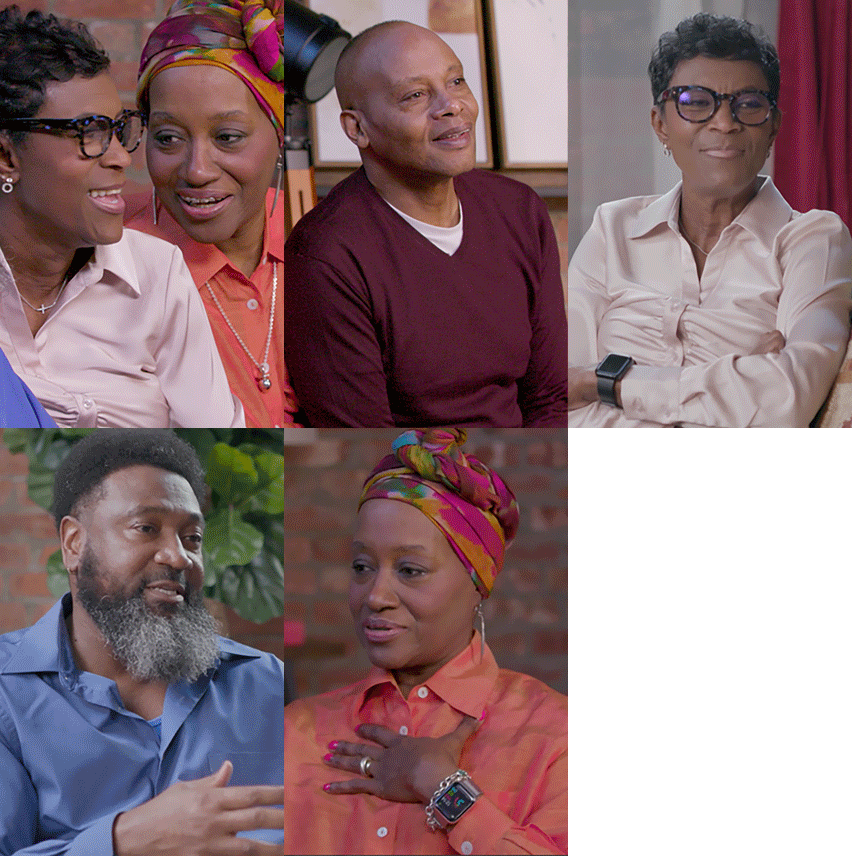
Multiple myeloma is one of those diseases that rarely shows up in casual conversation. It is not exactly the life of the party, not exactly cookout small talk, and definitely not the diagnosis most people expect to hear. But for many Black patients and families, multiple myeloma is more than a medical condition. It is an experience shaped by race, community, culture, faith, family, access to care, and the very real feeling of having to explain the disease to people who have never even heard of it.
That is why the phrase “communities within communities” matters so much. A Black patient with multiple myeloma may be moving through several worlds at once: the Black community, the cancer community, the caregiver community, the church community, the online support community, and the very private community of one person trying to make sense of a body that suddenly feels unfamiliar. Videos, patient stories, and community-centered conversations matter here because they do something a dry brochure often cannot: they let people see themselves in the story.
This article takes a closer look at what it means to be Black with multiple myeloma, why the burden is higher, where the barriers show up, and how community support, practical advocacy, and patient storytelling can help people feel less alone and better equipped. Because while myeloma may be a blood cancer, the experience of living with it is deeply human.
What Multiple Myeloma Is, in Plain English
Multiple myeloma is a cancer of plasma cells, which are a type of white blood cell found in bone marrow. Normally, plasma cells help the body fight infection by making antibodies. In myeloma, those cells start multiplying in unhealthy ways and crowd out normal blood-forming cells. They can also produce abnormal proteins that damage the bones, kidneys, blood counts, and immune system.
That is the clean, textbook version. In real life, multiple myeloma can feel messy and confusing. It may show up as nagging back pain, repeated infections, unexplained fatigue, kidney trouble, bone weakness, anemia, nerve symptoms, or a general sense that something is off. The tricky part is that many of these symptoms can look like aging, overwork, arthritis, dehydration, stress, or a dozen other things people try to push through. In other words, myeloma has a talent for disguise, and it is unfortunately very good at it.
Common Symptoms That Deserve Attention
While symptoms vary, several red flags come up again and again in myeloma conversations. These include persistent bone pain, especially in the back, ribs, or hips; unusual tiredness; shortness of breath related to anemia; frequent infections; kidney problems; numbness or tingling; and symptoms linked to high calcium, such as thirst, constipation, confusion, or weakness. Not every ache means cancer, of course. Bodies are dramatic sometimes. But symptoms that linger, worsen, or pile up should not be brushed aside.
There is also an important precursor condition called MGUS, or monoclonal gammopathy of undetermined significance. MGUS is not cancer, but it can sometimes develop into multiple myeloma over time. That matters because MGUS appears to be more common in Black adults, which may help explain part of the higher myeloma burden in Black communities.
Why This Conversation Hits the Black Community Differently
Multiple myeloma is more common in Black Americans than in White Americans. It also tends to be diagnosed at a younger average age in Black patients. That alone changes the whole conversation. When a disease shows up earlier, it can collide with working years, caregiving years, mortgage years, parenting years, and the stretch of adulthood when people are still expected to be carrying everybody else on their shoulders.
And then there is the cruel twist: even though Black communities carry a heavier myeloma burden, Black patients have historically faced delays in diagnosis, unequal access to specialist care, lower use of certain treatments, and lower participation in clinical trials. So the people most affected have often had the hardest time getting the full benefit of the modern myeloma toolbox. That is not a biology problem alone. That is an access problem, a systems problem, and sometimes a trust problem built over generations.
It Is Not Just About Risk. It Is About the Road to Care.
One of the most important points in myeloma disparities research is this: when Black patients receive equitable access to quality care, outcomes can be similar to or even better than those of White patients. That should reframe the entire discussion. The issue is not that Black patients are somehow destined to do worse. The issue is that barriers to diagnosis, treatment, referral, trial enrollment, transportation, insurance coverage, time off work, and financial support can make the journey harder than it should be.
That is why conversations around myeloma in Black communities cannot stop at awareness slogans. Awareness matters, yes. But awareness without access is like handing someone an umbrella in a hurricane and calling it a housing plan.
The “Too Young, Too Healthy, Too Easy to Dismiss” Problem
One recurring theme in Black patient stories is the experience of not being taken seriously early enough. Symptoms may be attributed to sports injuries, regular back strain, aging, overwork, or other everyday explanations. Sometimes patients are treated for the wrong problem first. Sometimes they know something is wrong but feel they have to fight to be heard. Sometimes they are simply told, in effect, “You do not look like someone who would have this.”
That kind of delay can be devastating. It is not just frustrating; it can postpone testing, referral, and treatment. For a younger Black patient, especially a person who is active, working, or outwardly “healthy-looking,” the diagnosis can feel especially surreal. You are told you have a cancer many people associate with older adults, and suddenly the script of your life gets rewritten in a doctor’s office under fluorescent lights. No one asks for that plot twist.
That is one reason patient videos are so powerful. They show real faces, real voices, and real timelines. They challenge stereotypes about who gets myeloma, what symptoms can look like, and how quickly life can change.
Why Videos Matter More Than People Think
Medical videos and patient testimony can do something remarkable: they turn isolation into recognition. A Black patient watching another Black patient talk about missed symptoms, fear, anger, resilience, faith, or treatment decisions may think, finally, someone is speaking my language. That is not just emotionally comforting. It can be medically useful.
Good videos can help viewers:
- recognize symptoms they may have dismissed,
- understand treatment options in more human terms,
- prepare better questions for doctors,
- see that second opinions are normal,
- understand how clinical trials actually work,
- feel less alone during treatment, and
- see caregivers as part of the care story, not just backstage crew.
They also make room for nuance. A pamphlet may say “advocate for yourself,” but a patient video can show what that sounds like in real life: asking why a symptom is being dismissed, requesting a referral to a specialist, asking whether a clinical trial is appropriate, or bringing a family member into the appointment to help track information.
Community-centered myeloma video programs have also shown the value of taking education outside the traditional hospital setting. Workshops and recorded talks hosted in partnership with churches, community leaders, and health-equity initiatives are not just symbolic gestures. They are practical ways to meet people where they are, in spaces that already carry trust.
Being Black With Myeloma Means Navigating More Than One Community
The title of this article points to a truth many patients know instinctively: no one experiences illness in a vacuum. A Black person with multiple myeloma is not only dealing with lab results and treatment schedules. They may also be managing family expectations, work responsibilities, cultural silence around illness, faith traditions, financial pressures, and the emotional labor of educating other people about a disease that remains unfamiliar.
The Family Community
Family can be the first circle of strength. It can also be the first place where fear lands. Loved ones may rally beautifully, helping with rides, meals, medication tracking, insurance calls, or prayer. But families may also be overwhelmed, confused, or reluctant to talk openly about cancer. In some households, the patient becomes the accidental spokesperson, translator, and emotional thermostat all at once.
The Faith Community
For many Black patients, church and faith communities offer more than spiritual comfort. They offer practical care, social connection, and a language for hope that feels familiar. Community health outreach in faith settings can be especially effective because trust is already there. When a doctor or patient advocate walks into a church fellowship hall and talks plainly about myeloma, the message can land differently than it does in a sterile clinic waiting room.
The Patient Community
Then there is the myeloma community itself: support groups, advocacy organizations, patient webinars, community workshops, online forums, and educational videos. This community becomes a lifeline because it helps people move from “I have never heard of this” to “I know what questions to ask next.” Patients learn that the disease is complex, that treatment keeps evolving, and that they do not have to decode everything alone at 2:14 a.m. with a search bar and rising anxiety.
Why Representation in Clinical Trials Still Matters
Clinical trials are often misunderstood. Some people hear the phrase and picture last-resort medicine or being treated like a science experiment. In reality, clinical trials are one of the ways modern myeloma care improves, and they can give patients access to promising therapies while helping researchers understand how treatments work across different populations.
Black patients remain underrepresented in oncology trials, including myeloma studies, even though the disease affects Black communities at disproportionately high rates. That mismatch matters. If the people most affected are not adequately represented in research, the evidence base becomes less complete. It can also reinforce mistrust when patients feel like medical progress is happening around them, but not fully with them.
The answer is not to pressure people into trials. The answer is to create fair access, clear communication, culturally competent outreach, and genuine partnership. Research has shown that lack of participation is often not about lack of willingness. Many patients are simply never offered the opportunity in a timely, understandable, and trustworthy way.
This is where community-based education helps again. When trial information comes through trusted doctors, trained patient navigators, support organizations, community leaders, or patient advocates who look and sound familiar, it becomes easier to ask questions without feeling cornered.
Practical Advice for Black Patients With Multiple Myeloma
1. Ask Whether You Are Seeing a Myeloma Specialist
Myeloma is not a one-size-fits-all disease. Treatment options can include combinations of targeted therapy, immunotherapy, steroids, transplant strategies, supportive care, and, in some cases, newer approaches such as CAR T-cell therapy or bispecific antibodies. A hematologist-oncologist may be excellent, but a myeloma specialist can bring disease-specific expertise that really matters.
2. Do Not Be Afraid to Ask Sharp Questions
Useful questions include:
- What exactly is my diagnosis and risk level?
- What organs or systems are currently affected?
- Am I a candidate for stem cell transplant?
- Should I be evaluated for a clinical trial now or later?
- How will we monitor my kidneys, bones, blood counts, and side effects?
- What financial support resources are available?
- Who can help me navigate insurance, transportation, and work leave?
These are not “difficult patient” questions. These are “I would like to stay alive and informed” questions, which are, frankly, very reasonable.
3. Bring a Care Partner
Appointments can get dense fast. Bring someone who can listen, take notes, ask follow-up questions, and remember details you may miss. This is especially helpful when treatment plans are changing or when big decisions are on the table.
4. Track Symptoms Like They Matter, Because They Do
Keep a log of pain, fatigue, infections, side effects, sleep issues, appetite changes, numbness, mood shifts, and anything else unusual. Patterns matter. They can help your team respond sooner and more accurately.
5. Build Community on Purpose
Support is not a luxury item. Join a support group. Watch educational videos. Follow credible myeloma organizations. Connect with other patients or caregivers. Ask your treatment center or advocacy groups about programs geared toward Black communities. You do not need to turn your life into a constant cancer seminar, but having trustworthy community around you can make the whole process less lonely and less confusing.
For Caregivers: You Count Too
Caregivers are often asked to do impossible things with a brave face and a working calendar. They manage rides, insurance calls, medications, side effects, emotional spirals, and household logistics, all while trying not to fall apart in public. In Black communities, caregivers may also be carrying the weight of broader family expectations and cultural habits that reward strength but do not always make room for rest.
The truth is simple: caregiving is work. Important work. Exhausting work. Meaningful work. And no, being strong does not mean being silent. Caregivers need support groups, breaks, information, and backup too. A burned-out caregiver cannot pour from an empty cup, and certainly not from one that has also been answering insurance calls since 8 a.m.
Patient advocacy conversations increasingly recognize this, and that is a good thing. Multiple myeloma does not only affect the patient in the chair. It changes the rhythm of whole households.
What Better Myeloma Care Should Look Like
Better care for Black patients with multiple myeloma should include earlier recognition of symptoms, faster referrals, equitable access to specialists, transparent conversations about treatment options, realistic financial guidance, wider trial access, and more community-rooted education. It should also include more trust-building and more listening. Not performative listening. Real listening.
It also means expanding the voices in the room. More Black clinicians, researchers, advocates, support leaders, and patient educators can help make myeloma care feel less alien and more responsive. Representation is not a cosmetic upgrade. In many cases, it improves communication, trust, and the sense that a patient’s concerns are being understood in full context.
Experiences From the Community: What These Stories Often Sound Like
This section is a composite synthesis of recurring themes described across patient stories, caregiver accounts, support programs, and health-equity conversations related to Black communities and multiple myeloma.
For many Black patients, the myeloma story does not begin with a dramatic movie scene. It begins with a backache that refuses to leave, a weird fatigue that coffee cannot fix, a lab result that does not make sense, or a feeling that the body is whispering, then shouting, that something is wrong. A person may keep going to work, caring for children, leading church events, checking in on parents, and doing all the things responsible adults are told to keep doing. The symptoms get folded into normal life. Maybe it is stress. Maybe it is age. Maybe it is a pulled muscle. Maybe it is “I just need to rest.”
Then comes the medical maze. Some people are reassured too early. Some are treated for the wrong issue first. Some say they knew they were not being heard and had to push for scans, bloodwork, or another opinion. That experience can leave a mark. It is not only the disease that shakes trust; it is the memory of having to insist that the pain was real.
When the diagnosis finally arrives, it often lands in a cloud of shock. Multiple myeloma is not a household-name cancer, so many patients and families are hearing the term for the first time. Suddenly there are new words, new acronyms, new lab numbers, and a new kind of fear. Some patients describe a moment of going blank. Others go into research mode immediately. Some cry in the parking lot. Some do not cry until three weeks later, when the house is quiet and the medicine bottles are lined up on the table like uninvited guests.
Then community begins to rearrange itself. Family members who were once on the edge of daily life move to the center. A spouse becomes a note-taker and medication manager. A sibling becomes the ride to infusion. A friend starts a meal train. A church member checks in every Thursday. Someone sends a video from a patient advocate who explains transplant in language that actually makes sense. Someone else says, “You need a specialist,” and that one sentence changes the course of care.
Many Black patients also talk about the relief of seeing another Black person tell a myeloma story out loud. It helps to see someone describe treatment, fear, faith, anger, exhaustion, remission, relapse, or survival without filtering it into perfect, polished inspiration. Real stories make space for complicated feelings. They also make room for humor, which patients often use not because the situation is funny, but because humor keeps fear from taking over the whole room.
Over time, many stories shift from confusion to advocacy. Patients begin asking harder questions. Caregivers learn how to push for clearer answers. Support groups become places where people swap not just feelings, but strategy. How do you ask about trials? What side effect caught you off guard? How do you explain this diagnosis to your family? How do you stay grounded when the plan changes? These are the communities within communities, and they matter because they turn private struggle into shared knowledge.
That may be the most powerful lesson of all: being Black with multiple myeloma can be isolating, but it does not have to stay that way. When stories are shared, support gets stronger. When support gets stronger, patients are better able to claim space, ask questions, and move through treatment with more clarity and less loneliness.
Conclusion
Being Black with multiple myeloma is not just a medical experience. It is a layered social experience shaped by higher risk, younger diagnosis, unequal access, cultural context, and the constant need for trustworthy information. But it is also an experience shaped by strength, community, advocacy, caregiving, faith, and the growing power of patient voices.
That is why videos, support programs, and community-centered education matter so much. They help people recognize symptoms, understand treatment, challenge stereotypes, and see that they are not navigating this disease in isolation. The future of better myeloma care in Black communities will not come from awareness alone. It will come from awareness matched with access, trust, representation, and real support.
In other words, the goal is not merely to help people survive the diagnosis. It is to make sure they are seen, heard, and fully supported in every community they belong to.