Area 51 has spent decades doing what Area 51 does best: making people squint at blurry desert photos, whisper about saucers, and wonder why a dry lakebed in Nevada has the public-relations strategy of a locked basement. But one of the most fascinating stories connected to the famous base is not about aliens, moon tunnels, or a suspiciously shiny “weather balloon.” It is about a real secret CIA plane, a real crash, a real pilot, and a wreck site hidden for decades in the lonely desert near the world’s most mythologized military facility.
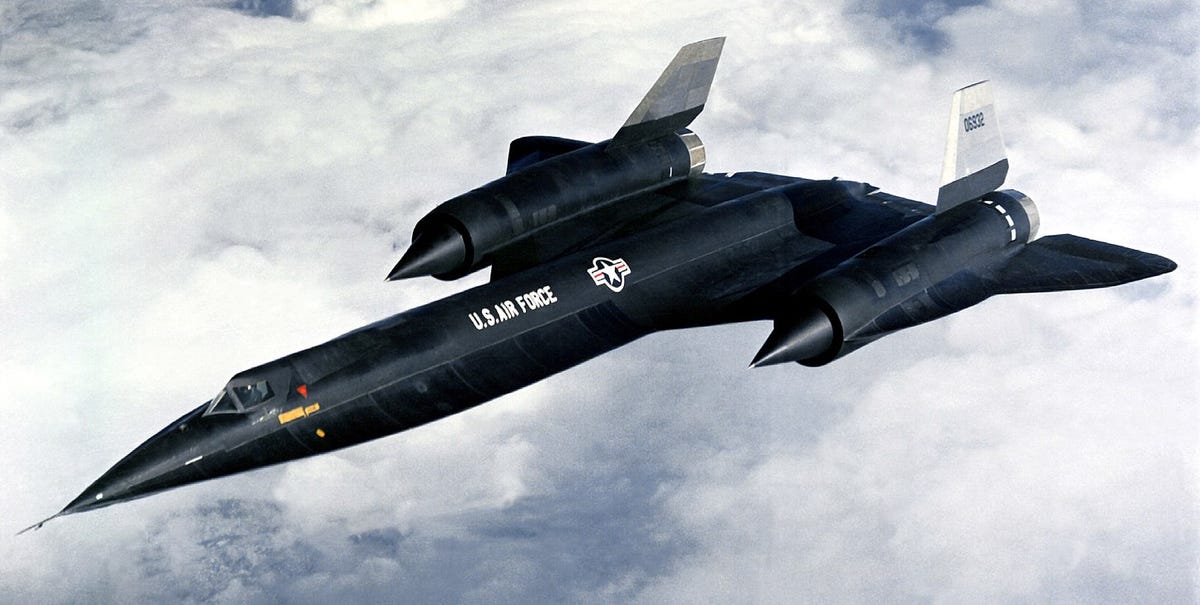
The aircraft was the Lockheed A-12 OXCART, a top-secret CIA spy plane built by Lockheed’s Skunk Works during the Cold War. It was designed to fly so high and so fast that enemy defenses would have about as much chance of catching it as a tricycle chasing a lightning bolt. The A-12 was the sleek predecessor to the more famous SR-71 Blackbird, but for years, it lived in the shadows, tested at Groom Lakebetter known to the public as Area 51and hidden behind layers of classification, cover stories, and official silence.
The phrase “secret CIA plane found near Area 51” sounds like the opening scene of a science-fiction blockbuster, but the true story is more grounded, more human, and in many ways more powerful. In 1967, CIA pilot Walter Ray died when his A-12 crashed during a training flight after taking off from the Groom Lake test facility. The government recovered the pilot and aircraft remains, but the broader crash site faded into secrecy. Decades later, an explorer named Jeremy Krans located the debris field in the Nevada desert, turning a long-whispered aviation mystery into a tangible piece of Cold War history.
The Real Secret Plane: What Was the A-12 OXCART?
The A-12 OXCART was not just another fast jet with a classified paint job. It was one of the most ambitious reconnaissance aircraft ever built. Developed for the Central Intelligence Agency by Lockheed’s Skunk Works under legendary aircraft designer Clarence “Kelly” Johnson, the A-12 was meant to replace the U-2 spy plane with something faster, higher-flying, and harder to intercept.
During the late 1950s and early 1960s, the United States wanted intelligence on adversaries without putting pilots in unnecessary danger. The U-2 had already proven that high-altitude reconnaissance could change the intelligence game. But as Soviet air defenses improved, flying high was no longer enough. The next spy plane needed to fly high, fast, and with a reduced radar signature. In other words, it needed to be part aircraft, part engineering dare, and part “let’s hope the laws of physics are in a cooperative mood today.”
The A-12 answered that challenge. It used titanium construction, special fuel, powerful Pratt & Whitney J58 engines, and a long, sharp, futuristic shape that still looks modern enough to make most aircraft feel underdressed. It could fly at Mach 3 speeds and operate at altitudes around 90,000 feet. At that height, the sky above the pilot turned dark, the Earth curved below, and ordinary commercial airliners were far beneath like slow-moving dots.
Why Area 51 Was the Perfect Place to Hide It
Before Area 51 became a pop-culture magnet for UFO hunters, memes, and late-night documentaries with dramatic music, it was a remote test site chosen for practical reasons. Groom Lake offered isolation, dry lakebed runways, restricted airspace, and enough empty desert to keep curious eyes at a safe distance. For the CIA, it was ideal. For anyone trying to casually wander in and take a look, it wasand remainsa terrible idea.
The CIA used Groom Lake to test both the U-2 and later the A-12. The site allowed engineers, pilots, and support crews to work on aircraft that did not officially exist in the way normal aircraft exist. There were no public launch ceremonies, no glossy brochures, and definitely no “come meet the spy plane” open house with lemonade and souvenir hats.
The secrecy surrounding the base helped create the Area 51 legend. When people in the 1950s and 1960s saw strange, fast-moving objects at extreme altitudes, many did not know they were seeing advanced American reconnaissance aircraft. From the ground, the U-2 and A-12 could look otherworldly. In fairness, if you saw a black, needle-nosed aircraft streaking across the high desert sky faster than anything you knew existed, “secret government spy plane” and “space visitors forgot their turn signal” might both cross your mind.
The 1967 Crash That Became a Desert Mystery
On January 5, 1967, CIA pilot Walter Ray took off from the Groom Lake facility in an A-12 known as Article 125. The mission was a training flight, not a combat operation. Yet the A-12 was so demanding that even training carried serious risk. This was an aircraft operating at the edge of what materials, engines, fuel systems, and human pilots could endure.
During the flight, the aircraft suffered a fuel-related problem. Reports on the accident describe a likely fuel quantity system error that led to fuel starvation and engine flameout. Ray attempted to handle the emergency and eventually ejected. Tragically, the ejection did not save him. He was unable to separate from the seat before impact, and he died in the crash.
The aircraft came down in the Nevada desert, far from public roads and ordinary travel routes. Because the A-12 program was classified, the crash could not be treated like a normal aviation accident. Officials recovered what they needed, but the location and the story remained wrapped in secrecy. The site became one of those Cold War fragments that existed in government memory, aviation circles, and local rumorbut not in the mainstream public record.
How the Plane Was “Found” Decades Later
The A-12 was not found in the sense of a complete aircraft sitting under a tarp, waiting for someone to pull it away like a garage-sale surprise. What was found was the crash debris fielda scattered, weathered remnant of Article 125 and the accident that claimed Walter Ray’s life. That distinction matters. The story is not about a perfectly preserved mystery jet parked behind a cactus. It is about an explorer locating the physical trace of a classified crash that had been hidden in plain desert silence for decades.
In the late 1990s, explorer Jeremy Krans became interested in the story of the missing crash site. He studied clues, eliminated false locations, and spent years searching remote stretches of Nevada. This was not a quick afternoon hike with a bottle of water and a playlist. The desert can be beautiful, but it is also unforgiving, and many areas near military ranges are restricted or dangerous. Serious research into such places requires caution, legality, and respect for boundaries.
Krans eventually located the debris field in 2009. Later, a small memorial was created at the site to honor Walter Ray. The discovery gave aviation historians and enthusiasts a physical connection to a story that had long existed mostly in documents, memories, and specialized circles. It also reminded the public that behind every sleek Cold War aircraft were real people taking real risks.
Why the A-12 Was More Secret Than the SR-71
Most people know the SR-71 Blackbird. It is the celebrity sibling: the aircraft that appears on posters, museum floors, documentaries, and “coolest plane ever” lists. The A-12, however, was the quieter and more secretive older relative. It served the CIA rather than the U.S. Air Force, and its existence stayed classified for years.
The A-12 and SR-71 shared a family resemblance. Both were part of the Blackbird lineage, both flew at blistering speeds, and both looked like they had been designed by someone who thought ordinary airplanes were not dramatic enough. But the A-12 was built as a single-seat CIA reconnaissance aircraft. The SR-71 was a two-seat Air Force platform with different operational requirements and broader public recognition after its existence became known.
Only a small number of A-12 aircraft were built. The fleet flew test missions, training flights, and operational reconnaissance under the OXCART program. Its operational life was short, but its influence was enormous. The technology, materials, and operating concepts helped shape the future of high-speed, high-altitude reconnaissance.
The Technology That Made the A-12 Extraordinary
Titanium Skin for Extreme Heat
At Mach 3, air friction heats an aircraft dramatically. The A-12 needed materials that could survive temperatures far beyond what conventional aluminum structures could handle. Titanium became essential. Working with titanium was difficult, expensive, and sometimes deeply annoying for engineersimagine trying to build a dragon out of metal that does not particularly want to cooperate.
Special Fuel for a Special Aircraft
The A-12 used JP-7 fuel, designed for high-temperature performance. Ordinary fuel would not do the job. In the Blackbird family, fuel was not simply something poured into tanks; it was part of a complex thermal and mechanical system. The aircraft was so extreme that even its fuel had to be a specialist.
Speed as Defense
The A-12’s survival strategy was simple in concept but difficult in execution: fly higher and faster than threats could reach. Instead of relying only on stealth in the modern sense, the aircraft combined speed, altitude, careful shaping, and mission planning. If detected, it could outrun many dangers. That sounds easy until you remember that flying at Mach 3 requires every system to function in a brutal environment.
Area 51, UFO Myths, and the Truth Hiding in the Sky
One reason Area 51 became tangled with UFO stories is that secret aircraft genuinely did fly there. That does not mean the base housed aliens, flying saucers, or a break room where extraterrestrials complained about Nevada heat. It means that, during the Cold War, the U.S. government tested aircraft so advanced that ordinary observers had no easy explanation for them.
High-altitude spy planes could catch sunlight long after the ground below was dark, making them appear as strange glowing objects. Their speed and altitude made them unlike anything most people had seen. Before declassified documents confirmed details about Groom Lake and programs like U-2 and OXCART, the mystery created a vacuum. And as the internet has proven many times, mystery plus vacuum equals conspiracy confetti.
The discovery of the A-12 crash site adds a more serious layer to the Area 51 story. It shows that behind the myths are real engineering programs, real military and intelligence needs, and real human sacrifice. The truth may not involve aliens, but it is still extraordinary.
Walter Ray: The Man Behind the Mystery
It is easy to focus on the aircraft because the A-12 looks like something that escaped from the future. But the most important name in this story is Walter Ray. He was one of the small group of highly skilled pilots trusted to fly the CIA’s most secret aircraft. These pilots were not simply “drivers” of fast machines. They were test subjects, engineers in flight suits, emergency managers, and Cold War professionals operating in conditions where mistakes could become fatal within seconds.
Ray’s death underscores the danger of experimental aviation. The A-12 program pushed boundaries, and boundaries push back. Today, his story is part of the larger memory of the OXCART program and the people who served in silence. The later memorial at the crash site is meaningful because it shifts attention from the mystery of the machine to the life of the pilot.
Why This Discovery Still Fascinates People
The secret CIA plane found near Area 51 captures public attention because it combines several irresistible ingredients: a classified aircraft, a legendary base, a desert search, declassified history, and a mystery that turned out to be real. Unlike many Area 51 rumors, this one has documentation behind it. There really was a CIA spy plane. It really flew from Groom Lake. It really crashed. And decades later, its debris field really was located.
That makes the story more compelling than pure conspiracy talk. A rumor can be entertaining, but a confirmed historical mystery has texture. It has dates, names, engineering details, and consequences. It gives readers the thrill of discovery without requiring them to believe that every blinking light in the desert is a spaceship looking for parking.
The Larger Legacy of the A-12 OXCART
The A-12 program represented a specific moment in Cold War history when speed, altitude, and secrecy were central to national intelligence. Satellites were emerging, but aircraft still provided flexibility and high-resolution reconnaissance. The U-2 had shown the power and risk of overflight. The A-12 took the concept further, creating an aircraft that could cross hostile skies at astonishing speed.
Although the A-12’s operational career was brief, its legacy continues through museums, declassified documents, aviation research, and the enduring fame of the Blackbird family. The CIA’s own A-12 display, restored and preserved, stands as a reminder of the technology and sacrifice behind the program. Other surviving A-12 aircraft in museums allow the public to stand near something that was once among the most closely guarded machines in the world.
The story also illustrates how secrecy ages. What begins as classified national security information can eventually become public history. Documents are released, aircraft are displayed, veterans speak, and once-hidden places become subjects of serious research. Area 51 still has secrets, but the A-12 shows that some secrets eventually step into daylightusually wearing a titanium skin and looking cooler than anything else in the room.
Experience Section: What It Feels Like to Follow the Story of a Secret CIA Plane Found Near Area 51
Researching the story of a secret CIA plane found near Area 51 feels a bit like walking into a library where half the books are locked, the other half have black marker across the pages, and the librarian may or may not be a retired test pilot. You start with the familiar mythology: Area 51, UFO rumors, desert roads, warning signs, and decades of pop-culture fog. Then, slowly, the fog clears. What remains is not less interesting. It is more interesting, because the real story has weight.
The first experience is surprise. Many people assume the most exciting Area 51 stories must involve aliens or impossible technology. But the A-12 OXCART proves that human engineering was already astonishing enough. Imagine standing near one of these aircraft in a museum. The fuselage is long and predatory, the chines sweep along the sides like sculpted shadows, and the entire machine looks as if it was designed for a world where ordinary speed limits are considered rude suggestions. You do not need a flying saucer when a real CIA aircraft can cruise at Mach 3.
The second experience is respect. The desert crash story is not a treasure hunt in the silly sense. It is tied to the death of Walter Ray, a pilot operating under secrecy in a program few Americans knew existed. That changes the emotional tone. The wreckage is not just historical debris; it is connected to service, risk, and loss. For aviation enthusiasts, the discovery of the site may feel thrilling, but it should also feel solemn. A memorial belongs in that story because the aircraft was remarkable, but the pilot was irreplaceable.
The third experience is perspective. Area 51 is often treated like a giant joke, a place where internet culture sends imaginary raiding parties and cartoon aliens. Yet the real Groom Lake was a workplace. Engineers solved impossible problems there. Mechanics maintained exotic aircraft under pressure. Pilots climbed into machines that could punish small errors. Security teams protected programs that shaped Cold War intelligence. Once you understand that, the base becomes less of a meme and more of a monument to classified labor.
The fourth experience is caution. Stories about secret aircraft can tempt people to think the desert is an open invitation. It is not. Remote Nevada can be dangerous, and military boundaries are serious. The responsible way to engage with this history is through declassified records, museums, reputable reporting, aviation archives, and legal public viewpoints. The best adventure is not the one that ends with a flat tire, heat exhaustion, or a conversation with armed security. Indiana Jones may make trespassing look cinematic; real life mostly makes it expensive and embarrassing.
The final experience is wonder. The A-12 story reminds readers that history is often hiding in unexpected places. Sometimes it is in a government archive. Sometimes it is on a museum floor. Sometimes it is scattered across a desert landscape, waiting for someone patient enough to connect documents, memories, geography, and persistence. The secret CIA plane found near Area 51 is not just a headline. It is a doorway into Cold War aviation, intelligence history, human courage, and the strange way truth can be more fascinating than rumor.
Conclusion
The secret CIA plane found near Area 51 is not a fantasy about alien hardware or a lost superweapon. It is the real story of the A-12 OXCART, a classified CIA spy plane born from Cold War urgency and tested at Groom Lake. Its crash in 1967 took the life of pilot Walter Ray, and the later discovery of the debris field brought renewed attention to a chapter of aviation history that had long remained hidden in the Nevada desert.
In the end, the A-12 proves that reality does not need much help from conspiracy theories. A titanium spy plane flying at Mach 3 from a secret desert base is already dramatic enough. Add declassified documents, a decades-long search, a memorial to a fallen pilot, and the eerie backdrop of Area 51, and you have a story that is both historically important and impossible to ignore.