There are bad relationship decisions, there are spectacularly bad relationship decisions, and then there is “I replaced my girlfriend on a romantic vacation with my female best friend and somehow expected a warm welcome when I got back”. That last category deserves its own travel brochure, preferably printed in red ink and handed out at airports next to the boarding passes.
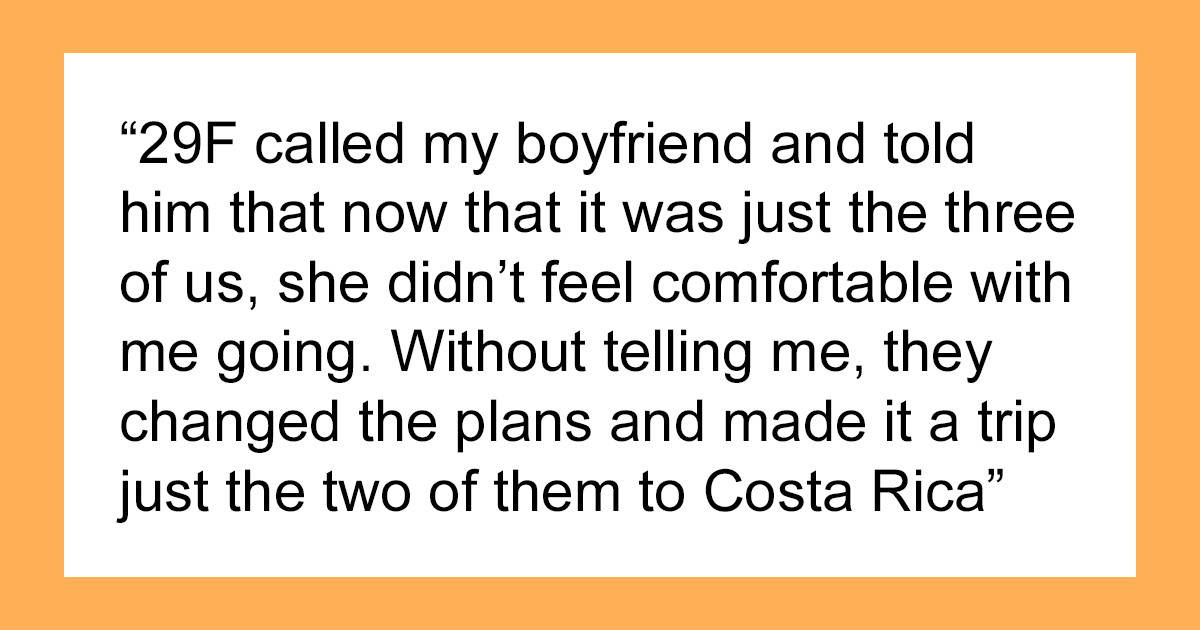
A viral relationship story has been making the rounds online because it hits a nerve almost instantly. The setup was already shaky: a boyfriend, a girlfriend, a planned group vacation, and a female best friend in the orbit. But once another traveler dropped out, the boyfriend reportedly made a choice that detonated the relationship in one move: he uninvited his own girlfriend and went anyway with his best friend. The destination? Costa Rica, a place regularly marketed as romantic, luxurious, and honeymoon-friendly. The girlfriend eventually dumped him before he even got home.
And honestly? The internet did not need a committee meeting to decide how it felt about this.
The reason this story spread so fast is not because people think men and women can’t be friends. Most grown adults understand perfectly well that close friendships across genders can be real, healthy, and totally non-romantic. The problem here was not friendship. It was priority. It was optics. It was disrespect dressed up in beachwear. It was the kind of decision that says, “Trust me,” while doing absolutely nothing that makes trust easier.
The Viral Story That Felt Like a Relationship Jump Scare
In the online account, the woman described being in a serious relationship with a man who had a female best friend. A vacation had originally been planned with multiple people, which already made the trip easier to swallow. But when one friend backed out, the boyfriend did not respond by canceling, inviting his girlfriend back in, or even stepping back to ask what would feel respectful. Instead, he kept the trip on the calendar and effectively swapped out his partner so he could go away with the friend.
That alone would be enough to trigger a very long pause. But the details made it worse. The girlfriend said she felt disregarded, disrespected, and emotionally stranded while the boyfriend kept acting as if the problem could be solved with vague reassurance and last-minute gestures. In one especially bleak little detail, he reportedly bought her peanut butter cups instead of offering real repair. Candy is lovely. Accountability is lovelier.
Before long, the girlfriend realized the issue was not just the trip. The trip was the spotlight. It illuminated the ranking system inside the relationship, and she did not like where she landed. So she ended it before he came back.
Why This Was Never Just About a Vacation
People often reduce stories like this to one lazy question: Was he cheating? But that question can miss the bigger point. Sometimes the relationship doesn’t implode because of proven physical infidelity. Sometimes it implodes because one partner keeps making choices that feel like betrayal even before anything physical enters the chat.
That is exactly why this story hit so many people in the chest. The boyfriend’s decision did not merely create discomfort. It sent a message. It said that his girlfriend’s sense of safety, dignity, and place in the relationship was negotiable. It said she was expected to absorb humiliation and call it maturity. It said she should be “cool” while he made a profoundly uncool choice.
And let’s be real: being told to be the “secure girlfriend” while your boyfriend heads off to a honeymoon-coded destination with another woman is less a trust exercise and more an audition for sainthood.
Opposite-Sex Friendships Aren’t the Villain Here
Let’s be fair, because this is where a lot of people go off the rails. Having a close female best friend is not a crime. Having a male best friend is not a crime. Adults in committed relationships have cross-gender friendships all the time, and those friendships can be meaningful, stabilizing, and genuinely platonic.
What matters is how those friendships are managed once romance enters the picture. Healthy relationships are not built on one partner bulldozing the other’s feelings and then accusing them of being dramatic. They are built on honesty, care, clarity, and the willingness to say, “I can see why this would hurt you, and I’m not going to act like your pain is a personality flaw.”
That distinction matters because the internet often swings to extremes. On one end, some people insist that any close friendship with someone of a gender you could be attracted to is suspicious. On the other end, some people pretend that boundaries are for the weak and anyone who feels uneasy is insecure. Both takes are lazy.
The smarter answer is this: friendships are fine, but they do not exist in a vacuum. Once you are in a committed relationship, context matters. History matters. secrecy matters. travel arrangements matter. emotional priority matters. And yes, inviting your best friend on a trip that your girlfriend was supposed to take is the kind of context that could make a potted plant suspicious.
Why Trips Like This Feel So Personal
Travel is not neutral. A trip is rarely just a trip, especially when it is expensive, intimate, and memory-making. Vacations often symbolize who gets your best energy. They are where couples reconnect, celebrate milestones, and create stories they will tell for years. That is why the destination in this story mattered so much. A romantic getaway carries emotional weight even if no one officially labels it that way.
So when a boyfriend chooses to share that kind of experience with his female best friend instead of the girlfriend who was originally meant to go, the wound is not only jealousy. It is displacement. The girlfriend is not simply excluded from a plane ticket. She is excluded from a role. She sees, in full color, who gets the adventure, the attention, and the emotional spotlight.
This is also why “but nothing happened” is often such a useless defense. Relationships do not run on courtroom rules. People are allowed to leave because something felt wrong, dismissive, or deeply disrespectful. A partner does not need to wait for a smoking gun when the entire room already smells like smoke.
Emotional Cheating, Subtle Betrayal, and the Fantasy Bubble
One of the most useful things relationship experts point out is that emotional betrayal often starts in ordinary-looking ways. It can begin with a friendship, an inside joke, a person you text first, or someone you increasingly turn to when your actual partner should be the emotional center. It does not always look dramatic at first. That is exactly why people miss it.
And that is what makes stories like this so slippery. The boyfriend may have seen the trip as defensible because it was technically explainable. There was a prior plan. There was a friend involved. There may have been no sex, no kissing, no official “affair” language. But relationships are not protected by technicalities. They are protected by trust. Once your partner starts feeling replaced, minimized, or emotionally demoted, the damage is already underway.
There is also the fantasy factor. Trips create bubbles. They remove people from routine, bills, dishes, work stress, and all the unglamorous realities that test real-life relationships. That makes a vacation especially risky terrain when boundaries are already blurry. The person on the trip gets the curated version of you: relaxed, adventurous, charming, fully present. Meanwhile, your real partner is back home dealing with the emotional hangover before the cocktails have even been served.
That is why this situation felt like more than bad optics. It looked like a mini-relationship wearing a “just friends” hat.
The Real Red Flags in This Story
He made a ranking decision
The most painful part of the story is that the boyfriend effectively ranked the women in his life and did it out loud with his actions. When the trip changed shape, he had a chance to choose his partner. He did not.
He expected her to manage his bad choice
Another red flag was the emotional labor transfer. Instead of doing the hard work of repairing the rupture, he reportedly asked her what he should do to make it better. That can sound collaborative on paper, but in practice it often means the hurt partner has to design the apology, write the recovery plan, and soothe the person who created the mess. That is not repair. That is outsourcing.
He minimized the symbolism
Trips carry emotional meaning. Romantic destinations carry even more. Pretending otherwise is not maturity; it is selective cluelessness. Adults understand symbolism perfectly well when they want to. They just sometimes become mysteriously confused when the symbolism benefits them.
He treated discomfort as irrationality
A secure relationship makes space for discomfort without immediately shaming it. If one partner says, “This hurts and I don’t feel safe in this,” the answer is not, “Wow, you’re overreacting.” The answer is, “Let’s take this seriously.” Once a partner starts feeling mocked for having normal emotional responses, resentment sets up camp fast.
The Female Best Friend Was Not Necessarily the Main Problem
This is an important nuance. In many stories like this, people fixate on the friend as if she is the whole issue. Sometimes the friend is inappropriate. Sometimes she is territorial. Sometimes she absolutely enjoys the power imbalance. But even then, the main responsibility still belongs to the person in the relationship.
If your partner has a best friend who crosses lines, it is your partner’s job to notice, address it, and protect the relationship. If your partner keeps saying, “That’s just how she is,” or “You’re reading into it,” they are not being neutral. They are choosing passivity over partnership.
That is why so many readers saw this breakup as justified. The story was less about one female friend and more about one boyfriend who failed the basic test of partnership: make your person feel chosen.
What a Healthy Response Would Have Looked Like
A healthier version of this story was available the whole time. When the original group plan changed, the boyfriend could have paused and said, “This no longer feels appropriate. Let’s either cancel, rework it, or make sure my girlfriend comes first in whatever happens next.” That would have been relationship behavior.
He could have invited a transparent conversation early instead of waiting until feelings curdled. He could have acknowledged that a romantic destination plus a female best friend plus a disinvited girlfriend equals a very bad equation. He could have prioritized his partner’s emotional security over convenience. He could have chosen short-term disappointment instead of long-term fallout.
In other words, he could have acted like someone who wanted to keep his girlfriend.
So, Was the Breakup an Overreaction?
No. It was a boundary.
That is the key takeaway from this entire saga. The woman did not dump him because she was anti-friendship or incapable of trust. She dumped him because his behavior made the relationship feel unsafe, unbalanced, and humiliating. Ending a relationship after repeated disregard is not dramatic. It is often the first sane thing that has happened in weeks.
Too many people stay in relationships because they are waiting for a cleaner villain. They wait for the obvious affair, the confession, the undeniable proof. But disrespect is often obvious long before adultery is provable. By the time people say, “I just couldn’t do this anymore,” what they usually mean is, “I got tired of arguing with reality.”
Related Experiences That Make This Story So Painfully Familiar
What gives this kind of viral story its staying power is that it does not feel rare. It feels familiar. A lot of readers have lived some version of it, even if the destination was not Costa Rica and the plane tickets never entered the picture. The details change, but the emotional script stays weirdly consistent.
One common experience is the “you have nothing to worry about” friendship. At first, the friend is framed as harmless, almost saintly. You are told she is basically family, basically a sibling, basically a cactus, basically anything except a possible issue. Then you start noticing the strange intimacy: constant texting, private jokes, territorial energy, and the subtle sense that you are joining a relationship that already has an emotional co-headliner. Nothing is technically wrong, but everything feels off. You bring it up carefully, hoping for reassurance, and instead you get a lecture on trust. Now you are not discussing behavior anymore; you are defending your sanity.
Another experience is the “cool girlfriend” trap. This one is brutal because it flatters you while it erases you. You are expected to be mature, chill, evolved, and impossible to rattle. You are told that secure women do not ask questions. Secure women do not mind boundaries being vague. Secure women smile while their boyfriend goes on intimate trips, answers emotionally loaded messages at midnight, or lets another woman behave like she has a reserved seat in the relationship. The unspoken rule is simple: if you protest, you become the problem. And that trick works on people for a while, because nobody wants to feel petty. But eventually they realize that “being chill” has become code for “accepting treatment that hurts.”
Then there is the public replacement experience, which is exactly why this story landed so hard. Being excluded in private is painful enough. Being excluded in a way that other people can see is something else. Maybe it is a trip. Maybe it is a birthday dinner. Maybe it is a wedding plus-one situation. Whatever form it takes, the message is the same: another woman is getting the place you thought was yours. Even if nobody kisses, even if no one says anything explicit, the humiliation is social as well as romantic. That is why people remember these moments so vividly. They are not only hurt; they are embarrassed.
And finally there is the late realization. This is the part many people in comment sections recognize instantly. They look back and realize the actual breakup did not happen because of one trip, one dinner, or one text thread. It happened because the event forced them to admit a truth they had been trying not to name: their partner was more committed to avoiding discomfort than protecting the relationship. Once that realization hits, the relationship often ends quickly. Not because the injured partner suddenly became impulsive, but because they finally saw the pattern without its usual disguise.
That is why the woman in this story dumping him before he returned home felt so satisfying to many readers. It was not revenge. It was clarity arriving early for once.
Final Thoughts
The lesson from this story is not that men and women cannot be friends. The lesson is that friendship does not excuse disrespect, and trust does not require self-abandonment. A healthy partner does not ask you to swallow hurt just to prove you are secure. A healthy partner does not make you audition for dignity while they board a plane with someone else.
If there is one reason this breakup feels justified, it is because the woman understood something important before wasting more time: when a person consistently makes you feel secondary, the relationship is already telling you the truth. Your job is not to explain it better. Your job is to listen.
And if your boyfriend ever tries to replace you on a tropical getaway with his best friend? Please remember: a breakup text may not be romantic, but it is still a perfectly valid form of trip insurance.