A bedroom without a headboard is not an unfinished bedroom. It is a blank canvas with excellent lighting, a very comfortable mattress, and zero interest in following old furniture rules just because someone’s great-aunt bought a carved oak bed frame in 1987. Today, no-headboard design ideas are everywhere, from tiny apartments and rental bedrooms to boutique-style primary suites. The look can be minimalist, cozy, dramatic, bohemian, modern, cottage-inspired, or wonderfully budget-friendly.
The trick is simple: when you remove the traditional headboard, you need to give the wall behind the bed a job. It can add color, texture, storage, softness, height, symmetry, or personality. That wall becomes the visual anchor. Without one, the bed may look like it accidentally parked against the wall after a long day. With the right design move, however, a no-headboard bed can look intentional, polished, and surprisingly luxurious.
Whether you are decorating a rental, styling a small bedroom, saving money, avoiding bulky furniture, or simply craving a cleaner look, these 25 no-headboard design ideas will help you create a bedroom that feels complete without relying on a traditional headboard.
Why Choose a Bed Without a Headboard?
A headboard can be beautiful and practical, especially if you like reading in bed. But it is not required for great bedroom design. Skipping the headboard can make a room feel lighter, especially in compact spaces where every inch matters. It also gives you more freedom to experiment with wall treatments, artwork, shelves, textiles, lighting, and architectural details.
No-headboard bedroom ideas are especially useful for renters because many alternatives are removable, affordable, and easy to update. Peel-and-stick wallpaper, framed prints, fabric panels, curtain backdrops, and painted shapes can all create a strong focal point without requiring a heavy furniture purchase. Plus, if your style changes every six months, a painted arch is much easier to replace than a giant upholstered headboard that now feels like it belongs in a hotel lobby from 2009.
25 No-Headboard Design Ideas for a Stylish Bedroom
1. Paint a Bold Accent Wall Behind the Bed
One of the easiest no-headboard design ideas is to paint the wall behind your bed in a color that contrasts with the rest of the room. A deep green, warm terracotta, navy blue, charcoal gray, or soft clay shade can instantly create depth. The bed feels grounded, and the wall becomes the “headboard” without adding furniture.
For a calm look, keep the bedding neutral and let the wall do the talking. For a playful look, repeat the wall color in throw pillows, art, or a bedside lamp. This approach works beautifully in modern, transitional, and cozy minimalist bedrooms.
2. Create a Painted Arch
A painted arch is the design equivalent of putting a spotlight on your bed. It frames the sleeping area, adds softness, and gives the wall a custom look. You can paint a single arch just wider than the bed or create a tall arch that stretches almost to the ceiling for more drama.
This idea is especially helpful in small bedrooms because it adds visual interest without taking up floor space. Use warm beige for a subtle effect, sage green for a relaxed feel, or dusty pink for a soft modern touch.
3. Hang Oversized Artwork
Large-scale artwork is a classic headboard alternative. A single oversized canvas, framed print, or textile artwork can balance the width of the bed and bring the room together. The key is proportion. A tiny picture floating above a queen bed may look lonely, like it lost its friends on moving day.
Choose artwork that is roughly two-thirds to three-quarters the width of the bed. Hang it low enough to feel connected to the bed, but high enough to avoid bumping it with pillows.
4. Build a Gallery Wall
If one large piece of art feels too formal, try a gallery wall. Mix framed prints, photographs, sketches, small mirrors, and personal pieces. A gallery wall adds character and can make a headboard-free bed feel collected rather than bare.
For a clean look, use matching frames and a grid layout. For a relaxed look, mix frame styles while keeping one unifying element, such as black-and-white images or a consistent color palette.
5. Use Peel-and-Stick Wallpaper
Peel-and-stick wallpaper is a renter-friendly hero. It can create pattern, color, and texture behind the bed without a permanent commitment. Botanical prints, grasscloth textures, geometric patterns, and soft murals all work well as no-headboard bedroom decor.
You can cover the whole wall or apply wallpaper only in a panel behind the bed. A framed wallpaper panel can mimic the shape of a headboard while keeping the overall room light and flexible.
6. Try a Wall Mural
A wall mural can turn a simple bed into the centerpiece of the room. Landscape murals, abstract washes, soft florals, or subtle mountain scenes bring atmosphere to a bedroom. This idea works especially well when the rest of the furniture is simple.
To avoid overwhelming the room, choose bedding in colors pulled from the mural. The result feels designed, not like the wall got dressed for a party and the bed forgot.
7. Install a Picture Ledge
A slim picture ledge above the bed is practical, stylish, and easy to change. You can layer framed prints, small objects, books, or even a tiny plant. It gives the wall dimension without the bulk of a full headboard.
For safety and comfort, install the ledge high enough that pillows will not knock items off. In children’s rooms or earthquake-prone areas, keep heavy objects off the ledge and use secure mounting hardware.
8. Add Floating Shelves
Floating shelves can replace both a headboard and some bedside storage. They are ideal for small bedrooms where floor space is limited. A long floating shelf above the bed can display art, books, candles, baskets, or decorative ceramics.
Keep the styling light and balanced. Too many items above the bed can make the room feel cluttered. Think curated, not “garage sale, but elevated.”
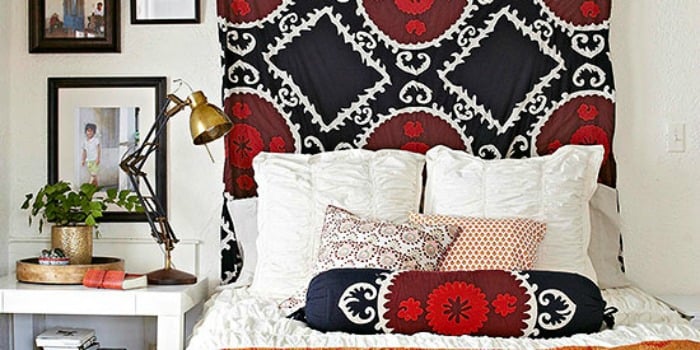
9. Hang a Tapestry
A tapestry is one of the softest and most affordable headboard alternatives. It adds texture, pattern, and warmth without requiring construction. Choose a woven wall hanging for a boho look, a vintage textile for a collected feel, or a simple linen panel for understated elegance.
Tapestries are also great for renters because they are lightweight and easy to move. Hang one with a rod for a polished finish or use discreet clips for a casual approach.
10. Use Curtains Behind the Bed
Curtains are not just for windows. Hanging curtain panels behind a bed can create a soft, hotel-like backdrop. This works especially well when the bed is centered on a wall with no architectural interest.
Mount the curtain rod close to the ceiling to make the room feel taller. Linen, cotton, velvet, or sheer panels can each create a different mood. Velvet adds drama, linen feels relaxed, and sheers bring a dreamy, airy quality.
11. Place the Bed in Front of a Window
If your layout allows it, a window can act as a natural focal point behind the bed. This arrangement works best when the window is centered and the bed sits below it without blocking too much light.
Use slim window treatments, low-profile pillows, and symmetrical nightstands to make the layout look intentional. If privacy is a concern, layer shades with curtains for function and softness.
12. Let Exposed Brick Do the Work
Exposed brick has built-in character. If you are lucky enough to have a brick wall behind your bed, you may not need a headboard at all. The texture creates warmth, pattern, and visual weight.
Pair brick with simple bedding, warm lighting, and natural wood furniture. If the brick feels too rough or dark, soften it with linen bedding, a pale rug, and light-colored curtains.
13. Add Board-and-Batten Wall Treatment
Board-and-batten is a timeless way to add architectural detail behind a bed. It can cover the full wall or stop halfway up like a modern wainscoting effect. Painted in the same color as the wall, it adds subtle dimension. Painted in a contrasting color, it becomes a strong feature.
This no-headboard idea works well in farmhouse, coastal, cottage, and transitional bedrooms. It gives structure without needing a separate piece of furniture.
14. Try Vertical Wood Slats
Vertical wood slats create a warm, modern backdrop. They add height, texture, and a custom built-in feeling. You can use natural wood for a Scandinavian or Japandi-inspired bedroom, or paint the slats the same color as the wall for a more subtle effect.
This idea is especially useful when you want the wall to feel finished but not busy. It pairs beautifully with platform beds, neutral bedding, and simple pendant lights.
15. Use a Large Mirror
A large mirror above or behind the bed can make the room feel brighter and more spacious. Round mirrors soften the lines of the bed, while rectangular mirrors add structure.
Be careful with placement. The mirror should feel secure, proportional, and comfortable. If a mirror directly above your head makes you nervous, place two smaller mirrors to the sides or use a tall mirror leaning nearby instead.
16. Style With Tall Pillows
Sometimes the simplest solution is excellent pillow styling. Large Euro pillows, stacked sleeping pillows, and a few decorative cushions can create the visual height usually provided by a headboard.
For a queen bed, try two or three Euro pillows in the back, two standard sleeping pillows in front, and one long lumbar pillow. It looks full, comfortable, and intentional without requiring a single power tool.
17. Choose Statement Bedding
If the bed has no headboard, the bedding becomes more important. A quilt, duvet cover, or coverlet with texture, pattern, or rich color can help the bed feel complete. Think waffle weave, linen, matelassé, channel quilting, or a subtle stripe.
Statement bedding is also easy to update seasonally. Light cotton in summer, cozy layers in winter, and suddenly your no-headboard bedroom has range.
18. Hang Pendant Lights on Both Sides
Pendant lights create vertical lines that frame the bed beautifully. They are especially helpful in a no-headboard bedroom because they add symmetry and draw attention upward.
Use matching pendants for a clean hotel-inspired look or choose sculptural fixtures for more personality. Plug-in pendants are a smart option for renters or anyone not interested in calling an electrician before breakfast.
19. Install Wall Sconces
Wall sconces give a bedroom a finished look while freeing up space on nightstands. They can frame the bed and make the absence of a headboard feel deliberate. Swing-arm sconces are especially practical for reading.
Choose warm bulbs and install the sconces at a comfortable height. The goal is cozy light, not interrogation-room brightness.
20. Use a Folding Screen
A folding screen can stand behind the bed and act like a movable headboard. It adds height, texture, and flexibility. Rattan screens, carved wood screens, upholstered screens, or painted panels can all work depending on your style.
This is a great choice if you want the look of a headboard without attaching anything to the wall. It is also useful in studio apartments because it can help define the sleeping zone.
21. Place a Console or Narrow Shelf Behind the Bed
If your bed is not pushed tightly against the wall, a narrow console table or shelf behind it can create a stylish ledge. This works well with low platform beds and modern layouts.
You can style the surface with lamps, books, framed art, or small decorative objects. Keep it practical and uncluttered so it does not become the place where random receipts go to retire.
22. Add Plants Behind or Beside the Bed
Plants bring life, softness, and color to a bedroom without a headboard. Tall plants on either side of the bed can frame it naturally. A hanging plant near the corner or a row of small plants on a shelf can also work beautifully.
Choose low-maintenance plants suited to your light conditions. Snake plants, pothos, ZZ plants, and philodendrons are popular indoor choices because they are forgiving and stylish.
23. Use Chalkboard or Limewash Paint
Chalkboard paint can create a playful, creative backdrop, especially in kids’ rooms, teen bedrooms, or casual spaces. Limewash or Roman clay-style paint creates a more refined, textured effect that feels organic and high-end.
Both options give the wall movement and depth. Limewash works especially well in neutral bedrooms because it adds interest without relying on bold color or pattern.
24. Create a Built-In Niche or Recessed Shelf
If you are renovating, a recessed niche behind the bed can replace a headboard and add useful storage. It can hold books, art, small lamps, or decorative objects while maintaining a clean profile.
This idea works best when planned carefully with proper lighting and proportions. Add a warm LED strip or small sconces to make the niche feel intentional and cozy.
25. Keep It Minimal and Let Negative Space Shine
Not every no-headboard bedroom needs a dramatic wall treatment. In a minimalist bedroom, empty space can be part of the design. A low platform bed, crisp bedding, matching nightstands, and a calm color palette can look sophisticated without anything above the bed.
The secret is precision. Keep the bedding neat, the furniture balanced, and the palette consistent. Minimalism looks peaceful when it is intentional; it looks unfinished when the bed is lonely and the wall is ignored.
How to Make a No-Headboard Bed Look Finished
The most successful no-headboard bedrooms usually include at least one of three elements: a strong backdrop, good symmetry, or rich texture. A strong backdrop might be paint, wallpaper, wood slats, brick, curtains, or art. Symmetry can come from matching nightstands, lamps, sconces, or framed prints. Texture can come from linen bedding, layered pillows, rugs, woven wall hangings, or natural materials.
Scale matters too. If your bed is large, the design feature behind it should have enough presence to balance the bed. A king bed with one tiny floating shelf may feel visually underdressed. A twin bed, on the other hand, can look charming with one framed print, a small wall sconce, and a cozy throw.
Another helpful tip is to repeat colors. If your artwork has soft blue, bring that blue into a pillow or throw. If your wallpaper includes warm tan, echo it in a woven basket or wood nightstand. Repetition makes the room feel cohesive and helps your no-headboard design look planned rather than improvised during a caffeine-fueled decorating emergency.
Best No-Headboard Ideas for Small Bedrooms
Small bedrooms benefit from no-headboard designs because they reduce visual bulk. Painted arches, peel-and-stick wallpaper panels, wall sconces, slim picture ledges, and tall pillow arrangements are excellent choices. These ideas add style without eating up precious inches.
Use vertical elements to make the ceiling feel higher. Curtains mounted near the ceiling, vertical wood slats, tall art, or pendant lights can draw the eye upward. Choose furniture with legs or a low platform profile to keep the room feeling open. In a tiny bedroom, avoiding a bulky headboard may be the difference between “cozy retreat” and “I have to shuffle sideways like a crab.”
Best No-Headboard Ideas for Renters
Renters should focus on removable and low-damage options. Peel-and-stick wallpaper, tapestries, fabric panels, leaning art, plug-in sconces, removable hooks, and folding screens are all smart solutions. A curtain backdrop can also work if you use tension rods or renter-friendly mounting methods where appropriate.
Before installing anything, check your lease and wall type. Use lightweight decor and secure it properly. The goal is to create a beautiful bedroom, not to have your security deposit quietly leave the chat.
Common Mistakes to Avoid
Hanging Art Too High
Artwork above a bed should feel connected to the bed. If it floats too high, the wall can look awkward. A good general approach is to hang art so the bottom edge sits close enough to visually relate to the pillows while still being safely out of the way.
Ignoring Comfort
If you sit up in bed often, a no-headboard setup still needs support. Use large pillows, a bolster, or a cushioned wall panel. Style should not require sacrificing your spine.
Using Too Many Small Pieces
Small decor scattered above the bed can feel busy. Group items intentionally, use matching frames, or choose one larger statement piece instead.
Forgetting Lighting
Lighting can make or break a no-headboard bedroom. Sconces, pendants, bedside lamps, and warm bulbs help the bed feel cozy and complete.
Extra Experience-Based Tips for Styling a Bedroom Without a Headboard
After working through many bedroom layouts, one thing becomes clear: no-headboard design is less about removing furniture and more about creating balance. The wall behind the bed needs to feel considered, even if the final result is simple. In real homes, the best solutions often come from the room’s existing features. If there is a window, frame it beautifully. If there is a textured wall, highlight it. If the room is plain, bring in paint, art, fabric, or lighting.
One practical experience is that bedding does much more work in a headboard-free room. When there is no tall furniture piece behind the bed, flat bedding can make the whole room feel low and unfinished. Adding height with Euro pillows, a folded quilt, and a long lumbar pillow makes a major difference. You do not need twelve pillows arranged like a department-store display, but you do need enough softness to give the bed shape.
Another helpful lesson is that symmetry is your friend, especially if you are unsure where to start. Matching nightstands and lamps can instantly make a no-headboard bed look intentional. Even if the wall is completely blank, symmetry tells the eye, “Yes, this is the plan.” For a more relaxed look, the nightstands do not need to match exactly, but they should have similar visual weight. A tiny stool on one side and a huge dresser on the other can make the bed feel off balance.
Texture is also essential. A no-headboard room with plain white walls, plain white bedding, and no art may feel cold unless the room has strong architecture. Add a woven throw, linen duvet, textured rug, wood furniture, plaster-style paint, or a fabric wall hanging. These elements keep the room from feeling empty while still preserving the clean look that makes headboard-free bedrooms appealing.
For renters, the easiest winning combination is peel-and-stick wallpaper plus good pillow styling. Choose a removable wallpaper that covers only the width of the bed or the entire wall behind it. Then layer pillows in colors pulled from the pattern. Add two plug-in sconces or table lamps, and the bedroom suddenly feels designed without a single permanent change.
For homeowners, built-in wall treatments can be worth the effort. Board-and-batten, vertical slats, recessed shelves, and limewash finishes create a custom look that lasts longer than trendy decor. These treatments are especially useful in primary bedrooms because they add architectural value while keeping the bed itself flexible. You can change the bed frame later without redesigning the entire wall.
One mistake people often make is choosing decor that is too narrow. The feature behind the bed should usually relate to the bed’s width. For example, a queen bed looks better with a large artwork, wide tapestry, pair of sconces, or wallpaper panel that extends beyond the pillows. If the decor is too small, the bed can look visually heavy and the wall can look timid.
Finally, remember that a no-headboard bedroom should still support your habits. If you read in bed, prioritize pillows, wall cushions, or a soft textile backdrop. If you watch shows in bed, make sure the setup is comfortable. If your bedroom is mainly for sleeping, a minimal wall treatment and calming palette may be enough. The best design is not the one that looks perfect in a photo for three seconds. It is the one that feels good every night, looks good every morning, and does not make you regret skipping the headboard.
Conclusion
A bedroom without a headboard can be stylish, practical, and full of personality. From painted arches and oversized artwork to curtains, wallpaper, shelves, sconces, plants, and textured wall treatments, there are countless ways to make the bed feel anchored and complete. The secret is to treat the wall behind the bed as an opportunity rather than a problem.
No-headboard design ideas are perfect for renters, small spaces, budget makeovers, and anyone who prefers a lighter, more flexible bedroom layout. With the right balance of color, texture, lighting, and scale, your bed can look polished without a traditional headboard. In fact, it may look even better because it feels custom, creative, and completely your own.
Note: This article was created as original, publication-ready web content based on widely accepted interior design principles and current bedroom styling practices from reputable U.S. home and decor resources.