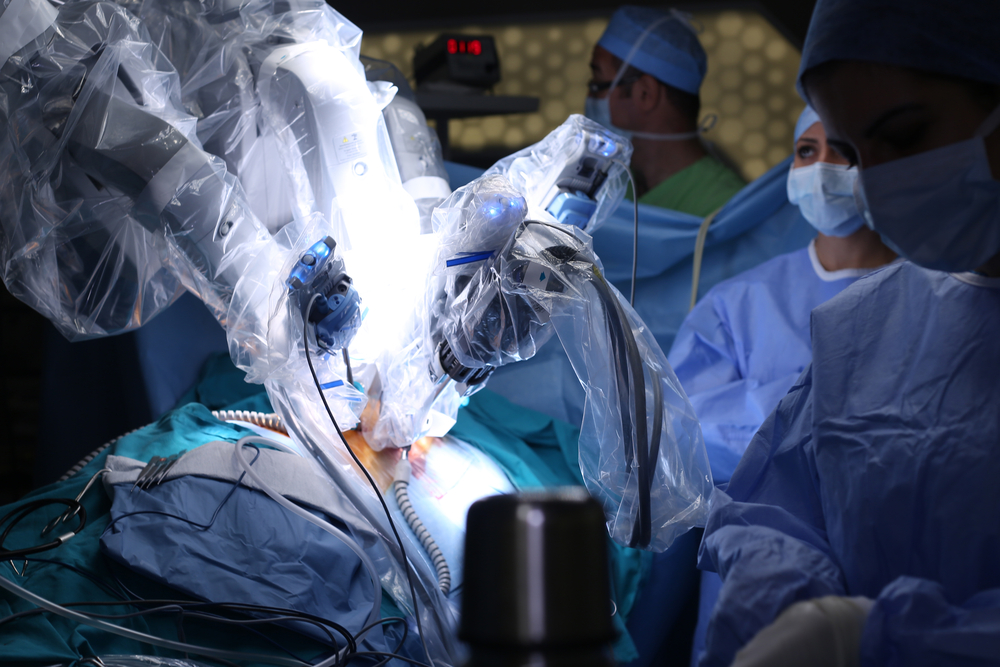
Walk past an operating room brochure and robot-assisted surgery can sound like medicine wandered onto a sci-fi movie set, grabbed a joystick, and forgot to come back. The marketing is sleek. The technology is impressive. The word “robot” practically sparkles. But the real question is less dramatic and much more useful: Does robot-assisted surgery actually have a long-term future in modern healthcare?
The short answer is yes, but not because robots are cooler than scalpels. Robot-assisted surgery has a future because it solves some real surgical problems better than older tools do. It can improve visualization, extend a surgeon’s dexterity, reduce tremor, and make certain minimally invasive procedures more practical in tight or delicate spaces. That said, it is not automatically better in every operation, for every patient, or at every hospital. In some areas, the evidence is promising. In others, it is mixed. And in a few cases, history has already delivered a firm reminder that shiny technology is not the same thing as superior care.
So yes, there is a future for robot-assisted surgery. It just won’t look like a robot replacing a surgeon while everyone in the room casually sips coffee. It will look more like carefully selected procedures, better training, smarter imaging, data-driven quality control, smaller platforms, and tougher questions about cost, outcomes, and who truly benefits.
What robot-assisted surgery actually is
Let’s clear up the biggest misconception first: in most modern operating rooms, the robot is not the surgeon. A human surgeon controls the system the entire time. The platform translates the surgeon’s hand movements into smaller, steadier, more precise motions at the surgical site. Think of it less as a mechanical doctor and more as a high-end instrument package with excellent posture, no hand tremor, and a camera that refuses to blink.
That matters because the real value of robotic surgery is not automation. It is enhanced control. In many procedures, surgeons can work through small incisions while using wristed instruments, magnified 3D visualization, and motion scaling. That combination can be especially useful in narrow spaces like the pelvis, chest, throat, or around complex anatomy where a standard laparoscopic approach may be technically harder.
In other words, robot-assisted surgery belongs to the larger story of minimally invasive surgery. It is not magic. It is a toolset. And like every toolset in medicine, it is only as good as the procedure, the evidence, and the hands guiding it.
Why robot-assisted surgery keeps gaining ground
1. It can make difficult minimally invasive surgery more doable
Some operations are simply better suited to robotic platforms than others. Urologic procedures are the classic example. Robotic systems became especially influential in prostate surgery because the anatomy is cramped, the structures are delicate, and precision matters a lot. The same logic applies to certain kidney, gynecologic, colorectal, thoracic, and head-and-neck procedures.
For surgeons, the robot can make complex minimally invasive work feel more controlled. For patients, that can translate into smaller incisions, less blood loss, shorter hospital stays, and faster recovery in selected cases. No, it does not turn surgery into a spa day. But when a patient can walk sooner, go home sooner, and heal with less disruption, that is a meaningful advantage.
2. It is expanding into more specialties
Robot-assisted surgery is no longer just the celebrity of prostate cancer care. It now appears in fields ranging from gynecology and colorectal surgery to cardiac surgery, thoracic surgery, orthopedics, microsurgery, transplant surgery, pediatric urology, and selected cancer operations. Transoral robotic surgery has also opened doors in head-and-neck oncology, allowing surgeons to reach tumors in hard-to-access areas of the mouth and throat without some of the larger incisions older approaches required.
That widening range matters because technologies with a future do not stay trapped in one niche forever. They diversify. They become more tailored. They start showing up where they solve very specific problems. That is exactly what is happening here.
3. Competition is slowly changing the economics
For years, one of the biggest criticisms of robot-assisted surgery was simple: it was expensive. Not just “nice laptop” expensive, but “someone in finance just sat down very hard” expensive. Capital costs, service contracts, disposable instruments, training, and longer setup times all added to the bill.
That concern still matters, but the market is changing. More platforms are entering the field, including modular systems and specialty-focused designs. As competition grows, hardware may become smaller, more flexible, and potentially more affordable. If the next wave of systems reduces acquisition costs and improves workflow efficiency, the future of robotic surgery becomes more realistic not only for flagship academic centers, but also for more regional hospitals.
Why the future is not guaranteed everywhere
1. Better technology does not always mean better outcomes
This is the part where medicine politely takes the hype machine by the shoulders and says, “Let’s calm down.”
Some studies have shown clear perioperative advantages for robot-assisted surgery in selected operations. But across all procedures, the evidence is not uniformly superior to laparoscopy or open surgery. In some operations, robotic and laparoscopic outcomes are very similar. In others, robotic surgery may take longer or cost more without delivering a major clinical edge.
That does not mean the technology has no future. It means its future is likely to be selective. The winning model will not be “use the robot for everything.” It will be “use the robot where it improves the operation, the recovery, or the reproducibility enough to justify the trade-offs.”
2. Training and experience matter enormously
A robot can magnify excellence, but it can also expose inexperience. Surgical outcomes still depend heavily on the skill of the surgeon and the quality of the team. Learning curves are real. Setup is real. Workflow problems are real. Communication errors in the operating room are still very real, and technology does not eliminate them.
That is why the future of robot-assisted surgery depends just as much on simulation, credentialing, case volume, and team training as it does on hardware. A brilliant machine in an unready system is still a problem wearing expensive shoes.
3. Some fields have already learned caution the hard way
If you want a clear reminder that innovation is not automatically progress, look at the history of minimally invasive radical hysterectomy for early-stage cervical cancer. Evidence from major studies shifted practice by showing worse survival outcomes with minimally invasive approaches in that specific setting compared with open surgery. That lesson still matters today.
The takeaway is not that robotic surgery is bad. The takeaway is that procedure-specific evidence must outrank enthusiasm. A future exists only when the data support it.
What the evidence suggests right now
Where robot-assisted surgery looks strongest
Urology remains one of the clearest strongholds. Procedures involving the prostate and kidney often benefit from the robot’s precision in tight spaces.
Head and neck surgery, especially transoral robotic surgery, is another important growth area. It can help surgeons remove tumors in difficult-to-reach regions while preserving function and avoiding larger external approaches in selected patients.
Cardiothoracic and selected general surgery also continue to evolve, especially as surgeons gain experience and platforms improve. In these fields, the robotic advantage often centers on visualization, fine dissection, and the ability to perform minimally invasive surgery in cases that might otherwise tilt toward a larger incision.
Orthopedics and microsurgery represent another important branch of the future. Here, robotics can assist with alignment, placement, and extremely fine movements. The future of surgical robotics is not one single robot doing everything. It is a growing family of systems designed for different kinds of precision.
Where the picture is more mixed
Gallbladder surgery, hernia repair, and some abdominal procedures show a more nuanced reality. In these areas, robotic surgery may be feasible and safe, but not always clearly superior to laparoscopy. Sometimes the benefits are modest. Sometimes the costs are stubborn. Sometimes the learning curve is part of the story.
That mixed evidence is actually healthy for the field. It forces hospitals and surgeons to justify use based on outcomes rather than novelty. Long term, that is a good thing. The future belongs to technologies that survive serious scrutiny, not to gadgets that only look good in glossy brochures.
The next chapter: what the future probably looks like
AI will likely become the robot’s smartest sidekick
The most important future development may not be a shinier console. It may be the integration of artificial intelligence, computer vision, imaging overlays, and performance analytics.
Imagine a system that identifies anatomy in real time, flags structures at risk, tracks surgical steps, and helps surgeons review performance after the case. That is not fully routine yet, but the building blocks are already taking shape. AI may help transform robotic surgery from a precision tool into a precision-plus-information platform.
That could improve planning, coaching, quality assurance, and consistency. It could also make training more objective, since future systems may evaluate technical performance using video and instrument data rather than relying only on memory, ego, and the timeless educational method known as “that looked fine to me.”
Smaller and more specialized robots will matter
Big, multi-arm systems changed the first era of robot-assisted surgery. The next era may belong to smaller, modular, portable, or specialty-specific designs. Some platforms are targeting microsurgery. Others are focused on single-port access, spinal navigation, orthopedic alignment, or more flexible endoluminal work.
That trend makes sense. Surgery is not one problem. It is hundreds of problems. A more diverse robotic ecosystem could let hospitals match the platform to the operation rather than trying to force one machine into every scenario.
Remote support may grow before full telesurgery does
People love the futuristic idea of a surgeon operating from another city or another continent. Telesurgery may have a role one day, especially where expertise is scarce. But in the near term, remote mentoring and telementoring are more likely to expand faster than fully remote operations. They are easier to implement, safer to scale, and more practical within current legal, technical, and credentialing frameworks.
So yes, the future may include distance-enabled surgery. But first it will probably include distance-enabled training, guidance, troubleshooting, and collaboration.
What this means for patients
If you are a patient, the most useful question is not “Does this hospital have a robot?” It is “Is robotic surgery the best option for my condition, in this surgeon’s hands, at this center?”
That leads to better questions:
- How many of these procedures has the surgeon performed robotically?
- How does the robotic approach compare with open or laparoscopic surgery for this exact operation?
- What are the likely benefits for recovery, blood loss, pain, and hospital stay?
- Are there any cancer-specific or long-term outcome concerns for this procedure?
- What happens if the surgeon needs to convert to open surgery?
Patients do not need to be dazzled by machinery. They need honest, procedure-specific information. A robot is a tool, not a guarantee.
So, is there a future for robot-assisted surgery?
Absolutely, but the future is more grounded than glamorous. Robot-assisted surgery is likely to grow because it fits several long-term trends in healthcare: minimally invasive treatment, precision-based intervention, digital imaging, performance analytics, and technology-enabled training. It is already well established in some specialties and steadily expanding in others.
Still, its future will not be built on hype alone. It will depend on better evidence, lower costs, stronger training, smarter system design, and appropriate case selection. The most successful programs will be the ones that use robotics not as a status symbol, but as a carefully chosen solution to a specific clinical problem.
In that sense, the future of robot-assisted surgery is not really about robots. It is about whether technology can help surgeons operate more safely, more precisely, and more consistently for the right patients. Where the answer is yes, the future looks strong. Where the answer is maybe, the robot should wait in the corner and keep its mechanical elbows to itself.
Experiences from the real world of robot-assisted surgery
One reason robot-assisted surgery keeps attracting attention is that the experience around it feels different for nearly everyone involved. Patients, surgeons, nurses, and trainees all encounter the technology from different angles, and those viewpoints tell a more useful story than hype alone.
For many patients, the experience starts with confusion. They hear “robotic surgery” and picture a machine making independent decisions. Then the consultation happens, and the surgeon explains that the robot never acts alone. That moment matters. Anxiety often drops once patients understand that the surgeon remains in control throughout the procedure. After that, the conversation usually becomes more practical: Will I have less pain? Will I recover faster? Will the scars be smaller? Can I get back to work sooner? Patients do not care much about a futuristic console if they still cannot sit up comfortably after surgery.
When patients do have a good experience, the details are often surprisingly ordinary in the best possible way. They may remember walking earlier than expected, needing less time in the hospital, or feeling relieved that a big incision was avoided. Some describe the recovery as less physically draining than they feared. Others say the biggest emotional benefit was not the robot itself, but the sense that the surgical team had a clear plan and a high level of confidence. Technology can be impressive, but confidence is contagious.
From the surgeon’s side, the experience is often more nuanced. Surgeons who embrace robotic platforms usually talk about improved visualization, better ergonomics, steadier movement, and more dexterity in confined spaces. They also talk about what the public rarely sees: setup time, docking, staff coordination, troubleshooting, case selection, and the discipline required to become truly efficient. No experienced surgeon thinks the machine does the hard part for them. If anything, robotic surgery raises the standard by demanding technical skill plus system management.
Operating room staff experience the technology as teamwork in action. A well-run robotic case depends on communication, positioning, instrument exchange, anesthesia planning, and backup preparation if a case needs to change course. In strong programs, team members often become highly specialized and develop a rhythm that makes the process look effortless. In weaker setups, every extra step feels longer. That is why robot-assisted surgery is never just about a surgeon and a console. It is about whether the entire room knows the choreography.
Trainees often describe robotic surgery as both exciting and humbling. The field promises high-tech precision, but it also makes them confront the reality that advanced tools do not eliminate the need for judgment. They still have to learn anatomy, tissue handling, timing, decision-making, and what to do when things do not go according to plan. The best training experiences happen when simulation, mentoring, feedback, and real operative experience come together instead of relying on trial and error.
Put all those experiences together, and a pattern emerges. People are not drawn to robot-assisted surgery just because it is new. They are drawn to it when it helps care feel more precise, more controlled, and less disruptive. That is why the future remains plausible. In medicine, technologies last when the experience becomes consistently better for real humans, not just more impressive in a brochure.