Every lawn owner has had this moment: you’re standing outside, staring at your yard like it just told you a riddle. The grass is green-ish, mostly cooperative, and definitely in charge. But what type is it? If you know the answer, lawn care gets much easier. If you guess wrong, you can end up mowing too short, watering at the wrong time, or feeding a grass that would rather be left alone with its feelings.
The good news is that lawn grass identification does not require a lab coat, a microscope, or a dramatic soundtrack. In most cases, you can identify your grass by looking at a few simple clues: where you live, how the lawn grows, how wide the blades are, what the tips look like, and whether the grass spreads by runners or grows in clumps. Once you know what you’re dealing with, everything from mowing height to overseeding starts to make a lot more sense.
This guide walks you through simple identification steps, common lawn grass types in the United States, and a few classic mix-ups that confuse homeowners every year. By the end, you should be able to look at your lawn and say, with much more confidence, “Aha. So that’s what you are.”
Why Identifying Your Grass Matters
Not all grasses want the same life. Some love blazing summer heat. Others prefer cool spring and fall weather. Some spread aggressively through underground stems. Others grow in bunches and need overseeding to stay thick. Some tolerate shade like champs, while others throw a full tantrum the moment a tree branch sneezes overhead.
That means grass identification is not just a fun lawn trivia game. It affects your real maintenance decisions, including:
- How low or high you should mow
- When the lawn is actively growing
- How much fertilizer it usually needs
- Whether it can handle shade, drought, or heavy traffic
- How quickly it can repair itself after damage
- Whether you should seed, sod, plug, or sprig it
In other words, before you try to fix your lawn, you need to know which lawn you actually have.
Step 1: Start With the Biggest Clue Cool-Season or Warm-Season?
The first and easiest identification step is figuring out whether your lawn is made up of cool-season grass or warm-season grass.
Cool-Season Grasses
Cool-season grasses grow best when temperatures are mild. They usually thrive in spring and fall, may slow down in summer heat, and are common in northern states and many transition-zone lawns. If your lawn stays green through cooler weather and looks happiest when summer is not acting like a toaster oven, you may have a cool-season turf.
Common cool-season lawn grasses include:
- Kentucky bluegrass
- Perennial ryegrass
- Tall fescue
- Fine fescue
Warm-Season Grasses
Warm-season grasses love heat. They grow most actively in late spring and summer, and they typically go dormant and turn tan or brown in winter. These grasses dominate in the South, lower coastal areas, and many sunny lawns in warmer regions.
Common warm-season lawn grasses include:
- Bermudagrass
- Zoysiagrass
- St. Augustinegrass
- Centipedegrass
- Bahiagrass in some regional lawns
If your lawn turns brown after the first cold stretch and then wakes up when summer hits full blast, that is a strong warm-season clue.
Step 2: Look at How the Grass Grows
Now crouch down and inspect how the lawn spreads. This is one of the fastest ways to narrow things down.
Bunch-Type Grass
Bunch-type grasses grow in clumps instead of aggressively creeping across the lawn. If your yard looks like it is made of individual tufts that gradually enlarge rather than knitting together quickly, you may be looking at a bunch-type grass.
Common examples:
- Tall fescue
- Perennial ryegrass
- Some fine fescues
Bunch grasses often need overseeding to stay full because they do not repair bare spots as fast as spreading grasses.
Spreading Grass
Spreading grasses move by stolons and/or rhizomes. Stolons are above-ground runners. Rhizomes are underground stems. If your lawn seems to creep into nearby beds, colonize bare soil, and generally behave like it pays no rent, you probably have a spreading grass.
Common examples:
- Kentucky bluegrass: spreads by rhizomes
- Bermudagrass: spreads by stolons and rhizomes
- Zoysiagrass: spreads and forms a dense turf
- St. Augustinegrass: spreads by stolons
- Centipedegrass: spreads by stolons
Step 3: Check Blade Width and Texture
Grass blades can be fine, medium, or coarse. You do not need a ruler unless you enjoy that sort of thing. Just compare the feel and appearance.
Fine-Textured Grasses
These have narrow blades and a softer, finer look. They often create a more delicate appearance.
- Fine fescue
- Bermudagrass
- Some zoysiagrasses
Medium to Coarse Grasses
These have wider blades and a chunkier visual texture.
- Tall fescue: often slightly coarse with visible veins
- St. Augustinegrass: famously broad-bladed
- Centipedegrass: wider and flatter than finer warm-season types
- Bahiagrass: coarse and open-looking
If your lawn feels plush but stiff and the blades look dense and upright, zoysia may be a suspect. If the blades are broad enough to make you say, “That’s a lot of leaf,” St. Augustinegrass jumps higher on the list.
Step 4: Inspect the Leaf Tip
Leaf tips are surprisingly useful. They are like little signatures.
- Boat-shaped tip: Kentucky bluegrass is famous for this. The tip looks like the prow of a tiny boat.
- Pointed tip: Tall fescue, perennial ryegrass, and centipedegrass often have a more pointed appearance.
- Rounded or blunt tip: St. Augustinegrass often has a broader, blunter tip.
This is easiest to see if you pull a single blade and place it on your palm or a white sheet of paper.
Step 5: Look at the Collar Area Like a Grass Detective
If you want to go from “pretty sure” to “neighbor-impressing certainty,” inspect the collar region where the blade meets the sheath. This is where grass identification gets nerdy in a useful way.
Ligule
The ligule is a small structure at the junction of the blade and sheath. Depending on the grass, it may be membranous, hairy, short, tall, or nearly invisible.
Auricles
Auricles are small clasping appendages that wrap around the stem. Ryegrasses often show noticeable auricles. Tall fescue may have blunt auricles. Many other turf species do not have them.
Vernation
This describes how new leaves are folded or rolled in the bud. It sounds like a word made up by botanists on a dare, but it is a legitimate identification clue.
If you do not want to memorize every collar feature, that is fine. A small hand lens and a few close-up photos from your phone can still help you compare what you see with extension guides later.
Step 6: Check for Seed Heads, Runners, and Color
Seed heads can make identification easier, though lawns are often mowed before seed heads fully appear. Still, if your grass throws up visible seed heads in spring or summer, pay attention.
Also notice:
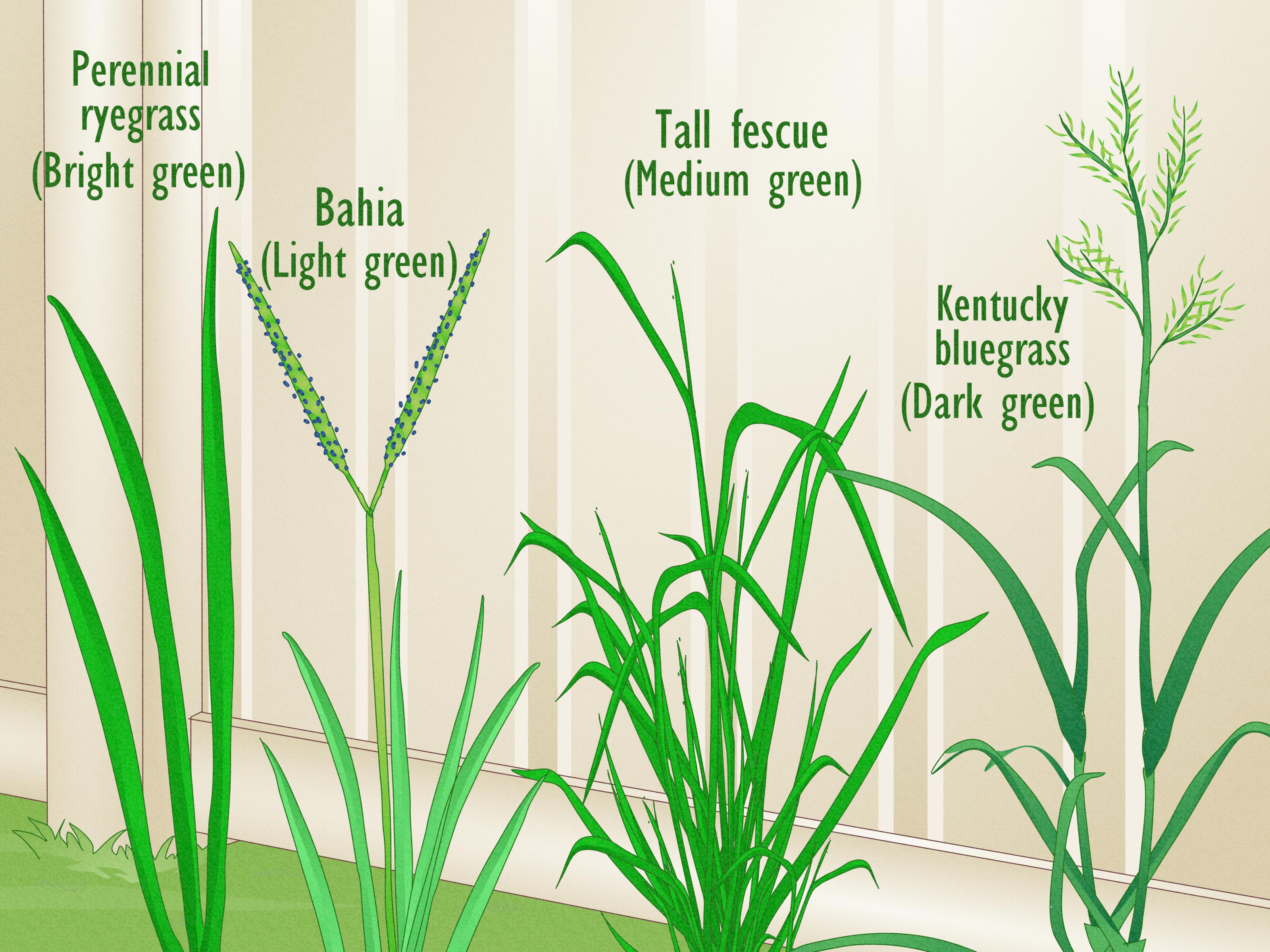
- Color: Kentucky bluegrass is often dark green. Centipedegrass tends to be lighter green. Bermudagrass may range from light to dark green depending on cultivar.
- Shine: Perennial ryegrass often has a glossy or shiny underside.
- Density: Zoysia usually forms a dense, carpet-like lawn. Tall fescue often looks more open unless overseeded regularly.
- Runners: Thick, obvious above-ground stolons point toward grasses like St. Augustinegrass or centipedegrass.
Quick Identification Guide to Common Lawn Grasses
Kentucky Bluegrass
If your lawn is dark green, spreads by rhizomes, and has that classic boat-shaped leaf tip, Kentucky bluegrass is a strong possibility. It recovers well from damage but usually prefers sun to light shade and tends to need more maintenance than low-input grasses.
Perennial Ryegrass
Perennial ryegrass establishes quickly, grows in bunches, and often shows a shiny leaf underside. It usually has a pointed tip and a tidy texture. It is common in seed mixes and overseeding blends, especially when fast green-up is the goal.
Tall Fescue
Tall fescue is the cool-season workhorse. It is usually medium to coarse in texture, bunch-type, and more heat- and drought-tolerant than Kentucky bluegrass. Look for visible veins on the upper leaf surface and a pointed tip. If your lawn has a slightly clumpy look and survives summer better than expected, tall fescue may be your answer.
Fine Fescue
Fine fescue has very narrow blades and is often used in shady or lower-maintenance lawns. It can look soft, wispy, and elegant in a quiet sort of way. If your lawn does well in shade and the blades are truly slender, fine fescue deserves a close look.
Bermudagrass
Bermudagrass loves heat, hates shade, and spreads aggressively by both stolons and rhizomes. It is often fine-textured, durable, and quick to recover from wear. If your lawn thrives in full sun, spreads enthusiastically, and goes winter-brown in a warm climate, Bermuda is a prime suspect.
Zoysiagrass
Zoysia forms a dense, thick turf and can range from fine- to coarse-bladed depending on cultivar. It grows more slowly laterally than Bermuda but still spreads. Many homeowners recognize it by its dense, almost cushiony feel and stiff blades that can make mowing a little less glamorous than advertised.
St. Augustinegrass
St. Augustinegrass is one of the easiest warm-season grasses to spot because the blades are broad and the stolons are thick and obvious. It handles shade better than most warm-season grasses, which is a major clue in southern landscapes. If the lawn looks lush, coarse, and tropical-adjacent, St. Augustinegrass may be your grass.
Centipedegrass
Centipedegrass usually has a lighter green color and spreads by stolons. Homeowners often like it because it is relatively low-maintenance compared with fussier turf types. It is commonly confused with St. Augustinegrass, but centipedegrass typically has narrower blades and a more pointed, folded look.
Common Mistakes People Make When Identifying Lawn Grass
Mistake #1: Confusing weeds with turf. Crabgrass, annual bluegrass, quackgrass, and other grassy weeds can fool you. If the odd patches look different in color, texture, or growth habit from the rest of the lawn, you may be identifying an invader rather than the actual lawn.
Mistake #2: Judging only by color. Fertility, drought, shade, and mowing height can all change color. A pale lawn is not automatically centipedegrass, and a dark lawn is not automatically bluegrass.
Mistake #3: Ignoring the season. A warm-season lawn in winter can look dead when it is simply dormant. A cool-season lawn in August can look tired when it is simply over summer’s nonsense.
Mistake #4: Forgetting the lawn may be a mix. Many lawns are not one pure species. It is common to find blends of Kentucky bluegrass, ryegrass, and fescues in cool-season regions. Transition-zone lawns can also contain a surprising mix after years of overseeding and repairs.
Simple Tools That Help
You do not need a fancy kit. A few basic tools are enough:
- A hand lens or magnifying glass
- A white sheet of paper for blade inspection
- A smartphone camera for close-ups
- A small trowel to lift a plug and check roots or runners
- The original seed bag or sod invoice, if you still have it
If the lawn was seeded, the seed label can be a gold mine. It may list the species, cultivar, germination percentage, and purity. That is basically the grass version of checking the name tag at a conference.
What to Do If You Still Cannot Tell
If you are still unsure after looking at blades, tips, runners, and seasonal behavior, do not panic. Lawn grass can be tricky, especially when mowing hides seed heads and stress changes appearance. Take a sample that includes blades, crown, roots, and any stolons or rhizomes you can find. Then compare it with local extension turf guides or contact your county extension office.
That is not cheating. That is using available wisdom, which is honestly one of the healthiest things a lawn owner can do.
Conclusion
Figuring out what type of grass you have is one of the smartest first moves in lawn care. Start with your region and the season. Then look at how the grass spreads, how wide the blades are, what the tips look like, and whether you can spot runners, rhizomes, ligules, or auricles. Those simple steps can quickly separate Kentucky bluegrass from tall fescue, Bermuda from zoysia, and St. Augustinegrass from centipedegrass.
Once you know your turf type, lawn care gets less mysterious and a lot more effective. You stop guessing. You stop overcorrecting. And you stop blaming the mower for everything, which, to be fair, the mower probably appreciates.
Real-World Experiences With Identifying Lawn Grass
One of the funniest things about lawn care is how often people think they know their grass until they actually look closely. A homeowner in a transition-zone neighborhood may swear the lawn is Kentucky bluegrass because that is what the builder mentioned years ago. Then summer arrives, the yard turns patchy, and a closer inspection shows clumps of tall fescue mixed with a little ryegrass and a few patches of something else that wandered in uninvited. Suddenly the lawn is less of a monoculture and more of a family reunion.
A very common experience happens with St. Augustinegrass and centipedegrass. From a distance, both can look similar enough to fool someone who is just trying to survive a weekend yard chore. But once you kneel down and inspect the blades, the differences start to show. St. Augustinegrass usually looks broader, flatter, and bolder. Centipedegrass tends to look narrower and a bit more folded. That “aha” moment often changes how people mow, fertilize, and even talk about their yard. Nothing says growth like becoming the person who uses the phrase “above-ground stolons” on a Saturday morning.
Many homeowners also discover that what they thought was lawn grass is actually a grassy weed. Crabgrass is a classic example. It appears fast, sprawls low, and often announces itself in summer like an uninvited relative with strong opinions. Someone may think their regular turf is suddenly thriving, when in reality a warm-season annual weed has simply found an opening. That kind of mix-up matters because treating a weed like turf usually ends with disappointment, wasted products, or both.
Another real-life lesson comes from shade. People often try to force sun-loving grasses into shady spaces under trees, beside fences, or along the north side of the house. The lawn thins out, weeds creep in, and frustration rises. Then they learn the grass is Bermudagrass, which is not exactly famous for loving shade, and the mystery is solved. In contrast, lawns with fine fescue or St. Augustinegrass in the right region often perform better in partial shade, which feels almost magical until you realize it is just a case of matching the grass to the site.
There is also the experience of inheriting a lawn. New homeowners rarely receive a dramatic folder labeled “Your Turfgrass Identity.” They get a yard, a mower, and maybe one vague comment from a neighbor. The smartest thing many of them do is wait a full season and observe. When does the lawn green up? Does it go brown in winter? Does it spread into flower beds? Does it form clumps? Those observations become more useful than random guesses from social media. Grass identification gets easier when you stop trying to solve it in five minutes and start watching patterns over time.
In the end, the most relatable experience is this: the moment you correctly identify your grass, the entire lawn starts making sense. The mowing height that seemed arbitrary suddenly feels logical. The patchy areas tell a clearer story. The care schedule stops being generic advice and starts becoming a tailored plan. And that is when lawn care gets less frustrating, more effective, and maybe even a little fun.