Note: This article is prepared as clean body-only HTML for web publishing, with SEO metadata displayed in JSON format at the end.
The Maya civilization did not vanish in a puff of jungle mist, despite what dramatic documentaries sometimes suggest while zooming in on abandoned temples with suspiciously spooky music. The truth is more fascinating: many Classic Maya cities declined, dynasties broke apart, and political systems collapsed, but the people did not simply disappear. Their descendants remained, migrated, adapted, intermarried, rebuilt communities, preserved languages, and carried Maya ancestry forward into the present.
Modern ancient DNA research is giving this story fresh scientific muscle. Genomes recovered from archaeological sites such as Copán and Chichén Itzá show that the Maya past was not a sealed museum case. It was a living population history shaped by local continuity, regional movement, outside contact, hardship, and survival. In plain English: the marble palaces may have gone quiet, but the family tree kept growing branches.
What Do We Mean When We Say the Maya Civilization “Ended”?
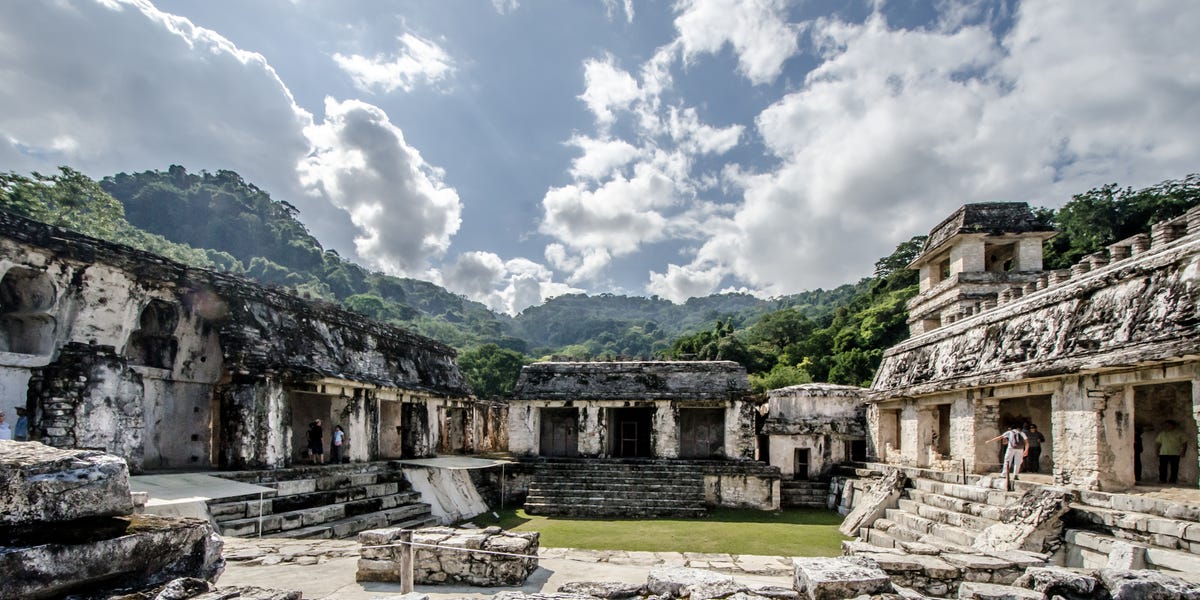
The phrase “the Maya civilization ended” can be misleading. It usually refers to the decline of major Classic Maya urban centers, especially in the southern lowlands, between roughly the late eighth and tenth centuries A.D. Cities such as Tikal, Copán, Palenque, and Calakmul had supported royal courts, monumental architecture, elaborate inscriptions, trade networks, and religious ceremonies. Then many of these centers experienced political breakdown, population decline, and abandonment.
That was a civilizational crisis, not a biological extinction. The Classic Maya political order changed dramatically, but Maya people continued living across the region. Some moved from large cities into smaller settlements. Some communities persisted in the northern Yucatán, where places such as Chichén Itzá, Uxmal, and later Mayapán became major centers. Others adapted through farming villages, trade, local leadership, and cultural practices that survived long after the last carved royal monument stopped boasting about a king’s excellent résumé.
The Maya Were Never One Single “Lost” People
The Maya world covered a broad region that included the Yucatán Peninsula, modern Guatemala, Belize, parts of southern Mexico, western Honduras, and El Salvador. It was never a single empire ruled from one capital. Instead, it was a network of city-states, alliances, rival dynasties, languages, trade routes, and local identities. That diversity matters because a collapse in one area did not mean collapse everywhere.
Classic Maya civilization is famous for stepped pyramids, hieroglyphic writing, astronomy, mathematics, calendars, painted ceramics, ball courts, and sophisticated urban planning. But the people behind these achievements were not frozen in the Classic period. Their descendants continued speaking Maya languages, farming maize, practicing community traditions, telling stories, building new political structures, and surviving colonial violence. Today, millions of Maya people live in Mexico and Central America, and many speak one of the many Maya languages still used across the region.
Ancient DNA Changes the Story
For a long time, archaeologists studied the Maya mainly through ruins, inscriptions, pottery, burials, settlement patterns, and environmental evidence. Those sources remain essential. A carved stone monument can tell us who ruled, when a war happened, or which royal family wanted everyone to remember its glory forever. But ancient DNA adds another layer: it can show biological relationships, population continuity, migration, and genetic mixing across time.
Ancient DNA is usually taken from well-preserved bones or teeth. Researchers compare fragments of ancient genomes with other ancient and modern populations. The work is delicate because tropical environments are not kind to DNA. Heat, moisture, soil chemistry, and time all conspire against preservation. In other words, if DNA were a handwritten note, the Maya lowlands are the washing machine. That makes every usable genome from the region especially valuable.
The Copán Genome Study: Decline, Not Disappearance
One major recent study analyzed ancient genomes from seven individuals from Classic-period Copán, a powerful Maya city in present-day Honduras. Copán was important because it sat near the southeastern edge of the Maya world, where cultural and trade connections linked different parts of Mesoamerica and Central America. The city’s royal dynasty began in A.D. 426 or 427 and lasted for about four centuries.
The genetic results showed strong continuity between Classic Copán individuals and other ancient and modern Maya-related populations. Researchers found that local ancestry persisted in the Maya region over thousands of years. They also identified gene flow into Copán from highland Mexican populations during the Early-to-Middle Classic period. That means Copán was not an isolated jungle kingdom. It was connected, mobile, and socially complex.
The study also found evidence of population decline around the time of the Classic Maya collapse. This is where the story becomes both sobering and important. DNA can detect demographic bottlenecks, which are periods when a population shrinks sharply. The Copán evidence supports the idea that the collapse caused real human hardship. But the same evidence also shows survival. The population changed; it did not disappear.
Chichén Itzá and Long-Term Maya Genetic Continuity
Another major ancient DNA study focused on Chichén Itzá, one of the most famous Maya cities in the northern Yucatán. Researchers analyzed genome-wide data from 64 children found in a subterranean burial chamber near the Sacred Cenote. The results revealed details about ritual life, kinship, and long-term genetic continuity in the Maya region.
The Chichén Itzá study found that the individuals were genetically close to people from nearby Maya communities, suggesting that ritual victims were not random foreigners dragged in from distant lands. Several were related, including pairs of identical twins. This discovery connected biological evidence with Maya mythology, where twin figures play a powerful role in the Popol Vuh, the K’iche’ Maya creation story.
The study also compared ancient DNA with present-day people in the region and found long-term continuity. There were changes, of course. Populations are never perfectly static. Colonial-era disease, migration, intermarriage, and social disruption all shaped later generations. But the broad picture is clear: ancient Maya ancestry continued into modern Maya communities.
Genes Spread Because People Moved, Married, Traded, and Survived
When we say Maya genes “kept spreading,” we are not talking about genes marching heroically through the forest wearing tiny sandals. We mean that Maya-related ancestry continued through ordinary human life: families, migrations, marriages, alliances, trade, displacement, adaptation, and rebuilding.
After political centers declined, people moved to safer or more productive areas. Some joined existing communities. Some carried local ancestry into new regions. Others mixed with neighboring populations through trade and marriage. Later, Spanish colonization brought enormous disruption through warfare, forced labor, religious conversion, land seizure, and introduced diseases. Even then, Maya communities survived, although often under brutal pressure.
This is why the genetic story matters. It pushes back against the old “mysterious disappearance” myth. The Maya did not exit history. They remained in it, often while outsiders failed to recognize them as active historical agents.
Why Did Classic Maya Cities Decline?
No single cause explains the Classic Maya collapse. The best answer is a messy combination, which is usually how history behaves when it refuses to fit into a neat PowerPoint slide. Researchers have pointed to drought, deforestation, soil stress, overpopulation, warfare, political rivalry, trade disruption, and weakening royal authority.
Climate evidence shows that drought played a major role in some regions. The Maya depended heavily on seasonal rainfall, reservoirs, wetlands, and careful water management. When long dry periods hit, farming maize became harder, food insecurity increased, and political leaders lost credibility. If a king claimed sacred power over order and prosperity, repeated crop failure was a public relations disaster of pyramid-sized proportions.
Deforestation may have intensified local drought conditions. Large populations needed farmland, firewood, building materials, and lime plaster for construction. Clearing forests can reduce moisture recycling and raise temperatures, making dry periods even harsher. Environmental stress alone did not “kill” Maya civilization, but it likely pushed already strained political systems toward collapse.
Collapse Was Uneven Across the Maya World
The idea of one sudden, universal collapse is outdated. Some southern lowland centers declined sharply. Other regions transformed rather than vanished. Chichén Itzá flourished after many Classic southern centers had weakened. Mayapán later became a major Postclassic capital. Rural populations continued in places where older models assumed emptiness.
This uneven pattern is important for SEO readers and serious history fans alike: “Maya collapse” does not mean “Maya extinction.” It means the breakdown of certain political and urban systems, especially royal courts and monument-building traditions. The people adjusted, moved, and kept living. In many ways, that is the more impressive story. Anyone can be dramatic in ruins; survival takes planning.
Modern Maya Descendants and Living Culture
Modern Maya communities are not archaeological leftovers. They are living peoples with languages, land struggles, art, foodways, ceremonies, political movements, and cultural creativity. Maya languages are still spoken across Mexico, Guatemala, Belize, and neighboring regions. Traditional knowledge around maize farming, weaving, herbal medicine, ritual calendars, and community organization remains important in many places.
In Belize, Mexico, Guatemala, and beyond, Maya descendants are also reviving and reinterpreting ancient cultural practices, including versions of the Mesoamerican ballgame. These efforts are not simple reenactments. They are expressions of identity, education, tourism, athletic skill, and cultural pride. The past is not being dusted off like an old vase; it is being played, spoken, cooked, danced, debated, and taught.
Why This Genetic Story Matters
The Maya genetic story matters because it corrects a lazy historical habit: confusing the end of monuments with the end of people. Archaeological ruins are easy to photograph. Living continuity is harder to capture because it appears in families, languages, local histories, and everyday life.
Ancient DNA also reminds us that cultures are not sealed containers. Copán’s genetic evidence of highland Mexican ancestry shows contact and movement. Chichén Itzá’s evidence of local continuity shows deep roots. Together, these studies reveal a population history that is both stable and dynamic. The Maya were not isolated, and they were not erased.
This matters for modern identity, too. Indigenous communities have often had their histories written by outsiders who prefer endings: collapse, conquest, disappearance. Genetics cannot replace oral tradition, archaeology, linguistics, or community history, but it can support a more accurate story. The Maya past did not end with ruined temples. It continued through descendants who carried ancestry and culture into the modern world.
Experience Section: Feeling the Maya Story Beyond the Textbook
To understand the idea that Maya genes kept spreading, it helps to imagine the experience of standing in a Maya archaeological site today. You walk past limestone blocks, carved steps, plazas, and ball courts. The air is hot, the forest is loud, and the ruins seem ancient enough to belong to another planet. A guide points to a temple and explains the dynasty that ruled there. You look up and think, “So this is where it ended.” But that thought is only half-right.
Then you leave the archaeological zone and pass through nearby towns where people are selling food, speaking local languages, weaving textiles, farming maize, or telling stories passed down through families. Suddenly the ruins no longer feel like an ending. They feel like one chapter in a much longer book. The carved stones are quiet, but the people are not.
This is the experience that changes how many visitors understand the Maya civilization. At first, the temples dominate the imagination. They are huge, cinematic, and easy to admire. But the deeper lesson is not only architectural. It is human. A civilization can lose kings, capitals, and political systems while its people continue in new forms. The descendants may not live exactly like their ancestors, because no living community is a museum display, but they remain connected through ancestry, language, land, memory, and culture.
There is also something humbling about ancient DNA in this context. A tooth or bone fragment can carry evidence of relationships that outlasted royal titles. A genome can reveal continuity across droughts, migrations, epidemics, and conquest. It can show that the story did not stop when scribes stopped carving dates into stone. For readers used to history as a list of empires rising and falling, this feels almost rebellious. The empire falls; the grandparents remain.
Visiting Maya sites also makes the “mystery of collapse” feel less like a puzzle box and more like a warning. Water matters. Food systems matter. Political trust matters. Environmental pressure can turn social cracks into canyons. The Classic Maya world was brilliant, but it was not invincible. Its cities depended on careful relationships between people, rulers, farmers, forests, rainfall, and trade. When those relationships broke down, cities suffered.
Yet the most powerful experience is not the collapse. It is continuity. You may hear a Maya language spoken in a market, see maize prepared in ways rooted in deep tradition, or watch cultural knowledge passed from elders to children. That moment makes the phrase “lost civilization” feel inadequate. The better phrase is “transformed civilization.” The Maya world changed dramatically, sometimes violently, but its people carried pieces of it forward.
That is why the genetic findings are so compelling. They do not reduce Maya identity to biology, and they should never be used that way. Culture is more than DNA. But DNA can help confirm what living Maya communities already prove every day: disappearance was never the real story. Endurance was.
Conclusion: The Maya Story Did Not End in the Jungle
The Maya civilization’s Classic political order declined, but Maya people continued. Ancient DNA from Copán and Chichén Itzá supports a picture of long-term genetic continuity, regional movement, and survival through crisis. Climate stress, warfare, political fragmentation, and colonial disruption all reshaped Maya history, but none erased it.
The old myth says the Maya vanished. The evidence says something better: they adapted. Their genes spread through descendants, migrations, marriages, and communities that endured beyond dynasties and drought. The ruins are spectacular, but the living legacy is even greater. The Maya civilization did not simply end; it changed address, changed form, and kept walking.