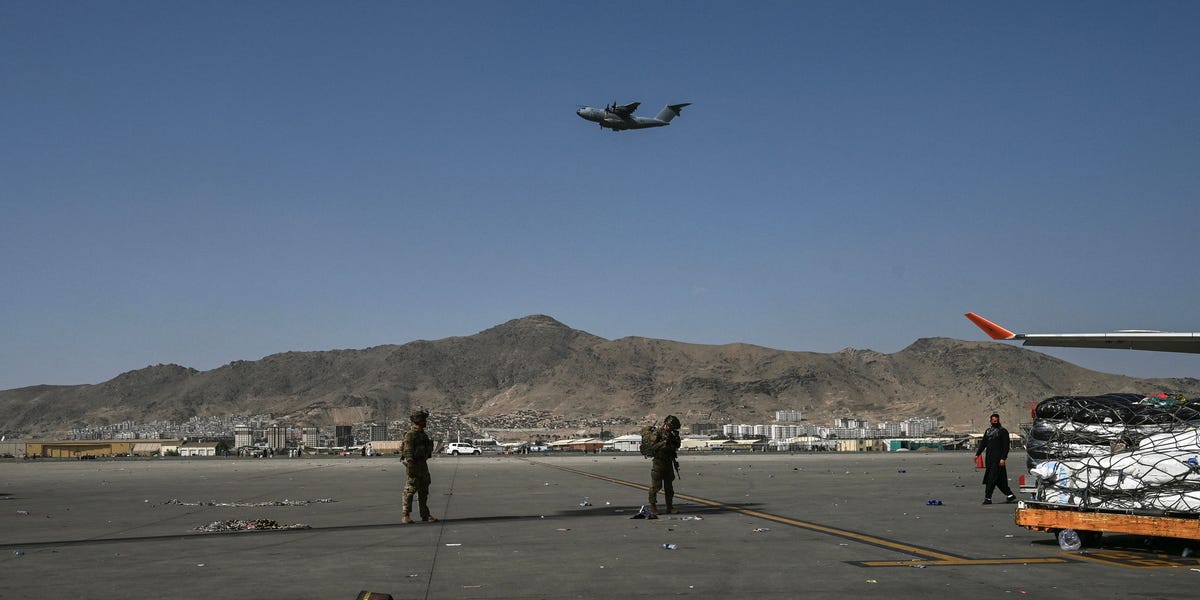
In August 2021, the world watched one airport become the center of a collapsing war, a humanitarian emergency, a diplomatic test, and a logistical puzzle with the difficulty setting turned all the way up. Hamid Karzai International Airport in Kabul, Afghanistan, was suddenly not just an airport. It became the last open door for U.S. citizens, foreign nationals, Afghan interpreters, embassy staff, journalists, activists, families, and thousands of people who feared Taliban rule.
The Kabul Airport evacuations were dramatic, painful, heroic, messy, and historic all at once. They produced images that were impossible to forget: crowds pressed against gates, military cargo planes packed with evacuees, parents handing children toward soldiers, and desperate people chasing rumors because, in that moment, rumor sometimes felt like a boarding pass. If airports usually run on schedules, boarding zones, and overpriced sandwiches, Kabul’s airport in August 2021 ran on urgency, improvisation, and the thinnest thread of hope.
To understand the Kabul Airport evacuations, we need to look at what happened before the airlift, how the operation worked, why it became so dangerous, what went wrong, what went right, and why the story still matters years later.
What Were the Kabul Airport Evacuations?
The Kabul Airport evacuations refer to the massive airlift from Hamid Karzai International Airport during the final days of the U.S. military withdrawal from Afghanistan in August 2021. The mission was formally tied to Operation Allies Refuge, the U.S. effort to evacuate American citizens, embassy personnel, Special Immigrant Visa applicants, and vulnerable Afghans who had worked with or supported the United States and coalition forces.
By the end of the operation, roughly 124,000 people had been flown out of Kabul. That made it one of the largest air evacuations of civilians in modern history. The numbers are impressive, but they only tell part of the story. Behind every seat on every aircraft was a human being carrying a passport, a document folder, a child, a memory, a fear, or sometimes nothing at all except the hope of getting out alive.
Why Did Kabul Airport Become the Center of the Crisis?
The airport became the center of the crisis because the Taliban took control of Afghanistan much faster than many officials had expected. After the United States and the Taliban reached the 2020 Doha Agreement, the path was set for U.S. forces to leave Afghanistan. President Joe Biden later confirmed that the U.S. withdrawal would continue, though the deadline shifted from the symbolic date of September 11 to August 31, 2021.
As U.S. troops drew down and the Afghan government lost territory, Taliban forces advanced rapidly across the country. Provincial capitals fell one after another. Then, on August 15, 2021, Kabul fell. Afghan President Ashraf Ghani left the country, the U.S.-backed government collapsed, and the Taliban entered the capital.
That left one practical exit point: Hamid Karzai International Airport. Overland routes were dangerous, commercial flights had stopped, and many foreign embassies were shutting down or relocating. The airport became the funnel through which nearly everyone had to pass. Unfortunately, funnels are not designed for stampedes, geopolitics, security screening, and international heartbreak all at the same time.
A Quick Timeline of the Kabul Airport Evacuations
February 2020: The Doha Agreement
The United States and the Taliban signed an agreement in Doha, Qatar. Under the deal, the United States committed to withdrawing troops from Afghanistan, while the Taliban made commitments related to counterterrorism and negotiations. The Afghan government was not a direct party to the agreement, which later became one of the most debated points in discussions about the collapse.
Spring and Summer 2021: The Withdrawal Accelerates
The U.S. military reduced its presence. Bagram Air Base, once a major hub for American operations, was handed over to Afghan forces in July 2021. That decision later drew criticism because it left Kabul’s airport as the primary evacuation route. Supporters argued the U.S. was already committed to leaving; critics said the loss of Bagram reduced flexibility when the emergency hit.
August 15, 2021: Kabul Falls
The Taliban entered Kabul, and the Afghan government collapsed. The U.S. embassy moved operations to the airport. Panic spread across the city as thousands of people tried to reach the airport gates.
August 16–25, 2021: The Airlift Grows
U.S. troops secured the airport, while Taliban fighters controlled much of the surrounding city. This created a strange and uncomfortable arrangement: American forces ran the airfield, but evacuees often had to pass through Taliban checkpoints before reaching U.S. gates. In the middle of all this, military aircraft flew around the clock, moving thousands of people each day.
August 26, 2021: Abbey Gate Attack
A suicide bomber from ISIS-K attacked Abbey Gate, one of the main entry points to the airport. The blast killed 13 U.S. service members and roughly 160 Afghan civilians. It was the deadliest day for U.S. forces in Afghanistan in years and turned an already dangerous evacuation into a national trauma.
August 30, 2021: Final U.S. Flight Leaves
The last U.S. military aircraft departed shortly before the August 31 deadline in Kabul time, ending America’s 20-year military presence in Afghanistan. The evacuation continued afterward in smaller, more complicated ways through diplomatic and private efforts, but the large military airlift was over.
Who Was Evacuated from Kabul?
The evacuation included several groups. U.S. citizens were a top priority, along with lawful permanent residents and foreign nationals from allied countries. Afghan interpreters, contractors, embassy workers, journalists, women’s rights advocates, former government employees, and people with pending Special Immigrant Visa applications also sought evacuation.
The Special Immigrant Visa program was especially important. Many Afghans had worked alongside American troops, diplomats, and aid organizations for years. To the Taliban, that work could mark them as collaborators. To the United States, those people were allies. The moral argument was simple: if someone risked their life to help you, you do not leave them standing outside the gate with a folder full of paperwork and a target on their back.
But the system was not simple. Visa applications were backlogged. Documents were missing. Families were separated. Names were spelled differently across records. Some people had approval letters. Others had emails, badges, recommendation letters, or screenshots. In a normal government office, those details can cause delays. At Kabul Airport, delays could become life-or-death decisions.
How Did the Evacuation Actually Work?
At its core, the Kabul Airport evacuation was a military airlift under extreme pressure. U.S. forces secured the airfield, organized boarding, screened evacuees, and loaded aircraft. C-17 military transport planes became symbols of the operation. These aircraft are built to carry heavy cargo, but during the evacuation they carried families, children, elderly people, wounded civilians, and exhausted evacuees who had waited for hours or days.
Flights moved from Kabul to temporary transit locations in the Middle East, Europe, and elsewhere. From there, evacuees were processed, screened, and eventually sent onward to the United States or other countries. In the U.S., Operation Allies Welcome became the follow-on effort to support Afghan evacuees with temporary housing, medical care, legal processing, and resettlement.
The operation required coordination among the Pentagon, State Department, Department of Homeland Security, intelligence agencies, allied governments, nonprofit groups, veterans’ networks, and private volunteers. It was not a clean chain of command so much as a giant emergency group project. And like any group project, some people did heroic work while others were still trying to figure out who had the spreadsheet.
Why Was the Airport So Chaotic?
The chaos came from several problems colliding at once. First, the Afghan government collapsed quickly. Many plans had assumed more time. Second, the airport was not designed to process tens of thousands of desperate people under combat conditions. Third, Taliban checkpoints made access unpredictable. Fourth, security threats from ISIS-K created constant danger. Fifth, the paperwork burden was enormous.
There was also a brutal information problem. People received different instructions from different sources. Some were told to go to one gate, then another. Some waited overnight only to be pushed back by crowds or blocked by fighters. Others received calls or messages from U.S. contacts but could not physically reach the entrance. When official instructions failed, rumors filled the vacuum.
The result was a tragic mixture of hope and confusion. Families stood in sewage canals near airport walls. Babies cried in the heat. U.S. Marines and soldiers tried to identify eligible evacuees while scanning the crowd for threats. Volunteers abroad worked through encrypted chats, passport photos, and lists of names. It was bureaucracy, battlefield, and humanitarian triage rolled into one.
What Was Abbey Gate?
Abbey Gate was one of the main entry points at Hamid Karzai International Airport. It became a focal point because large numbers of evacuees gathered there hoping to be admitted. The gate was controlled by U.S. forces on the airport side, while the surrounding area was crowded with civilians and influenced by Taliban security outside the airport perimeter.
On August 26, 2021, ISIS-K attacked Abbey Gate with a suicide bombing. The attack killed 13 American service members: 11 Marines, one Navy corpsman, and one Army soldier. Around 160 Afghan civilians were also killed. The blast was devastating not only because of the death toll but because it struck people who were trying to escape danger and troops who were trying to save them.
Later reviews examined whether the attack could have been prevented. U.S. military findings concluded that a single bomber carried out the attack and that the bombing was not preventable at the tactical level under the conditions at the gate. Still, Abbey Gate remains central to debates about the withdrawal, security planning, intelligence warnings, and responsibility.
What Went Right?
For all the criticism of the Afghanistan evacuation, one fact should not be ignored: the airlift moved an extraordinary number of people in a very short time. U.S. service members, diplomats, pilots, aircrews, medical teams, and allied personnel worked under extreme danger and emotional pressure. Many did not sleep properly for days. Some processed evacuees while knowing an attack might come at any moment.
The operation also showed the power of informal rescue networks. Veterans, aid workers, journalists, nonprofit groups, and ordinary citizens helped identify at-risk Afghans, verify documents, connect families with officials, and advocate for people trapped in Kabul. These networks were imperfect, but they saved lives.
The airlift demonstrated logistical skill. Planes arrived and departed rapidly. Crowded aircraft were routed through transit hubs. Evacuees received food, water, medical checks, and further processing. When the machinery finally moved at full speed, it moved with astonishing force.
What Went Wrong?
The biggest criticism is that planning did not match the speed of events. Multiple later reviews and public debates pointed to insufficient preparation for worst-case scenarios. Critics argued that evacuation planning should have begun earlier, especially for Afghan allies whose visa cases were already delayed. Former military officials testified that the evacuation order came too late and that the U.S. should have preserved more options, including possibly keeping Bagram Air Base longer.
Others argued that President Biden inherited a constrained situation from the Trump administration’s Doha Agreement, a reduced troop presence, and a Taliban that was already in its strongest position in years. This view does not erase the problems of execution, but it explains why the choices in August 2021 were so limited. In plain English: by the time the fire alarm went off, the building was already full of smoke, the exits were crowded, and the instruction manual was missing several pages.
There were also failures in communication. Many evacuees did not know where to go. Some U.S. citizens and eligible Afghans could not reach the airport. Afghan allies who had trusted the visa process found themselves stuck in a race against time. The gap between legal eligibility and physical access became one of the cruelest parts of the evacuation.
What Happened After the Airlift?
After the final military flight left Kabul, evacuation efforts slowed but did not completely stop. Some U.S. citizens and Afghan allies departed later through charter flights, diplomatic arrangements, land routes, or third-country processing. Inside the United States, tens of thousands of Afghans entered under humanitarian parole through Operation Allies Welcome.
Resettlement brought new challenges. Afghan families needed housing, jobs, English classes, school enrollment, health care, immigration support, and trauma services. Many had left behind homes, relatives, careers, degrees, and entire identities. A former interpreter might arrive in America with courage, fluent Dari and Pashto, military experience, and a stack of recommendation letters, only to spend months trying to navigate rent, work authorization, and the DMV. That is not exactly the glamorous sequel to a Hollywood rescue scene.
The legal situation remained complicated. Humanitarian parole allowed many evacuees to enter temporarily, but it did not automatically provide permanent status. Many Afghans had to apply for asylum, Special Immigrant Visas, or other legal pathways. Years later, some families still faced uncertainty.
Why the Kabul Airport Evacuations Still Matter
The Kabul Airport evacuations matter because they forced the United States to confront hard questions about war, loyalty, planning, and responsibility. What does a country owe to people who risked their lives for its mission? How early should evacuations begin when a partner government is weakening? How should military withdrawal plans account for civilians? And how do leaders communicate honestly when the truth is frightening?
The story also matters because Afghanistan did not stop changing after the last plane left. The Taliban returned to power. Women and girls faced severe restrictions. Former Afghan officials and activists went into hiding or exile. Families separated during the evacuation continued searching for one another. For many Afghans, August 2021 was not the end of a war on television; it was the beginning of a new life split between before and after.
Experiences and Lessons from the Kabul Airport Evacuations
The human experiences connected to the Kabul Airport evacuations are difficult to summarize because they were so different depending on where someone stood. For an American service member at the gate, the evacuation could mean scanning thousands of faces while holding a rifle, checking documents, lifting children over barriers, and trying to stay alert despite heat, exhaustion, and the knowledge that a suicide bomber might be nearby. For an Afghan mother outside the airport, it could mean deciding whether to keep pushing through a dangerous crowd with her children or retreat and possibly lose the last chance to leave.
For interpreters and other Afghan allies, the experience often carried a bitter emotional weight. Many had spent years believing that their service created a bond with the United States. Some had recommendation letters from U.S. officers. Some had pending visa cases. Some had already been threatened by the Taliban. When Kabul fell, those documents became more than paper; they became proof of loyalty and, possibly, a ticket to survival. But paper did not always open a gate. Many people learned that eligibility and evacuation were two very different things.
Veterans in the United States also lived through the evacuation in a personal way. Some watched the fall of Kabul and felt anger, grief, guilt, or helplessness. Many joined volunteer networks, trying to help former interpreters and Afghan friends reach safety. These efforts often involved late-night messages, document verification, phone calls to congressional offices, and constant coordination across time zones. For some veterans, helping Afghans escape became a final mission after the official mission had ended.
Evacuees who reached the United States faced a second kind of evacuation: leaving behind the identity they had known and rebuilding from scratch. Safety did not erase grief. A family might be physically secure in Virginia, Texas, California, or Wisconsin while still worrying about relatives in Kabul. Children entered new schools. Parents searched for work. Professionals who had been journalists, engineers, soldiers, teachers, or public servants had to learn new systems quickly. The emotional whiplash was enormous: one week near a blast zone, the next week in a resettlement office filling out forms under fluorescent lights.
The broader lesson is that evacuations do not begin when aircraft start flying. They begin with planning, honest intelligence, clear communication, and legal pathways that are ready before panic arrives. The Kabul Airport evacuations showed that brave people can achieve remarkable things under pressure, but bravery should not be used as a substitute for preparation. If a future crisis forces another mass evacuation, the lesson from Kabul is simple: start earlier, plan wider, communicate better, and never forget that behind every manifest number is a person whose entire life may fit into one carry-on bag.
Conclusion
The Kabul Airport evacuations were one of the most consequential and emotional chapters of the Afghanistan withdrawal. They combined extraordinary rescue efforts with painful failures of timing, planning, and access. Around 124,000 people escaped through Kabul’s airport, but many others were left behind or faced years of uncertainty. The operation revealed the best and worst of emergency policy: courage at the gate, confusion in the system, compassion from volunteers, and consequences from decisions made months and years earlier.
To explain the Kabul Airport evacuations is not to reduce them to a simple success or failure. They were both. The airlift saved lives on a historic scale. The disorder exposed serious flaws. The Abbey Gate attack turned urgency into tragedy. And the aftershocks continue in immigration debates, military lessons, Afghan resettlement, and the lives of families who still carry August 2021 with them.
Note: This article synthesizes real historical information from official U.S. government materials, military records, congressional discussions, and reputable U.S.-based news and policy organizations. Source links are intentionally not inserted in the article body per the publishing requirement.