Important note: Firearm laws in the United States are not one-size-fits-all. In fact, they are more like a drawer full of mystery chargers: some fit, some do not, and using the wrong one can create a serious problem. This guide is for general educational purposes only and should not be treated as legal advice. Before transferring any firearm, confirm the current rules with your state attorney general, local law enforcement agency, a licensed firearms dealer, or a qualified firearms attorney.
When people search for how to transfer a gun registration, they are often asking one of three different questions: how to sell or give a firearm to someone else, how to complete the paperwork for a firearm transfer, or how to update a registration record in a state or jurisdiction that requires one. The tricky part is that most ordinary firearms are not “registered” at the federal level in the way many people imagine. Federal law focuses mainly on lawful possession, licensed dealer records, background checks, interstate transfer rules, and special rules for National Firearms Act firearms. Some states and cities, however, do require registration or transfer documentation for certain firearms.
This 12-step guide breaks the process down in plain English so you can understand the usual path: check the law, verify eligibility, use a licensed firearms dealer when required or wise, complete the correct forms, wait for approvals if needed, and keep careful records. In other words, do the boring paperwork now so nobody has to have an exciting conversation with law enforcement later.
What Does “Gun Registration Transfer” Actually Mean?
The phrase gun registration transfer can mean different things depending on the firearm and the location. In many states, a private transfer of an ordinary rifle or shotgun may not involve a state registration record at all. In other states, private firearm sales must go through a Federal Firearms Licensee, often called an FFL, and may involve a state background check, waiting period, transfer record, or registration update.
For handguns, the process is often more regulated. Some states require dealer involvement, state police forms, permits, or transfer records. Jurisdictions such as the District of Columbia require firearm registration through the local police department. Maryland requires a state application process for regulated firearms. California requires most private party transfers to be processed through a licensed dealer. Washington requires background checks for most firearm sales and transfers, including private transfers.
Then there are NFA firearms, such as suppressors, short-barreled rifles, short-barreled shotguns, machine guns, and certain other regulated items. These are federally registered in the National Firearms Registration and Transfer Record, and a transfer normally requires advance approval from the Bureau of Alcohol, Tobacco, Firearms and Explosives using ATF Form 4. That process is not optional, not casual, and definitely not something to “figure out later.”
How to Transfer a Gun Registration: 12 Steps
Step 1: Identify the Type of Firearm
Start by identifying exactly what is being transferred. Is it a handgun, rifle, shotgun, antique firearm, unfinished frame or receiver, privately made firearm, or NFA item? The classification matters because different rules may apply.
For example, transferring a common hunting rifle between two eligible residents of the same state may be relatively simple in some states. Transferring a handgun may require a dealer, permit, or state police paperwork. Transferring an NFA firearm requires federal approval before possession changes hands. Do not guess. Read the markings, confirm the model, and ask an FFL or attorney if anything seems unclear.
Step 2: Confirm Whether the Firearm Is Legally Transferable
Before thinking about money, paperwork, or family gifts, confirm that the firearm itself can legally be transferred. Some states restrict certain models, magazine capacities, assault-weapon configurations, unserialized firearms, or other categories. A gun that is legal in one state may be restricted in another.
This is especially important for interstate transfers. If the recipient lives in another state, the firearm must generally be legal in the recipient’s state before an FFL can complete the transfer. Think of this step as the “measure twice, cut once” rule of firearm paperwork.
Step 3: Check the Recipient’s Eligibility
Federal law prohibits certain people from receiving or possessing firearms. Common disqualifiers include felony convictions, certain domestic violence convictions, being a fugitive from justice, unlawful controlled substance use, certain mental health adjudications, dishonorable discharge from the Armed Forces, and certain restraining orders. State laws may add more restrictions.
If you are the person transferring the firearm, never transfer it to someone you know, or have reasonable cause to believe, is prohibited. That includes the “I’m buying it for my cousin because he can’t pass the check” situation. That is not a favor; that is a legal disaster wearing sunglasses.
Step 4: Determine Whether the Transfer Is In-State or Interstate
Location matters. Under federal guidance, an unlicensed person may generally transfer a firearm to another unlicensed resident of the same state, as long as the recipient is not known or reasonably believed to be prohibited. But state law may still require a licensed dealer, background check, permit, waiting period, or registration process.
For transfers to a person who lives in another state, the process usually must go through an FFL in the recipient’s state. The recipient then completes the required federal paperwork and background check before taking possession. Do not simply mail or hand a firearm to an out-of-state private buyer. That shortcut can turn a normal transaction into a federal problem.
Step 5: Review Your State and Local Rules
This is where many people get tripped up. Federal law is only the baseline. Your state, county, or city may add additional requirements. California generally requires licensed dealers to process private party transfers. Maryland requires an MSP 77R application for regulated firearms, including private sales, gifts, inheritance, and voluntary registration. Washington requires most firearm transfers to go through a licensed dealer with a background check. Pennsylvania uses the Pennsylvania Instant Check System for dealer and sheriff firearm transactions and maintains firearm licensing and transfer records. The District of Columbia has its own firearm transfer and registration process through the Metropolitan Police Department.
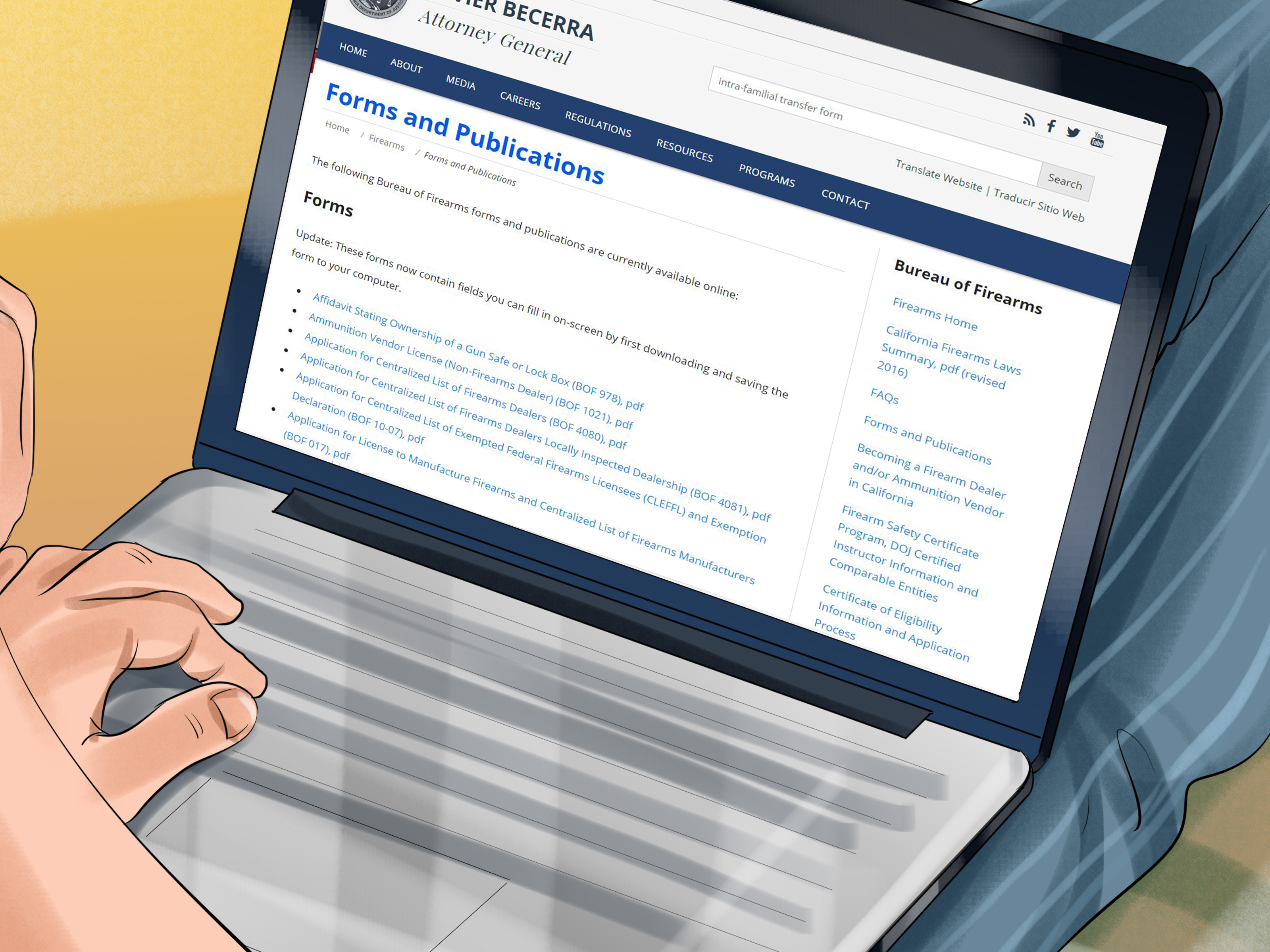
The best practical move is simple: search your state attorney general, state police, or official firearms licensing website before doing anything else. If the official page makes your eyes glaze over, call a reputable FFL and ask what documents are needed. Dealers handle this paperwork daily; you do not have to become a legal scholar by breakfast.
Step 6: Choose a Licensed Firearms Dealer When Required or Recommended
An FFL is often the safest route for a firearm transfer, even when not strictly required by state law. A dealer can verify identification, process ATF Form 4473 when required, initiate a NICS or state background check, record the transaction properly, and help both parties avoid preventable mistakes.
Using an FFL is especially wise for private sales, online sales, interstate transfers, handgun transfers, and situations involving unclear state rules. Many dealers charge a transfer fee. That fee may feel annoying in the moment, but it is usually cheaper than hiring a lawyer to fix a bad transfer later.
Step 7: Prepare the Required Identification and Documents
Before visiting the dealer or agency, gather the basics. The recipient usually needs a valid government-issued photo ID showing current address. Some states may require a firearm owner identification card, handgun qualification license, purchase permit, concealed carry license, registration application, proof of residency, safety certificate, or other state-specific documents.
The firearm information may also be needed, including manufacturer, model, caliber or gauge, type, and serial number. For NFA firearms, exact information is critical because the firearm must match the federal registration record. One wrong digit can slow everything down faster than a printer jam on tax day.
Step 8: Complete the Background Check Process
When a transfer goes through an FFL, the buyer or recipient typically completes ATF Form 4473. The dealer then contacts the National Instant Criminal Background Check System, or a state point-of-contact system, depending on the state. The response may be proceed, denied, delayed, or another state-specific result.
A NICS check is generally valid for only a limited time for that transaction. If the transfer is not completed within the allowed period, the dealer may need to run a new check. State waiting periods can also apply. The key point is simple: no firearm changes hands through the dealer until the dealer says the transfer may legally be completed.
Step 9: Complete State Transfer or Registration Forms
If your state or city requires registration or transfer paperwork, complete it carefully. In Maryland, regulated firearm transfers require the state police application process. In California, dealer-processed private party transfers use the state’s Dealer Record of Sale system. In the District of Columbia, firearm registration is handled through the Metropolitan Police Department. Other states may require pistol sales records, permit applications, or dealer submissions.
Use your full legal name consistently. Match your address to your identification. Check the firearm serial number twice. If the form asks whether the firearm is a handgun, long gun, receiver, or NFA item, do not guess. Ask. Firearm forms are not a personality quiz; “close enough” is not an answer.
Step 10: Follow Special Rules for Gifts, Inheritance, and Family Transfers
Many firearm transfers happen inside families. A parent gives a hunting rifle to an adult child. A grandparent leaves a revolver in a will. A spouse wants to transfer a firearm after a move. These situations may have special exceptions, but the exceptions vary widely by state and firearm type.
Federal guidance recognizes certain inheritance situations, such as lawful bequests, but state registration, permit, or background-check rules may still apply. If the firearm is an NFA item, inheritance and estate transfers require careful handling through the ATF process. Do not assume that “it is family” automatically means “no paperwork.” Family dinners are informal. Firearm transfers often are not.
Step 11: Keep a Clear Record of the Transfer
After the transfer is complete, keep copies of receipts, dealer transfer documents, state approvals, registration confirmations, bill of sale records, and any agency correspondence. The seller should keep proof that the firearm was legally transferred. The recipient should keep proof that the firearm was lawfully acquired.
A simple private bill of sale, where legal, may include the date, names of the parties, firearm description, serial number, price or gift statement, and signatures. However, do not use a private bill of sale as a substitute for a required background check, FFL transfer, permit, or registration process. Paperwork is helpful only when it is the right paperwork.
Step 12: Store the Firearm Safely After the Transfer
Once the transfer is complete, safe storage becomes the new priority. Use a locked safe, lockbox, cable lock, or other secure storage method. Keep ammunition stored separately when appropriate. Follow local child-access prevention laws. If minors, guests, roommates, or prohibited persons may access the home, secure storage is not just smart; it may be legally required.
Responsible firearm ownership does not end when the paperwork is approved. It begins there. The cleanest transfer in the world still becomes a problem if the firearm is later stored carelessly, lost, stolen, or accessed by someone who should never touch it.
Common Mistakes to Avoid During a Firearm Transfer
Mistake 1: Assuming Every State Uses the Same Rules
This is the classic error. A lawful private transfer in one state may be illegal in another without a dealer or state background check. Always check the rules where the transfer happens and where the recipient lives.
Mistake 2: Confusing Dealer Records with Registration
ATF Form 4473 is a firearms transaction record completed during dealer transfers. It is not the same thing as a universal national registration certificate for ordinary firearms. Some states and cities do maintain registration or transfer records, but the details vary.
Mistake 3: Skipping the FFL for an Interstate Transfer
If buyer and seller live in different states, do not treat the transaction like a local garage sale. Interstate transfers generally require an FFL in the recipient’s state. The recipient must complete the required paperwork and background check before taking possession.
Mistake 4: Handing Over an NFA Firearm Too Early
NFA firearms require prior ATF approval before transfer. The recipient should not take possession until the approved paperwork is complete. With NFA items, patience is not just a virtue; it is part of the law.
Mistake 5: Forgetting Local Rules
Some cities and districts have their own registration or safety requirements. If you live in a highly regulated jurisdiction, check local police or licensing authority instructions before moving forward.
Specific Examples of How Transfer Rules Can Differ
California: Private party transfers are generally processed through licensed dealers. The dealer handles required state paperwork and background-check procedures. Fees are also regulated for private party transfers.
Maryland: A person who wants to purchase, transfer, receive, inherit, or voluntarily register a regulated firearm must use the Maryland State Police application process, commonly associated with the MSP 77R.
Washington: Most firearm sales and transfers, including private transfers, are subject to background checks unless a legal exemption applies. Private parties generally complete the transfer through a licensed dealer.
Pennsylvania: The Pennsylvania State Police operates the Pennsylvania Instant Check System, used by dealers and sheriffs to verify whether a person may legally buy or receive a firearm in covered transactions.
District of Columbia: The Metropolitan Police Department handles firearm transfer and registration procedures. D.C. has its own registration-focused process, which is very different from the rules in many states.
These examples show why the safest answer to “How do I transfer a gun registration?” is usually: first identify the firearm, then identify the jurisdiction, then follow the official process for that place.
Practical Experiences and Lessons From Real-World Firearm Transfers
People who go through a firearm transfer for the first time often expect the process to be mysterious, dramatic, or painfully complicated. In reality, most lawful transfers are more like a trip to the DMV with heavier safety consequences. There may be forms, waiting, identification checks, and a few moments where someone says, “Let me check that,” which is paperwork language for “Please remain calm.”
One common experience is surprise at how much state law matters. A person may hear from a friend in another state that a private sale was simple, then discover that their own state requires dealer involvement, a permit, a waiting period, or a state police form. The lesson is to avoid relying on coffee-shop legal advice. Your neighbor may be confident, friendly, and completely wrong.
Another frequent lesson involves family transfers. Many people assume that giving a firearm to a sibling, adult child, or parent is automatically exempt from paperwork. Sometimes there are family exemptions, but they may apply only to certain relatives, certain firearms, or certain in-state transfers. In some places, the recipient still has to file a form after taking possession. In others, the transfer must go through a dealer. If an estate is involved, the executor may need additional guidance, especially if the firearm crosses state lines or is an NFA item.
Private sellers also learn the value of documentation. Even where a private transfer is lawful without dealer processing, a written record can help show when the seller no longer possessed the firearm. A clear bill of sale does not replace required legal procedures, but it can be useful when allowed. Many experienced sellers prefer using an FFL anyway because it adds a professional checkpoint and creates a cleaner paper trail.
Buyers often learn that the background-check process is not always instant. Many checks are quick, but delays happen because of similar names, incomplete records, state workload, or extra review. A delay is not the same as a denial. The best approach is patience. Calling the dealer every twelve minutes will not make the system move faster, although it may make the dealer remember you for the wrong reason.
NFA transfers teach an even bigger lesson: do not take possession before approval. People may buy a suppressor or short-barreled rifle and feel like payment means ownership is complete. Legally, the important moment is approved transfer. Until the required approval is granted, possession must remain where the law requires it to remain.
The smoothest firearm transfers usually have three things in common: both parties check the rules before meeting, they use a reputable dealer or official agency when required, and they keep copies of everything. That may sound boring, but boring is exactly what you want in a firearm transfer. Exciting paperwork usually means something has gone sideways.
Conclusion
Learning how to transfer a gun registration is really about learning how firearm transfer laws work in your specific situation. There is no single national process for every ordinary firearm, and the word “registration” means different things depending on whether you are dealing with a regular firearm, a handgun in a regulated state, a local registration system, or an NFA firearm.
The safest path is to slow down and follow the correct order: identify the firearm, confirm it is legal to transfer, verify the recipient’s eligibility, check federal and state laws, use an FFL when required or recommended, complete all forms honestly, wait for approvals, keep records, and store the firearm securely. That may not sound glamorous, but responsible gun ownership has never depended on glamour. It depends on caution, compliance, and enough patience to let the paperwork do its job.