If you have ever watched a preschooler turn a cardboard tube into a telescope, a microphone, a snake tunnel, and a dragon launcher in the same five minutes, congratulations: you have already met the magic of loose parts play. It is one of the simplest, smartest, and most budget-friendly ways to support early learning. Better yet, children usually think they are just “playing,” which is preschool code for “quietly building important life skills while adults try not to look too impressed.”
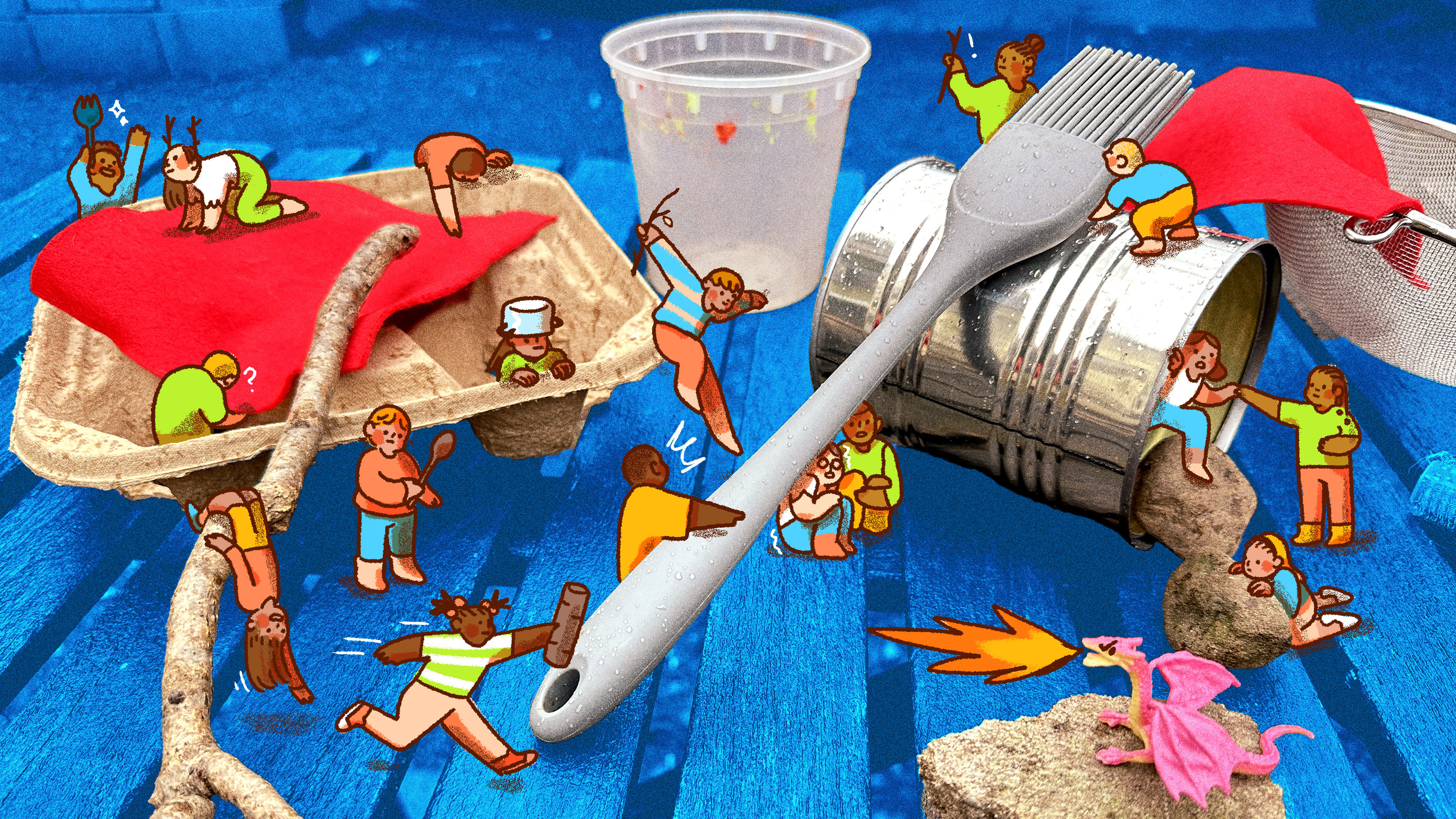
Loose parts play in preschool uses open-ended materials that children can move, combine, redesign, take apart, line up, stack, sort, and transform. These materials may include pine cones, fabric scraps, shells, large bottle caps, cardboard tubes, smooth stones, baskets, wooden rings, blocks, scarves, clips, lids, boxes, and other safe odds and ends. Unlike toys with one correct outcome, loose parts leave room for imagination, experimentation, and invention. That freedom is exactly why they are so powerful.
When preschool teachers use loose parts well, children are not just keeping busy. They are practicing problem-solving, building language, exploring early math and science concepts, learning to cooperate, and growing more independent. The trick is not dumping random stuff on a rug and hoping for genius. The trick is creating an environment that invites discovery, supports safety, and leaves enough room for children to lead.
What Loose Parts Play Really Means
Loose parts are movable materials with no single purpose. A wooden slice can become a cookie, a steering wheel, a stepping stone, or a plate for pretend spaghetti that is somehow also a dinosaur egg. The point is not what the object is called. The point is what the child decides it can become.
That open-ended quality matters in preschool because children are developing symbolic thinking, flexible thinking, and self-control. They are learning that one object can stand in for another, that ideas can change, and that problems can be solved in more than one way. In other words, loose parts help children think beyond the obvious. And preschoolers are very good at beyond the obvious. Give them one basket of corks and they will invent a bakery, a traffic jam, and a moon colony before snack.
Loose parts also work beautifully across learning areas. In one moment, children may sort shells by size and color. In the next, those same shells become treasure in a pirate story or ingredients in an outdoor mud kitchen. That kind of flexible use is what makes loose parts play such a strong fit for child-led learning.
Why Loose Parts Play Works So Well in Preschool
It builds creativity without forcing it
Children do not need a lecture on creativity. They need materials that do not boss them around. Loose parts invite children to imagine, test, revise, and invent. A pile of tubes and fabric says, “What could this be?” instead of “Use me this one correct way.” That simple shift encourages original thinking.
It strengthens executive function
Preschoolers use planning, working memory, attention, and self-control during open-ended play. They decide what to build, remember their idea, adapt when it collapses, and try again. That process may look messy from across the room, but inside the mess there is serious mental work happening.
It supports language and storytelling
Loose parts are excellent conversation starters. When one child wraps fabric around a basket and says it is a boat, another child has to ask questions, join the story, or negotiate a role. Suddenly you have vocabulary, turn-taking, symbolic thinking, and social communication all happening in one pretend-fishing expedition.
It encourages early math and science
Sorting, patterning, counting, comparing, balancing, estimating, testing, and classifying all show up naturally in loose parts play. Children may group objects by shape, create repeating patterns, compare which structure is taller, or test which materials roll fastest down a ramp. Preschool STEM does not always need a lab coat. Sometimes it just needs pine cones and a curious child.
It grows independence and confidence
Because loose parts do not come with one “right” answer, children gain a sense of ownership. They make choices. They revise plans. They feel capable. That independence matters, especially in preschool classrooms where children are learning how to make decisions, work with others, and persist through challenges without an adult solving every tiny crisis.
How to Set Up Loose Parts Play Without Creating Beautiful Chaos
Loose parts play works best when the environment is thoughtfully prepared. A good setup feels inviting, not cluttered. The goal is possibility, not sensory overload.
Start with a curated collection
Begin with a small number of materials that are easy to explore. Think baskets of large shells, cardboard tubes, fabric pieces, wooden rings, smooth stones, or sturdy lids. Too many options at once can make some children feel overwhelmed. A smaller, well-chosen set often leads to deeper play.
Store materials where children can see and reach them
Use low shelves, open bins, and clear baskets. Preschoolers are more likely to engage with materials they can actually see. Attractive, organized storage also teaches children that materials have a place and can be cared for. Translation: your cleanup routine has a fighting chance.
Mix textures, shapes, and sizes
A rich loose parts collection includes materials that feel different and behave differently. Soft fabric, rigid cardboard, natural wood, smooth stones, and lightweight scarves all invite different kinds of exploration. Variety helps children compare, build, test, and imagine.
Rotate items to renew interest
You do not need a warehouse of materials. Rotate what you have. Bring out seasonal natural items, swap in different containers, or move materials to a new part of the room. A change in location or presentation can make familiar objects feel brand-new.
Create invitation zones
Instead of treating loose parts as one giant category, place them in different learning areas. Add natural objects to the science center, fabric and boxes to dramatic play, stones and lids to the math area, and sticks and logs to outdoor construction play. Children often use materials more thoughtfully when the setup hints at possibilities without dictating outcomes.
The Teacher’s Role: Guide, Don’t Hijack
One of the smartest ways to make the most of loose parts play in preschool is knowing when not to take over. Adults are often tempted to “help” by giving directions, solving problems too quickly, or suggesting exactly what children should make. That usually shrinks the learning instead of expanding it.
Think of the teacher as a guide, observer, and gentle extender. Watch first. Listen. Notice what the children are trying to do. Then step in only when needed to support safety, social problem-solving, or deeper thinking.
Use open-ended questions
Ask questions that invite thinking instead of steering children toward a predetermined answer:
- What do you notice about these materials?
- How could you make this more stable?
- What might happen if you put the larger pieces on the bottom?
- How will your friends know what this is in your story?
- What else could you use?
Scaffold without taking control
If a tower keeps collapsing, resist the urge to rebuild it yourself like a heroic home-renovation host. Instead, offer just enough support for the child to keep going: “I wonder if a wider base would help,” or “Would you like to test two different ways?” That keeps the learning in the child’s hands.
Observe for assessment
Loose parts play gives teachers a front-row seat to children’s development. You can observe language growth, fine-motor control, cooperation, attention span, symbolic thinking, persistence, and early math concepts all in one activity. In many cases, the best assessment tool is not a worksheet. It is a teacher paying close attention.
Turning Loose Parts Into Real Learning Opportunities
Math
Use shells, rocks, lids, or wooden discs for counting, patterning, sorting, and comparing quantities. Invite children to line materials up from shortest to longest, build sets, divide items fairly, or create repeating sequences. Add trays or mats for organizing by size, texture, or color.
Science
Loose parts are perfect for testing and investigating. Which objects roll? Which stack better? Which float? Which feel rough or smooth? Natural materials are especially useful because they invite observation, classification, prediction, and comparison. Preschool science thrives on hands-on curiosity.
Literacy
Bring loose parts into storytelling. After reading a picture book, invite children to build a setting, retell the story, or invent a new ending using fabric, tubes, rings, boxes, and natural objects. This supports oral language, sequencing, comprehension, and symbolic representation.
Social-emotional learning
Open-ended play creates natural opportunities for collaboration, negotiation, and self-regulation. Children decide who is doing what, solve disagreements, and adapt when plans change. Those are big skills for little humans. Sometimes the real masterpiece is not the structure on the rug. It is the fact that three children built it together without a dramatic international incident.
Art and design
Loose parts can be arranged into mandalas, collages, sculptures, or temporary installations. Because the materials can be rearranged, children feel freer to experiment. They can revise without fear of “ruining” a final product, which encourages creative risk-taking.
Safety Rules That Keep the Fun Smart
Loose parts play should feel adventurous, not reckless. Preschool teachers need to choose materials with care and establish clear expectations.
- Use age-appropriate items and avoid materials that present choking hazards.
- Check for sharp edges, splinters, rust, broken plastic, loose magnets, or damaged parts.
- Supervise natural materials closely and teach hand washing after play.
- Co-create simple safety rules with children, such as not throwing rocks, lifting heavy items carefully, and asking before taking materials from someone else’s work.
- Offer shade, safe surfaces, and active supervision outdoors.
- Consider the sensory and developmental needs of individual children and adapt materials when needed.
Safety does not mean removing every challenge. It means preparing an environment where children can take reasonable, developmentally appropriate risks while adults stay alert and responsive.
Common Mistakes to Avoid
Offering too much, too fast
A mountain of random materials may look generous, but it can actually flatten the play. Start small, then expand.
Asking children to make the same thing
The moment every child is expected to build the same robot, house, or flower, loose parts stop being loose in spirit. Keep the task open.
Jumping in too quickly
Silence, confusion, and false starts are not signs of failure. They are often the warm-up lap before richer play begins.
Ignoring documentation
Take photos, jot down children’s words, and display their work or process. Documentation helps teachers reflect and helps families see the learning hidden inside the glorious preschool mess.
Experience-Based Ideas From Preschool Practice
In real preschool settings, loose parts play often becomes more powerful after the first awkward attempt. Many teachers discover that when they set out a random bin of materials and say, “Go create,” some children jump in while others stare like they have just been assigned taxes. What helps is a gentle invitation. For example, placing baskets of stones, fabric, and wooden rings near a dramatic play area often sparks richer play than placing the same items in an undefined pile. Children begin making soups, treasure maps, picnic setups, and tiny homes because the environment gives them a clue without telling them what to do.
Another common experience is that children use loose parts in ways adults do not expect. A teacher might introduce shells for counting, only to watch children turn them into phones, money, or tickets for a pretend train. That is not a detour from learning. That is learning. In those moments, the strongest teachers are usually the ones who pause before redirecting. Instead of saying, “No, these are for math,” they ask, “Tell me about your tickets.” Suddenly the activity expands into literacy, social play, and problem-solving.
Outdoor loose parts play tends to bring out a different kind of energy. Children often build bigger, move more, and collaborate more naturally outside. Sticks become fishing poles, ramps, fences, magic wands, and bridge supports. Rocks become bakery goods, tower foundations, or “rare dinosaur eggs” that absolutely must not be touched by dragons. Teachers often report that conflicts still happen, but they become useful teaching moments. Children negotiate over materials, defend ideas, and learn how to join ongoing play. Those are not side benefits. They are central preschool goals.
Many educators also notice that documentation changes everything. When teachers photograph structures, record children’s exact words, or revisit a project the next day, children begin to see their thinking as important. A child who built a “bird hospital” from bark, leaves, and fabric scraps on Monday may return on Tuesday ready to improve the waiting room, add signs, or explain the bird-check-in rules in great detail. Loose parts play becomes deeper when children know their ideas can continue over time.
Families can be part of the experience too. Some classrooms invite families to donate clean recyclables, fabric, baskets, or natural materials. This often increases interest at home, where parents begin noticing that a cereal box and scarf can be more exciting than a flashy toy with one button and six electronic sound effects. When schools share why open-ended play matters, families are more likely to value the learning behind it.
Perhaps the biggest real-world lesson is this: loose parts play does not need to look Pinterest-perfect to be effective. In fact, the best sessions often look a little wild. There may be half-built towers, invented stories, mismatched materials, and children deeply invested in ideas adults never saw coming. That is usually a sign that the play belongs to the children. And when the play belongs to the children, the learning sticks.
Conclusion
Loose parts play in preschool is powerful because it respects how young children learn best: by touching, testing, imagining, building, talking, revising, and trying again. With thoughtful materials, smart safety practices, and teachers who know how to support without taking over, loose parts can become a daily engine for creativity, STEM learning, language growth, and independence.
The best part is that loose parts do not require fancy equipment or a giant budget. They require intention. A basket of well-chosen materials, an observant teacher, and time to explore can do a lot of heavy lifting. Give preschoolers open-ended materials and enough room to think, and they will usually do the rest. Often with surprising brilliance. Sometimes with a lot of pine cones. Usually both.