Winter has a way of making smart people do weird things. The driveway gets slick, the sidewalk looks like a scene from a low-budget ice-skating movie, and suddenly that bag of deicing salt starts to look like a miracle worker. Toss, sprinkle, scatter, done. Problem solved, right?
Not exactly. If that salt lands near your lawn, your “quick fix” can turn into a slow-motion turf tragedy. What looks like a harmless layer of rock salt can dry out roots, burn grass blades, wreck soil structure, and leave you with ugly brown edges that make your yard look like it lost a bar fight with winter.
If you care about curb appeal, healthy grass, and not spending spring weekends apologizing to your lawn with a rake in one hand and seed in the other, this is a topic worth understanding. Here’s why you should never use deicing salt near your lawn this winter, what damage it causes, and what to do instead if you want safe walkways without sacrificing your grass.
What Deicing Salt Actually Is
When most homeowners say “deicing salt,” they usually mean rock salt, also known as sodium chloride. It is popular for a simple reason: it is cheap, easy to find, and decent at melting ice in the right conditions. The problem is that “cheap and available” does not mean “kind to your landscape.”
There are other ice-melt products on the market too, including calcium chloride, magnesium chloride, potassium chloride, urea-based products, and calcium magnesium acetate. Some are less harmful than sodium chloride, but that does not make them harmless. Many still carry chlorides, can still stress plants when overapplied, and can still move into the soil with snowmelt.
In other words, your lawn does not see a bag that says “premium ice melt.” It sees chemistry.
Why Deicing Salt and Lawns Are a Terrible Match
1. Salt pulls water away from grass roots
One of the biggest reasons deicing salt damages grass is that salt changes how water moves in the soil. High salt levels make it harder for roots to take up moisture. Even when the ground looks damp, the grass can behave as though it is thirsty. That is why salt injury often looks like drought stress wearing a winter coat.
The result? Yellowing turf, scorched-looking edges, thinning patches, and eventually dead sections of lawn near sidewalks, driveways, and streets. Grass essentially gets dehydrated by the very material you threw down to deal with ice. That is a rude plot twist.
2. Salt spray can burn grass blades and nearby plants
Salt does not have to soak deep into the soil to cause problems. It can also splash or spray onto nearby grass and ornamentals. This is especially common near walkways, plow lines, and roads where slush gets kicked around. Once salt lands on plant tissue, it can burn foliage and cause browning, tip damage, or a dry, crispy appearance.
That is why the edge of a lawn beside a sidewalk often looks worse than the center of the yard in spring. The grass closest to the pavement gets hit first and hit hardest.
3. Sodium can ruin soil structure
This is where the damage gets sneaky. Sodium is not just rough on grass itself; it can also change the soil beneath it. In clay-heavy soils especially, sodium can cause soil particles to disperse and compact. That means poorer drainage, reduced air movement, weaker root growth, and less water infiltration.
So even after the ice melts and winter exits dramatically, the soil can still be in bad shape. The grass is not just recovering from a bad season. It is trying to grow in a worse home.
4. The damage builds up over time
A single light application may not destroy a lawn. Repeated applications all winter long are another story. Salt accumulates in snow piles, washes into the same narrow turf strip again and again, and settles where melting water flows. The lawn along a driveway or sidewalk becomes the unlucky collection point for months of “just a little more.”
That is why salt damage often shows up in predictable patterns: along pavement edges, at the bottom of sloped driveways, around drain paths, and where plowed snow is piled repeatedly.
How to Tell If Your Lawn Has Salt Damage
Salt injury can mimic other lawn problems, so it helps to know what to look for. Common signs include:
- Brown or straw-colored grass along sidewalks, streets, and driveways
- Thin turf or dead patches near areas where ice melt was spread
- Yellowing in late winter or early spring
- Uneven recovery while healthier grass farther away greens up normally
- Compacted, crusty, or poorly draining soil in damaged areas
If the problem follows the pavement like a shadow, salt is a strong suspect. Fungus and pests rarely care that much about your driveway lines.
Why “A Little Extra Salt” Is Usually a Big Mistake
Homeowners often assume more deicer means more safety. In reality, using too much ice melt often wastes money and increases plant injury without improving performance much. Salt works best when it is spread evenly and used in the right amount for the temperature and surface conditions. Dumping heavy piles on frozen pavement is less of a strategy and more of an emotional support ritual.
Oversalting also creates leftovers. Once the surface dries, those extra crystals do not magically become responsible citizens. They get tracked indoors, washed into the lawn, blown into planting beds, or carried into storm drains.
Why This Matters Beyond Your Grass
The case against rock salt is not just cosmetic. Yes, brown turf is annoying. But the broader issue is that salt can move beyond your lawn and into surrounding soil and water. Chlorides do not simply vanish after winter. They can accumulate in runoff, affect water quality, and create longer-term environmental headaches.
So when you stop using deicing salt near your lawn, you are not only protecting your yard. You are making a smarter choice for the surrounding landscape and local waterways too.
Better Alternatives to Deicing Salt Near Grass
Shovel first, always
If you take one lesson from this article, let it be this: the best way to reduce deicer damage is to use less deicer. And the easiest way to do that is to remove snow early and often. Fresh snow is far easier to shovel than packed snow or refrozen slush.
Think of shoveling as the broccoli of winter maintenance. It is not exciting, but it solves a lot of problems before they become expensive.
Use traction materials where possible
If your main concern is preventing slips rather than melting thick ice, use sand or similar traction materials in trouble spots. These will not melt ice, but they can help people keep their footing without dumping more sodium into the lawn.
They are especially useful when temperatures are so low that standard rock salt is less effective anyway. When the air is brutally cold, throwing more sodium chloride on the ground can become a very lazy chemistry experiment.
Choose less-damaging products carefully
If you need an ice-melting product near turf, look for options that are less harmful than sodium chloride. Calcium magnesium acetate is often cited as one of the safer choices for vegetation, though it tends to be much more expensive. Calcium chloride and magnesium chloride may be somewhat less damaging than rock salt, but they are not lawn vitamins. Use them carefully and sparingly.
Also, read labels closely. Many “pet safe,” “fast acting,” or “professional strength” products are still blends that contain chlorides. Marketing language is not a soil test.
Spread less than you think you need
One of the biggest homeowner mistakes is applying ice melt by feel. A light, even application is usually enough. If you can still see a field of unused crystals after conditions improve, you likely used too much. Sweep up the excess instead of letting it wash into your grass.
Rethink where snow piles go
If salty slush or shoveled snow keeps getting dumped onto the same strip of lawn, that area receives the full season’s worth of runoff in one place. Change where you pile snow whenever possible. Spreading out the load can reduce concentrated damage.
How to Protect Your Lawn Before Winter Damage Starts
Edge vulnerable areas with strategy
The narrow strip of grass bordering a driveway is prime salt casualty territory. If that area gets hammered every year, consider reducing your risk with smarter landscape design. A buffer of stone, mulch, or salt-tolerant plantings in the highest-exposure zones can work better than asking delicate turf to keep surviving chemical winter warfare.
Improve drainage
Where water flows, salt follows. If snowmelt consistently drains into one section of lawn, try to improve grading or drainage so salt does not keep pooling in the same spot.
Use salt-tolerant grass mixes where needed
In chronic trouble areas, some turf blends with fine fescues may perform better than more sensitive grasses. This is not a free pass to oversalt, but it can help reduce visible injury in high-risk zones.
What to Do If Salt Already Damaged Your Lawn
Flush the area in spring
Once the ground has thawed and drainage is possible, deep watering can help leach excess salts downward and away from the root zone. This works best in well-drained soil. It is not instant magic, but it can reduce the concentration stressing your turf.
Loosen and amend damaged soil
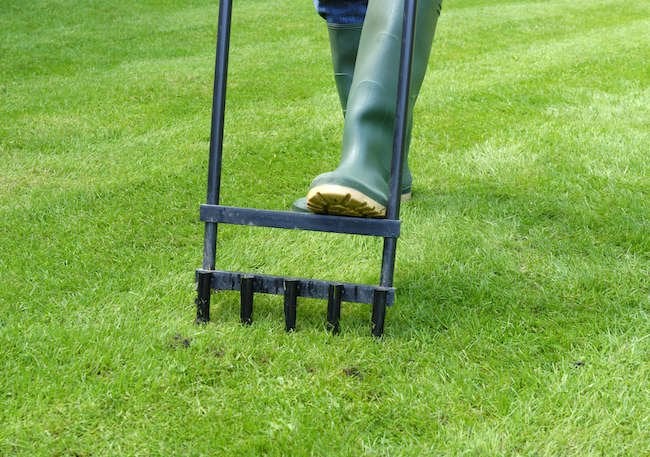
If the area is compacted, crusty, or struggling to drain, core aeration and the addition of compost can improve soil structure. In some sodium-affected soils, gypsum may also be recommended to help displace sodium, but this is best used thoughtfully and ideally with local extension or soil-test guidance rather than as a blind “fix everything” purchase.
Rake out dead grass and reseed
Some turf will recover if only the blades were injured. But if the crowns and roots were killed, those spots need renovation. Rake out dead material, prepare the soil, overseed or patch-seed with a suitable grass mix, and keep the area evenly moist during establishment.
Do not overfertilize stressed turf
It is tempting to throw fertilizer at a bad-looking lawn like confetti at a parade, but stressed grass does not need a panic response. Too much fertilizer can add more stress. Focus first on flushing salts, improving soil conditions, and repairing damaged areas properly.
The Real Bottom Line: Safety and Lawn Health Can Coexist
You do not need to choose between preventing slips and preserving your yard. You just need a smarter winter strategy. Remove snow promptly. Use the least damaging product possible. Apply only what is needed. Sweep up excess. Keep salty runoff away from the same strips of turf. And stop treating your lawn like it volunteered to be part of your driveway maintenance plan.
Why should you never use deicing salt near your lawn this winter? Because the short-term convenience is rarely worth the long-term damage. Rock salt may help melt ice fast, but it can also dehydrate grass, burn blades, damage soil, and create spring repair work you absolutely did not ask for.
Winter is hard enough. Your lawn does not need a chemical enemy living in a bright orange bucket by the garage.
Experience and Real-Life Lessons From Homeowners Dealing With Salt Damage
Anyone who has owned a home through a few snowy winters has probably seen the same frustrating pattern. December arrives, the walkway gets icy, and out comes the deicer. At first everything seems fine. The sidewalk is safer, the driveway looks under control, and there is a satisfying sense that adulthood has been achieved. Then spring shows up, and the lawn beside the concrete looks like it has given up on all future plans.
Many homeowners describe the damage the same way: the grass closest to the pavement turns pale first, then brown, then patchy. The rest of the lawn starts greening up, but that narrow edge stays stubbornly lifeless. Some people assume snow mold did it. Others blame the dog, the plow, or bad luck. Then the pattern repeats the next year in the exact same place, and the deicing salt practically introduces itself.
One common experience is the “helpful overapplication” problem. A homeowner sprinkles a little salt before work, comes home to find the surface still slippery, and dumps on more for good measure. A family member does the same later. Then a storm arrives, more gets added, and by February the sidewalk edge has absorbed enough salt to season a year’s worth of fries. Come April, the lawn border looks toasted while the center of the yard is thriving. The lesson is simple: salt damage is often not dramatic in the moment, but painfully obvious later.
Another frequent story involves snow piles. A lot of people shovel snow off the driveway into the same grassy strip every time because it is convenient. That pile quietly stores every bit of salt, slush, and dirty meltwater from the season. When temperatures rise, all of it drains into one concentrated area. Homeowners are often surprised that the worst lawn damage is not where they walked the most, but where they piled snow the most. Once they start moving snow to different areas or reducing deicer use, the lawn usually improves the following year.
Some gardeners learn the hard way that “premium” ice melt is not the same as “plant friendly.” They buy a product with a gentler-sounding label, assume it is safe, and still see browning along the edge of the turf. The difference is that the damage may be less severe, not nonexistent. The takeaway from those experiences is that product choice matters, but technique matters just as much. Even a less aggressive ice melt can become a problem when it is overused.
On the bright side, homeowners who change their winter habits often report a dramatic difference. The biggest improvements usually come from boring but effective steps: shoveling earlier, using smaller amounts, switching to traction materials in low-risk areas, sweeping up extra granules, and avoiding repeated snow piles on the same lawn edge. None of this is glamorous. Nobody posts a triumphant photo captioned “Used a reasonable amount of deicer today.” But those quiet habits are usually what save the lawn.
The most consistent lesson from real-world experience is this: lawn damage from deicing salt is rarely mysterious, and it is often preventable. When homeowners recognize the pattern and adjust before winter gets too deep, they can protect both safety and turf quality. That makes spring a lot more pleasant, and it saves you from spending the first warm weekend of the year staring at a dead strip of grass and whispering, “Well, that was expensive.”
Conclusion
If you want a healthier lawn this winter and an easier spring, keep deicing salt away from grass whenever possible. Rock salt may be cheap, but the hidden cost shows up in burned turf, stressed soil, and repair work later. A smarter plan is to shovel early, use less product, pick safer options carefully, and stop runoff from collecting in the same lawn edges. Your sidewalks can stay safer without turning your yard into a salt test site.