Note: The theories below are fan interpretations, not official canon unless stated otherwise. They are included because they fit the themes, character choices, and story logic of popular young adult movie franchises surprisingly well.
Why YA Movie Fan Theories Hit So Hard
Young adult movies are basically theory factories with better lighting. Give fans a chosen one, a mysterious government, a magical school, a brooding vampire, a fake relationship contract, or a death arena sponsored by nightmare capitalism, and the internet will immediately start connecting dots like it has three corkboards and unlimited red string.
That is part of the fun. The best YA movie fan theories do not just yell, “What if everyone was dead the whole time?” and run away before anyone can ask questions. The ones that actually make sense grow from the story itself. They explain odd character behavior, deepen a theme, or turn a throwaway detail into something that feels suspiciously intentional.
From Harry Potter and The Hunger Games to Twilight, Divergent, The Maze Runner, and To All the Boys I’ve Loved Before, these fan theories survive because they feel emotionally true. Maybe they are not confirmed. Maybe the author would look at them, blink twice, and say, “Cute, but no.” Still, they make us rewatch the movies with fresh eyes, which is the whole point of a good fan theory.
1. Dumbledore Represents Death in Harry Potter
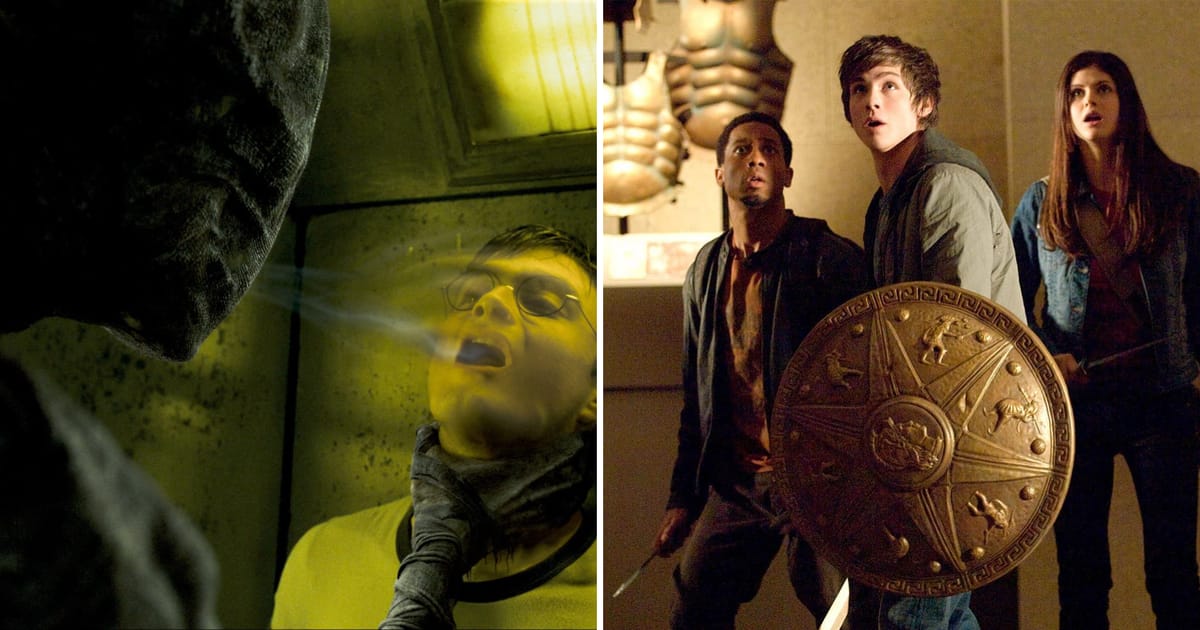
Among all Harry Potter fan theories, the idea that Dumbledore symbolically represents Death is one of the rare ones that sounds dramatic and still holds together after five minutes of thought. The theory connects The Tale of the Three Brothers to Voldemort, Snape, Harry, and Dumbledore.
In this reading, Voldemort mirrors the first brother, who wants power and is destroyed by his obsession with the Elder Wand. Snape resembles the second brother, trapped by grief and unable to move past the woman he lost. Harry becomes the third brother, the one who eventually accepts death instead of trying to conquer it. Dumbledore? He is the figure waiting at the end, guiding each man toward his fate.
What makes this YA movie theory so elegant is that it does not require the plot to literally turn Dumbledore into a hooded skeleton with a train schedule. It works as symbolism. Dumbledore possesses or controls knowledge of the Hallows, shapes Harry’s path, and meets him in the dreamlike King’s Cross scene after Harry walks willingly toward death. That is not just a theory; that is literary analysis wearing a wizard hat.
2. Foxface Ate the Nightlock Berries on Purpose in The Hunger Games
Foxface, the clever tribute from District 5 in The Hunger Games, dies after eating poisonous nightlock berries. On the surface, it looks like a tragic mistake. But fans have long wondered: would someone that observant really eat unfamiliar berries in an arena where literally everything is trying to kill you?
The theory argues that Foxface knew the berries were deadly and chose them anyway. Her survival strategy depended on stealth, intelligence, and avoiding direct fights. By the final stretch of the Games, she was outmatched by stronger competitors and trapped in a system where even winning meant becoming a Capitol puppet. A quiet death by berries may have looked like her only remaining form of control.
This theory makes sense because Foxface is presented as sharp, patient, and careful. She studies patterns. She steals food without being noticed. She does not behave like someone who randomly snacks her way into disaster. The theory also fits the grim emotional logic of Panem: sometimes the “choice” left to a tribute is only the least horrifying option. Cheerful? Absolutely not. Plausible? Unfortunately, yes.
3. The Quarter Quell Was Rigged Specifically to Destroy Katniss
In The Hunger Games: Catching Fire, the 75th Hunger Games forces existing victors back into the arena. Officially, it is a Quarter Quell twist. Unofficially, fans argue that President Snow and the Capitol engineered the rule to eliminate Katniss Everdeen without making her a straightforward martyr.
This theory is almost too sensible to feel like a theory. Katniss has become a living symbol of rebellion after her berry stunt with Peeta. Killing her publicly in District 12 could inflame the districts. But placing her in a “fair” arena with other victors lets the Capitol hide murder behind ceremony. Very tidy. Very evil. Very Capitol.
The idea also explains why the twist feels so perfectly targeted. District 12 has only one living female victor: Katniss. No random reaping can protect her. The system claims tradition, but the result is surgical. The Quarter Quell becomes less like an ancient rule and more like political pest control with better costumes.
4. Coin Knew Prim’s Death Would Break Katniss
One of the darkest Hunger Games fan theories focuses on Primrose Everdeen’s death in Mockingjay. Fans have long debated whether President Coin deliberately allowed or arranged the bombing that killed Capitol children and then the medics, including Prim.
The theory makes sense because Coin is not written as a simple heroic alternative to Snow. She is controlled, strategic, and frighteningly comfortable using people as symbols. Katniss is useful to Coin as the Mockingjay, but also dangerous. She cannot be fully managed. Prim’s death shatters Katniss emotionally and removes the one person whose safety originally motivated her entire journey.
Even if Coin did not personally say, “Put Prim right there,” the theory works because the story’s moral structure points in that direction. Snow and Coin both understand spectacle. Both use children, fear, and public emotion. Katniss choosing to kill Coin instead of Snow only lands with full force if she realizes tyranny can change uniforms without changing its appetite.
5. Bella’s Shield Explains More Than Edward’s Mind-Reading Problem in Twilight
In Twilight, Edward Cullen can read minds, but Bella Swan’s thoughts are mysteriously closed to him. Later, the saga reveals that Bella has a mental shield, which becomes much stronger after she becomes a vampire. Fans often take this a step further: Bella’s entire personality was quietly shaped by that shield long before she understood it.
This theory works because Bella is unusually private, inward, and emotionally self-contained. She does not simply have a secret brain door Edward cannot open; she behaves like someone who has spent her life guarding her interior world. Her shield is not a random superpower stapled onto the plot. It feels like a supernatural exaggeration of who she already is.
It also explains why Edward’s fascination with her becomes so intense. For a century, people have been mentally available to him, whether they liked it or not. Then Bella arrives as the world’s prettiest unread message. Is it romantic? Is it a little weird? Yes and yes. But as YA paranormal logic goes, it tracks beautifully.
6. Alice Can See Bella’s Future Because Bella Blocks Minds, Not Possibilities
A related Twilight fan theory tries to solve a common question: if Bella is protected from mental powers, why can Alice still see parts of her future? The answer many fans favor is simple: Bella’s shield blocks direct mental invasion, not every supernatural ability in existence.
Edward’s power tries to access thoughts. Aro’s power tries to access memories. Jane’s power attacks the mind with pain. Bella’s shield can stop those. Alice’s gift, however, is more like tracking possible outcomes based on decisions. She is not reading Bella’s private thoughts so much as watching the weather pattern created by choices.
This theory makes the vampire powers feel more consistent. Bella is not immune to everything. Jasper can still affect her emotions because his gift works differently. Alice’s visions can still involve her because the future is not locked inside Bella’s skull. Suddenly, what looks like a plot hole becomes a surprisingly tidy supernatural rulebook. Somewhere, a very organized vampire is proud.
7. WCKD Needed Fear, Not Just Biology, in The Maze Runner
At first glance, The Maze Runner raises a giant question: if WCKD needs immune teenagers to find a cure, why put them in a deadly maze full of mechanical nightmares? That feels less like science and more like a grant proposal written by a haunted escape-room designer.
A convincing fan theory suggests that WCKD is not merely testing biology. It is testing stress responses, group behavior, memory, leadership, loyalty, and trauma. The maze is not just a prison; it is a pressure cooker. By erasing memories, WCKD strips the teens down to instinct and watches what emerges.
This theory makes the cruelty of the experiment more coherent. Thomas, Minho, Teresa, Newt, and the other Gladers are not just blood samples with cheekbones. They are variables in a social and psychological trial. WCKD’s slogan insists that wickedness can be justified by the greater good, and the maze proves how far that logic can rot before anyone in a lab coat notices the smell.
8. Teresa Was Playing a Longer Game Than Thomas Realized
Teresa in The Maze Runner franchise is one of those characters fans either defend like attorneys or side-eye like she just ate the last slice of pizza. A popular interpretation is that Teresa’s choices make more sense if she is seen as someone trying to minimize harm from inside an impossible system.
Rather than reading her as simply disloyal, this theory frames her as a tragic strategist. She understands more about WCKD than the others, believes a cure may be possible, and makes choices that betray Thomas emotionally while still aiming at a larger survival goal. Is she right? Not necessarily. Is her logic coherent? Painfully.
The theory adds depth because YA stories often ask whether survival justifies compromise. Thomas chooses trust and rebellion. Teresa chooses calculation and sacrifice. Their conflict hurts because both positions grow from fear, love, and limited information. In other words, the most realistic part of the dystopia is that nobody gets a clean option.
9. Divergent Is Really About Social Control, Not Personality
The faction system in Divergent divides society into Abnegation, Dauntless, Erudite, Amity, and Candor. On paper, it is about human virtues. In practice, it looks like a personality quiz got promoted to dictator.
One strong fan theory argues that the factions were never mainly about creating harmony. They were about making people easier to control. If citizens define themselves by one trait, they become predictable. Dauntless can be weaponized. Erudite can be politicized. Abnegation can be exploited. Candor can be isolated by bluntness. Amity can be kept passive.
This reading makes Tris’s Divergence more powerful. She is dangerous not just because she has special genes or an unusual test result, but because she resists reduction. She cannot be filed into one behavioral drawer. The theory also gives the series a sharper social message: authoritarian systems love labels because labels are cheaper than freedom.
10. The “Genetic Purity” Plot in Divergent Is Propaganda Inside the Story
Some fans are skeptical of the later Divergent explanation that society’s problems come from genetic damage. A more interesting theory is that the genetic purity narrative should be read as propaganda created by institutions trying to justify control.
This theory helps smooth over one of the franchise’s bumpier ideas. Instead of accepting every scientific claim at face value, viewers can interpret the Bureau and its experiments as another layer of manipulation. The language of “damaged” and “pure” becomes a political tool, not objective truth.
That makes the story more thematically consistent. Divergent begins by challenging a society that sorts people into categories. It would be strange for the ultimate answer to be, “Actually, sorting people by biology is the real truth.” The propaganda theory keeps the focus where the franchise is strongest: identity, choice, and the danger of systems that pretend human beings are simple.
11. Kitty Sent the Letters Because She Understood Lara Jean Better Than Anyone
In To All the Boys I’ve Loved Before, Kitty mails Lara Jean’s secret love letters, launching a romantic disaster with excellent wardrobe choices. On the surface, it is little-sister chaos. But fans often argue Kitty’s move is not random mischief. She knows Lara Jean is stuck.
Lara Jean writes letters to process emotions privately. That is sweet, but it also keeps her safely sealed away from risk. Kitty sees her older sister hiding from life, especially after Margot leaves and the family dynamic shifts. Mailing the letters is wildly invasive, yes. Please do not try this at home unless you enjoy family meetings with raised voices. But within the movie’s emotional logic, Kitty forces Lara Jean into motion.
The theory makes Kitty less of a plot device and more of an accidental therapist with terrible boundaries. She does the wrong thing for a reason that turns out to be partly right. That is why the story works: Lara Jean does not become someone new. She becomes brave enough to be seen.
12. Peter Kavinsky Was Not Perfect; He Was Performing Confidence Too
Another To All the Boys theory argues that Peter Kavinsky’s smooth confidence is partly performance. He looks like the relaxed popular guy who always knows what he is doing, but the fake dating contract gives him structure because he is also emotionally unsure.
This makes his character more believable. Peter is not just a fantasy boyfriend generated by a teen rom-com laboratory. He is dealing with jealousy, family pain, and the weird social pressure of being liked by everyone while not necessarily feeling deeply known. His romance with Lara Jean works because both of them are pretending at first. The difference is that the pretending becomes a safe space where they can be honest.
That theory is especially satisfying because YA romance often understands something adults forget: confidence is sometimes just anxiety with better posture.
13. The Giver Community Did Not Remove Pain; It Removed Moral Imagination
The Giver presents a society that has eliminated intense emotion, memory, color, and conflict in the name of peace. A thoughtful fan theory suggests the real horror is not simply that people cannot feel pain. It is that they cannot imagine the full humanity of others.
Jonas’s father, for example, can participate in “release” because the society has removed the emotional and historical context that would make him understand the act as murder. He is not cackling villainously. He is morally numb, which is somehow scarier.
This theory makes the movie’s world more chilling. The community does not need everyone to be evil. It only needs them to be disconnected from memory, consequence, and empathy. The result is a soft-spoken dystopia where the furniture is tasteful and the ethics are on life support.
14. The Best YA Fan Theories Are Really About Growing Up
Whether the setting is Hogwarts, Panem, Forks, Chicago, a maze, or a pastel high school hallway, the strongest YA movie theories circle the same big question: what happens when young people realize the adults in charge may not deserve automatic trust?
Dumbledore may be wise, but he withholds information. Snow and Coin are different versions of power. WCKD sacrifices children for a supposed cure. The Bureau in Divergent labels people for control. Even in romantic YA stories, adults and older siblings cannot solve the inner problem for the protagonist. Lara Jean has to speak for herself.
That is why fan theories about YA movies are so addictive. They let viewers keep asking grown-up questions inside stories about first love, rebellion, identity, grief, and choice. The theories may be speculative, but the feelings behind them are very real.
Experience Section: Rewatching YA Movies Through Fan Theories
The funny thing about revisiting YA movies as an older viewer is that the theories suddenly become less about “secret clues” and more about emotional common sense. When you watch these movies as a teen, you may focus on the romance, the action, the sorting ceremony, the arena dress, the dramatic soundtrack, or the extremely serious boy staring out a window. When you come back later, you start noticing systems. You notice how often adults explain cruelty as tradition. You notice how many villains use polished language. You notice that the most dangerous people in YA movies rarely think of themselves as villains.
That is why theories like the rigged Quarter Quell or Coin’s involvement in Prim’s death feel so convincing. They match what many viewers eventually learn about power: it usually prefers paperwork over open threats. A cruel rule looks cleaner than a cruel person. The Capitol does not need to say, “We are afraid of Katniss.” It can simply announce a historic twist, cue the anthem, and let the cameras roll. Suddenly, the theory feels less like fandom imagination and more like political pattern recognition.
The same thing happens with Divergent. As a younger viewer, the faction system can look cool in a dramatic, tattooed, zip-line kind of way. Later, it looks exhausting. Imagine being told at sixteen that your entire identity must fit into one public category forever. No thanks. Most people cannot even choose one favorite snack for life, let alone one moral trait. The theory that factions are about control rather than harmony feels obvious after you have seen how labels can simplify people until they become easier to manage.
Romantic YA theories age differently but just as interestingly. Kitty mailing Lara Jean’s letters seems outrageous, and it is. Yet the emotional idea behind it lands: sometimes the people closest to us can see when we are using “privacy” as a bunker. Lara Jean’s letters were personal and should have stayed hers, but the story works because her secret self and public self needed to meet. Watching that as a viewer can be oddly comforting. It reminds you that being seen is terrifying, but hiding forever is not exactly a spa day either.
Even Twilight becomes more fun through theories. Bella’s shield is often discussed as a supernatural power, but it also feels like a metaphor for guardedness. Many people have an inner room they do not easily let others enter. Edward’s inability to read Bella’s mind is melodramatic vampire romance, sure, but it also captures a basic truth: mystery can create attraction, and privacy can be powerful. The theory that Bella’s shield reflects her personality makes the saga feel more intentional than its sparkly reputation sometimes gets credit for.
Rewatching YA movies with fan theories in mind also makes the viewing experience more communal. You are not just consuming a story; you are joining a conversation. Someone notices a pattern. Someone else challenges it. Another fan brings receipts. Then suddenly a scene you have watched five times feels new again. That is the magic of fan theories that make sense. They do not replace the movie. They open another door inside it, preferably one that does not lead to a deadly maze, a vampire trial, or a televised fight to the death.
Conclusion: Why These YA Movie Fan Theories Still Matter
The best fan theories about YA movies do not survive because they are shocking. They survive because they reveal something the story was already whispering. Dumbledore as Death adds mythic weight to Harry Potter. Foxface’s possible choice makes The Hunger Games even more tragic. Bella’s shield turns a romantic mystery into character design. WCKD’s experiments become more disturbing when fear itself is part of the data. Kitty’s meddling becomes a messy act of sisterly insight.
These theories make sense because YA stories are built around transformation. Their heroes are young, but the worlds around them are ancient with rules, lies, rituals, and secrets. Fan theories let viewers challenge those worlds the same way the protagonists do. They ask, “What is really happening here?” That question is the heartbeat of young adult storytelling.
So the next time someone says fan theories are silly, remind them that every great rewatch begins with one dangerous phrase: “Okay, but hear me out.”