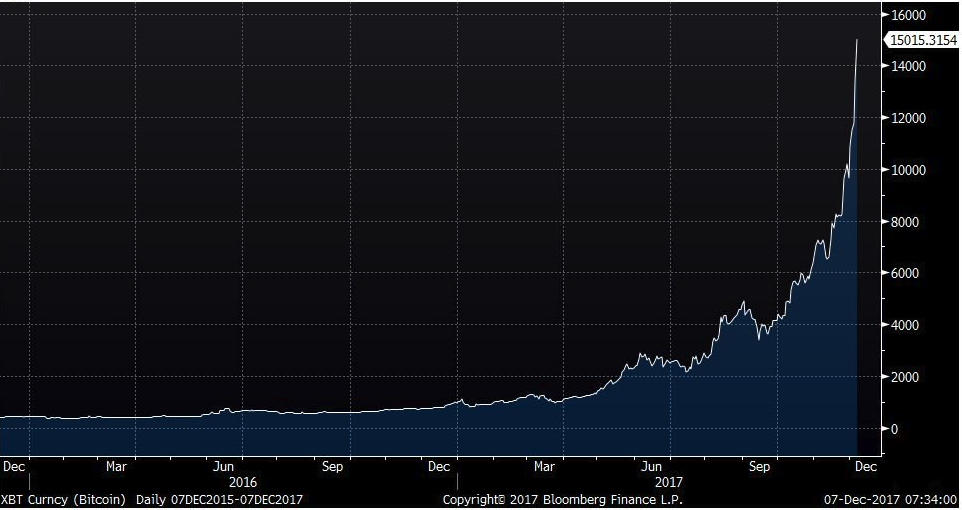
Bitcoin did not fall from the sky wearing sunglasses and carrying a tiny laptop. It happened because several powerful ideas arrived at the same party at the right time: cryptography, peer-to-peer networking, distrust of financial middlemen, open-source software, economic incentives, and a very stubborn belief that digital money could exist without a bank standing in the middle saying, “Trust me, bro.”
To understand how something like Bitcoin happens, we have to look beyond price charts and internet arguments. Bitcoin is not just an asset, a payment network, or a mysterious orange coin that makes family dinners more intense. It is the result of decades of technical experimentation, social frustration, and economic design. It solved a problem that had annoyed computer scientists for years: how can people send value online without needing a trusted third party?
The answer became Bitcoin, a decentralized digital currency powered by blockchain technology. But the bigger story is even more interesting. Bitcoin happened because the internet made global communication cheap, cryptography made digital ownership possible, and a financial crisis made people unusually open to asking, “Do we really need the old system to do everything?”
What Is Bitcoin, Really?
Bitcoin is a peer-to-peer digital currency. That means people can send bitcoin directly to each other over a network, without relying on a bank, card company, or payment processor to approve every transaction. Instead of one company maintaining the ledger, thousands of computers around the world help verify and store the record of transactions.
The key idea is decentralization. In a traditional banking system, a central institution updates account balances. If Alice sends Bob $50, the bank subtracts $50 from Alice and adds $50 to Bob. Simple enough. But with Bitcoin, there is no single bank. The network itself agrees on who owns what by using rules, cryptography, and a public ledger called the blockchain.
The Blockchain in Plain English
A blockchain is a chain of blocks, and yes, for once the name is refreshingly literal. Each block contains a batch of transactions. Once a block is accepted by the network, it is linked to the previous block using cryptographic hashing. This creates a historical record that is extremely difficult to alter without redoing massive amounts of computational work.
Think of it like a notebook shared by thousands of people. Every few minutes, a new page is added. Everyone checks the page before accepting it. If someone tries to sneak in a fake page, the rest of the group rejects it. Bitcoin’s blockchain is that notebook, except the “group” is software, math, and machines using enough electricity to make your toaster feel underemployed.
The Problem Bitcoin Solved: Double Spending
Digital information is easy to copy. Send a photo to a friend, and now both of you have it. That is great for memes but terrible for money. If digital cash could be copied like a JPEG, one person could spend the same digital dollar over and over. This is called the double-spending problem.
Before Bitcoin, the usual solution was to put a trusted company in charge. PayPal, banks, and credit card networks prevent double spending by controlling the ledger. Bitcoin took a different path. It used a decentralized timestamped ledger, proof-of-work mining, and network consensus to make sure the same bitcoin could not be spent twice.
This was the breakthrough. Bitcoin did not make digital money possible by inventing every piece from scratch. It combined existing tools in a new way: public-key cryptography, hash functions, peer-to-peer networking, game theory, and open-source participation.
Why Did Bitcoin Appear When It Did?
Timing matters. Bitcoin’s white paper was published in 2008, during the global financial crisis. Banks were failing, bailouts were making headlines, and public trust in financial institutions was wobbling like a cheap folding chair at a barbecue.
The first block of Bitcoin, known as the genesis block, was mined in January 2009. Embedded in it was a newspaper headline referencing bank bailouts. Whether viewed as a political statement, a timestamp, or both, the message captured the mood: many people were questioning whether centralized financial institutions deserved the level of trust they had been given.
Bitcoin arrived as both technology and commentary. It said, in effect, “What if money could be issued and transferred by code rather than policy meetings, balance sheets, and a room full of people wearing serious suits?”
The Ingredients That Made Bitcoin Possible
1. Cryptography
Cryptography allows Bitcoin users to prove ownership without revealing private information. Each user has a private key and a public address. The private key acts like a digital signature tool. When someone sends bitcoin, they sign the transaction, proving they have the right to spend it.
This is why people say, “Not your keys, not your coins.” If you control the private key, you control the bitcoin. If someone else controls the key on your behalf, you are trusting that person, exchange, or custodian. That can be convenient, but it also brings risk.
2. Peer-to-Peer Networking
Bitcoin does not rely on a central server. It runs across a peer-to-peer network, meaning computers communicate directly with each other. These computers, often called nodes, share transaction information and verify that the rules are being followed.
This makes Bitcoin difficult to shut down. There is no single headquarters to raid, no single database to unplug, and no customer service desk where someone can politely ask the blockchain to “reverse that one weird transaction from Tuesday.”
3. Proof of Work
Proof of work is Bitcoin’s method for securing the network and adding new blocks. Miners compete to solve a computational puzzle. The first miner to find a valid solution can propose the next block and earn newly issued bitcoin plus transaction fees.
The puzzle is not intellectually fancy in the way a chess grandmaster is fancy. It is more like trying random combinations very, very quickly until one works. The important part is that producing a valid block requires real-world cost, while verifying that block is easy for other nodes.
4. Economic Incentives
Bitcoin works partly because it gives participants reasons to behave honestly. Miners spend money on equipment and electricity, so they want rewards. Nodes enforce the rules, so invalid blocks are rejected. Users value a network that is secure, predictable, and resistant to manipulation.
The design is not based on everyone being noble. It is based on incentives. Bitcoin assumes people like rewards, dislike losing money, and generally prefer not to set their expensive mining hardware on fire for no benefit. Reasonable assumptions, honestly.
5. Open-Source Software
Bitcoin is open source. Anyone can inspect the code, run the software, suggest improvements, or build tools around it. This matters because open-source systems can grow through voluntary participation. Developers, researchers, businesses, miners, and users can all contribute without needing permission from a central owner.
That does not mean changes are easy. In fact, Bitcoin is famously conservative about upgrades. Because the network protects real value, major changes require broad agreement. This slow-moving culture can frustrate people, but it also helps preserve Bitcoin’s core promise: predictable rules.
Why the 21 Million Supply Cap Matters
One of Bitcoin’s most famous features is its limited supply. The protocol is designed so that no more than 21 million bitcoin will ever exist. New bitcoin enters circulation through mining rewards, but those rewards are cut roughly in half every four years in events known as halvings.
This predictable issuance schedule is part of why people compare Bitcoin to “digital gold.” Unlike traditional currencies, whose supply can change through central bank policy, Bitcoin’s supply rules are written into the protocol and enforced by the network.
Of course, scarcity alone does not create value. A limited-edition sock with a hole in it is still a sock with a hole in it. Bitcoin’s value comes from a combination of scarcity, security, liquidity, network effects, brand recognition, and the belief that a decentralized monetary network is useful.
How Bitcoin Grew From Experiment to Global Asset
Bitcoin began as a niche experiment among cryptographers, programmers, and internet money enthusiasts. In the early days, it had little market value. People mined it on ordinary computers, discussed it on forums, and treated it like a strange but fascinating technical toy.
Then came the first real-world transactions, exchanges, wallets, merchant tools, media attention, price booms, crashes, scandals, recoveries, and more price charts than any emotionally balanced person should view in one sitting. Over time, Bitcoin became more than software. It became a market, a movement, an investment thesis, and a cultural symbol.
Network Effects Took Over
A network becomes more useful as more people use it. Telephones are the classic example: one telephone is useless, two are interesting, millions are transformative. Bitcoin gained value as more users, miners, developers, exchanges, payment companies, and investors joined the ecosystem.
This network effect helped Bitcoin survive. Every crash inspired obituaries. Every recovery attracted new attention. The result was not a smooth climb but a chaotic expansion filled with innovation, speculation, and the occasional person explaining blockchain at a party without being asked.
Why People Care About Bitcoin
Financial Sovereignty
Some people care about Bitcoin because it allows users to hold and transfer value without relying entirely on banks. This is especially meaningful in places with unstable currencies, capital controls, weak banking access, or political uncertainty.
Inflation Hedge Narrative
Others view Bitcoin as a hedge against currency debasement because its supply is limited. Whether Bitcoin behaves like a reliable inflation hedge in every market cycle is debated, but the narrative remains powerful.
Technology and Innovation
For developers and entrepreneurs, Bitcoin proved that decentralized networks could coordinate value at global scale. It inspired thousands of later blockchain projects, some useful, some questionable, and some that sound like they were named by a caffeinated raccoon.
Speculation
Let’s not pretend everyone arrived for the philosophy. Many people discovered Bitcoin because the price moved dramatically. Speculation has fueled adoption, media coverage, and controversy. It has also attracted scams, hype, and unrealistic expectations.
The Risks: Bitcoin Is Not Magic Money
Bitcoin is innovative, but it is not risk-free. Its price can be extremely volatile. People can lose access to their bitcoin if they lose private keys. Exchanges can fail. Scammers target beginners. Transactions are difficult or impossible to reverse. Regulatory treatment can change. Mining uses significant energy, which remains a major point of debate.
Bitcoin also asks users to accept responsibility. Traditional finance has customer support, chargebacks, passwords resets, and fraud departments. Bitcoin has math. Math is powerful, but it will not gently ask whether you meant to send funds to the wrong address.
How Regulation Entered the Story
As Bitcoin grew, regulators became more involved. In the United States, different agencies have addressed crypto from different angles, including securities law, commodities law, tax reporting, consumer protection, anti-money-laundering rules, and banking risk. This patchwork can be confusing, but it reflects Bitcoin’s unusual nature: it behaves like technology, money, property, commodity, network, and speculative asset all at once.
Institutional adoption also changed the conversation. The approval of spot bitcoin exchange-traded products in the United States made it easier for traditional investors to gain exposure without directly holding bitcoin. That did not make Bitcoin safe or predictable, but it did signal that the asset had moved from internet oddity to serious financial infrastructure.
So, How Does Something Like Bitcoin Happen?
Something like Bitcoin happens when a technical problem meets a social moment. The technical problem was digital scarcity: how do you create online money that cannot be copied or double-spent? The social moment was distrust in centralized finance and growing comfort with internet-native systems.
Bitcoin also happened because no one needed permission to try it. Satoshi Nakamoto published an idea, released software, and let the network grow. People joined because they found it useful, interesting, profitable, ideological, or simply weird enough to be irresistible.
That is the underrated magic of open networks. They do not require a launch party, celebrity endorsement, or a committee-approved mission statement printed on recycled paper. They need a working system, clear incentives, and enough people willing to experiment.
Specific Example: The Pizza Moment
One famous early example of Bitcoin’s journey into the real world was the purchase of two pizzas for 10,000 BTC in 2010. At the time, it was a quirky proof that bitcoin could be exchanged for something tangible. Today, that transaction is remembered because the bitcoin later became worth an enormous amount of money.
The pizza story matters not because someone overpaid for dinner, but because it shows how value emerges. At first, bitcoin had value only to a small community. Then someone accepted it for food. Then exchanges priced it. Then more people traded it. Then businesses built around it. Value did not appear all at once; it accumulated through belief, utility, scarcity, and market participation.
What Bitcoin Teaches Us About Innovation
Bitcoin shows that innovation often looks ridiculous before it looks obvious. A decentralized currency run by strangers on the internet sounded absurd to many people in 2009. But many major technologies started that way. The early internet sounded impractical. Online shopping sounded risky. Streaming movies sounded like a bandwidth fever dream.
Bitcoin’s rise teaches several lessons. First, open protocols can compete with institutions. Second, incentives can organize strangers. Third, trust can be shifted from organizations to code and consensus. Fourth, a strong narrative can help technology spread. And fifth, humans will absolutely create heated debates about anything with a ticker symbol.
Experiences and Reflections: Watching Something Like Bitcoin Happen
The most fascinating experience related to Bitcoin is not just watching the price move. It is watching people slowly change how they think about money. For many newcomers, Bitcoin begins as a headline: “Bitcoin hits new high,” “Bitcoin crashes,” or “Someone lost millions because of a forgotten password.” At first, it feels like financial science fiction with worse customer support.
Then curiosity kicks in. A person opens a wallet, reads about private keys, learns that transactions are public but identities are not automatically attached, and realizes that Bitcoin is not simply “internet coins.” It is a system of rules. It is money as software. That discovery can be exciting, confusing, and mildly terrifying, like finding out your microwave has a philosophy degree.
One common experience is the first transfer. Sending bitcoin for the first time feels different from using a banking app. There is no “Are you sure?” safety net in the traditional sense. You check the address once, twice, maybe twelve times. You send a small test amount. You wait. Then the transaction appears. Nothing dramatic happens. No orchestra plays. But a little mental door opens: value just moved across a decentralized network without a bank approving it.
Another experience is learning about custody. Beginners often assume bitcoin lives “in” an app. Then they discover that wallets manage keys, not coins in the physical sense. The bitcoin exists on the network’s ledger; the private key gives control over it. This is a major shift. It turns ownership into responsibility. Some people love that freedom. Others prefer regulated custodians, because freedom is wonderful until you misplace a seed phrase during spring cleaning.
There is also the emotional experience of volatility. Bitcoin can make calm people refresh charts like caffeinated squirrels. Prices can rise quickly, fall sharply, and humble anyone who thinks they have discovered a guaranteed pattern. This volatility teaches a practical lesson: technology may be revolutionary, but markets are still markets. Greed, fear, leverage, rumors, liquidity, and macroeconomic forces all show up to the party, usually without bringing snacks.
Conversations about Bitcoin reveal how differently people understand value. Some see it as digital gold. Some see it as a payment network. Some see it as a speculative asset. Some see it as a protest against central banking. Some see it as a bubble that learned to code. The interesting part is that Bitcoin can attract all these interpretations at once because it sits at the intersection of economics, technology, politics, and culture.
The practical takeaway from observing Bitcoin is simple: do not dismiss strange ideas too quickly, but do not worship them blindly either. Bitcoin became important because it solved a real technical problem and inspired a global network. That deserves serious attention. At the same time, responsible thinking matters. Anyone exploring Bitcoin should understand custody, risk, taxes, scams, volatility, and the difference between owning bitcoin directly and gaining exposure through financial products.
In the end, the experience of Bitcoin is the experience of watching trust move. Trust moved from institutions to protocols, from closed ledgers to public verification, from “the bank says so” to “the network confirms it.” Whether someone loves Bitcoin, doubts it, invests in it, builds on it, or simply studies it from a safe emotional distance, the lesson remains powerful: when technology gives people a new way to coordinate value, the world pays attention.
Conclusion
Bitcoin happened because the conditions were right: decades of cryptographic research, peer-to-peer networking, open-source collaboration, financial distrust, and a clever incentive system all came together. It solved the double-spending problem without a central authority and created a new model for digital scarcity.
Something like Bitcoin does not happen because one person has a clever idea in isolation. It happens when an idea is released into a community ready to test it, argue about it, improve it, invest in it, and occasionally make memes about it. Bitcoin is code, but it is also culture. It is math, but it is also belief. It is a network, but it is also a story about how trust can be rebuilt in a digital age.
Note: This article is for educational purposes only and should not be treated as financial, legal, tax, or investment advice.