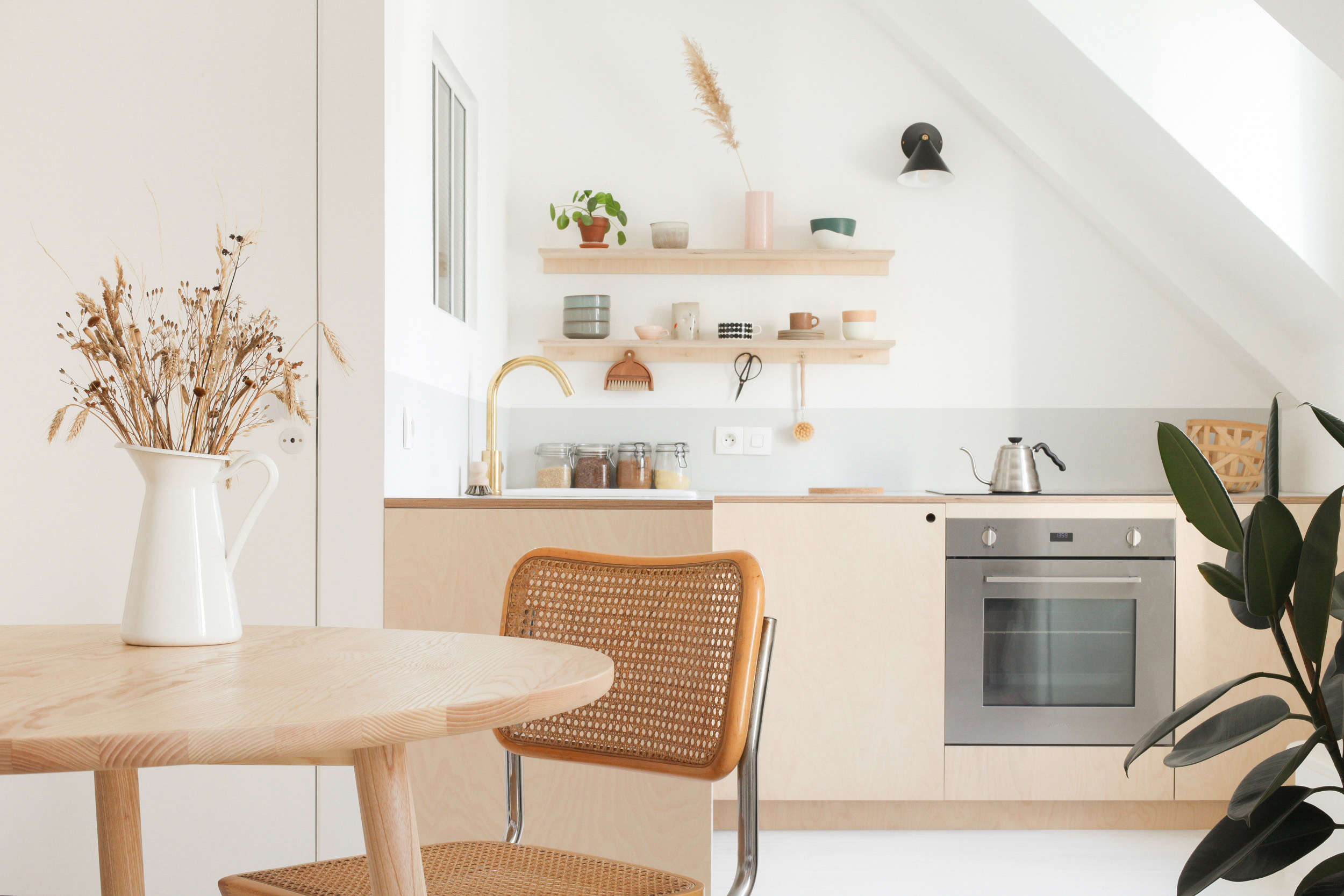
If your dream kitchen mood board looks like it was assembled somewhere between a Paris flea market, a design studio, and a really excellent espresso habit, good news: you do not need a six-figure renovation to get there. The charm of a Parisian kitchen is not about showing off. It is about restraint, texture, patina, proportion, and the kind of confidence that says, “Yes, this brass has aged beautifully, and no, I will not apologize for it.”
That is why the now-famous tiny Paris kitchen created by two DIY-minded design experts has so much magnetic appeal. It proves a point American homeowners, renters, and chronic Pinterest collectors need to hear: a stylish kitchen on a budget is absolutely possible when you stop chasing luxury showroom perfection and start focusing on the bones. In other words, save the money for the details that actually matter, and let the room do a little flirting on its own.
This Parisian kitchen look works because it balances elegance with humility. It feels edited but never cold, classic but never stuffy, polished but still human. You can imagine someone slicing bread on the counter, opening a window, and pretending they are late for a gallery opening even if they are really just making grilled cheese on a Tuesday. That, friends, is the power of good design.
What Makes a Parisian Kitchen Feel So Effortlessly Chic?
A true Parisian kitchen is not usually giant. In fact, part of its magic comes from the opposite. Small kitchens in Paris often have to work very hard in very little square footage, so every inch needs a purpose. That naturally leads to a design language built on efficiency, clean lines, layered materials, and a few carefully chosen decorative moves.
The style is often rooted in quiet contrasts. Think pale walls next to darker wood, simple cabinets next to expressive stone, modern silhouettes paired with vintage accents. Instead of shouting for attention, the room whispers, “I have excellent taste and a butter dish older than your mortgage.”
If you want to steal this look successfully, do not copy every object. Copy the logic. Parisian kitchens tend to prioritize the following:
1. A light, creamy backdrop
Start with warm whites, soft putty, pale greige, light mushroom, or muted stone. These shades bounce light, soften hard surfaces, and create the airy foundation that makes a small kitchen feel larger. Avoid stark, icy white if you want the room to feel soulful rather than sterile. Parisian style prefers cream in its coffee and on its walls.
2. Simple cabinetry with character
You do not need ornate cabinet doors or ultra-modern gloss fronts. The sweet spot is somewhere in the middle: simple, clean cabinet profiles that feel tailored but lived in. Painted cabinets are one of the smartest moves in a budget kitchen remodel because they change the visual weight of the entire room without requiring a full gut renovation.
3. Warm metal accents
Brass, aged brass, brushed gold, copper, and unlacquered finishes all help create that old-world-meets-modern mood. Cabinet knobs, drawer pulls, pot rails, faucets, and even small shelf brackets can add warmth fast. This is one of those details that punches hilariously above its price tag.
4. Stone or stone-look surfaces
Marble is the fantasy, but the feeling is what matters. If real marble is out of reach, you can still create the same energy with marble-look laminate, quartz remnants, or tile choices that echo the softness and variation of natural stone. The Parisian trick is not “expensive at all costs.” It is “beautiful enough to look accidental.”
5. A little bit of openness
Open shelving, a slim ledge, a plate rack, or a brass rail can keep the room from feeling visually heavy. The key is moderation. A kitchen should not look like a home goods store had a minor emotional breakdown. Display what you use and love: glasses, bowls, a stack of plates, maybe a ceramic vase if you are feeling dramatic.
6. Vintage texture
Parisian spaces tend to feel collected, not purchased all at once under fluorescent lighting on a holiday sale weekend. Add one or two vintage pieces: a stool with worn wood, a flea-market mirror, old cutting boards, linen café curtains, or a secondhand pendant. These pieces give the room a sense of history, which is often the ingredient missing in brand-new kitchens.
How to Recreate the $4K Parisian Kitchen Look Without Losing Your Mind
The secret to a successful DIY kitchen makeover is knowing where to spend, where to save, and where to fake it beautifully. Here is a practical framework for translating this French-inspired kitchen style into a real-world project.
Refresh the cabinets, do not replace them
If your cabinet boxes are solid, keep them. Sand, prime, and paint. Swap the hardware. Consider replacing only the doors if the fronts are beyond redemption. Cabinets dominate the visual field in a kitchen, so improving them changes everything. In most cases, replacing all cabinetry is the budget killer. Refinishing is the budget hero wearing less makeup.
Keep the layout intact
Moving plumbing, gas, or electrical is where renovation budgets begin doing acrobatics. A small kitchen design benefits most from visual improvements and smarter storage, not necessarily a completely new floor plan. If the sink, stove, and work triangle already function reasonably well, leave them where they are and spend your money on surfaces and finishing details.
Use backsplash strategically
A backsplash is one of the easiest ways to bring in French charm. Zellige-style tile, beaded board, classic subway tile, or vertically stacked tile all work. If the backsplash area is small, you can afford to choose something with a little more style and texture. This is one of the best “looks expensive, costs less than expected” moves in the entire kitchen playbook.
Layer the lighting
Lighting is where many budget kitchens quietly fall apart. One sad ceiling fixture can flatten the room faster than bad coffee ruins a morning. Add a pendant, a pair of sconces, under-cabinet lighting, or even a small lamp on the counter if outlets allow. Warm, layered light makes a kitchen feel intimate and intentional instead of vaguely like a dentist’s break room.
Mix open and closed storage
Too much open shelving can feel chaotic. Too many upper cabinets can feel heavy. The Parisian balance lies in mixing both. Keep hidden storage for the unglamorous stuff, then leave a little room for glassware, ceramics, and objects with shape. This gives the room breathing space without sacrificing function.
Style with restraint
One ironstone pitcher, a cutting board leaned against the wall, a loaf of bread, maybe a linen towel. Done. The charm of a French-inspired kitchen comes from a few meaningful details, not a decorative avalanche. If your countertop styling starts to resemble a stage set for a butter commercial, you have gone too far.
The Best Budget Splurges for This Look
If you have a little flexibility in your spending, there are a few places where a modest splurge can create outsized visual impact.
Hardware
Good hardware feels weighty in the hand and instantly upgrades builder-grade cabinets. Aged brass, antique bronze, or simple metal pulls can transform painted cabinetry from “I tried” to “I have standards.”
Faucet
A graceful faucet can act like jewelry for the sink wall. Go classic instead of trendy. You want something that still looks charming five years from now, not a faucet that feels like it was chosen during a design dare.
One beautiful light fixture
A single statement pendant or semi-flush fixture can establish the mood for the whole kitchen. Vintage-inspired shapes, opal glass, pleated shades, or metal finishes all work well here.
Countertop edge or remnant stone
If full slabs are out of budget, ask about remnants for a small counter area, shelf, or ledge. Even a limited dose of stone can give the kitchen a custom feel. Think of it as the kitchen equivalent of wearing one excellent coat instead of five mediocre sweaters.
Common Mistakes That Kill the Parisian Mood
Getting this look wrong is surprisingly easy. Most mistakes come from trying too hard.
Going too rustic
Parisian is not the same thing as overly distressed farmhouse. You want warmth, not cosplay. Avoid fake weathering, overly themed signage, and anything that looks like it says “Bistro” in a font that should be illegal.
Going too sleek
On the other hand, an ultra-minimal kitchen with no texture, no softness, and no visible life will miss the point. Parisian style needs at least a little age, a little material variation, and something that suggests a human being has cooked in the space before.
Ignoring scale
In a tiny kitchen, giant pendants, oversized stools, or bulky hardware can overwhelm the room. Smaller spaces need proportional choices. Good design is not about buying the prettiest object in isolation; it is about choosing the right-size object for the room you actually have.
Using too many competing finishes
Pick a clear palette and stay loyal. Two woods, one metal, one wall color family, one countertop story. If your kitchen contains brushed brass, polished chrome, matte black, oil-rubbed bronze, and something mysterious labeled “champagne nickel,” it may be time for an intervention.
A Sample Shopping Strategy for a Kitchen on a Budget
To recreate the mood of this $4K Parisian kitchen, think in layers rather than line items.
Foundation Layer
Paint the walls. Paint or refinish the cabinets. Update the backsplash. If needed, refresh the floor with affordable tile, vinyl, or a durable checkerboard-inspired pattern.
Function Layer
Add better storage. Install shelf rails, hooks, slim shelves, drawer organizers, and under-cabinet lighting. Tiny kitchens become beautiful faster when they stop fighting you every morning.
Character Layer
Bring in vintage cutting boards, café curtains, old-style glassware, pottery, a stool, or framed art. Not all charm needs to be built in. Some of it can simply be leaned, hung, or casually placed where it looks like it has always belonged.
Why This DIY Kitchen Style Resonates So Much Right Now
People are tired of kitchens that look expensive but feel generic. The appeal of this look is that it values taste over square footage and intelligence over excess. It says you can create beauty through editing, problem-solving, and a few deeply strategic upgrades. That idea is especially powerful in a time when renovation costs can escalate quickly and homeowners want more personality for less money.
The other reason it resonates is emotional. A Parisian kitchen, even a tiny one, promises a certain kind of life. Not a fantasy life exactly, but a more attentive one. Better coffee. Better light. Better bowls. A place where even leftovers seem to have more self-respect. And honestly, who among us does not want that?
Extra Notes From the Real-World Experience of Chasing This Look
Here is the part nobody tells you when you fall in love with a beautifully restrained, impossibly chic kitchen online: the magic is rarely in the “before and after” photos alone. It is in the thousand small decisions that happen in between. The ones where you stand in a hardware aisle holding two brass pulls that look identical until one suddenly seems smug. The ones where you paint a cabinet sample, hate it at noon, love it at sunset, and question your entire personality by dinner.
Trying to recreate a Parisian kitchen on a real budget teaches you that taste is less about spending and more about editing. At first, the instinct is to add more. Another shelf. Another hook. Another pretty little jar for sea salt. But the more you live with the project, the more you realize the room becomes elegant when you subtract. The extra stool. The cluttered countertop corner. The trendy fixture that looked cute on a website and vaguely confused in your actual kitchen.
There is also something weirdly satisfying about working within limits. When you cannot solve every problem with a contractor and an unlimited credit card, you start paying closer attention. You notice how much a wall color changes under morning light. You realize a humble beaded-board backsplash can be more charming than a flashy slab if it suits the room. You discover that a flea-market mirror, slightly foxed and a little dramatic, can do more for the atmosphere than a dozen expensive accessories still wrapped in optimism and styrofoam.
And then there is the emotional reward of DIY itself. Not the glamorous social-media version where everyone is smiling in clean overalls, but the real version. The version where you mismeasure once, sand twice, and mutter things unfit for a family design blog while trying to level a shelf. Somehow that effort becomes part of the room. A finished kitchen you worked on with your own hands feels different. It has memory in it. It has personality before you even add the dishes.
The smartest lesson from this whole Parisian-kitchen obsession may be that good spaces do not need to be huge or perfect. They need to feel coherent. Useful. A little romantic. A little honest. The best kitchens are not museum pieces; they are workhorses with style. They hold groceries, collect mail, host late-night conversations, and occasionally witness someone eating standing up over the sink because life is busy and plates are optional.
Once the room starts coming together, the change can feel bigger than the square footage suggests. A better light fixture makes the evening softer. New hardware makes old cabinets feel intentional. Open shelves encourage you to keep only what you use and love. Even making coffee becomes more pleasant when the cup, spoon, sugar bowl, and morning light all seem to be cooperating for once.
That is why this look has such staying power. It is not really about Paris. It is about creating a kitchen that feels collected instead of chaotic, calm instead of crowded, stylish instead of stagey. It is about borrowing the spirit of a tiny European kitchen and translating it into everyday American life, where budgets are real, square footage can be limited, and the dream is less “luxury renovation reveal” and more “I genuinely love being in this room now.”
And honestly, that may be the chicest outcome of all.
Conclusion
If you want to steal the look of a budget kitchen remodel that feels polished, personal, and deeply livable, the $4K Parisian kitchen is a masterclass. Keep the layout. Refresh the cabinets. Choose warm metals. Add stone or stone-look texture. Use lighting like you mean it. Then finish the room with restraint and a few vintage notes that give it soul.
In the end, the most convincing DIY kitchen makeover is not the one with the biggest budget. It is the one with the clearest point of view. Paris figured that out a long time ago. Your kitchen can, too.