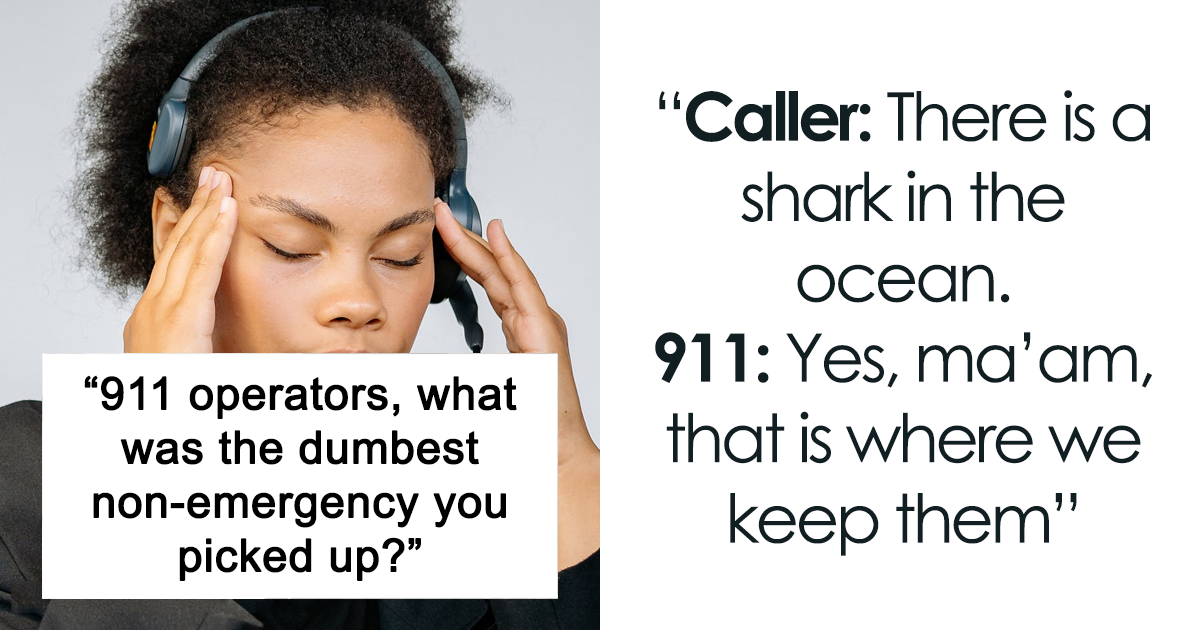
Every 911 operator knows the sound of a real emergency. A shaking voice. A breathless sentence. A background scream. A caller who is trying to stay calm while life has decided to throw furniture at the ceiling fan.
And then there are the other calls.
The “my fries are cold” calls. The “there is a suspicious squirrel judging me from the fence” calls. The “my neighbor parked slightly too close to my emotional support mailbox” calls. The calls that make dispatchers stare at the headset, take one slow professional breath, and silently ask the universe whether humanity is currently buffering.
This article is not here to shame people who are confused, scared, elderly, young, overwhelmed, or unsure. If someone is in danger, if a crime is happening, if there is a fire, if someone may die or be seriously hurt, call 911 immediately. That is exactly what the emergency number is for. But public safety dispatchers also receive a surprising number of non-emergency 911 calls that are not just unnecessary, but spectacularly unnecessary.
Below is a look at the kinds of dumb, bizarre, and painfully avoidable non-emergency calls 911 operators have dealt with, why they matter, and what everyone should do instead.
First, What Actually Counts as a 911 Emergency?
911 is for situations that need immediate help from police, firefighters, or emergency medical services. Think: a car crash with injuries, a fire, a burglary in progress, chest pain, trouble breathing, a violent threat, a person with a weapon, or someone who is unconscious. In other words, if waiting could make someone seriously hurt, dead, or less rescuable, it belongs on 911.
Non-emergency situations usually belong somewhere else: a city service line, a local police non-emergency number, animal control, a utility company, a landlord, a customer service desk, or, in some cases, a deep breath and a snack.
That distinction matters because 911 operators do not have infinite ears. When someone calls about a missing dipping sauce, that call still has to be answered, assessed, documented, and closed. Meanwhile, someone else may be trying to report a house fire, a heart attack, or a crash on the freeway.
The Fast-Food “Emergency” Hall of Fame
Few categories of non-emergency 911 calls are more legendary than fast-food complaints. Something about a drive-thru window can turn mild disappointment into a full constitutional crisis.
1. “They Forgot My Chicken Nuggets”
One of the most infamous reported examples involved a customer who called 911 because a fast-food restaurant ran out of chicken nuggets and would not provide the refund she wanted. This was not a medical emergency. This was not a hostage situation. This was a poultry-based customer service dispute wearing a tiny paper crown.
For dispatchers, these calls are frustrating because they begin with a question that should never need to be asked: “What is your emergency?” If the answer is “I paid for nuggets,” the situation has already left the emergency lane and merged directly onto Ridiculous Boulevard.
2. “My Food Is Taking Too Long”
Another reported case involved a caller upset that chicken nuggets were not being prepared quickly enough. Police were contacted because the caller wanted the food for free due to the delay. There are many solutions to a slow order: ask for a manager, request a refund, leave a review, eat somewhere else, or accept that sometimes the nugget pipeline has traffic. Calling 911 is not one of them.
3. “My Burger Is Wrong”
Dispatchers have also dealt with calls about incorrect burgers, missing burgers, cold burgers, and other sandwich-adjacent tragedies. To be fair, a bad burger can ruin a mood. But 911 is not the Department of Lettuce Alignment. Police officers cannot emergency-reconstruct your lunch.
The lesson is simple: if the only thing bleeding is ketchup, do not call 911.
Pizza Calls: Sometimes Serious, Sometimes Just Sauce Drama
There is an important myth about 911 and pizza that deserves careful handling. Viral posts often claim that if someone calls 911 and pretends to order pizza, dispatchers are trained to automatically recognize domestic violence. Real life is more complicated. Dispatchers are trained to listen, ask questions, and notice clues when a caller cannot speak freely. But calling 911 to order pizza is not a secret universal code.
That said, some pizza-related calls really are just about pizza.
In one reported case, a woman called 911 over a pizza order dispute after receiving the wrong type of pizza and wanting a refund. The dispatcher had to explain that 911 is for emergencies, not half-cheese, half-bacon negotiations. If you eat part of the evidence before demanding police intervention, the legal strategy is already looking thin-crust.
Food disputes are among the clearest examples of 911 misuse because they almost never require immediate public safety response. Unless the restaurant is on fire, someone is being assaulted, or there is a genuine threat, the correct number is not 911. It is the store number printed on the receipt.
Animal Calls That Belong Somewhere Else
Animal-related calls can be tricky. Some are absolutely emergencies: a loose aggressive dog attacking people, a venomous snake inside a daycare, livestock blocking a highway at night, or an injured animal creating a public danger. But many animal calls are more “neighborhood inconvenience” than “sirens required.”
Dispatchers and wildlife officers have heard variations of:
- “There is a raccoon on my porch.”
- “A bird is looking suspicious.”
- “A deer is standing in my yard and refusing to leave.”
- “A squirrel is acting weird.”
- “My neighbor’s dog barked at me in a tone I did not appreciate.”
Sometimes the caller is genuinely frightened. Sometimes the animal is simply existing outdoors, which is rude but technically legal. In most cases, animal control, a wildlife agency, or a local non-emergency number is the better option.
911 operators must quickly determine whether the situation is dangerous or merely inconvenient. “There is a bear breaking into my kitchen” is different from “a possum is near my recycling bin and I feel emotionally outmaneuvered.”
The Accidental 911 Call: Not Dumb, But Still Important
Not every unnecessary 911 call comes from bad judgment. Many happen by accident. Phones in pockets dial 911. Kids press buttons. Smartwatches detect a “fall” that was actually someone dropping a backpack. Old deactivated phones can still connect to 911 in many circumstances. Technology is useful, but it occasionally behaves like a toddler with access to a control panel.
The dumb part is not always the accidental call. The dumb part is hanging up immediately and refusing to answer the callback.
If you dial 911 by mistake, stay on the line and explain that there is no emergency. If you hang up, dispatchers often have to call back. If they cannot confirm you are safe, officers may be sent to check on you. That means a simple pocket dial can become a real use of emergency resources.
Prank Calls: The “Funny” Call That Isn’t Funny
Prank calls to 911 are not harmless. They waste time, create records, tie up dispatchers, and can send responders racing toward a fake emergency. In the worst cases, false emergency calls can put innocent people in danger.
One category, known as swatting, involves making a fake emergency report to trigger a heavy police response at someone else’s address. That is not a prank. That is a dangerous crime. Even less elaborate false reports can create chaos when dispatchers, officers, firefighters, or medics must treat the information as potentially real until proven otherwise.
The operator cannot simply assume, “This sounds fake.” Emergency communication is built around caution. If someone reports violence, a weapon, a fire, a baby in danger, or a medical crisis, dispatchers must take it seriously. A caller who thinks they are being hilarious may be forcing trained professionals to gamble with real-world consequences.
“Can You Settle This Argument?” No, 911 Is Not a Referee
Some non-emergency calls happen because people want an authority figure to settle everyday disputes. The neighbor’s tree dropped leaves. A roommate ate leftovers. A spouse will not buy vodka. A friend refuses to return a sweater. Someone is mad about a parking space. Someone else believes the garbage truck came too early, too late, or with “a suspicious attitude.”
Dispatchers are calm by training, not because the call is reasonable. They may redirect the caller to a non-emergency line, explain civil options, or advise them to contact the correct agency. But every minute spent explaining that 911 cannot solve a sandwich argument is a minute that could have gone to someone having the worst day of their life.
Why 911 Operators Stay Professional Anyway
It is easy to laugh at dumb 911 calls, but the operator on the other end cannot simply roast the caller and hang up. Dispatchers have to stay composed. They have to ask questions, verify details, and determine whether a silly-sounding call is hiding a real emergency.
For example, a strange “pizza order” call might be nonsense, but it might also be someone trying to ask for help without alerting an abuser. A confused caller complaining about noises may be elderly, medically impaired, or afraid. A person calling repeatedly might need social services, mental health support, or welfare assistance rather than punishment.
That is what makes the job so hard. Operators must separate the ridiculous from the dangerous in seconds, using only a voice, background noise, location data, and their training. They are not just phone answerers. They are the first first responders.
The Hidden Cost of Non-Emergency 911 Calls
The United States receives hundreds of millions of 911 calls each year. Even a small percentage of unnecessary calls can create huge strain. Call centers face staffing challenges, high stress, burnout, and constant pressure to answer quickly. A single unnecessary call may seem harmless to the caller, but multiplied across a city, county, or state, it becomes a serious public safety issue.
Non-emergency calls can cause several problems:
- They delay real emergencies. A dispatcher handling a complaint about cold fries is not immediately available for a cardiac arrest call.
- They waste police, fire, or EMS resources. Responders may be sent to situations that never required emergency help.
- They increase stress on call-takers. Dispatchers already manage trauma, fear, confusion, and crisis. Pointless calls add unnecessary friction.
- They can create legal trouble for the caller. Misusing 911 may lead to citations, fines, or criminal charges depending on the jurisdiction.
In short, 911 is a shared public resource. Treating it like a complaint box makes the whole system weaker.
When You Should Call the Non-Emergency Number Instead
Many cities and counties have a police non-emergency number. Some communities also use 311 for city services. These are usually better choices for situations that matter but are not urgent.
Use a non-emergency number for:
- A theft that already happened and the suspect is gone.
- Minor vandalism with no immediate danger.
- A noise complaint.
- A blocked driveway, depending on local rules.
- A barking dog that is annoying but not attacking anyone.
- A suspicious situation that does not involve immediate danger.
- Questions about police reports, parking issues, or local ordinances.
Call 911 immediately for:
- Someone having trouble breathing, chest pain, or signs of a stroke.
- A fire, explosion, or smell of gas.
- A violent crime in progress.
- A serious crash or road hazard that could cause injuries.
- A person with a weapon threatening others.
- A child, elder, or vulnerable person in immediate danger.
- Any situation where seconds could matter.
If you are truly unsure whether something is an emergency, it is better to call 911 and explain clearly. Dispatchers would rather evaluate a possible emergency than have someone stay silent during a real crisis. The problem is not uncertainty. The problem is calling 911 when you already know the issue is a refund, a complaint, a prank, or a fast-food tragedy.
Specific Examples of Dumb Non-Emergency 911 Calls
Based on public reports and dispatcher experiences, here are the kinds of calls that regularly earn a place in the unofficial 911 “please don’t do this” museum.
The Missing Condiment Crisis
A caller discovers that the restaurant forgot the ranch, barbecue sauce, ketchup, or other critical dip. Emotions rise. The receipt trembles. The caller decides democracy has failed and dials 911. The dispatcher, who may have taken a shooting call minutes earlier, now has to explain that sauce distribution is not an emergency function.
The “My Neighbor Is Annoying” Complaint
Neighbors can be loud, strange, inconsiderate, and apparently committed to mowing lawns at the worst possible hour. But annoyance is not always an emergency. If there is violence, threats, a fire, or immediate danger, call 911. If the complaint is about routine noise or a civil disagreement, use the local non-emergency process.
The Animal Is Being an Animal Call
A raccoon tipping over a trash can may feel personal, but it is probably not a police emergency. A goose blocking a sidewalk is intimidating, yes, because geese behave like feathered parking enforcement officers. Still, most wildlife problems belong with animal control or a wildlife agency unless someone is in immediate danger.
The “Can You Make Them Give Me a Refund?” Call
Refund disputes are not emergencies. Police generally cannot force a business to remake your pizza, hand over a burger, or honor your coupon. That battle belongs to customer service, corporate email, your credit card company, or the ancient art of never eating there again.
The Fake Emergency
This is the least funny category. False reports can trigger real responses, real fear, and real danger. Calling in fake violence, fake hostages, fake fires, or fake injuries can lead to criminal charges and serious harm. Nothing about it is cute, clever, or worth a laugh.
Why These Calls Make Great Stories but Bad Behavior
There is a reason stories about dumb 911 calls spread so easily. They are absurd. They reveal how quickly everyday frustration can become theatrical. They also show the strange patience of public safety workers, who must answer each call like it may be the one that matters most.
But the humor has a hard edge. Every silly call competes with real emergencies. Behind every headline about a chicken nugget dispute is a dispatcher who had to treat the call seriously enough to make sure nobody was actually in danger. That is emotional labor. That is time. That is attention pulled from somewhere else.
The best way to enjoy these stories is to learn from them. Laugh at the absurdity, then save your local non-emergency number in your phone. Learn when to call 911. Teach kids that 911 is not a toy. Make sure older relatives understand what number to use for different problems. And if your food order is wrong, remember: the manager may be tired, but the dispatcher is busier.
Extra Dispatch-Room Experiences: What These Calls Feel Like From the Other Side
Imagine sitting at a console in a 911 center during a busy evening. Multiple screens glow in front of you. A radio channel is active in one ear. A caller is crying in the other. Police units are clearing one scene and being sent to another. Somewhere, a medic crew is trying to find the right apartment building. Somewhere else, firefighters are asking for better location details. The room is controlled chaos, and every person in it is trained to make sense of panic.
Now imagine that in the middle of that rhythm, a call drops in from someone furious that a restaurant gave them the wrong sandwich.
The operator cannot laugh. They cannot sigh dramatically into the microphone, even if their soul briefly leaves the building. They still have to ask where the caller is, what happened, whether anyone is injured, whether there are threats, whether weapons are involved, and whether the situation is escalating. A dumb call still has to be screened like a real call because sometimes people describe danger badly. Sometimes a caller begins with “my neighbor is annoying” and later reveals that the neighbor is holding a baseball bat and threatening people. Sometimes “my friend is acting weird” becomes a medical crisis. Dispatchers cannot afford to assume.
That is why non-emergency calls are so exhausting. They are not merely silly interruptions. They force the call-taker to spend professional attention on a situation that should never have reached the emergency line. The operator has to remain calm while the caller argues that the matter is, in fact, urgent because “I paid good money for that.” The dispatcher has to redirect without escalating the caller’s frustration. They may have to explain the difference between a crime, a civil issue, and a customer complaint. They may need to provide a non-emergency number while other calls are waiting.
Many dispatchers develop a particular kind of humor because of this. It is not cruelty. It is survival. When your work includes the worst moments of people’s lives, the occasional absurd call can become a pressure valve. A caller upset about nuggets is ridiculous, but it is also a reminder that not every ringing line ends in tragedy. The challenge is that the operator does not know that at the beginning. They find out only after doing the work.
There is also a strange emotional whiplash. A dispatcher may handle a CPR call, then a parking complaint, then a domestic violence call, then someone asking whether police can remove a frog from a garage. The public hears one funny story. The operator experiences a whole shift of rapid mental gear changes. That is why respecting 911 matters. It protects the people in crisis, but it also protects the people whose job is to find them help.
The most useful takeaway is not “people are dumb,” although, yes, sometimes humanity enters the chat wearing clown shoes. The real takeaway is that emergency systems work best when the public understands them. Call 911 for immediate danger. Use non-emergency numbers for non-urgent police matters. Use 311 or city services for local complaints where available. Call the business for food problems. Call animal control for routine animal issues. And if you accidentally dial 911, stay on the line and say so.
911 operators can handle almost anything: fear, confusion, screaming, silence, bad connections, language barriers, and people in shock. What they should not have to handle is a preventable flood of calls about coupons, condiments, and customer service grudges. The next time life hands you the wrong burger, do the brave thing. Take a breath. Check the receipt. Ask for the manager. Leave the emergency line open for someone who truly needs it.
Conclusion
Dumb non-emergency 911 calls are funny because they are so wildly human. They reveal impatience, confusion, entitlement, fear, and sometimes a stunning belief that police can fix a pizza. But they also remind us that 911 is not just a phone number. It is a lifeline.
Every unnecessary call adds weight to a system built for moments when seconds matter. So yes, laugh at the nugget emergencies, the wrong-pizza outrage, and the raccoon reports. Then do the responsible thing: know your local non-emergency number, use 911 only for immediate danger, and let dispatchers focus on the calls where lives may truly depend on their next question.