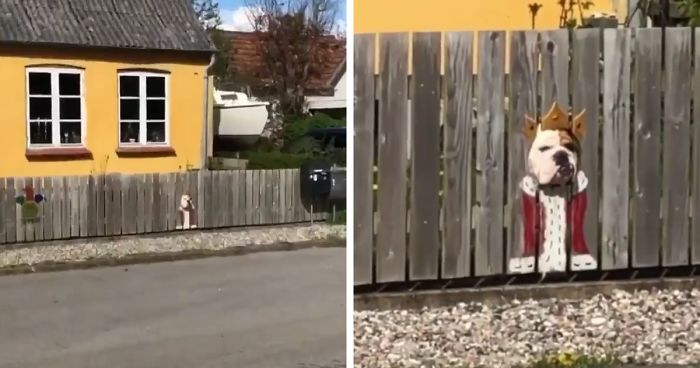
Some dogs fetch. Some dogs nap with the commitment of a retired mattress tester. And then there is Bogart, a charming English Bulldog from Gråsten, Denmark, who became internet royalty by doing something gloriously simple: sticking his head through a hole in a fence and watching the street like he owns the neighborhood, the sidewalk, and possibly the municipal tax office.
The story is wonderfully wholesome. Bogart loved peeking through the fence near his home, keeping an eye on passersby along a nearby walking path. His owners noticed his daily hobby and decided to turn it into something more delightful. Instead of treating the fence hole as a plain little lookout spot, they painted costumes around it. Suddenly, when Bogart poked his head through, he looked like a tiny king, a jester, or the star of a medieval comedy show where the main plot is “Where did that squirrel go?”
The result was internet magic: a curious bulldog, two painted costumes, and a fence that became part dog window, part public art, and part neighborhood happiness machine. It was funny, sweet, and surprisingly clever. Most viral pet moments last about as long as a dog’s promise not to beg for cheese. This one stuck because it captured something people love: pets being themselves, humans being creative, and ordinary life becoming a little brighter.
The Real Story Behind Bogart, the Bulldog With a Fence-Side Throne
Bogart is an English Bulldog whose owners lived near a walking path. Like many dogs, he was fascinated by what happened beyond the yard. People walked by. Bikes rolled past. Dogs trotted along. Leaves moved suspiciously. In Bogart’s world, every passing event deserved inspection by a serious professional with wrinkles, paws, and a face built for dramatic staring.
His owner, Ranveig Bjørklid Levinsen, explained in interviews that the dogs were curious about the people passing by every day. To keep them from jumping or trying to escape over the fence, the family made holes so the dogs could look out safely. This turned a potential problem into a controlled viewing station. In other words, Bogart got his own version of cable television, except the programming was “Sidewalk Channel 24/7.”
The family actually had two dogs: Bogart and Winston, who is Bogart’s mother despite the traditionally male name. Naturally, one hole was not enough. With two dogs and two curious faces, the fence needed two viewing spots. Then came the creative twist: costumes painted around the holes. One design included a crown, making Bogart look like a royal watchdog. Another had a jester-style hat, perfect for a dog whose expression already suggested he had just heard the world’s funniest squeaky toy joke.
Why the Painted Fence Went Viral
Viral animal stories usually work because they are instantly understandable. Nobody needs a complicated backstory to enjoy a bulldog face popping through a painted costume. The joke lands in one second. A wrinkly dog face appears in a crown. That is it. That is the comedy. No subtitles required.
The timing also mattered. The story spread during a period when many people were looking for lighthearted moments online. A bulldog peeking through a fence was not just cute; it was a tiny emotional reset button. For a few seconds, viewers could forget the news, laugh at Bogart’s royal expression, and enjoy the fact that somewhere in the world, a family had turned their fence into a dog-sized carnival cutout.
Another reason the story connected with readers is that it felt personal, not manufactured. Bogart was not doing a complicated trick or starring in a polished commercial. He was simply being a dog. His owners noticed a habit and made it funnier. That kind of creativity feels reachable. You do not need a film crew, a studio, or a million-dollar marketing budget. Sometimes all you need is a curious dog, a fence, paint, and the willingness to ask, “Would this be funnier with a crown?” The answer, for the record, is almost always yes.
What Bogart’s Fence Habit Says About Dogs
Dogs are natural observers. They track movement, sound, scent, and routine. A passing stroller may seem boring to a human, but to a dog it can be a full documentary: wheels, shoes, snacks, unfamiliar smells, and perhaps a toddler holding a cracker at dangerously droppable height.
For a dog like Bogart, watching the street can be mentally stimulating. A safe view of the outside world gives dogs something to study. They can observe without leaving the yard, sniff the air, and feel included in neighborhood activity. This kind of environmental enrichment can help keep dogs engaged, especially when combined with walks, play, training, and time with their people.
However, not every dog handles fence-watching the same way. Some dogs calmly observe. Others become overstimulated, bark at every passerby, or race along the fence line as if personally responsible for national border security. The difference depends on temperament, training, routine, and the dog’s emotional response to what they see.
Why Bulldogs Make This Story Even Funnier
The English Bulldog has a famously expressive face. The breed is known for its heavy wrinkles, sturdy body, broad head, and dignified look that somehow suggests both courage and confusion. Bulldogs often appear serious even when doing something deeply silly, which is why Bogart’s royal fence portrait worked so perfectly.
Bulldogs are often described as loyal, friendly, and calm companions. They are not usually marathon athletes. In fact, many bulldogs prefer moderate exercise and plenty of lounging. Because of their flat faces, they can be sensitive to heat and breathing strain, so safe, low-impact activity is important. Watching the street through a fence hole is basically the bulldog version of attending a parade from a recliner.
Bogart’s personality gave the whole scene its charm. He was not trying to perform. He was not chasing applause. He simply liked looking out. The costume painting made visible what his owners already knew: this dog had main-character energy.
Creative Pet Enrichment: When a Fence Becomes a Feature
One of the best parts of Bogart’s story is that the owners did not fight his curiosity. They shaped it. A dog wanted to see the street, so they created a safer viewing spot. Then they added humor. This is a smart lesson for pet owners: when a dog has a harmless habit, sometimes the best solution is not to stop it but to guide it.
For example, a dog that loves looking out a window might enjoy a stable indoor perch. A dog that loves sniffing during walks may benefit from slower “sniff walks” instead of being rushed along. A dog that gets bored in the yard may enjoy puzzle toys, scent games, or short training sessions. Enrichment does not need to be expensive. Dogs are impressed by cardboard boxes, hidden treats, and the same tennis ball they have owned since the dawn of civilization.
The painted fence also shows how pet-friendly design can blend function with fun. The holes helped prevent jumping while giving the dogs a controlled view. The costumes entertained neighbors and turned the yard into a cheerful landmark. That is a rare win-win-win: the dogs were happy, the owners were amused, and strangers got a free laugh during their walk.
Safety First: What Pet Owners Should Consider Before Making a Dog Fence Window
Bogart’s fence idea is adorable, but anyone inspired by it should think about safety before grabbing a saw and paintbrush. A dog fence window should be carefully planned. The opening must be smooth, secure, and sized so the dog cannot get stuck. Edges should be sanded or covered to prevent scratches. The fence must remain strong enough to contain the dog safely.
Visibility can also change behavior. Some dogs become excited when they see people, dogs, bikes, or delivery workers. If a dog begins barking intensely, lunging, growling, or showing stress, the viewing hole may not be the right enrichment tool. In those cases, blocking the view, adding distance, using positive training, or working with a qualified trainer may be better.
There is also the human side. People walking by should not be encouraged to touch a dog through a fence, especially children. Even friendly dogs need boundaries. A fence can create a false sense of safety, but dogs may feel protective or startled when strangers reach toward them. A cute painted costume should invite smiles, not fingers through the fence.
Use Pet-Safe Materials
If painting a fence around a dog window, choose pet-safe exterior paint once it is fully dry and cured. Avoid paint chips, sharp screws, splinters, or decorations a dog might chew. Keep the area clean and inspect it regularly. Dogs are talented at finding the one unsafe corner you missed and treating it like a personal project.
Match the Idea to the Dog
A calm, curious dog may love a lookout spot. A reactive dog may find it stressful. A small dog may need a low opening, while a large dog may need a stronger structure. A bulldog may enjoy watching quietly for a few minutes, while a high-energy dog may turn the same setup into a barking workout routine. The best design is the one that fits the actual dog, not the imaginary dog from your Pinterest board.
Why Humans Love Dressing Dogs UpEven With Paint on a Fence
There is something deeply funny about giving animals human roles. A bulldog in a crown becomes a king. A dog framed by a jester hat becomes the court comedian. The humor comes from contrast: dogs do not care about royalty, theater, or social media engagement. They care about snacks, smells, comfort, and whether someone said the word “walk.”
Painted costumes are especially clever because the dog does not have to wear anything. Many dogs dislike actual outfits, hats, or accessories. A fence painting creates the illusion of a costume without putting fabric on the dog. Bogart gets to remain comfortable while the humans get their comedy. That is the kind of compromise every pet owner should admire.
The idea also works because it turns the viewer into part of the joke. A passerby sees a fence, then a dog face, then suddenly realizes the dog is “wearing” a painted crown. That little moment of discovery makes the scene memorable. It is not just a picture; it is a neighborhood surprise.
The Internet’s Love Affair With Funny Dog Moments
Dog content spreads quickly because it is emotional, visual, and universal. People may disagree about politics, pineapple on pizza, or whether socks with sandals should be legal, but most can agree that a bulldog in a painted fence costume is excellent public service.
Funny dog stories also remind people of their own pets. Maybe your dog does not stick his head through a painted fence, but he may have a favorite window, a dramatic sleeping position, or a habit of staring at the refrigerator as if negotiating with it. Bogart’s fame feels familiar because every pet owner has seen an animal turn an ordinary object into a daily ritual.
That is why this story has lasted beyond a quick viral moment. It is not only about one bulldog. It is about the way pets bring personality into homes and neighborhoods. They create routines. They attract conversations. They make strangers smile. They transform boring fences into landmarks and ordinary sidewalks into stages.
How to Create a Bogart-Inspired Fence Feature at Home
For pet owners who love the idea, the first step is observation. Does your dog already enjoy watching the street? Does your dog stay calm while looking out? Is your fence sturdy and private enough to modify? If the answers are yes, a simple viewing window may be worth considering.
Start small. A clear acrylic pet window or professionally installed opening may be safer than a rough DIY hole. Make sure the dog cannot climb through, squeeze out, or injure his head or neck. Place the opening at a natural height for the dog, and keep it away from gates or busy corners where people might crowd too close.
Once the safety part is handled, the fun begins. You could paint a crown, a superhero cape, a sailor uniform, a flower frame, a space helmet, or a tiny news anchor suit. Choose weather-resistant materials and designs that make sense from the street side. A simple, bold painting will usually work better than tiny details. Remember, the star of the show is the dog’s face. The art is just the backup dancer.
Lessons From Bogart: Small Ideas Can Bring Big Joy
Bogart’s story is a reminder that joy does not always arrive wearing fancy shoes. Sometimes it arrives with paws, wrinkles, and a face poking through a fence. His owners did not create something complicated. They simply paid attention to what their dog already loved and added imagination.
That is the heart of great pet ownership. It is not only feeding, walking, and grooming. It is noticing. It is seeing that your dog has a favorite spot, a favorite routine, or a favorite way to participate in the world. It is asking how you can make that experience safer, richer, and maybe a little funnier.
The painted fence costumes also show how pets connect communities. People walking by could smile, laugh, take photos, and remember the house with the bulldog king. In a time when many neighbors barely know each other, a dog with a fence window can become an unexpected ambassador. Bogart did not need a campaign slogan. He had a crown. That was enough.
Extra Experiences: What Bogart’s Story Teaches Pet Owners and Neighborhoods
Anyone who has lived with a dog knows that pets create tiny traditions. Maybe your dog waits by the same window every morning. Maybe she sits by the front door five minutes before your usual walk. Maybe he has a favorite patch of sunlight and considers it legally reserved. These routines may look small, but they matter. They help dogs feel secure, engaged, and connected to their environment.
Bogart’s fence routine is a perfect example. To a person, a hole in a fence is just a hole. To Bogart, it was a front-row seat to the grand theater of daily life. The actors included walkers, cyclists, neighbors, other dogs, and possibly one suspicious bird who knows what he did. His owners understood that the behavior was not random. It was curiosity. It was entertainment. It was his way of joining the outside world without leaving home.
Many pet owners can learn from that mindset. Instead of immediately correcting every behavior, look for the reason behind it. A dog staring out the window may need stimulation. A dog carrying shoes may want attention or comfort. A dog digging in one yard corner may be bored, hot, or following an interesting scent. Understanding the motivation helps owners respond with kindness and creativity rather than frustration.
For neighborhoods, Bogart’s painted fence shows how small gestures can create shared happiness. Public-facing home details often shape how a street feels. A cheerful garden, a little free library, seasonal decorations, or a funny dog window can make people slow down and smile. These details create a sense of place. They make a walk feel less like transportation and more like a friendly experience.
There is also something refreshing about humor that asks for nothing. Bogart’s fence did not sell anything. It did not demand attention with noise or drama. It simply offered a visual joke to anyone passing by. In a world full of screens and notifications, that kind of simple, real-life comedy feels surprisingly valuable.
Pet owners who want to create similar experiences should balance fun with respect. The dog should enjoy the setup, not merely tolerate it. The design should be safe. Neighbors should be able to enjoy the sight without feeling barked at every time they pass. The best pet-centered ideas are the ones where the dog’s comfort comes first and the human laughter comes second.
Another useful lesson is that enrichment does not have to be complicated. Many people assume they need expensive toys or elaborate systems to keep a dog happy. Those can help, but dogs often appreciate simple experiences: sniffing new scents, watching the world, learning a trick, searching for treats, or spending relaxed time with their favorite humans. Bogart’s fence window was enrichment because it matched his personality.
Of course, not every dog is Bogart. Some dogs would find a street-facing hole too exciting. Others might ignore it completely, because their true passion is sleeping under the table and pretending not to hear commands. That is fine. The goal is not to copy the exact fence idea; it is to copy the attentiveness behind it. Watch your dog. Notice what brings calm interest. Build from there.
In the end, the famous bulldog fence costume story remains popular because it celebrates the best parts of life with pets: humor, creativity, companionship, and the everyday weirdness that makes animals so lovable. Bogart looked through a fence, and his family saw an opportunity to make the world smile. That is not just cute. That is excellent dog-parenting with a paintbrush.
Conclusion
The story of Bogart, the bulldog who loves watching the street through a hole in the fence, is more than a funny viral moment. It is a sweet example of how pets inspire creativity and how small household ideas can brighten an entire neighborhood. His owners turned a simple dog habit into a charming painted scene, giving Bogart a royal costume, a jester look, and a permanent place in the internet’s collection of wholesome animal legends.
For dog lovers, the takeaway is simple: pay attention to what your pet enjoys, make it safe, and do not be afraid to add a little imagination. Whether your dog needs a lookout spot, a puzzle toy, a calmer routine, or just a sunny place to supervise the universe, the best ideas often begin with observation. Bogart may not know he went viral, but he definitely knows the street is worth watching. And honestly, with a crown painted around your face, wouldn’t you watch it too?