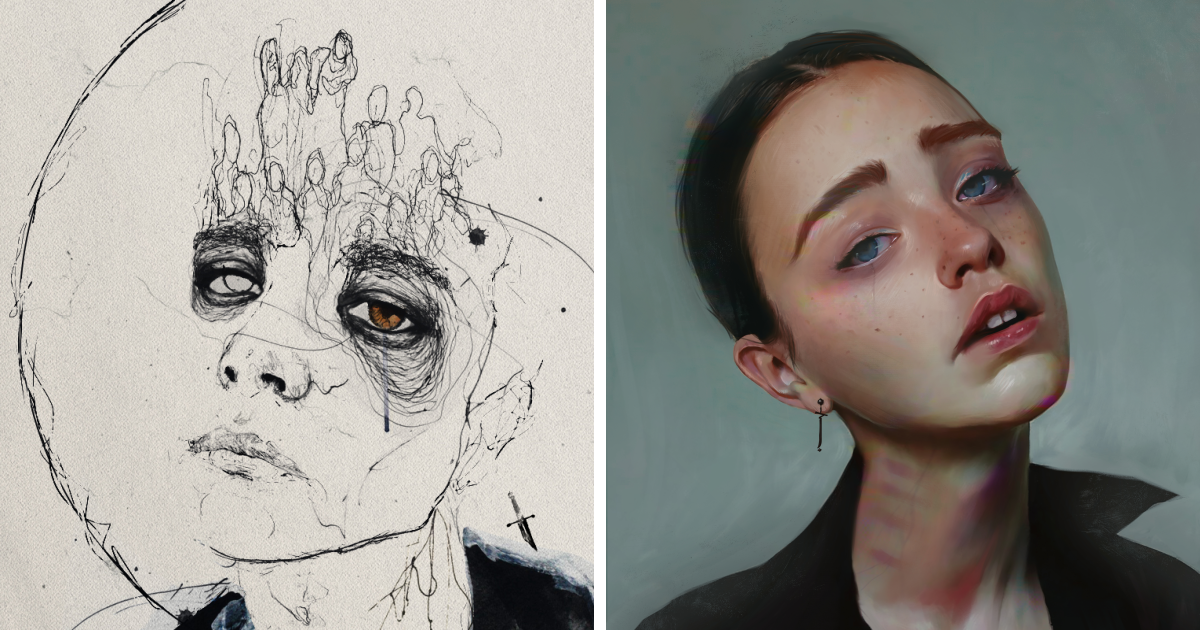
Depression does not always arrive like thunder. Sometimes it tiptoes in wearing fuzzy socks, quietly stealing your energy, your appetite, your sleep, and your ability to answer a simple text message without needing a three-hour emotional warm-up. For many people, depression feels less like sadness and more like being trapped behind glass: the world keeps moving, but you cannot quite reach it.
For me, art became the first tiny crack in that glass.
I did not pick up a pencil because I wanted to become a professional artist. I picked it up because words had started failing me. “I’m fine” was easier than explaining the heavy fog in my chest. “Just tired” sounded more polite than admitting I felt disconnected from myself. But when I drew, painted, scribbled, or glued random paper scraps into a journal like a raccoon with emotional depth, something shifted. Art gave my feelings somewhere to go.
This is the heart of why creative expression can be so powerful for mental health. Art is not a magic cure for depression, and it should never replace professional care when care is needed. But it can become a supportive tool, a daily ritual, a bridge back to yourself, and sometimes the gentlest way to say what your mouth cannot.
Understanding Depression: More Than “Feeling Sad”
Depression is a serious mental health condition that can affect mood, thinking, behavior, sleep, appetite, concentration, energy, and daily functioning. It is not laziness. It is not a personality flaw. It is not something you can simply “snap out of,” which is fortunate because snapping sounds painful and wildly unrealistic.
People experiencing depression may feel persistent sadness, emptiness, hopelessness, irritability, guilt, or a loss of interest in activities they once enjoyed. Some may sleep too much; others barely sleep at all. Some lose their appetite; others eat for comfort. Depression can also show up physically through fatigue, headaches, body aches, or a heavy, slowed-down feeling.
Effective treatments exist, including psychotherapy, medication, lifestyle support, social connection, and structured care from qualified professionals. Art fits best as a complementary practice: something that can support healing, self-awareness, emotional expression, and coping while working alongside appropriate mental health treatment.
How Art Helped Me Name What I Could Not Say
At my lowest point, talking about my emotions felt like trying to translate smoke. I knew something was wrong, but I could not package it neatly into sentences. Art gave me another language.
One evening, I opened a sketchbook and drew a tiny house floating in the middle of an ocean. It was not good in the technical sense. The roof looked confused. The waves looked like angry noodles. But when I looked at it, I thought, “That’s me. I feel alone, surrounded, and not very waterproof.”
That small drawing helped me understand myself. It did not solve everything, but it gave shape to something vague and frightening. Once the feeling had a shape, it became less mysterious. Less powerful. Less like a monster under the bed and more like a very rude houseguest that needed boundaries.
Art Turns Emotion Into Something Visible
Depression often hides inside silence. Art can bring hidden emotions into the open without forcing them into perfect words. A color, a line, a collage, a messy page of symbolsthese can reveal patterns we may not notice otherwise.
For example, dark colors do not automatically mean sadness, and bright colors do not automatically mean joy. The meaning depends on the person creating the art. A black page might represent calm. A yellow spiral might represent anxiety. A torn-paper collage might represent feeling scattered. Art invites curiosity instead of judgment.
That curiosity matters. Depression loves harsh self-talk. Art encourages a different question: “What is this trying to tell me?”
Why Creative Expression Supports Mental Health
Art can support mental health in several practical ways. It can lower stress, improve emotional awareness, encourage mindfulness, build confidence, and create a sense of control. When depression makes life feel chaotic, even choosing a paint color can feel like reclaiming one small piece of agency.
1. Art Creates a Safe Emotional Outlet
Feelings do not disappear because we ignore them. They usually just start making noise in other ways, like snapping at people, doom-scrolling until 2 a.m., or developing a strangely intense relationship with the refrigerator light.
Art offers a healthier outlet. Drawing, painting, sculpting, journaling, photography, music, or collage can help release emotions without needing to explain them immediately. You can make angry lines, gentle shapes, chaotic pages, or quiet images. The page can hold whatever you place on it.
2. Art Encourages Mindfulness
When you are blending watercolor, shading a sketch, kneading clay, or arranging paper pieces, your attention naturally shifts to the present moment. Your brain gets something concrete to focus on: texture, color, movement, rhythm, pattern.
This does not mean your worries vanish forever. It means you get a break from being chased around your own mind. Even ten minutes of creative focus can interrupt rumination, the repetitive loop of negative thoughts that often fuels depression.
3. Art Builds Small Wins
Depression can make ordinary tasks feel enormous. Making art creates manageable goals: fill one page, finish one sketch, mix one color, take one photo, write one paragraph. These small wins matter because they remind the brain, “I can still do something.”
You do not need a masterpiece. You need a moment of movement. Healing often begins with tiny actions repeated gently, not dramatic transformations set to movie-trailer music.
4. Art Helps Rebuild Identity
Depression can shrink your sense of self until you feel like a list of symptoms instead of a person. Art helps widen the frame. You are not only tired, sad, numb, anxious, or overwhelmed. You are also someone who notices color, creates patterns, remembers images, responds to music, collects ideas, and makes meaning.
That matters. Creativity can reconnect you with curiosity, playfulness, memory, humor, and hopethe parts of yourself depression may have pushed into the basement.
Art Therapy vs. Making Art at Home
It is helpful to understand the difference between art therapy and personal creative practice. Art therapy is a mental health approach guided by a trained art therapist. It uses creative processes to support emotional healing, self-understanding, coping skills, and communication. A professional art therapist can help people explore themes in their artwork safely and connect creative expression with therapeutic goals.
Making art at home is different, but it can still be valuable. You do not need a diagnosis, fancy supplies, or museum-level talent. A notebook and a pen can be enough. So can sidewalk chalk, digital drawing apps, old magazines, recycled cardboard, or that one pencil hiding behind your couch since 2019.
If depression is severe, persistent, or interfering with school, work, relationships, or basic daily care, professional support is important. Art can be a companion on the path, but it should not be the only map.
The First Art Practices That Helped Me
When I began using art as part of my recovery, I kept things simple. Complicated projects felt intimidating. My brain was already carrying enough tabs open, and none of them were labeled clearly.
Color Journaling
Each day, I picked one color that matched my mood and filled a small square with it. Sometimes I added a word. Sometimes I added nothing. Over time, the pages became a visual mood journal. I could see patterns: darker colors after poor sleep, warmer colors after seeing friends, softer colors after spending time outside.
This practice helped me notice what affected my mood without turning self-reflection into homework. It was data, but make it artsy.
Drawing the Weather Inside
Instead of asking, “How do I feel?” I asked, “What is the weather inside me today?” Some days were fog. Some were thunderstorms. Some were dry deserts. Occasionally, there was sunshine wearing sunglasses and acting suspiciously cheerful.
This metaphor made emotions easier to approach. Weather changes. Storms pass. Fog lifts. Even when the inner forecast was gloomy, the drawing reminded me that no emotional state is permanent.
Collage for Overwhelming Thoughts
When my thoughts felt too tangled, I made collages. I cut out images, textures, words, and colors from magazines or printed scraps. Collage was forgiving because nothing had to be drawn perfectly. I could arrange, tear, layer, and move pieces until something clicked.
Collage taught me that meaning can be rebuilt from fragments. That was a lesson I needed.
How Art Helped Me Create a Routine
Depression often disrupts routine. Days blur together. Motivation disappears. Even basic structure can feel out of reach. Art became a small anchor in my day.
I started with ten minutes in the evening. No pressure. No posting online. No judging whether the result was “good.” The rule was simple: show up to the page.
That routine helped in three ways. First, it gave me something predictable. Second, it gave me a place to unload emotions before sleep. Third, it gave me visible proof that I was still participating in my own life.
Some days I made art for two minutes and stopped. That still counted. Recovery is not a productivity contest. Nobody hands out trophies for suffering efficiently.
The Role of Beauty When Life Feels Heavy
One surprising thing about making art during depression is that beauty can feel almost rebellious. Depression says everything is dull, pointless, and gray. Then you mix blue with green and suddenly there is turquoise, being dramatic for no reason. A small beautiful thing appears, and it interrupts the lie that nothing can change.
Beauty does not have to be grand. It can be the texture of pencil on paper, the shine of wet paint, the rhythm of a song, the softness of clay, or the satisfying click of a camera shutter. These sensory moments can bring you back into your body and into the present.
For me, beauty became evidence. Not proof that everything was fine, but proof that everything was not only pain.
Art and Connection: Healing Does Not Have to Be Lonely
Depression often pushes people into isolation. Art can become a bridge back to connection. You might share a sketch with a trusted friend, join a community class, visit a museum, participate in a creative workshop, or simply sit beside someone while both of you make something.
Creative spaces can make conversation easier because the focus is not only on talking. You can paint while chatting. You can laugh over a lopsided ceramic bowl. You can admit, “I have been having a hard time,” while your hands stay busy with yarn, paper, or paint.
Connection does not always begin with a deep confession. Sometimes it begins with, “Why does my cat drawing look like a haunted potato?”
What Art Did Not Do
Art did not instantly cure my depression. It did not replace therapy. It did not make every day bright. It did not turn me into a permanently peaceful person who drinks herbal tea in linen clothing while forgiving everyone beautifully.
What art did was help me stay. It gave me a reason to look closely. It gave me a ritual when my days felt shapeless. It helped me notice feelings before they swallowed the whole room. It helped me communicate. It helped me rebuild trust with myself.
That is enough. Sometimes healing is not a grand exit from darkness. Sometimes it is one small lamp, switched on again and again.
Practical Ways to Use Art When You Feel Depressed
Start Small
Choose a creative activity that feels easy, not impressive. Draw circles. Color a page. Make a five-minute collage. Take three photos of ordinary objects. Write a six-line poem. The goal is not performance; the goal is expression.
Remove the Audience
Do not create for likes, comments, or approval at first. Make private art. Let it be messy, weird, boring, dramatic, or unfinished. Your sketchbook does not need a personal brand.
Use Prompts
When you do not know where to begin, try prompts like: “Draw today as a shape,” “Paint the color of tired,” “Make a collage of hope,” “Draw a safe place,” or “Create a creature that protects you.” Prompts reduce decision fatigue and make the blank page less bossy.
Pair Art With Support
If you are working with a therapist, counselor, or doctor, consider sharing your creative practice with them. Artwork can help start conversations about emotions, triggers, progress, and coping strategies.
Know When to Ask for Help
If depression feels overwhelming, if daily life becomes difficult to manage, or if you feel unsafe, reach out immediately to a trusted person, mental health professional, local emergency service, or crisis support line. Art can support healing, but you deserve real human support too.
of Personal Experience: How Art Slowly Led Me Back
The most important thing art gave me was not talent. It was evidence of motion. During depression, I often felt frozen. I would wake up already tired, move through the day like a ghost with responsibilities, and collapse at night wondering why being alive felt so heavy. The first time I filled a page with color during that period, it felt almost ridiculous. The world was on fire inside me, and there I was, coloring a crooked blue square. But that square mattered. It was proof that my hand could still move, my eyes could still choose, and some quiet part of me still wanted to leave a mark.
At first, my artwork looked chaotic. I drew crowded rooms with no doors, birds with tangled wings, faces with missing mouths, and trees growing in impossible directions. I did not understand every image, but I did not need to. The point was not to decode myself like a secret government file. The point was to listen. Over time, I began to notice that the images changed. The rooms gained windows. The birds looked less trapped. The trees still grew strangely, but they grew toward light. That shift felt small, but small shifts are how healing often announces itself.
I also learned to stop criticizing the quality of my art. Depression already had an enthusiastic inner critic on staff; I did not need to promote it to art director. So I made a rule: no cruel comments while creating. If a drawing looked awkward, I called it “expressive.” If a painting turned muddy, I called it “emotionally humid.” Humor helped. It softened the pressure. It reminded me that I could be serious about healing without treating every page like a courtroom trial.
Art helped me build conversations with people I trusted. Sometimes I could not say, “I feel lonely,” but I could show a painting of a tiny figure under a huge sky. That image opened the door. Someone would ask, “Is that how you feel?” and I could nod. The artwork spoke first, and then I followed. For a person who had been hiding behind “I’m okay,” that was huge.
Eventually, art became part of my recovery routine. I still had hard days. I still needed support, rest, honest conversations, and healthier habits. But art gave me a place to return. It taught me that emotions can move through the body and onto the page. It taught me that darkness can be witnessed without becoming the whole story. Most of all, it taught me that I did not have to wait until I felt hopeful to create something hopeful. Sometimes I created first, and hope arrived late, carrying coffee and pretending it had not forgotten the appointment.
Conclusion: Art Did Not Save Me Alone, But It Helped Me Find the Door
Art helped me find my way out of depression not because it erased the struggle, but because it gave the struggle a language. It helped me turn invisible pain into visible expression. It helped me slow down, notice patterns, release pressure, reconnect with beauty, and remember that I was more than my hardest days.
If you are living with depression, you do not have to create something beautiful to begin. You only have to create something honest. A line. A color. A torn scrap of paper. A song hummed quietly. A photo of morning light. These small acts can become breadcrumbs leading back to yourself.
Healing is rarely a straight road. Sometimes it looks like therapy appointments, medication, sleep, movement, community, and one very messy sketchbook. Sometimes it looks like choosing blue because blue understands. Sometimes it looks like making art when you cannot yet make sense of your life.
And sometimes, that is enough for today.