There are plenty of ways to update a factory floor. You can drag in clipboards, laser tripods, coffee, more clipboards, and one stressed-out engineer quietly muttering, “Who moved that conveyor?” Or you can send in a bright yellow robot dog that looks like it escaped from the future and give it a job. Ford chose option two.
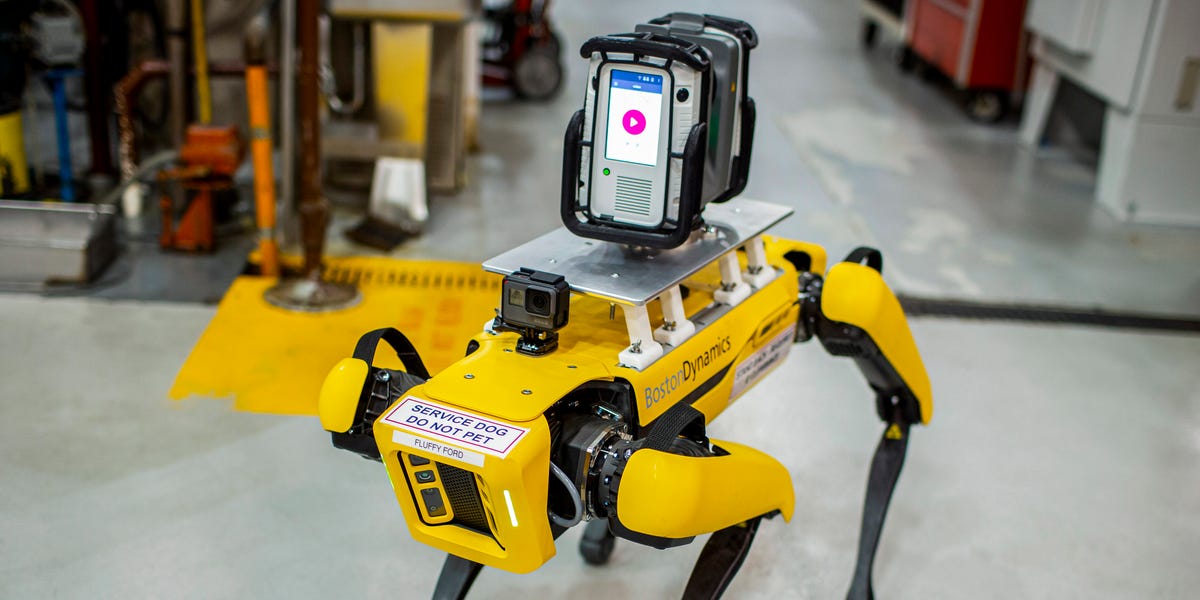
At Ford’s Van Dyke Transmission Plant in Michigan, Boston Dynamics’ Spot robot became more than a viral internet celebrity with excellent balance. The machine, nicknamed Fluffy by Ford’s team, was put to work scanning the facility, gathering visual and spatial data, and helping engineers build a more accurate digital model of the plant. In plain English, Spot helped Ford see what its factory actually looked like now, not what the old drawings claimed it looked like five upgrades ago.
That matters because factories are living spaces. Equipment gets moved. Workstations evolve. Lines are retooled. Temporary fixes become suspiciously permanent. Over time, the original computer-aided design can drift away from reality. When that gap grows, redesigning a plant becomes slower, more expensive, and more frustrating than it needs to be. That is where 3D factory mapping, digital twin technology, and agile robots like Spot start to look less like sci-fi theater and more like serious manufacturing strategy.
Why Ford Let a Robot Dog Loose in the Plant
Ford’s goal was not to create the world’s most advanced mechanical pet. The goal was practical: build a better map of the factory floor so engineers could prepare for future production changes faster and more accurately. Spot was used to scan the plant and help update Ford’s design files before retooling work began.
That may sound simple, but in manufacturing, “simple” often hides a budget-eating monster. Traditionally, factory scanning can involve engineers walking massive facilities with tripod-based laser equipment, stopping repeatedly to capture data point by point. It works, but it is slow, expensive, and about as glamorous as watching concrete dry in real time.
Spot offered Ford a faster way to collect the same kind of reality-capture information. Because the robot can move through tight areas, handle stairs, and navigate uneven industrial spaces, it is well suited to places where a wheeled cart or a human with a bulky scanner might lose time. Instead of treating the building like a static blueprint, Ford could treat it like a constantly changing environment and document those changes more efficiently.
From Static Drawings to Living Factory Data
The real magic here is not the robot itself. It is what the robot helps create: a fresh, trustworthy digital representation of the plant. Once Ford captures current conditions, engineers can compare planned changes against what is physically on the floor. That means fewer surprises when installing equipment, fewer fit issues, and fewer painful moments where a new machine is apparently designed to occupy the exact same space as an old pipe.
This is the practical heart of a digital twin. A digital twin is not just a pretty 3D model. It is a working digital version of a physical space or system that helps teams analyze, simulate, plan, and optimize operations. For a factory, that can mean testing layouts before construction starts, spotting clashes before hardware arrives, and making smarter decisions with fewer expensive do-overs.
Meet Spot: The Robot with Factory Floor Manners
Boston Dynamics’ Spot is built for movement in the real world, not just polished lab demos. It is a four-legged mobile robot designed to handle industrial environments, with the agility to climb stairs, manage slopes, and move through areas that would slow down many conventional machines. In Ford’s case, that mobility made the robot useful for 3D scanning and plant documentation.
Spot’s design makes sense for industrial mapping. A legged robot can step over small obstacles, shift its body position, and enter spaces that are awkward for humans carrying sensitive gear. It also brings repeatability. Once routes and missions are defined, organizations can standardize data collection rather than relying entirely on ad hoc manual surveys.
That repeatability is a big deal. Manufacturing leaders do not just want one good scan. They want reliable scans again and again, so they can monitor changes over time. Boston Dynamics now positions Spot as a platform for autonomous reality capture, site documentation, and industrial inspection. In other words, the Ford use case was not a gimmick. It fit into a much larger shift toward robots that collect operational data while humans focus on analysis and decisions.
Fluffy Was Not Working Alone
One of the more interesting details from Ford’s early work is that Spot could complement other automation tools rather than replace them. Reuters reported that Ford paired Fluffy with a smaller autonomous machine called Scouter in some situations, allowing the team to conserve battery life and cover different parts of the facility more efficiently. That combination hints at the future of factory automation: not one magic robot, but multiple specialized systems sharing the workload.
That is usually how real industrial progress happens. Not with one dramatic movie moment, but with a series of smarter workflows that quietly save time, money, and headaches.
Why 3D Mapping Matters in a Ford Factory
When people hear about robots mapping factories, the first reaction is often, “Cool.” The second should be, “Useful.” Factory mapping is deeply valuable because retooling is one of the most demanding phases in manufacturing. Plants need to adapt for new products, revised processes, and updated equipment without losing control of timing or cost.
If Ford wants to prepare a plant for future vehicle or component production, it needs confidence that new machinery will fit, pathways will remain workable, safety zones will be respected, and installation teams will not discover conflicts only after equipment is on site. Accurate laser scanning and point cloud data help solve that problem by showing the factory as it exists today.
According to Ford’s own description of the project, scanning a single facility the old way could take about two weeks and cost nearly $300,000. That is a serious incentive to modernize the workflow. If mobile robots can cut scanning time, reduce manual effort, and lower overall mapping costs, the benefits do not stay in the engineering department. They ripple into project schedules, capital planning, equipment installation, and speed to market.
Better Maps Mean Better Decisions
Once a facility is captured accurately, engineers can use the model to plan retooling with more confidence. They can identify where new cells should go, check for clearance problems, verify utility access, and coordinate around structural realities that old drawings may have missed. This improves collaboration across design, operations, and installation teams.
It also improves communication. A current 3D model is easier to understand than a pile of outdated drawings and field notes. When everyone is looking at the same representation of the factory, it becomes easier to make decisions and harder for confusion to sneak in wearing a hard hat.
From Robot Scan to Digital Twin
The Ford story becomes even more interesting when you zoom out. Spot’s role in mapping is part of a broader move toward smart manufacturing. Companies are trying to connect the physical and digital worlds so they can simulate operations, reduce downtime, and plan changes before those changes disrupt production.
That is why digital twins matter so much. Autodesk describes reality capture, including laser scanning and photogrammetry, as a way to bridge the gap when digital records are incomplete or outdated. NVIDIA describes virtual factories as physically accurate digital representations that allow manufacturers to model, simulate, analyze, and optimize operations without building a physical prototype first. Put those ideas together, and Spot starts to look like a data-gathering front line for future factory intelligence.
In that sense, Spot is not just mapping walls and machines. It is helping create the raw material for better operational planning. Once a digital twin exists, teams can compare current layouts against proposed changes, coordinate upgrades, and potentially connect the model with inspection data, equipment information, or performance dashboards.
Why This Is Bigger Than One Robot Dog
The real headline is not “robot dog walks through factory.” It is “manufacturing is becoming more observable.” Plants are turning into environments that can be scanned, documented, simulated, and improved with much less guesswork. That helps companies become more flexible, and flexibility matters when products, supply chains, and market demands keep changing.
Trimble and other reality-capture specialists have long argued that 3D laser scanning can improve safety and efficiency by reducing rework and cutting the time workers spend in hazardous areas. In a plant environment, those gains matter. If a robot can gather documentation in difficult spaces without requiring repeated human setup, that is not just convenient. It is operationally smart.
What Spot Does Well and What Humans Still Do Better
Let’s not over-romanticize the robot. Spot is impressive, but it is still a tool. It does not stroll into a Ford plant, admire the layout, and redesign the transmission line between lunch and battery recharge. Human engineers still decide what needs to be scanned, how the model will be used, what changes make sense, and which trade-offs are worth accepting.
That is actually the healthiest way to understand this technology. Robots like Spot are best at handling repetitive data collection, navigating awkward environments, and supporting routine inspection or documentation tasks. Humans are still better at judgment, cross-functional planning, negotiation, and all the messy decisions that come with real manufacturing work.
So no, the future is not a lonely factory run entirely by metal dogs and one nervous Wi-Fi router. The more realistic future is a plant where people use robotic systems to gather cleaner data, reduce manual drudgery, and make better-informed decisions.
Challenges Are Part of the Story Too
As promising as robot-based mapping is, it still comes with challenges. Facilities need workflows for managing captured data, integrating scans into engineering systems, and keeping digital models current. Teams also need training, budget justification, and clear use cases. A robot that makes a beautiful scan but leaves the data sitting in a digital drawer is not transformational. It is just expensive modern art.
That means success depends on process, not just hardware. Ford’s use of Spot stood out because it linked scanning to a real operational need: retooling the plant. That is the pattern other manufacturers should pay attention to. The smartest automation projects solve specific business problems first and look futuristic second.
What This Means for the Future of Manufacturing
Ford’s experiment with Spot captured a larger truth about modern industry: factories are no longer just places where products are assembled. They are data environments. The companies that understand their facilities most clearly can redesign them faster, operate them more efficiently, and adapt with less friction.
In that world, robots that gather spatial data are becoming surprisingly important. They help turn buildings into measurable systems. They support digital twins, better planning, safer inspections, and faster change management. And they do it in a way that feels a lot more practical than flashy.
There is also a branding lesson here, though Ford probably did not need one. When your factory innovation program involves a yellow robot dog named Fluffy, people pay attention. The trick is that behind the entertaining visuals sits a real manufacturing advantage. Spot is memorable, yes, but it is memorable because it solves a real problem.
That is why the story resonates. It is fun enough for headlines, but grounded enough for operations. It is a rare combination of “look at this cool robot” and “this could actually save serious money.” Manufacturing does not get that kind of public relations gift every day.
Experience: What It Feels Like to Watch Spot 3D-Map a Ford Factory
Imagine standing on a factory floor before the shift fully wakes up. The space is huge, industrial, and strangely theatrical. Overhead lights throw a bright wash across steel, concrete, cables, rails, carts, and machines that look as if they have been negotiating with gravity for decades. Then Spot steps into the scene, and suddenly the room feels like the present and the future shook hands.
What makes the experience memorable is not speed. Spot does not race around like a caffeinated greyhound. It moves with purpose. Its gait is deliberate, almost calm, as if it already knows the factory has enough chaos without adding robot drama. Each step feels engineered to say, “I’ve got this,” even while every human nearby is quietly thinking, “Well, that’s new.”
Watching Spot map a Ford factory would probably feel equal parts practical and surreal. On one level, it is just a tool doing a job. Engineers need data. The robot gathers data. End of story. But on another level, it looks like a machine from tomorrow wandered into today’s manufacturing world and immediately found useful employment. No motivational poster required.
You would notice the reactions around it too. Some people would watch with the focused curiosity of engineers already thinking about file outputs, layout conflicts, and what the updated model will reveal. Others would just grin, because no matter how professional the setting, a walking robot dog is still a walking robot dog. It is hard to act completely normal around one. The inner child shows up fast.
The most interesting part of the experience, though, would be the quiet confidence it creates. A robot like Spot changes the mood of a project because it suggests that the team is no longer guessing. They are documenting. They are capturing what is real. Every pass through the plant turns hidden conditions into visible information. Pipes, platforms, machine spacing, pathways, access points, and awkward corners all become part of a more honest picture.
That changes how people feel about upcoming work. Retooling a factory can be stressful because surprises are expensive. When teams know they have a current 3D map instead of stale assumptions, planning gets sharper. Meetings get more concrete. Arguments become more useful. The conversation shifts from “I think that should fit” to “Let’s check the model.” That is not flashy, but it is incredibly powerful.
There is also something oddly human about the whole scene. Spot may be a robot, but the purpose of its work is deeply human: help people understand a space better, make safer and smarter decisions, and avoid wasting time solving preventable problems. It is technology in service of clarity, not technology for applause alone.
And yes, the experience probably has one final effect: it makes the factory feel more alive. Not because the machines suddenly become characters, but because the building stops being a static container and starts becoming a readable system. When Spot walks through that environment collecting scan data, it is almost like the factory is being taught to remember itself. For manufacturers, that may be the most valuable experience of all.
Final Thoughts
“See Robot Spot 3D-Map a Ford Factory” sounds like a playful headline, and it is. But it also points to a serious trend in manufacturing: the marriage of mobile robotics, reality capture, and digital twin thinking. Ford’s use of Spot showed how a robot can help translate a complex physical facility into accurate digital information that engineers can actually use.
That is the real takeaway. Spot did not just scan a plant. It helped Ford reduce uncertainty. In manufacturing, uncertainty is expensive. Better maps lead to better planning, faster retooling, safer workflows, and smarter investments. Not bad for a machine that looks like it might also be able to fetch a wrench.