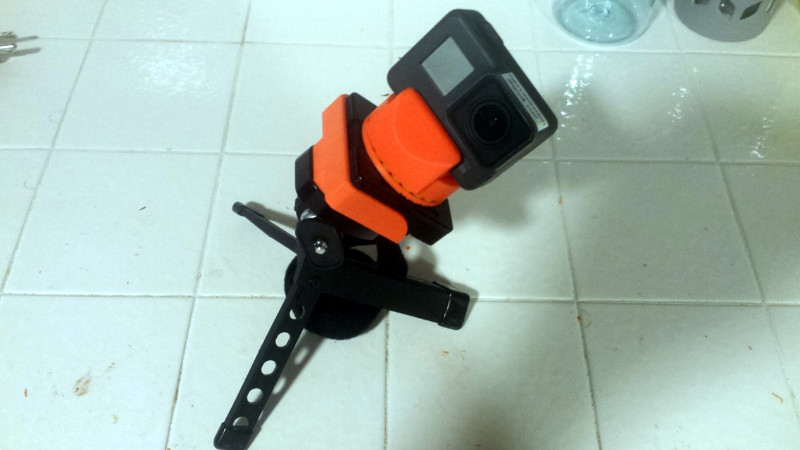
Astrophotography has a reputation for being painfully expensive, suspiciously complicated, and full of gear that looks like it belongs on a satellite launch pad. Then along comes the humble 3D printed clockwork star tracker and politely ruins that reputation. Suddenly, tracking the stars no longer requires a giant observatory mount, a second mortgage, or an engineering degree delivered by moonlight. Instead, it becomes a clever mix of astronomy, mechanics, and maker culture: a lightweight device that turns your camera slowly enough to follow the sky.
That is the magic of this idea. The Earth rotates, the stars appear to drift, and your cameraif left alone on a tripodrecords that drift as blur or trails. A star tracker fixes the problem by rotating in the opposite direction at nearly the same rate. In other words, it does not stop the universe. It simply keeps your camera from acting surprised by basic celestial mechanics.
A 3D printed clockwork star tracker is especially fascinating because it sits at the crossroads of old-school clockmaking and modern digital fabrication. It borrows the logic of gears, steady motion, and mechanical timing, then wraps that logic in printed parts, custom brackets, and compact field-ready design. It is part tool, part science lesson, and part “look what I made in my garage” victory lap.
What a Star Tracker Actually Does
At its core, a star tracker is an equatorial tracking device. That phrase sounds serious because it is, but the idea is simple: you align one axis of the tracker with Earth’s rotational axis, usually by aiming near Polaris in the Northern Hemisphere. Once aligned, the tracker rotates on that single axis to match the apparent motion of the sky. When it works, stars stay sharp longer, faint detail builds up in the exposure, and your images stop looking like the cosmos was photographed from a washing machine.
This matters because the night sky moves faster than beginners expect. Long exposures on a fixed tripod are fine for basic wide-angle shots, but as soon as you want cleaner Milky Way images, longer focal lengths, or more detail in objects like Andromeda, Orion, or wide-field nebulae, tracking becomes a huge advantage. A good tracker lets you shoot longer exposures with lower ISO, which usually means cleaner files, richer color, and less noisy misery during editing.
Why the Clockwork Version Is So Clever
The phrase clockwork star tracker sounds delightfully Victorian, like something an astronomer might carry in a brass case next to a pocket watch and a strong opinion about comets. But the modern version is far more practical. Instead of relying only on electronics, some DIY designs use a 24-hour clock movement or a simple mechanical drive to generate slow, continuous rotation. Pair that with 3D printed parts, and you get a tracker that is portable, cheap, customizable, and surprisingly educational.
One reason the concept became so popular in maker circles is that it lowers the barrier to entry. Instead of buying a polished commercial unit, builders can print housings, brackets, gear carriers, wedges, and camera mounts themselves. Even when a design uses off-the-shelf hardware, 3D printing makes it possible to tailor the structure to a specific camera, lens, or tripod. That is a big deal. Astrophotography gear is rarely famous for being universal, affordable, or emotionally supportive.
How a 3D Printed Clockwork Star Tracker Works
1. It aligns to the sky
The tracker needs to be pointed so its axis is parallel to Earth’s axis. In the north, that means aiming near Polaris. In the south, the target region is near Sigma Octantis. This process is called polar alignment, and it is the difference between crisp stars and a photo that looks like the galaxy sneezed.
2. It rotates at a sky-matching rate
The stars appear to complete a full circle in about one sidereal day, not one ordinary 24-hour solar day. That difference is small enough to sound petty but large enough to matter in imaging. A simple 24-hour clockwork drive can be wonderfully effective for lightweight cameras and wide-angle shots, but it is still an approximation. For casual time-lapse work, that is charming. For longer lenses or longer exposures, precision becomes less optional and more of a stern life lesson.
3. It uses gears or a hinged geometry
Some DIY trackers use a direct rotating platform. Others borrow from the classic barn-door tracker idea, where two boards open slowly as a screw or gear drive pushes them apart. Barn-door designs are beloved because they are elegant, cheap, and mechanically understandable. Their famous weakness is tangent error: a straight screw turning at a constant rate does not produce perfectly constant angular motion. Builders solve this with curved bolts, special geometry, compensation methods, or simply by accepting the limits for short focal lengths.
4. It holds a camera without flexing like a noodle
The mount must stay rigid. That sounds obvious until a lens, ball head, and camera body start leaning on a printed assembly at night in cold air. The best designs treat structure seriously: broad supports, careful load paths, snug hardware fits, and a balanced payload. In tracker design, stiffness is not glamorous, but it is the reason your stars look like stars instead of commas.
Why 3D Printing Changes the Game
Without 3D printing, building a custom tracker usually means cutting wood, machining metal, or improvising with hardware-store optimism. With 3D printing, you can prototype quickly, tweak dimensions, split large parts into printable sections, and remake worn components without drama. It becomes realistic to print a polar wedge, a motor housing, a geared interface, a camera plate, or a protective shell for a clock mechanism.
That flexibility is not just convenient. It changes the design philosophy. A builder can optimize for portability, swap between action cameras and mirrorless bodies, or create a travel-friendly rig that packs flat in a backpack. For field use, that matters. The best piece of astrophotography gear is not the one with the fanciest brochure. It is the one you actually bring outside.
Design Challenges Nobody Should Ignore
Torque and payload
A clock movement that can push a plastic hour hand around a wall clock is not automatically thrilled about carrying a heavy DSLR and telephoto lens. This is why many ultra-simple clockwork trackers are best suited to action cameras, smartphones, or compact mirrorless setups. Once payload grows, the drive system has to be stronger, smoother, and better balanced.
Backlash and tolerance
Printed mechanical systems live or die by fit. Too tight, and parts bind. Too loose, and backlash introduces wobble, slop, and inconsistent tracking. When parts are designed to fit together, clearances matter. Even a beautiful CAD model can become a tiny plastic betrayal if tolerances are ignored.
Material choice
Not all printed parts should be treated equally. Frames can prioritize rigidity and dimensional stability, while gears and moving joints benefit from wear resistance and lower friction. Nylon is often favored for functional gears and moving parts because it handles repetitive stress and friction better than many brittle alternatives. In plain English: if the part is supposed to move for hours without complaint, material choice matters more than your printer’s ability to make pretty benchies.
Environmental conditions
Night shooting means dew, cold, dust, and occasional user confusion. A tracker that behaves perfectly on a workbench may become much more dramatic outdoors. Printed parts can shrink, fasteners can loosen, lubricants can change behavior, and batteries or clock drives may not love low temperatures. Field testing is not optional. It is where optimism meets reality under a sky full of witnesses.
What You Can Shoot With One
A well-made 3D printed clockwork star tracker is most at home with wide-field astrophotography. That includes:
- The Milky Way over landscapes
- Constellation portraits with foreground subjects
- Wide views of Orion, Cygnus, or Scorpius
- Andromeda with short telephoto lenses
- Creative time-lapse sequences where the stars remain steady and the landscape slowly shifts
It is also a fantastic learning platform. You begin to understand why alignment matters, why long lenses are less forgiving, why balance is your friend, and why dark skies beat expensive gear surprisingly often. A tracker can help your camera collect more light, but it cannot negotiate with city glow. If your sky is washed out, the tracker is not failing. It is simply refusing to do battle with a shopping mall.
How to Build and Use One Without Losing Your Mind
- Start with the intended payload. Design around the camera and lens you will actually use, not the dream setup you may buy after winning the lottery.
- Print test parts first. Validate gear mesh, screw fits, and hinge motion before printing the full assembly.
- Check clearances. Mechanical parts need room to move. A tiny mismatch becomes a giant annoyance after midnight.
- Assemble for rigidity. Use metal fasteners where it matters, clamp joints firmly, and eliminate flex wherever possible.
- Balance the load. Even small imbalances can stall a weak clockwork drive or introduce uneven motion.
- Polar align carefully. Rough alignment can work for short wide-angle shots, but better alignment means better results.
- Run a short test sequence. Shoot a few exposures, zoom in on the stars, and inspect for trailing before committing to a full session.
Common Mistakes
Printing everything too fast: a rushed print on a badly tuned machine will make mechanical assemblies feel like they were designed by gremlins.
Skipping alignment practice: people love to blame the tracker when the real villain is a sloppy setup.
Overloading the mount: if the design was meant for a GoPro, do not strap a heavy full-frame camera onto it and act betrayed.
Ignoring light pollution: tracking improves sharpness, not sky quality.
Expecting telescope-class performance: a lightweight DIY clockwork tracker can be excellent, but it still has a lane. Respect the lane.
Why This Project Appeals to So Many Makers
The appeal is not just about cost. It is about agency. A DIY star tracker turns astrophotography from a shopping problem into a design problem, and that is much more interesting. You are not merely buying access to the night sky. You are building a mechanical translator between Earth’s rotation and your camera’s sensor.
There is also something deeply satisfying about using modern fabrication to solve an ancient observational problem. Humans have been tracking the sky for millennia. Now we do it with printed brackets, compact gear trains, and CAD files on a laptop. The stars remain majestic; the toolchain got weirder.
Field Experience: What Using a 3D Printed Clockwork Star Tracker Really Feels Like
The first experience most people have with a 3D printed clockwork star tracker is not cinematic triumph. It is usually a mix of excitement, minor panic, and crouching in the dark while trying not to drop an Allen key into the grass. You set up before sunset, feeling like a mechanical genius. Then the sky darkens, the temperature dips, and suddenly every knob feels similar, every screw feels slippery, and Polaris becomes much harder to find than the internet promised.
But once the tracker is roughly aligned and the camera is mounted, the mood changes. You hear or feel the subtle motion of the mechanism doing its job, and the whole device starts to feel oddly alive. Not alive in a haunted-clock waymore like a patient assistant who never speaks, never asks for Wi-Fi, and just keeps nudging the camera at the speed of the sky.
One of the most memorable parts of the experience is the first successful test shot. You zoom in on the LCD expecting disappointment, because astrophotography has trained you to be cautious. Then the stars look tight. Not perfect, maybe, but genuinely sharp. That moment lands harder than expected. A pile of printed plastic, a few fasteners, and a slow-moving drive just cooperated with planetary motion. That is absurdly satisfying.
Using a clockwork tracker also makes you a better observer. You begin noticing how quickly the sky changes, how sensitive longer focal lengths are to alignment errors, and how much easier it is to work under genuinely dark skies. You learn that moonlight can be your friend, that blue hour can save a foreground, and that red light is better than blasting the landscape like an interrogator in a detective movie.
There are frustrations, of course. Printed parts sometimes need rework. A gear may bind after transport. A camera plate that felt solid indoors may flex just enough outdoors to annoy you. Dew can form at the worst possible time. And because the tracker is homemade, every issue feels personal. A commercial device can fail and earn a shrug. Your own build fails and suddenly it is a character flaw. That is normal. So is fixing it.
The travel experience is often where this type of tracker shines. A compact printed unit can fit in a backpack, ride alongside a small tripod, and make astrophotography feel spontaneous instead of logistical. That changes how often you actually use it. Many people discover that a slightly imperfect tool they can carry everywhere beats a heavier “better” setup that stays home collecting dust and emotional judgment.
There is also a social side to it. A 3D printed star tracker is a conversation magnet. Other photographers ask what it is. Non-photographers assume it is either a tiny telescope mount or a device for contacting aliens. Kids usually think it is cooler than anything sold in a store, and honestly, they have a point. It looks handmade because it is. That visible problem-solving becomes part of the charm.
In the end, the experience is bigger than the hardware. A 3D printed clockwork tracker slows you down in the best way. It asks you to understand the sky, respect mechanics, and accept iteration. It rewards patience, observation, and curiosity. And when everything clickswhen the mount holds, the alignment is good, the stars stay sharp, and the Milky Way starts blooming across the frameyou get that rare maker feeling: not just “I bought a tool,” but “I built a solution.”
Conclusion
A 3D printed clockwork star tracker is one of those projects that proves clever design can do a lot with very little. It turns Earth’s rotation from a photographic problem into a mechanical opportunity. It gives makers a practical entry into astrophotography, teaches the fundamentals of tracking and alignment, and offers a deeply rewarding blend of science and craftsmanship.
Is it a replacement for every commercial mount? No. Is it an elegant, educational, field-worthy solution for lightweight night-sky imaging? Absolutely. And perhaps that is the best part: it reminds us that the distance between “I love astronomy” and “I made something that follows the stars” is now much shorter than it used to be.