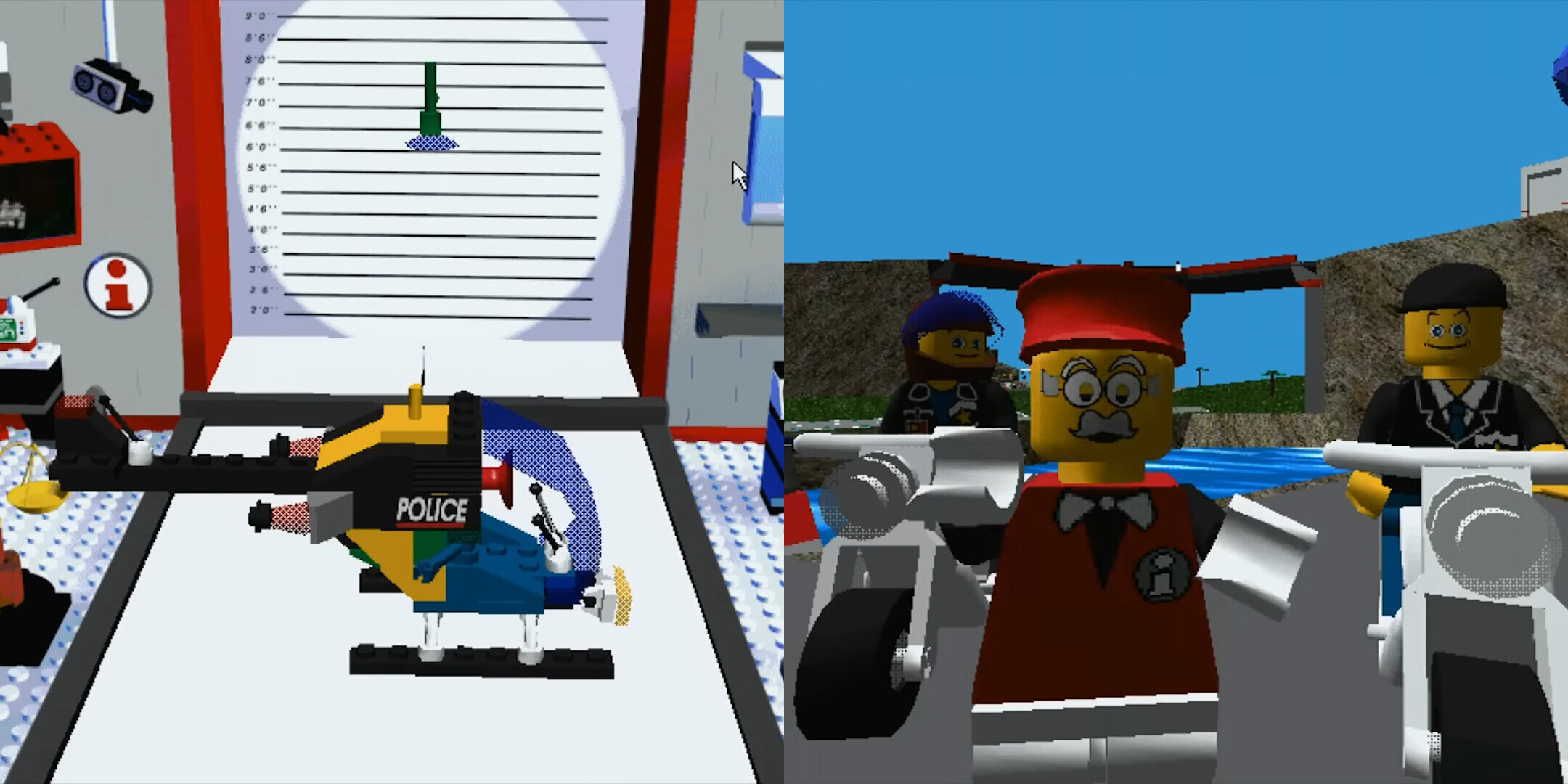
Some games age like fine wine. Others age like a half-melted cheese pizza left in a hot car. LEGO Island somehow managed to do both, which is exactly why reverse engineering it has become such a fascinating story. Released in 1997, the game was colorful, weird, ambitious, and way ahead of its little plastic shoes. It gave players a 3D island full of racing, building, chasing, voice acting, music, and enough cheerful chaos to make a Saturday morning cartoon blush. But for all its charm, it was also a product of late-1990s PC tech, which means modern computers often treat it like a beloved elder relative who still insists on using a fax machine.
That is where reverse engineering LEGO Island comes in. This is not just a story about “getting an old game to run.” It is about digital preservation, software archaeology, fan dedication, and the surprisingly emotional act of rebuilding a childhood world one function, one asset, and one mystery at a time. For retro gaming fans, programmers, preservationists, and anyone who has ever heard Pepper Roni say something delightfully odd, this project is a master class in how game history can be rescued instead of merely remembered.
Why LEGO Island Still Matters
To understand why reverse engineering LEGO Island matters, you have to understand what made the original game special. This was not just another licensed tie-in trying to cash in on a toy brand. It was a big, personality-driven 3D adventure that encouraged exploration and experimentation. Players could build vehicles, race across the island, deliver pizzas, ride a jet ski, and try to stop the Brickster from turning the whole place into a comedy of plastic destruction.
That design made LEGO Island memorable because it felt playful in the purest sense of the word. It did not always care about strict goals or tight efficiency. It cared about curiosity. You wandered. You tinkered. You listened to strange, charming dialogue. You discovered that the island itself felt like a toy box masquerading as a video game. For many players, that blend of freedom, humor, and toy-like creativity made it one of the first games that felt less like a challenge to beat and more like a place to visit.
And that is exactly why the game’s preservation matters. When a title is culturally important but technically fragile, losing the ability to run it means losing more than software. You lose a specific design philosophy, a specific mood, and a specific chapter in game history. Reverse engineering LEGO Island is really about keeping that chapter readable.
What Reverse Engineering Means in This Case
Reverse engineering a video game is not the same thing as finding the old source code sitting neatly in a folder labeled Definitely Important Do Not Delete. In practice, it means analyzing the shipped binaries, understanding how the original game behaved, and reconstructing code that can reproduce that behavior as faithfully as possible.
For LEGO Island, the public decompilation effort has focused on rebuilding the game’s code in C++. The goal is not just to produce something vaguely similar. The goal is to recreate the logic closely enough that the rebuilt program behaves like the original game, while also becoming understandable and editable by modern developers. That is hard enough on its own. It gets even harder when the original software depends on old tools, old compilers, and old graphics assumptions that modern systems barely recognize.
In plain English, reverse engineering LEGO Island is like rebuilding a vintage amusement park ride after the blueprints vanished, the bolts are weird, half the wiring was assembled by 1990s wizardry, and the safety manual appears to have been written by a caffeinated goblin. You are not just rebuilding the ride. You are figuring out why it worked in the first place.
The Technical Headaches That Make LEGO Island So Interesting
Part of what makes this project so compelling is that LEGO Island is a perfect storm of historical quirks. The game came from an era when Windows PC development was rapidly evolving, 3D standards were still settling, and developers were often making brave choices that later turned into compatibility nightmares. That is not an insult to the original team. It is a compliment. They were building something ambitious while the ground was still moving beneath them.
One major challenge is compiler behavior. The public decompilation documentation makes clear that the project aims to match the output of the original build process as closely as possible, even recommending the same old Microsoft Visual C++ 4.20 compiler used for the retail game. That means the reverse engineers are not just reproducing game logic. They are wrestling with the peculiar habits of a very old toolchain. Tiny changes in source can ripple into surprisingly different machine code, which is why getting close to the original can feel less like programming and more like negotiating with a haunted typewriter.
Another headache is graphics support. LEGO Island is tied to old Windows-era rendering technology and assumptions that modern machines do not naturally accommodate. On top of that, the original game also carries the classic baggage of older PC releases: quirky fullscreen behavior, frame-rate-related issues, odd save behavior, and platform-specific dependencies that turn a simple launch into a surprisingly dramatic event.
That combination is why fan tools became so important even before the decompilation reached maturity. Players needed patches, launch helpers, and workarounds just to smooth out the original experience on newer hardware. In other words, the preservation story did not start with the decompilation. It started with fans refusing to let the island sink.
Recovered Development Materials Changed the Conversation
One of the most fascinating twists in the story is that the LEGO Island community did not have to work entirely in the dark. Publicly circulated development materials from 1996 revealed that substantial early code and documents had survived. These materials include source files, technical documents, and in-house tools from a much earlier stage of the project. They do not amount to a complete retail codebase, but they do offer a rare window into how the game was being assembled before final release.
That matters for two reasons. First, it confirms just how ambitious the original project was. Early documents and behind-the-scenes materials show a team wrestling with world-building, rendering, animation, audio, and overall design in an era when consumer 3D on PC still felt like the Wild West wearing a tie. Second, these materials help reverse engineers understand the game’s internal structure, file formats, naming conventions, and design decisions.
Just as importantly, the Wes Jenkins interview gives the preservation effort a human voice. It reminds us that LEGO Island was built by people with creative ambitions that went beyond the final shipped product. Scrapped ideas included more enterable buildings, more missions, underwater exploration, pirate content, and a broader sense of island interactivity. Suddenly the reverse engineering story becomes bigger than “how do we replicate the executable?” It becomes “what was this world trying to be?”
How the Decompilation Project Grew Into Something Bigger
The public LEGO Island decompilation project began with a modest technical target and then snowballed into a serious preservation effort. According to the community’s own documentation, what started with decompiling the front-end executable expanded into the main game code and eventually matured into a functionally complete reconstruction. That phrase matters. “Functionally complete” means this is not just a pile of notes and nice intentions. It means the rebuilt code can reproduce the game closely enough to be practical, playable, and useful.
But the project did not stop there. Once you have a workable codebase, new doors open. You can document systems more clearly. You can fix long-standing bugs. You can create modern tooling. You can port the game to new environments. You can turn a fragile artifact into a living project.
That is where the toolchain around LEGO Island becomes just as interesting as the decompilation itself. The reccmp tools help compare recompiled output against original binaries, making it easier to verify accuracy. LEGO Island Rebuilder adds modern usability improvements, such as windowed mode support, save redirection, turning-speed adjustments, frame-rate options, and other quality-of-life fixes. Then the portable branch takes the next logical step by aiming for platform independence.
At that point, reverse engineering LEGO Island stops being a rescue mission and starts becoming infrastructure. The community is no longer just preserving a game. It is building a framework for how old games can survive.
Why Portability Is the Real Prize
The word “decompilation” sounds technical and a little intimidating. The word “portable” sounds friendlier, and honestly, it is where the magic becomes obvious. A decompiled codebase is important because it lets experts inspect and rebuild the game. A portable codebase is important because it lets more people actually experience it.
Once LEGO Island is no longer chained to a narrow slice of aging Windows assumptions, the game gains a future. It can be adapted to modern desktops more cleanly. It can be tested on alternative systems. It can even run through a browser-based frontend, which is a deeply funny and beautiful sentence if you remember the era of chunky beige PCs and family computers that wheezed every time someone opened too many programs at once.
Portability also changes the preservation conversation from defensive to creative. Instead of constantly asking, “How do we stop this from breaking?” the community can ask, “How faithfully can we bring this to modern platforms?” That is a healthier, more exciting question. It treats preservation as continuation rather than storage.
And yes, there is a philosophical tension here. Some fans want absolute historical authenticity. Others want improvements that make the game easier to enjoy in 2026 than it was in 1997. Both sides have a point. The best reverse engineering projects understand that preservation and usability are not enemies. They are dance partners who occasionally step on each other’s toes.
What Reverse Engineering LEGO Island Teaches About Game Preservation
Preservation is technical, but it is also emotional
Old games do not survive on nostalgia alone. Someone has to understand the binaries, rebuild tools, document file formats, and verify behavior. But none of that work happens without emotional fuel. People spend years on projects like this because the game mattered to them. Reverse engineering is driven by logic, but preservation is powered by affection.
Documentation is almost as valuable as code
A playable build is great. Clear documentation is what allows the work to outlive its first wave of contributors. LEGO Island’s public repos, tools, wiki pages, and community explanations all matter because they turn specialized knowledge into shared knowledge.
Fan communities often become accidental museums
The most effective preservationists are not always institutions. Sometimes they are fans with patience, technical skill, and a refusal to accept “well, I guess it is just gone.” In the case of LEGO Island, that combination has produced something remarkably close to a living archive.
Experiences From the World of Reverse Engineering LEGO Island
There is a very particular feeling that comes with reverse engineering LEGO Island, and it is not the same feeling as simply replaying an old favorite. Replaying is nostalgia. Reverse engineering is nostalgia with a flashlight, a wrench, and several tabs open that make you question every life choice that led you here. It is emotional, technical, and oddly intimate.
Imagine opening up a game you loved as a kid and realizing that the thing you once experienced as pure cartoon magic is actually a dense web of functions, assets, file formats, compiler quirks, rendering paths, and event logic. At first, that sounds like it might kill the magic. Weirdly, it often does the opposite. The more closely fans study LEGO Island, the more impressive the original game becomes. You stop seeing only the jokes, the pizzas, and the Brickster chaos. You start seeing the design constraints, the clever workarounds, and the surprising ambition hiding underneath the bright plastic smile.
One of the most rewarding experiences is the moment when a bug that seemed like ancient nonsense suddenly makes sense. Maybe a weird behavior turns out to be tied to timing. Maybe a crash traces back to a tiny initialization issue. Maybe some awkward movement on modern machines is not random at all, but the consequence of assumptions the game made in 1997 that no longer hold. Solving one of those problems feels less like patching software and more like finally understanding an inside joke told twenty-nine years ago.
There is also a strong social experience around the project. Reverse engineering LEGO Island is not just an isolated technical hobby. It is a collaborative act of memory. One person remembers a line of dialogue. Another remembers how the helicopter felt. Someone else finds an old development artifact. Someone documents a file structure. Someone builds a comparison tool. Someone ports a frontend. Alone, each contribution looks small. Together, they recreate an entire world.
Then there is the thrill of rediscovery. Old behind-the-scenes footage, early source fragments, and interviews do more than provide information. They create that wonderful “wait, so that is why it feels like that” moment. You realize that certain missing areas were not just mysterious omissions. They were features that collided with time, budget, or technology. Suddenly the island feels haunted in the best way, not by ghosts, but by almost-finished ideas. Reverse engineering lets fans walk around those ghosts and introduce themselves.
And perhaps the strangest experience of all is watching LEGO Island become modern without losing its identity. Seeing an old game move toward portability, cleaner tooling, or even browser-based accessibility can feel surreal. This was once a game tied to a very specific moment in home computing. Now it is becoming something that can survive beyond that moment. There is joy in that, but also relief. It means the game no longer has to exist only as a fading memory, an ISO on a hard drive, or a story that begins with “you kind of had to be there.”
Reverse engineering LEGO Island, then, is not just about understanding code. It is about recovering texture. It is about hearing old creative ambitions echo through technical work. It is about turning a beloved but fragile piece of software into something durable enough to be studied, shared, improved, and enjoyed by people who were not even alive when Pepper Roni first started talking. That is a pretty beautiful outcome for a game made of digital bricks and glorious nonsense.
Conclusion
Reverse engineering LEGO Island is one of those stories that sounds niche until you look closely, and then it suddenly seems important. Beneath the cheerful island, goofy dialogue, and toy-box freedom sits a serious case study in how old games survive. The project shows that preservation is not passive. It is active, technical, communal, and occasionally stubborn in the most admirable way possible.
What makes this effort stand out is that it preserves more than executable behavior. It preserves context. It preserves design intent. It preserves the personality of a game that helped prove toy brands could become fully realized digital worlds. Thanks to decompilation, modding tools, recovered materials, and portability work, LEGO Island is no longer just an artifact of 1997. It is becoming a readable, repairable, and replayable piece of software history.
That is the real triumph. Reverse engineering LEGO Island is not about taking the magic apart to prove it was fake. It is about understanding the magic well enough to keep it alive.