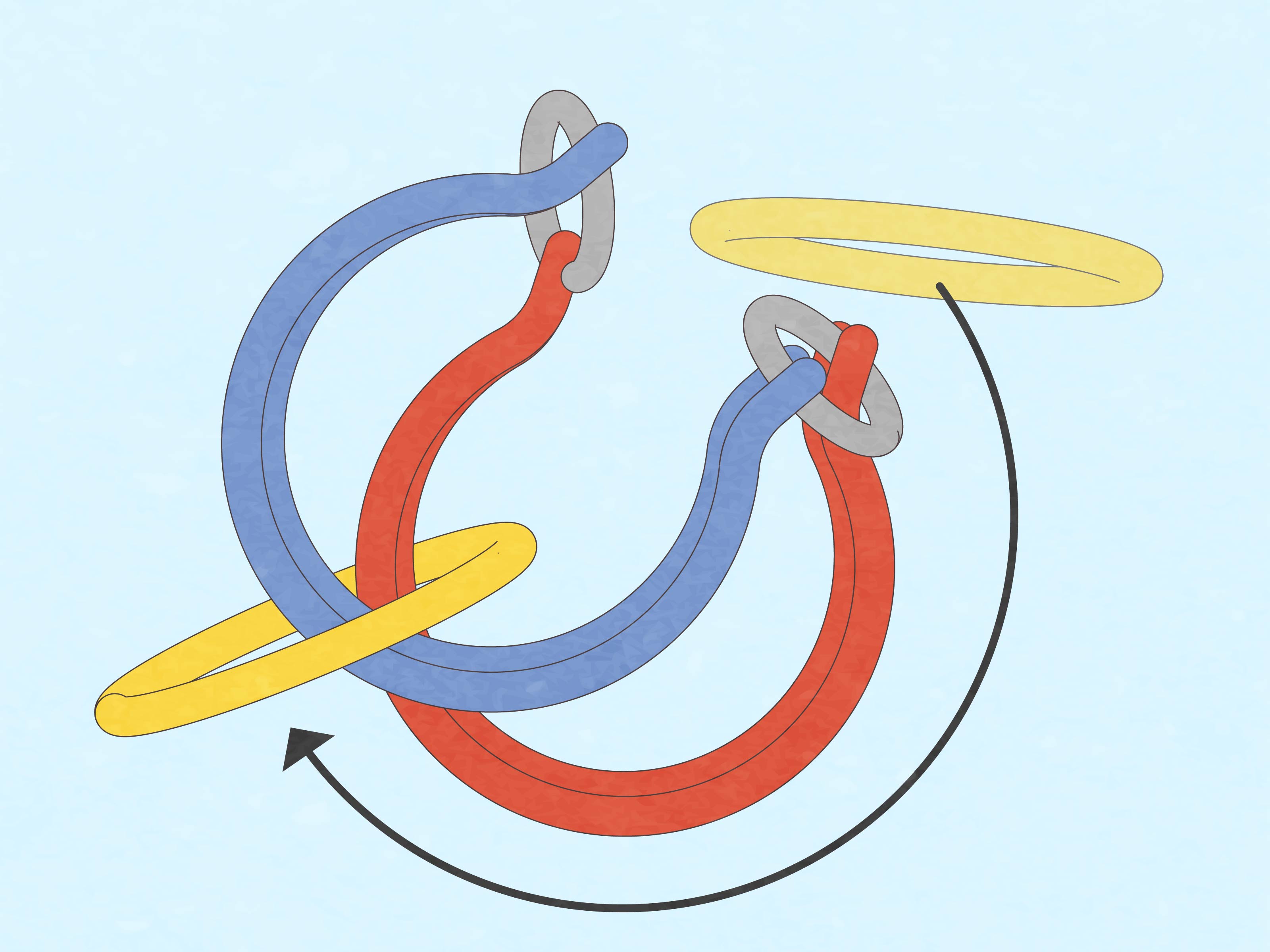
Metal puzzles have a special talent for making smart people feel personally attacked. One minute you are casually turning a shiny little brainteaser in your hand, and the next minute you are whispering, “There is no way this thing was made by humans.” The good news is that most metal puzzles are not impossible. They are just sneaky. They are designed to reward observation, patience, and a willingness to think in three dimensions instead of going full caveman and trying to pull the pieces apart like you are opening a pickle jar.
If you are new to cast metal puzzles, wire puzzles, or other disentanglement-style brainteasers, this guide will help you build the right habits from the start. You will learn how to read the puzzle, how to test moves without damaging it, what mistakes beginners make, and how to turn random fiddling into an actual solving strategy. By the end, you may not instantly conquer every tricky metal puzzle on the planet, but you will absolutely stop treating it like a wrestling match and start solving it like a puzzle.
What Is a Metal Puzzle, Exactly?
A metal puzzle is usually a small mechanical brainteaser made from interlocking cast or bent metal pieces. The goal is normally one of two things: separate the pieces, then put them back together again, or move one piece through a hidden route until it escapes. In other words, the puzzle is not asking, “Are you strong?” It is asking, “Can you find the correct path, angle, sequence, and orientation?”
That is why metal puzzles feel so clever. They often look simple on the outside, but they hide one very specific solution route. The solution may involve a tiny rotation, a brief alignment, a turn that only works from one side, or a move that seems backward until you realize it is the only way forward.
Before You Start, Fix Your Mindset
The puzzle is hiding a path, not asking for force
The fastest way to fail a metal puzzle is to assume more strength will fix everything. It will not. Good metal puzzles are designed so the right move feels smooth and the wrong move feels blocked. If a piece refuses to budge, that usually means you are missing an angle, a sequence, or a reference point. Put differently: if your forearm veins are getting involved, the puzzle has already won.
You are solving a 3D maze
Beginners often stare at metal puzzles as if they are flat objects. They are not. These puzzles live in three-dimensional space, which means the right move may involve lifting, rotating, tilting, threading, or flipping something in a way that is hard to spot from one viewpoint. Turn the puzzle over. Look from the top. Look from the side. Sometimes the answer is not hidden inside the puzzle so much as hidden inside your viewing angle.
Reassembly matters too
Taking the puzzle apart is only half the challenge. Many beginners celebrate too early, only to discover they now own two shiny metal pieces and zero memory of how they came apart. From the very first move, assume you will need to reverse everything later. That alone will make you more careful, more observant, and much less likely to end up googling “how to put metal puzzle back together before I lose my mind.”
How to Solve a Metal Puzzle Step by Step
1. Study the pieces before you move anything
Do not rush. Spend a minute inspecting the puzzle like a detective at a very tiny crime scene. Ask yourself:
- How many pieces are there?
- Where do they touch?
- Which areas rotate freely?
- Are there grooves, gaps, holes, seams, tabs, or notches?
- Do the pieces look symmetrical, or are there subtle differences?
This step sounds boring until you realize it prevents twenty minutes of useless twisting. Many metal puzzles include tiny clues in their shape. One opening may be slightly wider. One side may have a flatter edge. One piece may have a logo, line, or surface detail that helps you track orientation. Small details are not decoration. In puzzle land, small details are gossip.
2. Test every possible motion gently
Now begin moving the puzzle, but do it gently and deliberately. Try sliding, rotating, pivoting, lifting, and flipping. Notice what each motion allows and where it stops. You are not trying to solve it instantly. You are learning its vocabulary.
Maybe one piece turns smoothly until it clicks at a certain point. Maybe it slides just a little, but only while tilted. Maybe two pieces seem stuck until you line up a narrow opening with a curved section. All of that is useful information. A metal puzzle often reveals its logic in tiny ranges of motion before it reveals the answer.
3. Look for the “almost” position
Most beginners hunt for the final move when they should be hunting for the almost move. The puzzle usually gives you a position where the solution nearly works. Pieces line up halfway. A gap appears for a moment. A ring seems close to slipping free, but not quite. That “almost” moment is a clue. It tells you that you are in the neighborhood, even if you have not yet found the exact route.
When you find an almost position, freeze. Study it. Ask what is still blocking the escape. Often the answer is a tiny rotation or a reversed orientation one step earlier.
4. Think in routes, not random moves
One of the smartest ways to approach a metal puzzle is to stop asking, “What can I do right now?” and start asking, “What path would this piece need to travel to get free?” Imagine the trapped piece as a tiny car moving through a 3D maze. Which loop must it pass through? Which edge must it go around? Which opening is too small from one side but works from the other?
This mental shift is huge. When you think in routes, the puzzle stops feeling chaotic. You begin to see that one end is promising, one side is a dead end, and one orientation probably matters more than the rest.
5. Choose the correct end or opening
A classic beginner mistake is assuming that if a piece must go around an obstacle, any end will do. Nope. Many metal puzzles only work if you go around the correct end, use the correct opening, or approach from the correct side. One route may look obvious but fail because the spacing is too tight. The other route may look weird but turns out to be the winner.
So whenever a piece seems like it must pass around something, test both directions mentally. Left or right? Top or bottom? Front or back? One of those options is often a trap, and the other is the actual solution.
6. Use reference points
If two puzzle pieces look nearly identical, give yourself reference points. Notice a curve, a seam, a logo, a flat area, or even a tiny scratch. Keep track of how those points line up. Otherwise, you may repeat the same wrong move six times while insisting each attempt is “totally different this time.”
Reference points are especially helpful when the puzzle requires a precise orientation. Sometimes the pieces are not truly symmetrical, and the solution only appears when one side faces up, one groove faces outward, or one curve lines up with a matching contour.
7. Reverse engineer the solution
Here is a powerful trick: imagine the puzzle already solved. What would the last move have to be? For example, if the final step must be a piece slipping through a gap, then there must be an earlier step that creates that gap. If the last move requires a certain angle, then an earlier step must position the piece for that angle.
Working backward is often easier than working forward because it helps you identify the required end state. Once you know what the last move must look like, the earlier moves become easier to test.
8. Take a break before your brain turns into soup
This may be the most underrated puzzle strategy on earth. If you have repeated the same failed motion for five minutes, your brain is no longer solving. It is sulking. Put the puzzle down. Walk away. Come back later. A short break resets frustration and makes overlooked details suddenly obvious. You are not giving up. You are letting your brain stop shouting long enough to notice something useful.
Common Beginner Mistakes to Avoid
- Forcing the pieces: If it feels violent, it is probably wrong.
- Ignoring orientation: Tiny changes in angle can completely change what is possible.
- Moving too fast: Quick fidgeting hides useful feedback.
- Repeating one failed move forever: That is not persistence. That is a loop.
- Not remembering the sequence: Solving is great. Reassembling is part of the deal.
- Choosing a puzzle that is way too hard: Starting with an expert-level monster is a great way to develop a personal grudge against metal.
A Practical Example of the Beginner Process
Imagine a simple two-piece metal puzzle made of interlocked loops. At first glance, it looks impossible because each loop seems trapped behind the other. A beginner might immediately pull on both sides and conclude the puzzle is evil. A better approach looks like this:
- Examine where the loops overlap and which curves are widest.
- Rotate one piece slowly and notice that one section moves more freely than the others.
- Tilt the puzzle and discover that a narrow opening lines up only when one loop is turned diagonally.
- Pause at the almost position where the trapped section is halfway through.
- Reverse the angle slightly, then rotate a few degrees more.
- Slide the piece through the hidden path and separate the puzzle without force.
That is how many beginner-friendly metal puzzles work. Not through magic. Not through strength. Through observation, alignment, and sequence.
How Long Should It Take to Solve One?
There is no universal timer. Some beginner metal puzzles can be solved in a few minutes once you spot the key motion. Others may take half an hour, especially if you are still learning how to think spatially. More advanced models can eat an entire afternoon and still smile smugly at you from the coffee table.
The important thing is not speed. The important thing is progress. If you are learning how the pieces move, noticing better positions, and understanding why certain routes fail, you are getting better even before the puzzle comes apart.
How to Get Better at Metal Puzzles
Start with easy or moderate difficulty
There is no shame in beginning with puzzles designed for newcomers. In fact, it is smart. Easier puzzles teach you how to observe motion, track orientation, and think in paths. Once you build those habits, harder puzzles feel challenging instead of insulting.
Replay solved puzzles
Once you solve one, do not toss it in a drawer and move on forever. Solve it again. Then reassemble it. Then solve it a third time while explaining the steps out loud. Repetition turns vague luck into actual skill.
Narrate what you notice
Try saying things like, “This piece rotates freely until this notch faces up,” or “This ring almost escapes when the flat edge points left.” Talking yourself through the puzzle helps organize the sequence in your mind and makes the solution easier to remember.
Compare puzzle types
Some metal puzzles are about threading. Some are about rotations. Some rely on hidden openings. Some are basically elegant little mazes. The more types you try, the faster you will recognize familiar mechanics in new puzzles.
Why Metal Puzzles Are Weirdly Addictive
Metal puzzles are satisfying because they combine tactile play with real mental effort. Your hands are busy, your eyes are scanning shapes, and your brain is running strategy, memory, and spatial reasoning all at once. When the answer finally clicks, it feels earned. You do not just finish the puzzle. You crack its personality.
They are also wonderfully screen-free. No notifications. No battery. No update required. Just you, a stubborn little chunk of metal, and a slowly growing suspicion that the puzzle might be smarter than both of you.
Conclusion
If you want to solve a metal puzzle, the secret is not luck and it is definitely not brute force. The real secret is learning how to look. Study the pieces. Test motions gently. Search for the almost position. Think in routes. Use reference points. Work backward when needed. And when frustration starts muttering nonsense in your ear, take a break and come back fresh.
Once you start treating metal puzzles like 3D pathfinding problems instead of tiny gym equipment, everything gets easier. Not easy, exactly. These puzzles still enjoy being dramatic. But easier. And far more fun.
Experience: What Beginners Usually Go Through When Learning to Solve Metal Puzzles
One of the most relatable beginner experiences with a metal puzzle is the emotional roller coaster packed into the first ten minutes. It usually starts with confidence. The puzzle looks small, elegant, and harmless, so you assume this will be a quick little brain warm-up before dinner. Then two minutes later, you have rotated the same piece sixteen times, discovered absolutely nothing, and begun negotiating with the object as if it can hear you. This is normal. In fact, it is practically part of the hobby.
Another common experience is the false breakthrough. You find a position that feels exciting, the pieces loosen slightly, and your brain immediately starts celebrating like you just cracked a secret code. Then the motion stops. Everything jams. The puzzle is still together. Your tiny victory parade is canceled. Oddly enough, this is still progress. Those false breakthroughs teach you where the real solution probably lives. Beginners often improve fastest right after a failed almost-solution because they finally know which area of the puzzle deserves attention.
There is also the classic “I was holding it the wrong way the whole time” moment. This one is humbling. You spend ages staring at the front of the puzzle, convinced it is impossible, only to flip it over and realize the back reveals a gap, curve, or pathway you had completely missed. That experience teaches an important lesson: metal puzzles reward perspective changes. The answer is not always deeper thinking. Sometimes it is literally just turning the thing over.
Many beginners also discover that puzzle-solving has a rhythm. The first phase is curiosity. The second is random experimentation. The third is frustration. The fourth is pattern recognition. The fifth is that magical click when the puzzle suddenly makes sense and you wonder how you ever missed it. Once people experience that sequence a few times, they start to enjoy the process more. They stop expecting instant success and start appreciating the little clues along the way.
Then comes reassembly, the part that tends to make beginners laugh in disbelief. After all that effort to get the puzzle apart, putting it back together can feel like trying to retrace your steps through a maze while walking backward. But that is also where a lot of growth happens. Reassembly forces you to remember the logic of the solution instead of relying on luck. Over time, many beginners say this is the stage that really improves their attention to detail.
Perhaps the best beginner experience is the moment metal puzzles stop feeling impossible and start feeling readable. It does not happen all at once. It happens when you pick up a new puzzle and instinctively begin checking angles, identifying reference points, testing motion ranges, and imagining solution paths. That is when you realize you are no longer just fiddling. You are solving. And yes, you may still get stuck. You may still groan dramatically at a particularly smug piece of cast metal. But now you know the puzzle is beatable, and more importantly, you know how to think your way toward the answer.