Note: Prepared for web publication. Source links omitted by request. Dangerous how-to details have been intentionally excluded.
Some people join a makerspace to learn soldering. Some show up to fix a 3D printer that has been making noises like a haunted toaster. And then there are the people who look at a room full of tools, electronics, and stubborn optimism and think, “You know what this place needs? A liquid-fueled rocket engine.”
That is part of what makes the story behind FUBAR Labs so irresistible. It is not just a tale about combustion chambers, valves, and carefully controlled bursts of flame. It is a story about curiosity getting organized, community knowledge turning into hardware, and a hackerspace project pushing far beyond the usual breadboard-and-blinking-LED stereotype. In a world where “maker culture” can sometimes get reduced to keychains and cute desk gadgets, FUBAR Labs went in the opposite direction and built something gloriously ambitious.
The result was not a toy, not a movie prop, and not a science-fair cardboard tube with big dreams. It was a real liquid-fueled rocket engine project developed in a community lab setting, later expanded into an open-source, 3D-printed engine effort. That alone is enough to make engineers raise an eyebrow, hobbyists lean in, and anyone with a pulse say, “Wait, they built what?”
What FUBAR Labs Actually Is
FUBAR Labs is not some secret defense bunker hidden under a laundromat. It is a community-run New Jersey makerspace built around collaboration, education, and hands-on experimentation. That matters, because the rocket engine story makes a lot more sense when you understand the culture around it. This was not a lone genius in a dramatic garage montage. It was the kind of project that grows out of a place where people share tools, trade hard-earned knowledge, and cheerfully ask questions like, “Did you label that wire?” and “Should that valve be doing that?”
Makerspaces exist because modern technical creativity is often expensive, complicated, and just slightly ridiculous to attempt alone. Machine tools, fabrication equipment, electronics benches, and experienced peers are not small advantages. They are the difference between an idea staying in a notebook and becoming a working prototype. FUBAR Labs has long represented that spirit: a place where software, hardware, mechanics, fabrication, and curiosity collide in the best possible way.
In other words, if you wanted to build something that lives at the intersection of plumbing, controls, machining, thermodynamics, and bravery, a hackerspace is exactly the kind of environment where that project might either become a triumph or at least a very educational cautionary tale.
The Project That Put FUBAR Labs on the Rocket Map
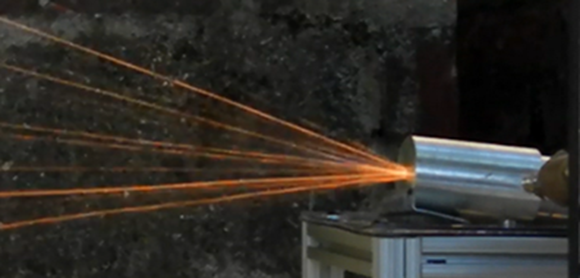
The attention-grabbing build associated with FUBAR Labs centered on Graham Sortino’s liquid-fueled rocket engine work. What made it especially notable was that it was not based on a simple solid motor concept. Instead, the project explored liquid-fuel engine architecture, starting with a smaller igniter engine and advancing through controlled test burns. Early versions used ethanol and air for serious experimentation before later tests moved to gaseous oxygen and ethanol.
That progression is a big deal. Liquid rocket engines are notoriously more complicated than solid motors because they involve managing separate propellant flows, ignition, combustion stability, pressure behavior, and hardware that must survive extremely unforgiving thermal conditions. This is not “strap fireworks to a tube and hope for the best.” This is an engineering problem with a dramatic soundtrack.
According to contemporary reporting on the project, the setup also involved remotely controlled fuel and oxidizer valves, Arduino-based control, wireless operation, and telemetry for measuring flow. That detail reveals the real character of the project: it was not just about making fire come out of a nozzle. It was about instrumentation, repeatability, and learning through test data. In rocketry, a bright plume may look impressive, but measured performance is what separates engineering from enthusiastic chaos.
Why a Liquid-Fueled Rocket Engine Is Such a Wildly Ambitious Build
To understand why the FUBAR Labs engine got so much attention, it helps to understand what a rocket engine is really trying to do. At a basic level, a rocket stores fuel and oxidizer, burns them in a combustion chamber, and pushes hot exhaust through a nozzle to generate thrust. That sounds tidy on paper. In practice, it is a controlled argument with physics.
NASA’s public guidance on rocket thrust and nozzle design makes clear that thrust depends on factors like mass flow, exhaust velocity, chamber conditions, and nozzle geometry. The throat of the nozzle is especially critical because it governs flow behavior, and the expansion through a convergent-divergent nozzle plays a major role in performance. Tiny geometric changes can have outsized effects. A rocket engine is one of those machines where being “close enough” can become “spectacularly wrong” in a hurry.
Then there is heat. Rocket engines run in an environment so hostile that many materials would happily melt, warp, or surrender immediately if given the chance. That is why cooling strategies, material choices, and test limits matter so much. When people read that later versions of the FUBAR-associated project explored regenerative cooling and 3D-printed components, that is not a decorative detail. That is the engineering equivalent of saying, “We moved from juggling tennis balls to juggling chainsaws, but in a very organized way.”
Why Ethanol and Oxygen Make Historical and Practical Sense
The fuel choices tied to the project also fit into a broader historical pattern. Liquid oxygen paired with alcohol-based fuels has deep roots in rocket history. Early American and German liquid-fuel systems relied on oxygen-and-alcohol combinations because they were workable, understandable, and achievable with the technology of their era. That does not make them simple. It just means they belong to a long engineering family tree.
For a makerspace project, using ethanol in discussion around test development also reflects a practical mindset. It is a fuel people can understand conceptually, and its historical use in rocketry gives it credibility in educational conversations. Still, this is where the romance of rocket science needs a reality check: practical does not mean casual, accessible does not mean safe, and historical precedent does not magically cancel risk. In rocketry, “we have used something like this before” is never the same as “no big deal.”
That tension is part of what makes the FUBAR Labs story compelling. It sits right on the line between old-school rocketry inspiration and modern open-source engineering discipline.
From Test Stand to Open Source: The Bigger Evolution
If the 2012 coverage introduced the project as an eye-popping makerspace accomplishment, the later phase made it even more interesting. By 2015, Graham’s work was being discussed as an open-source, 3D-printed liquid rocket engine effort with Arduino-based control and regenerative cooling ambitions. That shift matters because it turned the project from a single impressive build into a broader statement about accessibility in advanced hardware development.
Open-source hardware has always thrived on two ideas: first, that knowledge should be documented rather than hoarded; second, that reproducibility matters. A rocket engine is an extreme test of both ideas. If a project like this can be documented well enough for others to study, simulate, inspect, and learn from, it stops being just a cool anecdote and becomes a contribution to the maker knowledge base.
The use of Arduino in the control stack adds another layer to the story. Arduino has long served as a bridge technology for builders who want something real, affordable, and programmable without needing a custom industrial control platform. That does not make the project “easy.” It makes it legible. It means the electronics and control side of the system can live in a familiar ecosystem, which is exactly how open technical communities lower the barrier to learning.
The 3D-printing angle was equally significant. Rocket engine parts are difficult to manufacture through conventional methods because of their shapes, internal geometries, and thermal constraints. Additive manufacturing has become a major force in aerospace for exactly that reason. NASA and commercial space companies have used 3D printing on engine-related hardware because the process can enable shapes and features that are awkward, expensive, or nearly impossible to make otherwise. So when a FUBAR Labs-associated project moved in that direction, it was not a gimmick. It was aligned with where real aerospace engineering has been heading.
This Is Not a DIY Fairy Tale, and That Is the Point
A story like this can easily get flattened into internet folklore: clever hackers, a splash of fuel, some sparks, and boom, instant backyard space program. That version is entertaining, but it misses the lesson. The real point is not that building a rocket engine is casually doable. The real point is that disciplined experimentation, community resources, measurement, and respect for risk can move ambitious projects out of fantasy and into documented reality.
Just as importantly, the U.S. rocketry ecosystem has long emphasized that safety and legality are not optional accessories. The FAA regulates amateur rocket operations under specific rules. The National Association of Rocketry and the Tripoli Rocketry Association maintain safety codes precisely because propulsion work can go wrong fast and with consequences. Organizations like Friends of Amateur Rocketry exist to provide structured environments for experimental rocket activity. None of that screams “weekend impulse project,” and that is exactly the right message.
So the most responsible way to read the FUBAR Labs story is not as a build guide. It is as a case study in what technical communities can achieve when ambition is paired with documentation, instrumentation, and a healthy fear of pretending fire is a hobby that forgives carelessness.
What the Project Says About Maker Culture
FUBAR Labs did not become memorable because it built something flashy. Plenty of flashy projects vanish the moment the smoke clears. What gives this story staying power is that it captures the deepest promise of maker culture: ordinary people, working together, can take on extraordinary technical challenges when they have shared tools, public knowledge, and a culture of learning.
Rutgers and other institutions that talk about the value of makerspaces often emphasize confidence, problem-solving, collaboration, and real-world learning. The rocket engine story is basically that idea after several cups of coffee and a very serious design review. It is one thing to say makerspaces help people develop technical skills. It is another to point to a project involving fluid flow, controls, machining, telemetry, additive manufacturing, and thermal management and say, “Yes, that counts.”
There is also something wonderfully democratic about the whole thing. Aerospace has traditionally lived behind very large budgets, very large fences, and very large acronyms. Projects like this do not erase the gap between hobby work and professional launch systems, but they do challenge the idea that only giant institutions get to touch meaningful engineering. Sometimes innovation starts in a national lab. Sometimes it starts in a nonprofit hackerspace where someone has labeled a shelf “misc cables” and absolutely no one believes that label is accurate.
The Real Legacy of “FUBAR Labs Builds A Rocket Engine”
The legacy of the FUBAR Labs rocket engine project is bigger than the engine itself. It showed that advanced engineering could be explored in an open, community-driven environment. It demonstrated that documentation, control systems, and incremental testing are what make difficult technical work meaningful. And it highlighted the way maker communities can serve as real incubators for serious experimentation, not just hobbyist entertainment.
Most of all, the project remains memorable because it balanced spectacle with substance. Yes, rocket engines are visually dramatic. Yes, any sentence containing the words “liquid-fueled engine” automatically sounds cooler than it has a right to. But beneath that appeal is a quieter and more important truth: this was a story about learning, iteration, and engineering culture.
That is why the phrase “FUBAR Labs Builds A Rocket Engine” still lands years later. It is a headline with sparks in it, but it also carries a blueprint for how ambitious technical communities work. They do not begin with perfection. They begin with curiosity, shared resources, and the willingness to test, measure, improve, and keep going.
Experience and Lessons: What a Project Like This Feels Like From the Inside Out
Even without standing next to the test hardware, you can understand the experience this kind of project creates inside a makerspace. It changes the mood of the room. A rocket engine project has a way of pulling together people from wildly different backgrounds: the software person who suddenly cares about valves, the machinist who starts talking about telemetry, the electronics builder who becomes strangely invested in fluid dynamics, and the curious newcomer who arrives for a workshop and leaves thinking, “Apparently this place is one decision away from a propulsion lab.”
That cross-pollination is one of the most valuable experiences connected to a story like FUBAR Labs. A project at this level demands that nobody stay in their lane for very long. It forces real interdisciplinary thinking. The controls have to talk to the hardware. The hardware has to survive the heat. The measurements have to make sense. The test setup has to respect distance, procedure, and repeatability. Suddenly, “learning by doing” stops being a slogan and becomes a very literal operating principle.
There is also a psychological side to these builds that outsiders often miss. Ambitious hardware projects create a rhythm of tiny victories. A valve opens correctly. A sensor finally returns sane data. A mount holds. A control routine behaves. Nothing explodes, which in propulsion work qualifies as both reassuring and deeply motivational. The public usually sees the dramatic moment, the flame, the plume, the video clip. The people involved remember the dozens of quieter moments when a stubborn system slowly became a trustworthy one.
That experience is useful far beyond rocketry. It teaches patience, documentation, and respect for process. It teaches that hard engineering is rarely glamorous in real time. Most of it looks like troubleshooting, note-taking, redesigning, and asking better questions after every test. Those habits transfer beautifully into robotics, manufacturing, embedded systems, aerospace, and just about any field where reality refuses to care about your feelings.
Perhaps the best part is what a project like this does for community identity. A makerspace becomes more than a room with tools. It becomes a place with stories, standards, and shared pride. New members hear about the rocket engine build and instantly understand that the culture values bold ideas backed by real effort. Veterans see the project as proof that community knowledge can scale upward into work that looks startlingly professional. And everyone, ideally, learns the same lesson: the coolest outcome is not just the engine. It is the people you become while building something hard together.
That is why the FUBAR Labs story still resonates. It is not merely about combustion. It is about competence. It is about a community discovering that when people pool tools, time, and judgment, they can do far more than they first imagined. The flame gets the attention. The collaboration is what deserves the applause.