Some fandom flexes are harmless. A T-shirt. A coffee mug. A collectible figure that silently judges your financial choices from a shelf. But a real vanity plate that reads BORT? That is a deeper level of devotionone that can turn a classic The Simpsons joke into a very real mailbox problem.
That is exactly what happened to Massachusetts Simpsons collector Katie Unis, whose legitimate “BORT” license plate became the accidental star of a modern tolling nightmare. The plate was meant to be a funny tribute to one of the most beloved throwaway jokes in The Simpsons history. Instead, it reportedly attracted toll bills connected to other drivers using novelty “BORT” plates that looked close enough to confuse electronic toll cameras.
In other words, a joke about a fake souvenir license plate became a real license plate, which then got mistaken for fake souvenir license plates. Somewhere in Springfield, Comic Book Guy is whispering, “Most ironic billing dispute ever.”
What Happened With the Real “BORT” License Plate?
The situation centers on a real Massachusetts vanity plate registered as BORT. Unis, a longtime Simpsons fan and memorabilia collector, had the plate legally attached to her vehicle. The problem began when other fans apparently used full-size novelty “BORT” platesoften sold as collectibles or theme-park-style souvenirson vehicles that passed through tolling systems.
Massachusetts uses electronic toll collection, including E-ZPass and Pay By Plate systems. When a vehicle passes through a tolling location without a valid transponder match, cameras can capture the license plate and send an invoice to the registered owner. That works well when the plate is real, readable, and correctly matched. It works less beautifully when a fake plate inspired by an animated theme park gag happens to resemble a real registered plate.
According to public reports, those novelty “BORT” plates were close enough in appearance that some toll cameras connected the charges to Unis. The result: invoices for tolls she did not personally drive. Her plea was simple: stop using her plate. It is funny, yes. It is also the kind of funny that becomes less funny every time another envelope arrives.
The Origin of the “BORT” Joke in The Simpsons
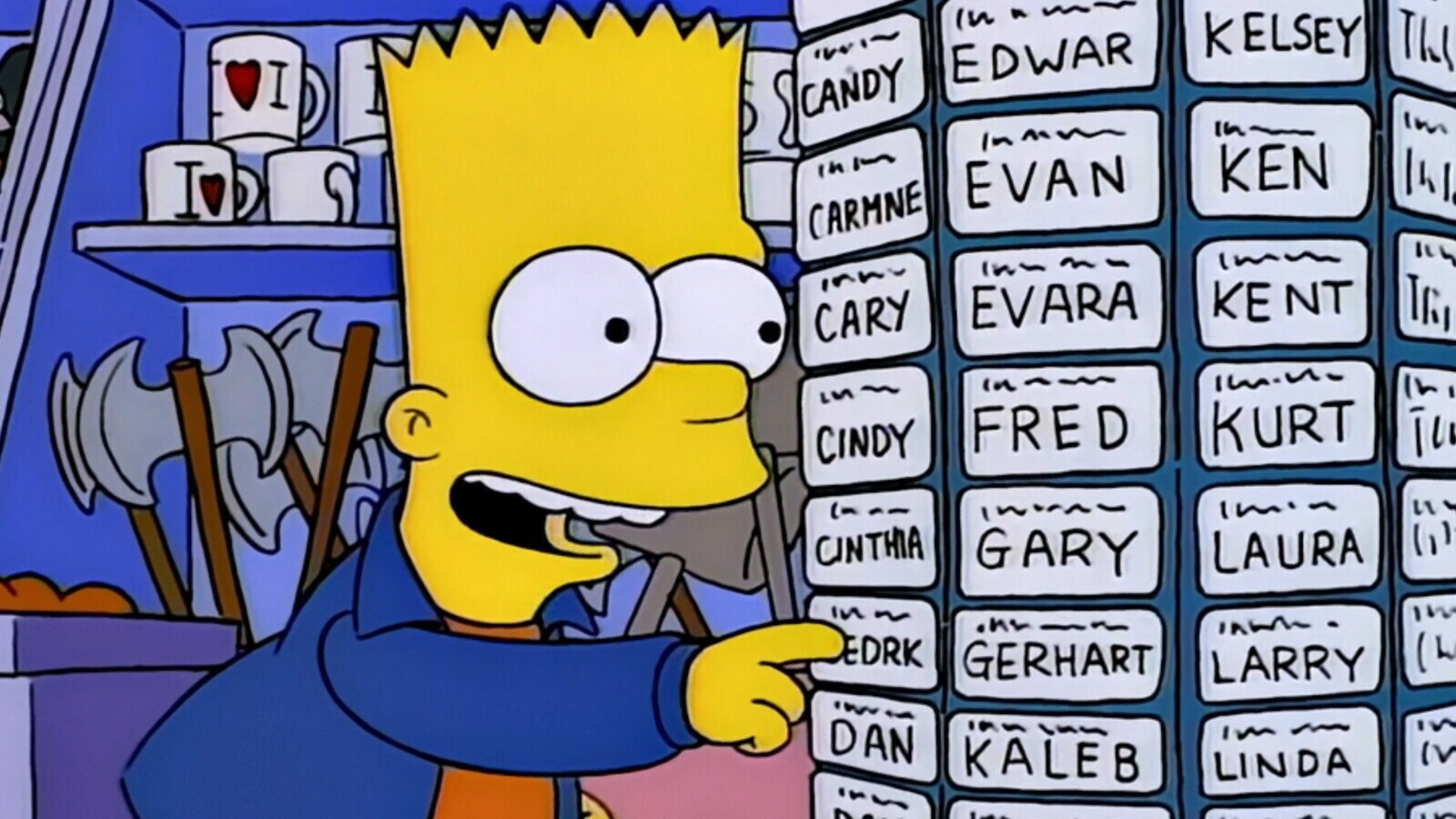
To understand why anyone would proudly drive around with “BORT” on a car, we need to return to Season 6, Episode 4 of The Simpsons, titled “Itchy & Scratchy Land.” The episode first aired in 1994 and follows the Simpson family on a trip to a violent, chaotic theme park based on the cat-and-mouse cartoon within the show.
During a gift shop scene, Bart looks through a rack of personalized novelty license plates. He finds names like Barclay, Barry, and Bert, but not Bart. Then he sees “Bort” and reacts with disbelief. Moments later, a mother calls to her child, also named Bort. Then an adult man thinks she is talking to him. The gag escalates from one absurd name to an entire mini-universe where Bort is apparently common enough to sell out at a theme park gift shop.
The humor works because it takes a familiar childhood frustrationnever finding your name on a souvenir rackand flips it into nonsense. Bart Simpson, one of the most famous fictional boys in television, cannot find “Bart.” But “Bort,” a name that sounds like a typo wearing sneakers, is in high demand.
Why “BORT” Became a Fan-Favorite Simpsons Reference
The “BORT” license plate gag is short, but it has stayed alive for decades because it is peak Simpsons: fast, weird, quotable, and oddly relatable. Great Simpsons jokes often work like comedy trapdoors. You think the joke is one thing, then the floor drops out and reveals a stranger joke underneath.
At first, the joke is simply that the gift shop has “Bort” but not “Bart.” Then the joke becomes that someone is actually named Bort. Then the joke becomes that multiple people are named Bort. Then the joke becomes that the park has somehow underestimated Bort demand. It is a perfect little machine of escalation.
That is why fans keep the gag alive through memes, Reddit posts, tattoos, novelty plates, collectibles, and custom car registrations. It is a password among Simpsons fans. If someone sees “BORT” and laughs, they are probably your people. If they do not laugh, they may still be perfectly nice, but they probably did not spend the 1990s memorizing cable reruns with the devotion of a monk copying sacred texts.
How a Fan Tribute Became a Tolling Headache
Most vanity plates are designed to express identity. They tell strangers, “I love dogs,” “I run marathons,” “I am a dentist,” or “I chose this combination because every better one was taken.” A BORT license plate does something more specific: it broadcasts a joke to a niche but enthusiastic audience.
That is the fun part. The not-so-fun part is that license plates are not just decoration. They are part of a public identification system. Toll roads, parking systems, law enforcement databases, and registration agencies rely on plates being accurate, unique, visible, and attached to the correct vehicle. A novelty plate may seem harmless when mounted for laughs, but if it is placed where a legal plate should be, it can create confusionor worse, shift costs and responsibility to someone else.
In Unis’s case, the “BORT” tribute reportedly became costly because other drivers’ souvenir plates were read as her legitimate Massachusetts registration. The toll system did what it was built to do: identify a plate and bill the registered owner. The glitch was that the plate being photographed was not actually hers.
Why the Massachusetts Plate Design Matters
One reason this story spread so quickly is that it feels almost too perfectly scripted. A fan buys a real “BORT” plate. Other fans buy fake “BORT” plates. Toll cameras treat the fake plates like the real one. The real fan receives the bills. It is a plot so Simpsons-like that you can practically hear the transition music.
But there is a practical detail here: plate design matters. Novelty plates inspired by the Itchy & Scratchy Land joke often use a white background and bold lettering. If a souvenir plate happens to resemble the general layout or readability of a state plate, automatic systems may have trouble distinguishing it at speed, at night, in rain, or from an imperfect camera angle.
That does not make the novelty plate legal. A decorative plate that says “Itchy & Scratchy Land” is not a government-issued registration. But cameras do not always understand comedy. They read shapes, letters, contrast, and patterns. They are excellent at many things; appreciating 1994 animated satire is not one of them.
The Bigger Lesson: Pop Culture Can Escape the Screen
The “BORT” license plate problem is not just a funny internet story. It is also a reminder that pop culture does not stay neatly inside TV episodes. A joke can become a meme. A meme can become merchandise. Merchandise can become a real-world object. A real-world object can interact with automated systems that were never designed to detect whether a driver is doing a bit.
This is the strange life cycle of modern fandom. People do not just watch shows anymore. They wear them, quote them, decorate homes with them, name pets after them, and sometimes register vehicles in their honor. That kind of fan participation is one reason The Simpsons has lasted so long as a cultural force.
Still, the BORT story shows the line between playful homage and practical trouble. A novelty plate on a wall? Great. A novelty plate in a collection room? Excellent. A novelty plate mounted on a vehicle and driven through toll gantries? That is where the joke starts billing the wrong person.
Why The Simpsons Still Inspires This Kind of Devotion
The Simpsons is not merely a long-running animated sitcom. It is a shared language for multiple generations. For many viewers, the show’s best jokes became family references, friend-group passwords, and internet shorthand. “BORT” belongs to the same universe of ultra-specific references as steamed hams, dental plans, monorails, and Mr. Sparkle.
Part of the magic is that the show built an enormous world out of tiny details. A one-off character, a background sign, or a single absurd line could become beloved. That depth rewards repeat viewing. Fans notice things, quote them, and turn them into rituals. The “BORT” gag is funny in the episode, but it becomes even funnier when fans recreate it in real life.
That is probably why Unis’s plate felt so charming before it became inconvenient. It was not just a random word. It was a wink to anyone who understood the joke. On a good day, a “BORT” license plate might make another driver laugh in traffic. On a bad day, it might make a toll authority mail you someone else’s invoice.
What Drivers Can Learn From the BORT Backfire
1. A Vanity Plate Is Still Legal Identification
Custom plates are fun, but they are also official records. If your plate becomes associated with errors, mistaken bills, or other drivers’ behavior, you may need to spend time disputing charges. The joke may be free. The administrative headache is not.
2. Novelty Plates Should Stay Off Public Roads
A decorative plate belongs on a wall, in a garage, or in a collector displaynot where a valid license plate should be. Even if someone thinks it is harmless, using a fake or decorative plate on the road can create confusion for toll systems, parking enforcement, and other identification tools.
3. Automated Systems Can Misread Context
Cameras and databases do not understand fandom. They process what they see. If they capture “BORT” and there is a real registered “BORT,” the system may connect the dots in the wrong direction. It is less “evil robot uprising” and more “bureaucratic robot shrug.”
4. Internet Fame Can Arrive Through the Weirdest Door
Unis likely expected her plate to make Simpsons fans smile. She probably did not expect it to become a viral cautionary tale about tolling, collectibles, and the dangers of being too good at a reference. That is the internet: one minute you are living your best fan life, the next minute your license plate has a character arc.
Why This Story Is So Funnyand So Frustrating
The reason the story caught fire is that it contains two emotions at once. First, it is genuinely funny. A Simpsons fan chose a plate based on a joke about personalized plates, only to be haunted by other personalized plate jokes. That is comedy symmetry so clean it should come with a chalkboard gag.
Second, it is genuinely annoying. Anyone who has dealt with mistaken bills knows the special exhaustion of proving you did not do something. It is not enough to be right. You have to call, document, dispute, wait, follow up, and hope the next notice does not arrive like a tiny paper ghost.
That combination makes the story relatable beyond The Simpsons fandom. Most people have had a joke go too far, a clever idea become complicated, or a system fail in a way that feels personally designed to test their patience. The difference is that most people’s paperwork problems are not named Bort.
The Cultural Power of One Silly Word
“Bort” is funny because it sounds almost like a name, but not quite. It has the bluntness of a cartoon sound effect and the awkwardness of a typo. It is short, memorable, and flexible. Fans can say it in almost any context and make another fan smile.
That is valuable in pop culture. The best references are portable. They can fit on a sticker, a mug, a comment thread, or a license plate. They do not require a long explanation, at least not for the initiated. “BORT” is a four-letter membership card.
But the plate controversy adds a new layer. Now “BORT” is not just a classic joke from “Itchy & Scratchy Land.” It is also a modern story about how fandom, merchandise, and automated infrastructure can collide. It proves that even the smallest pop culture reference can become surprisingly real when enough people repeat it.
Experiences Related to the “BORT” License Plate Backfire
Anyone who has ever loved a show enough to buy a ridiculous piece of merchandise can understand the emotional logic behind a “BORT” plate. Fan objects are not always about practicality. Nobody needs a novelty license plate from a fake violent theme park. Nobody needs a talking bottle opener shaped like Homer’s head. Nobody needs a framed print of a background gag from 1994. And yet, when you love something, those objects become tiny trophies of recognition.
The experience of seeing a niche reference in public is oddly powerful. Imagine sitting in traffic after a long workday, surrounded by gray sedans and brake lights, when you suddenly spot “BORT” on the car ahead. For a Simpsons fan, that is not just a plate. It is a little flare of joy. It says, “Someone else remembers.” It turns an ordinary road into a shared joke. For a few seconds, the commute becomes less boring, and the universe feels slightly more yellow.
That is the good side of fandom in public. The awkward side appears when the reference crosses into systems that do not understand humor. A friend might laugh at “BORT.” A toll camera will not. A cashier might appreciate your Comic Book Guy impression. A registration database will not. The lesson is not that fans should stop having fun. The lesson is that fan fun works best when it does not impersonate official identification, financial accounts, or anything that can generate a bill.
Many collectors have a similar story on a smaller scale: the clever sticker that confused a parking attendant, the novelty sign that looked too official, the costume prop that created an airport security delay, or the custom username that seemed hilarious until customer support had to read it aloud. Pop culture jokes often feel private when we create them, but once they enter the public world, they interact with people and systems we did not plan for.
The “BORT” situation is memorable because it is both extreme and understandable. Unis chose a plate that made perfect sense within her fandom. Other fans bought similar novelty plates because the joke is famous. Toll cameras did not know the difference. Suddenly, the world’s nerdiest inside joke became a customer service issue. That is frustrating, but it is also a strangely perfect tribute to The Simpsons, a show that has always found comedy in the gap between human silliness and institutional incompetence.
For fans, the takeaway is simple: celebrate boldly, but mount wisely. Put the novelty plate in the garage. Hang it in the media room. Display it next to the action figures, the DVDs, and the collectible you swear will be worth something someday. Just do not let a toll camera think your joke is legally responsible for a Honda three exits away.
Conclusion
The story of the Simpsons fan BORT license plate is funny because it feels like it escaped from the show itself. A joke about a personalized souvenir plate became a real vanity plate, then backfired because other souvenir plates were treated like the real thing. That is not just irony. That is Springfield-grade irony, served with a side of paperwork.
At its heart, the incident shows how deeply The Simpsons has embedded itself in American pop culture. A four-letter nonsense name from a brief 1994 gag still has enough power to inspire merchandise, vanity plates, viral stories, and toll disputes. Not bad for Bort, a name that began as a punchline and somehow became a public infrastructure problem.
For fans, the story is a reminder to keep loving the referencesbut maybe keep the novelty plates off the road. After all, being a Simpsons fan should cost you time, shelf space, and maybe a little dignity. It should not cost you someone else’s tolls.
Note: This article is original, written in standard American English, and based on publicly reported information about the real “BORT” license plate incident, The Simpsons episode history, Massachusetts vanity plates, and electronic tolling systems. No source links or citation placeholders are included in the publishable body copy.