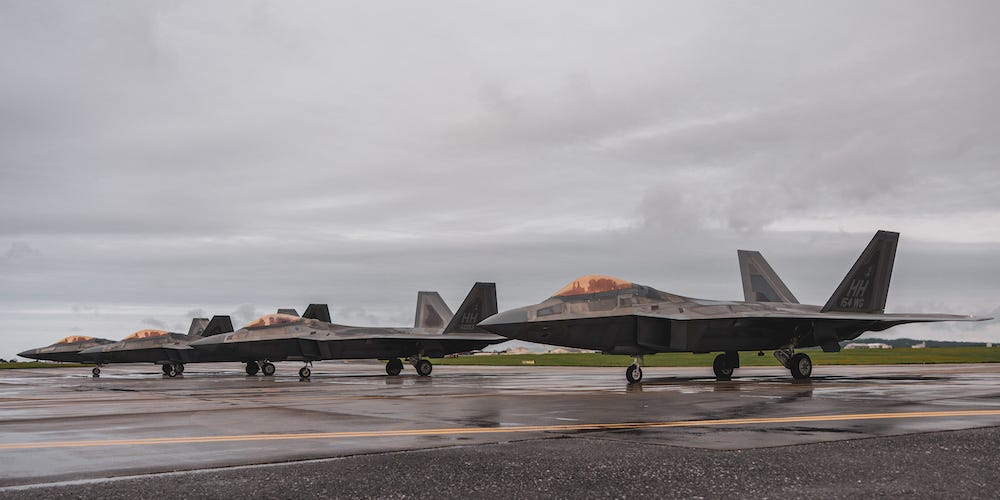
America owns some of the most advanced military aircraft on Earth. The F-22 Raptor can slip through contested airspace like a rumor. The F-35 Lightning II is basically a flying sensor network with missiles. The Navy’s F/A-18E/F Super Hornet remains the workhorse of carrier aviation, doing everything from air defense to strike missions to buddy refueling. On paper, it is a fearsome lineup.
But a report from the U.S. Government Accountability Office, along with later watchdog findings and defense readiness data, points to a less cinematic reality: hundreds of key U.S. warplanes are not ready for combat at any given time. The problem is not that America suddenly forgot how to build aircraft. It is that modern warplanes are extraordinarily complex, aging fleets are expensive to keep alive, spare parts do not magically appear like pizza delivery, and maintenance systems are straining under years of heavy use.
For readers searching for the meaning behind the phrase “U.S. warplanes not ready for combat,” the issue centers on mission-capable rates. That metric measures the percentage of time aircraft can fly and perform at least one assigned mission. It is not the only readiness metric, but it is an important warning light on the dashboard. And right now, that warning light is blinking like a Christmas tree in a thunderstorm.
What the Report Found About U.S. Warplane Readiness
The GAO found that mission-capable rates and related maintenance trends had worsened since fiscal year 2015 for selected Air Force and Navy aircraft. The aircraft reviewed included some of the most strategically important platforms in the U.S. arsenal, such as the F-22 Raptor, F/A-18E/F Super Hornet, P-8A Poseidon, KC-135 tanker, C-130 variants, and other fixed-wing aircraft.
The report did not say every aircraft was broken beyond hope. Instead, it revealed a persistent readiness gap: too many aircraft were spending too much time unavailable because of maintenance, parts shortages, inspections, depot delays, aging components, or other sustainment problems. In simple terms, the military has plenty of aircraft on the inventory sheet, but not all of them are ready to launch when needed.
That distinction matters. A fighter sitting on a ramp with a missing part still counts as part of the fleet, but it does not count as a combat-ready aircraft. A bomber undergoing long-term depot maintenance still exists, but it cannot help generate immediate airpower. A Super Hornet waiting for an engine module is not useless forever, but it is not helping a carrier air wing today.
Mission-Capable Rate: The Number Behind the Alarm
The mission-capable rate is one of the clearest ways to explain military aircraft readiness to the public. If a fleet has 100 aircraft and the mission-capable rate is 60 percent, roughly 60 aircraft are available to fly and perform at least one mission during the measured period. That does not necessarily mean the other 40 are doomed. It means they are temporarily unavailable because something needs fixing, replacing, inspecting, updating, or scheduling.
There is also a tougher standard called the full mission-capable rate. An aircraft may be mission-capable if it can perform one assigned mission, but full mission-capable means it can perform all of its tasked missions. For a multi-role aircraft like the F-35 or F/A-18E/F, that difference is enormous. A jet may be able to fly a training sortie but not be ready for the most demanding combat package.
This is why the headline matters. “Not ready for combat” does not mean every aircraft is sitting sadly in a hangar wearing a tiny cone of shame. It means the U.S. military’s ability to generate airpower is constrained by the number of aircraft that are actually available, properly maintained, and ready for operational use.
Why the F-22 Raptor Is a Readiness Case Study
The F-22 Raptor is one of the most capable air superiority fighters ever built, but it is also a small, specialized, aging fleet. The United States ended F-22 production years ago, leaving the Air Force with a limited number of aircraft and no easy way to buy more. That makes every unavailable F-22 especially important.
The Raptor’s readiness challenges reflect a broader truth about fifth-generation aircraft: stealth is powerful, but stealth is also maintenance-intensive. Low-observable coatings, specialized components, advanced avionics, and unique supply chains all add complexity. Keeping an F-22 ready is not like changing oil in a pickup truck. It is closer to maintaining a race car, a supercomputer, and a classified science project at the same time.
When mission-capable rates fall, commanders still prioritize operational units and deployments. That means the most urgent missions usually get aircraft first. But the trade-off often appears in training, scheduling flexibility, pilot proficiency, and long-term fleet health. You can surge readiness for a crisis, but you cannot surge a missing supply chain overnight.
The Navy’s Super Hornet Problem
The F/A-18E/F Super Hornet remains the backbone of the Navy’s carrier air wing. It is a versatile platform used for air-to-air combat, precision strike, close air support, reconnaissance, and aerial refueling. In the glamorous world of naval aviation, the Super Hornet is the dependable multitasker that shows up early, stays late, and still gets asked to bring snacks.
But workhorses wear down. The Super Hornet fleet has endured years of carrier deployments, high operational tempo, saltwater environments, and constant demand. Aircraft that launch from carriers experience stresses that land-based aircraft do not. Catapult shots and arrested landings are engineering miracles, but they are not gentle spa treatments.
The Navy has made readiness improvement efforts, including work at Fleet Readiness Centers and engine repair lines. However, the Super Hornet’s readiness story shows how fixing one bottleneck can create pressure somewhere else. Increasing engine output, for example, can drain parts inventories if supply chains are not ready to keep pace. In military aviation maintenance, one solved problem can politely introduce three new cousins.
The F-35: Advanced Jet, Advanced Headache
The F-35 Lightning II is central to the future of U.S. and allied airpower. It brings stealth, advanced sensors, data fusion, electronic warfare capabilities, and interoperability with partner nations. It is also the Pentagon’s largest acquisition program, with lifetime costs measured in the trillions.
Yet the F-35 has struggled with readiness and sustainment. Watchdog reports have pointed to mission-capable rates below program goals, delays in depot repair capacity, shortages of spare parts, and dependence on contractor-managed sustainment systems. In one GAO finding, the F-35 fleet’s mission-capable rate was about 55 percent in March 2023, far below stated objectives.
The F-35 problem is not only about whether the jet is good. In many ways, the aircraft is extremely capable. The deeper question is whether the sustainment system can support a growing global fleet at the pace required for real-world operations. A stealth fighter is only as useful as the maintenance ecosystem behind it. Without parts, trained maintainers, repair capacity, software support, and predictable supply chains, even the smartest aircraft becomes a very expensive lawn ornament.
Why So Many U.S. Military Aircraft Are Not Ready
1. Aging Aircraft Fleets
Many U.S. aircraft are older than the pilots flying them. Some tankers, bombers, trainers, and support aircraft have been in service for decades. Age brings structural fatigue, obsolete parts, corrosion, wiring issues, and growing inspection requirements. Older aircraft can remain useful, but the cost and effort required to keep them flying usually rise over time.
2. Spare Parts Shortages
Aircraft readiness often comes down to parts. A jet may be perfectly healthy except for one missing component. Unfortunately, that one component may be backordered, stuck in repair, dependent on a single supplier, or no longer produced at scale. This is where a billion-dollar aircraft can be grounded by a part that sounds boring enough to make a dinner guest change seats.
3. Depot Maintenance Backlogs
Depot maintenance is heavy, specialized repair work performed at dedicated facilities. When depots fall behind, aircraft and components wait longer to return to service. For advanced aircraft, depot capacity is especially important because certain repairs require unique equipment, technical data, trained personnel, and certified processes.
4. Shortage of Skilled Maintainers
Aircraft maintainers are the invisible backbone of military aviation. Pilots get the movie posters, but maintainers make the launch possible. Shortages of experienced maintenance personnel can slow inspections, repairs, troubleshooting, and quality control. Training new maintainers takes time, and the most valuable expertise often comes from years on the flight line.
5. Heavy Operational Demand
The U.S. military uses its aircraft constantly for deterrence missions, training, deployments, homeland defense, exercises, crisis response, and allied reassurance. Flying more helps pilots and crews stay sharp, but it also consumes aircraft life and increases maintenance demand. Readiness is a balancing act between using aircraft today and preserving them for tomorrow.
Why This Matters for National Security
Aircraft readiness is not an accounting problem. It is a combat power problem. If fewer aircraft are available, commanders have fewer options. That affects deterrence, crisis response, pilot training, carrier air wing strength, tanker availability, and the ability to surge forces in a major conflict.
In a high-end fight against a technologically advanced adversary, availability matters as much as capability. A smaller number of exquisite aircraft can be powerful, but only if enough of them are ready. Air superiority, strike missions, intelligence gathering, electronic attack, aerial refueling, and maritime patrol all depend on aircraft that can launch, complete the mission, and return for another sortie.
The Indo-Pacific theater highlights the issue. Distances are vast, bases may be vulnerable, logistics lines are long, and aircraft may need to operate from dispersed locations. In that environment, maintenance resilience is not a back-office concern. It is part of the fight.
Is the Situation as Bad as It Sounds?
Yes and no. The readiness data is serious, but it needs context. Mission-capable rates are useful, but they do not tell the whole story. Military services often prioritize aircraft for operational deployments, meaning frontline units may have better access to available aircraft than training or stateside units. The U.S. can also surge aircraft for specific missions by shifting maintenance focus, parts, and manpower.
That said, surge capacity is not magic. If a fleet is chronically short of parts, maintainers, depot throughput, and repair capacity, a crisis can expose the weak spots quickly. Readiness is like physical fitness: you can push hard for a big event, but you cannot fake years of conditioning.
What the Pentagon and Services Are Trying to Do
The Department of Defense, Air Force, Navy, and Marine Corps have pursued multiple readiness improvement efforts. These include sustainment reviews, depot modernization, improved parts forecasting, performance-based logistics reforms, targeted funding for weapon system sustainment, and attempts to strengthen the defense industrial base.
The Air Force has emphasized modernization, readiness, and the need to retire or replace aircraft that cost too much to maintain relative to their combat value. The Navy has worked to improve Super Hornet readiness through maintenance initiatives and parts management. The F-35 program continues to face pressure to improve sustainment, reduce repair delays, and clarify the balance between government and contractor responsibility.
The challenge is that every solution costs money, time, and political will. Buying new aircraft is expensive. Maintaining old aircraft is expensive. Retiring aircraft can reduce capacity before replacements are ready. Modernizing depots takes years. Expanding parts production requires stable demand and supplier investment. In defense planning, there is rarely a free lunch; sometimes there is not even a discounted sandwich.
What Should Change Next?
First, the services need better sustainment planning before aircraft enter service at scale. A fighter program should not treat spare parts, repair data, and depot capacity as afterthoughts. Sustainment is not the boring sequel to acquisition; it is the part of the movie where the hero either survives or gets stranded.
Second, the Pentagon should reduce single points of failure in supply chains. If one supplier, one depot, or one proprietary data arrangement can slow an entire fleet, readiness becomes fragile. Technical data rights, repair competition, and organic depot capacity may sound like inside-baseball issues, but they directly affect how many aircraft can fly.
Third, Congress and the services should connect readiness goals to realistic funding. Setting high mission-capable targets is easy. Paying for the parts, people, facilities, and repair capacity to reach them is the hard part. A readiness goal without a sustainment plan is basically a motivational poster with wings.
Finally, the military needs to protect training readiness, not just deployment readiness. If working aircraft are constantly shifted toward operational missions, stateside training can suffer. A pilot who cannot fly enough hours is not getting better. A maintainer who is constantly cannibalizing parts from one aircraft to fix another is not working in a healthy system.
Experience-Based Perspective: What Aircraft Readiness Looks Like on the Ground
To understand this issue beyond the numbers, imagine a typical military flight line before sunrise. The aircraft look impressive from a distance: sharp noses, folded ladders, warning tags, fuel trucks, toolboxes, and maintenance crews moving with practiced urgency. But readiness is not decided by how intimidating the jets look in photos. It is decided by thousands of small details that must all go right.
A crew chief checks forms and sees that one aircraft is waiting on a component. Another jet has a sensor fault that appeared during the last sortie. A third needs an inspection before it can be released. A fourth is technically flyable, but not for the mission scheduled that morning. The squadron still has training requirements, pilot currency needs, and operational taskings. So the team adjusts. Schedules shift. Parts are tracked. Maintenance controllers make calls. Supervisors decide which aircraft gets priority. The day becomes a puzzle, except the puzzle weighs 30,000 pounds and burns jet fuel.
This is why aircraft readiness can feel so frustrating to people outside the military. A jet may look complete, but one unavailable part can ground it. A squadron may own many aircraft, but only a portion may be ready for a specific mission. A maintenance team may work brilliantly and still lose time because a component has to move through a depot pipeline. The public sees the aircraft. The maintainers see the entire ecosystem.
There is also a human side. Maintenance crews often work long shifts in heat, cold, rain, wind, and noise. Carrier aviation adds cramped decks, salt air, moving ships, and the delightful workplace ambiance of jet blast. Air Force maintainers may support aircraft older than the newest airmen’s parents. F-35 maintainers work with software-heavy systems and specialized low-observable requirements. None of this is glamorous, but it is the difference between a combat-ready aircraft and an expensive display piece.
From an operational perspective, low readiness creates a chain reaction. Pilots may get fewer training sorties. Instructors may have to compress schedules. Commanders may save the best aircraft for deployments, leaving home units to stretch what remains. Maintenance crews may cannibalize parts from one aircraft to fix another, which solves today’s problem while creating tomorrow’s headache. Depot delays can leave squadrons waiting for components that are essential but invisible to outsiders.
The lesson is simple: readiness is not built on the day a crisis begins. It is built months and years earlier through boring but vital investments in spare parts, maintainers, repair facilities, technical data, software support, and realistic flying-hour plans. The country that wants combat power on demand must pay for maintenance before the demand arrives.
That may be the most important takeaway from the report. The United States still has extraordinary airpower, unmatched experience, and some of the world’s most advanced aircraft. But advanced aircraft do not maintain themselves. If America wants more warplanes ready for combat, it must treat sustainment as a frontline mission, not a budget footnote.
Conclusion
The finding that hundreds of key U.S. warplanes are not ready for combat should not be dismissed as bureaucratic drama. It is a serious warning about the gap between aircraft inventory and actual available combat power. The U.S. military has world-class aircraft, but readiness depends on maintenance capacity, parts availability, skilled personnel, depot performance, and long-term sustainment planning.
The solution is not simply to buy shiny new jets or squeeze more work from already busy maintainers. The solution is a smarter readiness ecosystem: stronger supply chains, better depot throughput, realistic funding, technical data access, trained maintenance personnel, and modernization plans that do not leave today’s fleets limping while tomorrow’s aircraft are delayed.
America’s warplanes remain powerful. The question is how many can fly, fight, and return when the nation needs them. That is the readiness test that matters most.
Note: This article is written for web publication in standard American English and is based on real defense readiness reporting, official watchdog findings, and public military aviation sustainment data.