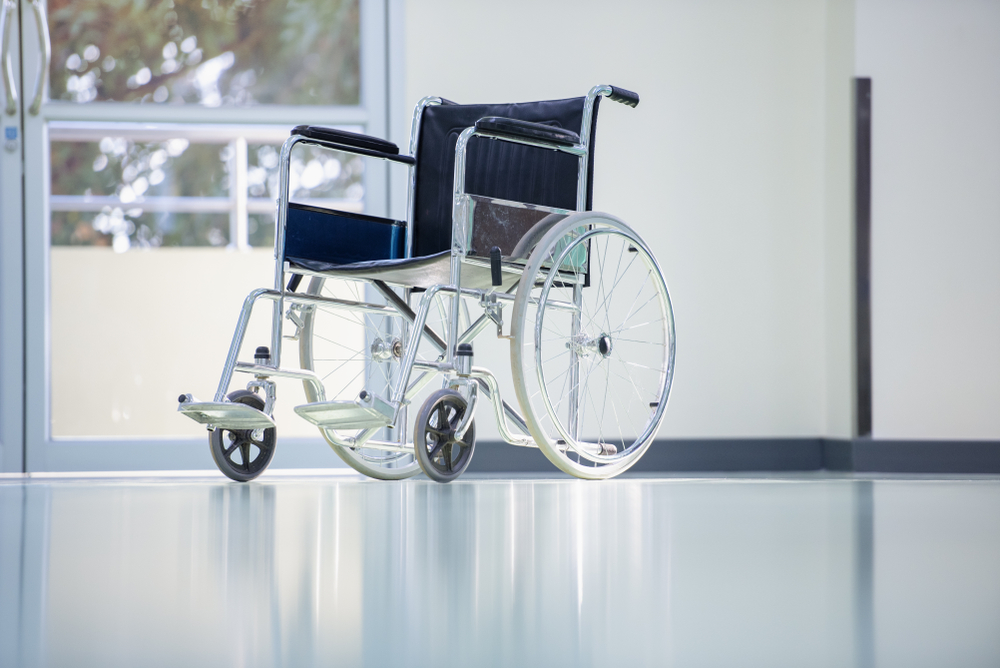
Medicine loves to describe itself as a profession built on intelligence, grit, and compassion. Fair enough. But if we are being honest, it has also been built on a stubborn myth: that the ideal doctor looks, moves, hears, learns, and works in one narrow, traditional way. That myth is not just outdated. It is harmful.
Disability inclusion in medicine is no longer a side conversation for diversity committees, conference panels, or the occasional well-meaning webinar with lukewarm coffee. It is a workforce issue, a patient care issue, a civil rights issue, and, frankly, a credibility issue. In a country where more than one in four adults lives with a disability, medicine still underrepresents disabled physicians and often underserves disabled patients. That gap should make the entire profession sit up a little straighter. Or at least wheel itself closer to the problem.
Source basis: U.S. disability prevalence and health-care access statistics.
The case for disability inclusion is simple: medicine cannot claim to serve everybody while structurally excluding a massive part of the population from training, leadership, and care design. A more disability-inclusive medical culture would not lower standards. It would update them. It would replace outdated assumptions with evidence, make training environments more accessible, and produce a physician workforce that is better prepared to care for real patients in the real world.
Why disability inclusion in medicine cannot wait
The urgency starts with scale. In the United States, over 61 million adults report having a disability. The NIH has also designated people with disabilities as a population with health disparities, which is a major acknowledgement that poorer outcomes are not simply the result of diagnosis or impairment, but also of barriers built into systems, settings, and policies. When a group this large encounters structural obstacles to care, the issue is not niche. It is central. Source basis: CDC prevalence and NIH/NIMHD designation.
Now compare that with the physician workforce. A national study of practicing U.S. physicians found that only about 3.1% self-identified as having a disability. Another AAMC summary put it even more plainly: while roughly a quarter of Americans have a disability, only about 3% of doctors do. That mismatch is not a coincidence. It is the visible result of years of narrow admissions practices, confusing technical standards, inaccessible learning environments, stigma around disclosure, and a professional culture that too often treats disability as a problem to hide rather than a perspective to value. Source basis: physician prevalence.
This underrepresentation matters because representation shapes care. Patients notice who is in the room, who understands adaptation, who knows that access is more than a ramp near the parking lot, and who can distinguish a medical need from a preventable barrier. Inclusion in medicine is not symbolism in a white coat. It is infrastructure for better care.
The pipeline is improving, but it is still leaking badly
There has been progress in medical education, but it is not yet enough to celebrate with confetti cannons. Research on U.S. medical schools found that the percentage of students reporting disabilities rose from 2.7% in 2016 to 4.6% in 2019, a 69% relative increase. A later national estimate across MD- and DO-granting programs put the pooled prevalence at 4.52%, with ADHD, psychological disabilities, and chronic health conditions among the most frequently reported categories. These numbers suggest that more disabled students are entering medicine or, just as importantly, feeling able to disclose. Both are meaningful signs of progress. Source basis: medical student prevalence and disability categories.
But the pipeline still narrows as training advances. Medical student representation remains well below disability prevalence in the broader public, and the drop between school and practice is glaring. That tells us something important: getting in is only one part of the problem. Staying in, advancing, and thriving are where inclusion often breaks down.
Disclosure is still risky
For many trainees, disability disclosure feels less like opening a door and more like stepping onto a trapdoor. Students and residents routinely worry that asking for accommodations will brand them as less capable, less reliable, or less “fit” for the profession. Those fears are not paranoid. They are grounded in how medicine has historically framed endurance as virtue and adaptation as weakness.
The irony is almost painful. Medicine is full of people who pride themselves on problem-solving, yet it can become wildly unimaginative when the problem is access. A student using assistive technology is seen as complicated. A physician requesting schedule flexibility for treatment is seen as inconvenient. A resident asking for clear accommodation procedures is treated like they are bringing bureaucracy to a profession already swimming in it. That is not professionalism. That is ableism wearing a stethoscope.
Technical standards are still too often written like gatekeeping manuals
One of the biggest barriers is the way some medical schools structure technical standards for admission, progression, and graduation. The AMA Journal of Ethics has noted that some schools still use standards that explicitly forbid accommodations such as intermediaries and interpreters. In other words, a qualified applicant can be discouraged or screened out not because they cannot do the job, but because an institution has defined the job too narrowly. Source basis: technical standards and accommodations.
That approach mistakes method for competence. A good physician does not become “less good” because they use captioning, a sign language interpreter, adaptive devices, mobility aids, or modified workflows. Competence should be measured by outcomes, judgment, ethics, communication, and patient care, not by nostalgia for the way training looked decades ago.
Why disability inclusion makes medicine better for patients
Here is the uncomfortable truth: medicine does not just underinclude disabled professionals. It often underprepares non-disabled clinicians to care for disabled patients. One widely cited national survey of practicing physicians found that 82.4% believed people with significant disabilities have a worse quality of life than non-disabled people. Fewer than half were very confident in their ability to provide equal quality care, and only a modest majority strongly agreed they welcomed disabled patients into their practices. That is not just a knowledge gap. That is a bias problem with clinical consequences. Source basis: physician attitudes and confidence.
Bias affects communication, diagnostic reasoning, treatment planning, and even the assumptions clinicians make about what kind of life a patient considers meaningful. If a physician quietly assumes disability equals suffering, dependence, or diminished quality of life, that assumption can bleed into counseling, triage decisions, goals-of-care discussions, and everyday interactions. Patients feel that. They may not quote the literature, but they absolutely feel it.
Disabled physicians and trainees bring invaluable insight to this problem. They often understand accessibility not as an abstract policy term, but as a daily operational reality. They know how systems fail in small ways that add up: the inaccessible exam table, the rushed interpreter arrangement, the intake form that erases communication needs, the clinic schedule that assumes every patient can transfer, hear, read, wait, and respond in the same way. Those experiences can sharpen clinical judgment and improve institutional design.
Inclusion also supports the principle patients have repeated for years: nothing about us without us. If medicine wants to reduce disability-related health disparities, disabled people must be included not only as patients and research participants but also as students, residents, faculty, administrators, and policy shapers.
The curriculum has to change, not just the brochure
A glossy diversity statement is nice. A disability-inclusive curriculum is better. Reports cited in recent medical education literature note that only about 52% of U.S. medical schools had some form of disability awareness content in their curriculum. That is a stunningly low bar for a profession that routinely serves disabled patients across every specialty. Source basis: disability education in medical schools.
Disability education should not be squeezed into a single lecture that treats disabled people as a special topic sandwiched between rare diseases and billing. It should be threaded throughout training. Students should learn disability history, civil rights law, communication strategies, anti-ableist practice, accessible physical exam techniques, use of assistive technology, care coordination, and the difference between a limitation caused by a diagnosis and one caused by the environment.
They should also be taught humility. Not the performative kind where everyone nods solemnly and then forgets the lesson by rounds. Real humility. The kind that helps a clinician ask, “What barriers am I not seeing?” rather than assuming expertise because they passed an exam.
What better training actually looks like
- Admissions policies that explicitly welcome qualified applicants with disabilities.
- Technical standards written around functional outcomes, with reasonable accommodations clearly allowed.
- Faculty development on disability law, inclusive teaching, and accessible assessment.
- Routine disability-health content integrated across courses, clerkships, and residency.
- Partnerships with disabled patients, advocates, and clinicians in curriculum design.
- Clear, confidential, fast accommodation processes that do not make trainees beg for basics.
None of this is radical. It is what modern professional education should already be doing.
Access is not just about attitudes. It is also about equipment, policy, and design.
Even the best intentions fall apart in an inaccessible building with inaccessible equipment and vague rules. That is why recent policy developments matter. HHS says the 2024 Section 504 final rule strengthens protections against disability discrimination, addresses discrimination in medical treatment, adds enforceable standards for accessible medical diagnostic equipment, and requires accessible web content and mobile apps for covered entities. ADA guidance similarly makes clear that public entities using medical diagnostic equipment must ensure their services are accessible, cannot deny care because they lack accessible equipment, and must have qualified staff who can operate that equipment and assist patients properly. Source basis: Section 504 and ADA medical diagnostic equipment rule.
That matters because accessibility failures are often embarrassingly practical. A patient cannot get on the exam table. A wheelchair user cannot be weighed. A clinic expects a disabled patient to bring a helper when it would never ask that of anyone else. A digital portal is unreadable by screen readers. These are not minor inconveniences. They are care barriers.
Training programs are also under growing pressure to do better. The ACGME’s Common Program Requirements say residency programs must provide accommodations for residents with disabilities consistent with institutional policy and applicable law. The organization has also developed a Disability Resource Hub in collaboration with the Docs with Disabilities Initiative, a sign that disability inclusion is moving closer to the center of graduate medical education rather than living permanently in the footnotes. Source basis: ACGME requirements and hub.
The cost of exclusion is human, educational, and clinical
Exclusion is not only unfair. It is expensive in all the wrong ways. When institutions make access difficult, they lose talented applicants, burn out trainees, increase attrition, and weaken patient care. A cohort study of resident physicians found that when disabled residents reported their access needs were not met, they showed a greater increase in depressive symptoms and were far more likely to report major medical errors. Among those without program access, 42.9% reported a major medical error in the last three months, compared with 13.9% of nondisabled residents. By contrast, disabled residents whose access needs were met did not significantly differ from nondisabled residents on depressive symptoms or self-reported errors. That is a neon sign flashing the obvious point: access is not a perk. It is a patient safety issue. Source basis: resident access, depression, and medical errors.
Discrimination compounds the damage. Recent national data indicate medical students with disabilities are more likely than peers without disabilities to report general discrimination. In one 2025 analysis, students with disabilities had a relative risk of 1.57 for general discrimination. This is where medicine’s self-image starts to crack. A profession that claims excellence cannot normalize environments where talented trainees spend precious cognitive energy managing bias, decoding policy ambiguity, and deciding whether it is safe to ask for what they need. Source basis: discrimination risk among medical students with disabilities.
What institutions should do next
The solution is not mysterious. Medical schools, residency programs, hospitals, and licensing bodies should stop treating disability inclusion as a courtesy and start treating it as operational excellence.
First, redefine merit more honestly
Merit in medicine should be tied to competence, clinical reasoning, communication, professionalism, and patient outcomes. It should not be tied to whether someone performs tasks in one historically preferred way. The profession needs functional standards, not exclusionary folklore.
Second, build systems people can actually use
Accommodation processes should be transparent, timely, confidential, and standardized. A student or resident should not need a scavenger hunt, a legal dictionary, and saint-level patience to request access.
Third, teach disability across the continuum
Disability health should appear in preclinical education, clerkships, simulation, residency, continuing medical education, and leadership training. Not once. Repeatedly.
Fourth, include disabled people in decision-making
Disabled clinicians, trainees, staff, and patients should be involved in admissions reform, policy writing, curriculum design, accessibility audits, and quality improvement. Inclusion designed without disabled people usually ends up looking inclusive only from across the room.
Fifth, measure what matters
Institutions should track disclosure climate, accommodation outcomes, learner retention, patient accessibility complaints, curriculum coverage, faculty representation, and promotion pathways. What gets measured gets improved. What stays vague stays broken.
Experiences that show why this issue is so personal
Published reports and lived-experience summaries paint a consistent picture: disability inclusion in medicine is not mainly derailed by lack of talent. It is derailed by friction, fear, and fatigue. A student with a mobility disability may technically be admitted, yet still spend months navigating anatomy labs, clinic spaces, and transport routes that were clearly designed with someone else in mind. A deaf or hard-of-hearing trainee may be told that the institution supports inclusion, only to discover that interpreter arrangements are treated like unusual favors instead of routine planning. A resident with ADHD, a chronic illness, or a psychological disability may look “fine” on the outside while quietly rationing medication, sleep, disclosure, and dignity just to keep up with a system that rewards invisibility.
These experiences matter because they are rarely dramatic enough to make headlines. The barriers are often ordinary. A clerkship evaluation that punishes a trainee for using adaptive communication methods. A faculty member who confuses accommodation with unfair advantage. A testing setup that becomes accessible only after repeated requests. A hospital portal that technically exists but practically excludes. A culture where asking for access feels riskier than going without it.
There are also powerful experiences on the other side of the equation. When access is built in early, disabled trainees do not merely survive; they contribute in ways institutions often failed to imagine. They mentor younger students. They identify hidden workflow problems before they become patient safety issues. They broaden how teams think about communication, autonomy, pain, quality of life, and informed consent. Patients with disabilities may feel understood more quickly, and non-disabled patients benefit too, because clinicians trained in accessible care are usually better communicators overall. Inclusion rarely helps just one group. It tends to improve the whole room.
One of the most revealing patterns in disability inclusion work is how often the real obstacle is not a diagnosis but a design choice. The student is capable. The process is not. The resident is ready. The policy is vague. The physician is skilled. The clinic is inaccessible. Once you notice that pattern, the conversation changes. Disability inclusion stops sounding like charity and starts sounding like quality improvement.
That is why the emotional side of this issue cannot be ignored. Many disabled trainees describe spending years deciding when to disclose, how much to disclose, and whether disclosure will cost them opportunities. That constant calculation is exhausting. It also steals attention from learning and patient care. Medicine should not force talented people to choose between authenticity and advancement. A profession dedicated to healing should not make access feel like a private battle fought in every new classroom, program, and hospital corridor.
And yet, many keep pushing forward. They keep showing up, adapting, excelling, and making the profession better in the process. Their experiences expose what is broken, but they also show what is possible. When a program has clear policies, informed leadership, accessible environments, and a culture that assumes belonging rather than exception, disability inclusion stops being an aspiration and becomes a normal part of excellence. That is the standard medicine should be chasing.
Conclusion
Disability inclusion in medicine is urgent because exclusion is still doing damage every day. It narrows the pipeline into medicine, worsens trainee well-being, undermines patient trust, weakens care quality, and leaves the profession less representative of the public it serves. The old excuses do not hold up. The law is clearer. The evidence is stronger. The need is bigger than ever.
Medicine does not need fewer disabled learners and physicians. It needs fewer inaccessible structures, fewer lazy assumptions, and fewer policies that confuse tradition with excellence. Breaking barriers is not about being generous. It is about being accurate, competent, and just. A profession that prides itself on solving hard problems should be able to solve this one too.