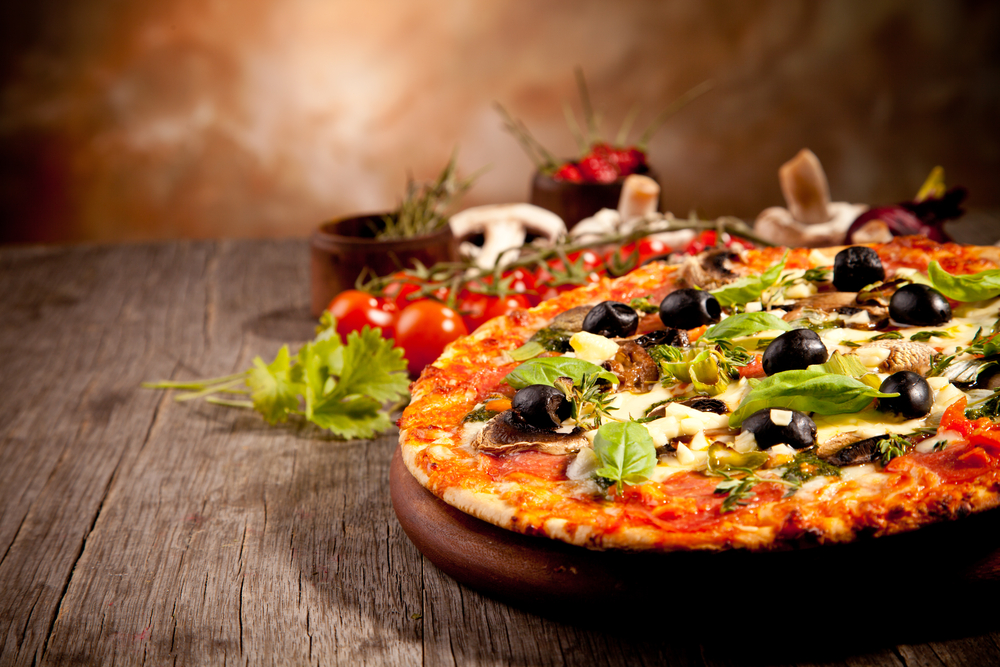
Imagine a small pizza shop on a busy corner in America. The owner wakes before sunrise, kneads dough, chops vegetables, checks the ovens, greets the delivery driver, argues gently with a basil supplier, and opens the door with the optimism of a person who believes melted cheese can still save civilization. Customers come in, order pizza, pay money, eat happily, and leave. Beautiful, right? A business transaction so simple it could fit on a napkin.
Then the system arrives.
One customer says, “I have pizza insurance.” Another says the pizza must be pre-approved before it can be baked. A third explains that pepperoni is covered only on Tuesdays, unless the cheese is considered specialty cheese, in which case a separate form is required. Soon the owner is no longer just making pizza. He is hiring billing clerks, arguing over codes, waiting for reimbursements, documenting crust thickness, proving the mushrooms were medicallysorry, gastronomicallynecessary, and wondering why his once-joyful pizza shop now feels like a paperwork lasagna.
That is the heart of The Parable of the Pizza Shop: a funny, slightly painful story about what happens when a simple human service becomes buried under complicated rules, middlemen, delays, and invisible costs. It works as a business lesson, a healthcare metaphor, and a reminder that systems should help people, not turn everyone into unpaid form detectives.
What Is “The Parable of the Pizza Shop” Really About?
At first glance, the pizza shop parable sounds like a quirky business fable. A man opens a pizza shop. Customers want pizza. He wants to make pizza. Society should be at peace. But as more outside organizations enter the storyinsurers, reviewers, regulators, quality programs, rating agencies, technology vendors, and payment processorsthe owner spends less time serving customers and more time satisfying everyone except customers.
The parable is often read as a critique of the American healthcare system. Instead of a patient seeing a doctor, receiving care, and paying a clear price, there may be insurance networks, prior authorizations, coding rules, claim denials, surprise bills, documentation requirements, quality metrics, and appeals. The doctor becomes like the pizza maker: trained to help people, but increasingly trapped in an obstacle course designed by committees that apparently believe joy is suspicious.
The power of the story is not that pizza and healthcare are identical. They are not. Nobody needs emergency mushroom removal at 2 a.m. But the comparison is useful because pizza is familiar. We understand what a straightforward transaction looks like. So when the pizza shop becomes absurd, we can suddenly see the absurdity hiding inside more serious systems.
The Simple Pizza Shop: A Model of Direct Value
In the beginning, the pizza shop has a clean value chain. The owner buys ingredients, prepares food, serves customers, collects payment, and improves based on feedback. If the crust is too floppy, customers complain. If the sauce tastes like someone whispered “tomato” into a bowl of sadness, the owner adjusts the recipe. Market feedback arrives quickly, sometimes with Yelp stars, sometimes with Aunt Linda saying, “Honey, this needs salt.”
This is how many small businesses begin. The U.S. Small Business Administration emphasizes planning, costs, customers, competition, and financial projections because a business survives by understanding what it sells, who it serves, and how money moves. For a pizza shop, that means food costs, labor, rent, equipment, marketing, delivery logistics, and quality control.
Real pizza operators also face serious challenges. The restaurant industry is competitive, customers are value-conscious, and costs for food, labor, technology, and delivery can squeeze margins thinner than a New York slice. But even with those challenges, the core mission is obvious: make good pizza, treat people well, charge enough to stay open, and do not burn the garlic knots. That last one should probably be carved into stone.
Then the Middlemen Walk In
The parable becomes sharp when the pizza shop stops being a direct exchange and becomes a maze. The customer no longer pays the shop directly. Instead, the customer pays a third party, the third party negotiates with the shop, the shop submits paperwork, the paperwork is reviewed, and payment arrives latermaybe. If the form uses the wrong code for “extra cheese,” the claim is rejected. If the customer ordered deep dish but the plan covers only thin crust, everyone must begin again.
This is funny because it is ridiculous. It is uncomfortable because it sounds familiar.
In U.S. healthcare, administrative complexity is not a tiny side dish; it is part of the main course. Billing, insurance rules, network contracts, authorizations, coding, documentation, and appeals consume time and money. A major analysis in Annals of Internal Medicine estimated that U.S. insurers and providers spent hundreds of billions of dollars on administration in 2017, representing a large share of national health expenditures. That does not mean every administrative task is useless. Some oversight prevents fraud, improves safety, and organizes payment. But when the system becomes too tangled, it starts eating the pizza before the customer does.
The Healthcare Lesson Hidden Under the Mozzarella
The pizza shop parable is especially useful for explaining patient frustration. In a normal shop, a customer knows the price before ordering. In healthcare, many people struggle to know the cost before receiving care. In a normal shop, the customer can ask, “Is this covered by my coupon?” In healthcare, the answer may involve deductibles, copays, coinsurance, in-network status, medical necessity reviews, pharmacy benefit managers, and a customer service representative named Gary who is doing his best but has placed you on hold beneath a flute version of a 1980s pop song.
Healthcare is expensive in the United States. CMS reported that national health expenditures reached $5.3 trillion in 2024, or $15,474 per person, and accounted for 18.0% of GDP. That number is so large it practically needs its own parking permit. The Commonwealth Fund has also compared wealthy countries and found that the U.S. spends heavily while still performing poorly on several access, equity, and outcome measures compared with peer nations.
One lesson is clear: spending more does not automatically create a better experience. A pizza shop could spend a fortune on gold-plated ovens, five managers for every pepperoni, and a blockchain-based napkin verification system. But if the pizza arrives cold, customers will not be impressed by the infrastructure.
Prior Authorization: Asking Permission to Bake the Pizza
In the parable, prior authorization would sound like this: the customer orders a pizza, the chef agrees it is needed, but before baking it, the shop must fax a form to the pizza insurance company proving that the customer truly requires dinner. The insurer then responds, “Have they tried breadsticks first?”
That joke lands because prior authorization is one of the most disliked features of modern healthcare. It was originally designed to manage costs and prevent unnecessary services. In theory, that sounds reasonable. In practice, physicians report that it can delay care, increase administrative work, and sometimes lead patients to give up on recommended treatment.
The American Medical Association has reported that physicians handle dozens of prior authorization requests per week on average, and many doctors say the process delays patient care. In pizza terms, that means the oven is hot, the ingredients are ready, the customer is hungry, and everyone is waiting because someone in an office far away needs proof that mozzarella is not experimental.
Claim Denials: When the Pizza Was Eaten but Payment Disappears
Another layer of the parable is claim denial. A customer receives pizza. The shop submits the bill. The payer denies it because the pizza was sliced into eight pieces instead of six, or because the delivery driver used the north entrance, or because pineapple requires additional documentation and possibly a public hearing.
In real healthcare, denied claims are not always wrong. Some may involve errors, duplicate billing, uncovered services, or missing information. But high denial rates create work for patients and providers. KFF reported that insurers selling qualified health plans on HealthCare.gov denied 19% of in-network claims in 2024. Even when a denial can be appealed, many people do not have the time, confidence, or energy to fight an insurance maze after already dealing with illness.
For providers, denials create another business problem: cash flow uncertainty. Imagine running a pizza shop where customers eat today, but payment may arrive weeks or months later, unless a code is wrong, in which case the money vanishes into the administrative fog. That is not a recipe. That is a stress casserole.
What Business Owners Can Learn From the Parable
The parable is not only about healthcare. It is also a warning for any business. Growth often brings systems, and systems can be helpful. A shop needs inventory controls, scheduling, sanitation rules, accounting, marketing, and customer service processes. Without structure, chaos walks in wearing an apron.
But the wrong kind of structure can suffocate the original mission. A pizza shop can become so obsessed with dashboards, loyalty funnels, third-party apps, discount codes, delivery rankings, and review responses that it forgets the basics: hot food, clean tables, fair prices, friendly service, and a crust that does not taste like cardboard wearing perfume.
Modern restaurants are under pressure to adopt technology, manage online ordering, improve delivery, build customer loyalty, and protect margins. Those tools can help. Toast’s restaurant industry research points to efficiency, profitability, hospitality, and guest experience as major operator priorities. The National Restaurant Association expects restaurant sales and employment to remain huge parts of the U.S. economy. Pizza Today has also highlighted cost pressure, menu innovation, delivery, labor, and customer value as important pizzeria themes.
The lesson is not “avoid systems.” The lesson is “make systems serve the customer-facing mission.” If a process helps the pizza arrive faster, hotter, safer, and more profitably, wonderful. If it forces three employees to spend half the afternoon reconciling coupon codes while the oven cries alone, something has gone sideways.
The Customer Experience Lesson: People Remember Friction
Customers may forget the exact price of a meal, but they remember friction. They remember being transferred five times. They remember unclear bills. They remember being told a service is covered, then receiving a surprise charge. They remember waiting too long while hungry, worried, or confused.
The pizza shop parable shows that friction has a cost. In business, friction reduces loyalty. In healthcare, friction can reduce access to care. In both cases, the person at the counter often gets blamed for a system they did not design. The cashier, nurse, front-desk coordinator, medical assistant, or delivery driver becomes the human face of a complicated machine.
That is why great organizations train people not only to follow rules but also to explain them clearly. A pizza shop that says, “Sorry, your coupon does not apply,” can still preserve goodwill by explaining why, offering an alternative, and not acting as if the customer personally insulted the oven. Healthcare organizations can learn from that same principle: transparency, empathy, and plain language matter.
How to Fix the Pizza Shop Without Burning It Down
The parable is funny, but the solution is not as simple as “remove every rule.” Rules exist for reasons. Food safety matters. Healthcare quality matters. Fraud prevention matters. Financial sustainability matters. The trick is to separate useful structure from ritualized complexity.
1. Make prices easier to understand
Whether selling pizza or medical care, people deserve clearer expectations. A customer should know what they are likely to pay, what is included, and what could change. Transparency does not solve every cost problem, but opacity almost always makes frustration worse.
2. Reduce unnecessary approvals
Approval processes should focus on situations where review genuinely improves safety or value. If every ordinary order requires permission, the system is not managing risk; it is manufacturing delay.
3. Design technology around humans
Software should reduce work, not create digital confetti. In the pizza shop, that means online ordering that sends the right ticket to the kitchen. In healthcare, it means records, portals, and billing tools that support care instead of turning professionals into professional clickers.
4. Measure what customers and patients actually feel
Metrics are useful, but only if they connect to real outcomes. A pizza shop can track ticket times, repeat orders, refunds, and complaints. Healthcare can track access, outcomes, affordability, and patient burden. The danger comes when organizations worship the metric and forget the person.
Specific Examples From the Pizza Counter
Consider two pizza shops. Shop A has excellent dough but chaotic service. Orders are lost, delivery estimates are fictional, and nobody knows whether the lunch special includes a drink. Shop B has good pizzanot life-changing, but dependableand communicates clearly. It confirms orders, fixes mistakes quickly, remembers regulars, and makes payment simple. Over time, Shop B earns trust.
The same principle applies to healthcare, education, banking, home repair, and almost every service industry. People are surprisingly forgiving when they feel respected. They are much less forgiving when they feel trapped inside a machine that speaks fluent fine print.
Now imagine Shop A hires a consultant who creates a 47-step “Pizza Excellence Optimization Framework.” Employees must document cheese distribution, crust confidence, and emotional tone of basil. Meanwhile, customers wait longer. The consultant’s binder looks impressive, but the dining room gets emptier. That is the parable in miniature: improvement efforts must improve the experience, not merely decorate the bureaucracy.
The Moral of the Story
The moral of The Parable of the Pizza Shop is that complexity should earn its keep. Every form, rule, approval, metric, platform, and middleman should be able to answer a basic question: Does this help the person who came here for pizza, care, service, or support?
If the answer is yes, keep it and make it better. If the answer is no, simplify it. If the answer is “We have always done it this way,” gently escort it to the alley behind the restaurant and let it think about its choices.
Systems are supposed to help humans do good work at scale. But when systems become self-protective, they turn workers into clerks, customers into case numbers, and simple needs into endurance sports. The pizza shop reminds us that behind every process is a person who just wants the thing they came for: dinner, care, clarity, fairness, or maybe just a slice with extra olives.
Experience Section: What the Pizza Shop Teaches in Real Life
Anyone who has worked in a small businessor even watched one closelyunderstands the emotional truth of the pizza shop parable. The first dream is usually simple. A baker wants to bake. A doctor wants to heal. A teacher wants to teach. A mechanic wants to fix engines. A writer wants to write without spending half the day naming files “final-final-really-final-v7.” But as work grows, invisible work grows with it.
One common experience is the slow creep of administrative tasks. At first, the owner handles orders, receipts, payroll, and customer messages personally. Then delivery apps arrive. Then tax rules become more complicated. Then food costs change. Then customers expect instant replies on five platforms. Then a bad review appears because someone ordered at 6:58 p.m. during a thunderstorm and did not receive a pizza teleported by 7:02. Suddenly, the business owner is not just a craftsperson. They are a marketer, accountant, therapist, software troubleshooter, supply-chain analyst, and emergency ranch-dressing diplomat.
The same feeling appears in many workplaces. Employees often know what would help customers, but they are boxed in by policies. A front-desk worker may want to solve a billing problem but cannot access the right screen. A nurse may want to spend more time with a patient but must finish documentation. A restaurant manager may want to comp a meal but needs approval from a regional system that treats every free breadstick as a constitutional crisis.
The parable also teaches empathy. When customers face friction, they often blame the person in front of them. That is understandable, but not always fair. The cashier did not design the coupon policy. The medical assistant did not create the insurance rule. The delivery driver did not invent traffic. Real life improves when organizations give frontline workers enough authority to solve small problems quickly. A free soda, a clear explanation, a direct phone number, or a sincere apology can rescue trust faster than a 19-page policy document.
Another experience hidden in the parable is the danger of forgetting why the business exists. A pizza shop exists to feed people well. Healthcare exists to care for people. Schools exist to educate. When internal systems become more important than the mission, workers burn out and customers leave confused. The best leaders regularly ask, “What are we making harder than it needs to be?” That question is simple, cheap, and powerful. It should be printed on office mugs, preferably ones large enough for Monday.
Finally, the pizza shop reminds us that better systems are possible. Complexity is not destiny. A menu can be simplified. A bill can be explained. A form can be removed. A digital tool can be redesigned. A manager can trust employees. A policy can be rewritten in plain English. The goal is not a fantasy world where nothing ever goes wrong. The goal is a world where solving the problem does not become harder than the problem itself.
So the next time a process feels absurd, picture the pizza shop. Picture the owner holding a fresh pie while twelve organizations debate whether the crust was authorized. Then ask the most important question in business, healthcare, and life: “Is this helping the person we are here to serve?” If not, it may be time to clean the counter, simplify the menu, and put the focus back where it belongson the human being waiting for their slice.
Conclusion
The Parable of the Pizza Shop is more than a clever comparison. It is a mirror held up to systems that become so complicated they forget their purpose. The story works because everyone understands pizza. We know what good service feels like: clear prices, warm food, fair treatment, quick problem-solving, and people who act like customers are not an interruption to the paperwork.
Whether the topic is healthcare, restaurants, small business, technology, or customer experience, the lesson remains the same. Systems should simplify value, not bury it. Rules should protect people, not paralyze them. Technology should support work, not turn every task into a password-reset ceremony. And leaders should remember that the best organizations are not the ones with the most complicated processes; they are the ones where people can do meaningful work without needing a treasure map.
In the end, the pizza shop is a warning and an invitation. It warns us that bureaucracy can sneak into any good idea. It invites us to build businesses, institutions, and services that are clearer, kinder, and easier to use. Because when the oven is hot, the customer is hungry, and the pizza is ready, the smartest system is the one that lets people eat.
Note: This article is for general educational and editorial purposes. It uses the pizza shop metaphor to explain broader business and healthcare-system issues in plain American English.